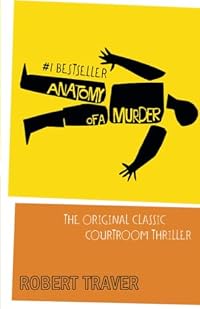
Anatomy of a Murder
by Robert Traver
On This Page
Description
First published by St. Martin's in 1958, Robert Traver's Anatomy of a Murder immediately became the number-one bestseller in America, and was subsequently turned into the successful and now classic Otto Preminger film. It is not only the most popular courtroom drama in American fiction, but one of the most popular novels of our time. A gripping tale of deceit, murder, and a sensational trial, Anatomy of a Murder is unmatched in the authenticity of its settings, events, and characters. A show more Macmillan Audio production from St. Martin's Griffin. show lessTags
Recommendations






















Member Reviews
This was difficult to read as a female attorney in 2021. Sure, it was interesting that a legal novel actually got into the strategy of jury instructions and the order that witnesses are called and when to stop questioning. But, it is so (hopefully) dated it mostly serves as a window into the good old boys club era of legal practice. When secretaries are patted on the butt and women were put on the jury because they are pretty to look at. I presume some of the popularity was due to the description of a rape and so many references to where the semen ended up and the details of vaginal smears. Let this molder in the dust bin.
First Lieutenant Frederic Manion is awakened by the screams and sobs of his wife Laura who has been allegedly raped by the bar manager who offered her a ride home. Manny tries to calm her as she sobs out her story, then takes a souvenir German luger, goes to the bar, and pumps five well-placed bullets into Barney Quill, killing him instantly. End of story? Nope, just the beginning. The real story is how local lawyer Paul Biegler accepts the case and pieces together his legal defense. This book and the subsequent movie adaptation were groundbreaking hot items back in the late 1950s because of the scandalous talk of rape which Mr. Biegler promoted as justification for his “irresistible impulse” argument.
The author wrote as if he were show more in the middle of the unfolding drama. No wonder… Robert Traver is the pen name of John Voelker who was the defense attorney for the real murder which took place in Big Bay, Michigan in 1952 and upon which the book and movie are based. This was his first book. He painstakingly brought out the ambiguous nature of the law and the human elements of a trial by jury. The courtroom sparring between Biegler and the “assistant” defense counsel Claude Dancer, a ringer from the Attorney General’s office in Lansing, is quite a “2-step” between two brilliant legal minds. Traver’s characterization is spot on. He gives some insight into how an attorney can defend someone he dislikes and also gives much credit to his behind-the-scene allies, the crusty retired lawyer Parnell who does much of the meticulous legal research and his feisty secretary Maida.
Travers has captured the isolation and beauty of the Upper Peninsula of Michigan which hasn’t diminished all that much in the past fifty years. The defense’s psychiatrist was brought in fom downstate because “either nobody in the UP is insane or else all of us are nuts” leading to an absence of local mental health experts. His first words after getting off the small plane were: “An amazing trip. Your scattered towns are nothing but occasional scars set amongst the lakes and woods. I didn’t dream of the remoteness and wild beauty of this place.” (335) I would be remiss if I didn’t include one of the many lovely descriptions of Lake Superior which we share with our Canadian neighbor to the north: “How incredibly beautiful…Whole rivers of liquid moonlight seemed to be coursing and flowing across the broad expanse of glittering lake; the scene was invested with a kind of awesome otherworldly grandeur.” (275)
Some reviewers have called this book slow and trite. I prefer to think of it as more of a journey back in time to look at the scrupulous building of a legal defense by an underdog small town lawyer. I got caught up in the fascinating anatomy of courtroom drama that follows the painstaking preparation work. I left most of the details for the reader to explore along with the ultimate resolution. Do the law and justice go hand in hand? You be the judge. show less
The author wrote as if he were show more in the middle of the unfolding drama. No wonder… Robert Traver is the pen name of John Voelker who was the defense attorney for the real murder which took place in Big Bay, Michigan in 1952 and upon which the book and movie are based. This was his first book. He painstakingly brought out the ambiguous nature of the law and the human elements of a trial by jury. The courtroom sparring between Biegler and the “assistant” defense counsel Claude Dancer, a ringer from the Attorney General’s office in Lansing, is quite a “2-step” between two brilliant legal minds. Traver’s characterization is spot on. He gives some insight into how an attorney can defend someone he dislikes and also gives much credit to his behind-the-scene allies, the crusty retired lawyer Parnell who does much of the meticulous legal research and his feisty secretary Maida.
Travers has captured the isolation and beauty of the Upper Peninsula of Michigan which hasn’t diminished all that much in the past fifty years. The defense’s psychiatrist was brought in fom downstate because “either nobody in the UP is insane or else all of us are nuts” leading to an absence of local mental health experts. His first words after getting off the small plane were: “An amazing trip. Your scattered towns are nothing but occasional scars set amongst the lakes and woods. I didn’t dream of the remoteness and wild beauty of this place.” (335) I would be remiss if I didn’t include one of the many lovely descriptions of Lake Superior which we share with our Canadian neighbor to the north: “How incredibly beautiful…Whole rivers of liquid moonlight seemed to be coursing and flowing across the broad expanse of glittering lake; the scene was invested with a kind of awesome otherworldly grandeur.” (275)
Some reviewers have called this book slow and trite. I prefer to think of it as more of a journey back in time to look at the scrupulous building of a legal defense by an underdog small town lawyer. I got caught up in the fascinating anatomy of courtroom drama that follows the painstaking preparation work. I left most of the details for the reader to explore along with the ultimate resolution. Do the law and justice go hand in hand? You be the judge. show less
I can't believe I've never seen this book's movie; I love James Stewart. But at least this way I had no idea what was going to happen next in the book; that was nice. And, funnily enough, I still had the odd little perk of being able to hear Jimmy's voice in my head for a lot of the lines. (Oh, and Lee Remick is perfect as Laura Manion.) I have a *cough* irresistible impulse to rent the movie. Soon. (Actually, the dvd might be in my mailbox now; I just can't get to it because of ALL THE SNOW.)
This is a book that requires the right mindset. 21st century feminist prickliness has to be firmly suppressed; all the tv and movie images of young and zealous lawyers working flat out eighteen hours a day to get their clients acquitted have to show more be put aside. The other images from popular media, though, the ones of lawyers seizing on any slender possibility that could remotely work in their favor? Those can stay.
Well, no, the second par of that's not fair; once it gets going, everyone begins putting in those eighteen-+-hour days and falling asleep at their desks. It's only in the very beginning that the main character keeps sloping off to go fishing.
None of which is to say this isn't a terrifically fun book. It had to be made into a movie; every page screams it. It is so very late 50's, from the dialogue pattering as easy and funny and sharp as a Gene Kelly – Donald O'Connor dance routine, to Laura Manion's tight sweaters, to the big old chrome-and-fins cars you just know everyone's driving. And, of course, former DA Paul Biegler (Jimmy Stewart) (well, not in the book, except in my head) said it himself: "The case has everything. Rape, murder. Even a little dog." It's a fictionalized account of an actual trial, "written by Michigan Supreme Court Justice John D. Voelker under the pen name Robert Traver. Voelker based the novel on a 1952 murder case in which he was the defense attorney." (What husband worth his salt wouldn't kill the man who did that to his wife? Problem is, while perfectly human and understandable, it was still murder, and Manny's been in jail ever since, trial pending.
Former DA Paul Biegler is pulled away from his fishing to consider taking the case for the defense. He needs a case; he's not the only defense attorney in his small Michigan town, and the other one's flashier; his secretary, Maida, would like to be paid her salary, thank you. So he puts down his fishing rod and goes to the jail, and finds it a tough call: the Manions have no money. And it seems like it could be a tough sell: Laura is very frank (too frank) about Manny's jealousy, and however much empathy there can be for a man going after someone who raped his wife, within the strict letter of the law it simply was not justifiable homicide. It was revenge. Unless… Biegler's got a few tricks up his sleeve, and his old buddy Parnell has more up both of his, and between them – and some surprising items turned up as they look into the details of the case – they're ready to put up a fight to get the Lieutenant free.
I tend to doubt very many writers nowadays would quite have the gall to use phrases like Traver does. A "blouseful" indeed. And the handling of the rape and the discussion of it is … interesting, a blend of euphemism and clinical directness from everyone concerned, with almost no emotion whatsoever. The prosecution – trying to set the victim in as positive a light as possible – has no problem dismissing the rape as either irrelevant or imaginary, whichever's more convenient, and to tarnish her reputation in any way possible; the defense is concerned that Laura's beauty might tell against them, but otherwise is determined to stick her on the stand come what may. Her own reactions are the only real weak point of the book, perhaps excusable by the male first person point of view: clueless. I'd be curious to see a more impersonal viewpoint of Laura's testimony, if such a thing were possible, because if she really did exhibit the level of sang-froid that she seems to in the book, she was a stunningly tough – or toughened – woman.
That being said – and being allowed to take off a half star from the rating – I enjoyed the hell out of this book. The film version was directed and produced by Otto Preminger, but – rape aside – I could easily see this as a Capra film. The blurring of right and wrong – who's lying? And why? What exactly is the truth, and should this man be allowed out of jail? – side by side with the sort of fervent idealism Jimmy Stewart should have had a patent on … again, whoever was at the helm, it's the perfect 50's movie. In a book.
Because Jimmy Stewart plays our hero in the movie, there may be little doubt going in as to how the case will turn out – but it's not that simple. It's a pitched battle, this trial, a bare-knuckle no-holds-barred brawl in which just about anything goes as long as you word it right. I've never seen or read a better revelation of the nuts and bolts of the US trial system – the mechanics of getting people to say – on and off the stand – what you as either the defense or the prosecutor need them to say, without letting out details that tip things to the other side. The head-to-head expert witnesses, the careful manipulation of the witnesses and the jury, the role of the judge and the use and formation of precedent – so that's what draws some people to the law. It has to be exhilarating. And it all comes down to a nail-biter, complete with a last-minute curveball and an epilogue that will leave you blinking.
It was terrific.
Side note: I find this other comment from the Wikipedia entry for the movie nauseatingly unsettling: "The Lumberjack Tavern is still in existence today. The murder scene body outline is still there, although it is possibly a restoration and not the original outline." There's a picture, captioned "where the body fell". Seriously?? show less
This is a book that requires the right mindset. 21st century feminist prickliness has to be firmly suppressed; all the tv and movie images of young and zealous lawyers working flat out eighteen hours a day to get their clients acquitted have to show more be put aside. The other images from popular media, though, the ones of lawyers seizing on any slender possibility that could remotely work in their favor? Those can stay.
Well, no, the second par of that's not fair; once it gets going, everyone begins putting in those eighteen-+-hour days and falling asleep at their desks. It's only in the very beginning that the main character keeps sloping off to go fishing.
None of which is to say this isn't a terrifically fun book. It had to be made into a movie; every page screams it. It is so very late 50's, from the dialogue pattering as easy and funny and sharp as a Gene Kelly – Donald O'Connor dance routine, to Laura Manion's tight sweaters, to the big old chrome-and-fins cars you just know everyone's driving. And, of course, former DA Paul Biegler (Jimmy Stewart) (well, not in the book, except in my head) said it himself: "The case has everything. Rape, murder. Even a little dog." It's a fictionalized account of an actual trial, "written by Michigan Supreme Court Justice John D. Voelker under the pen name Robert Traver. Voelker based the novel on a 1952 murder case in which he was the defense attorney." (What husband worth his salt wouldn't kill the man who did that to his wife? Problem is, while perfectly human and understandable, it was still murder, and Manny's been in jail ever since, trial pending.
Former DA Paul Biegler is pulled away from his fishing to consider taking the case for the defense. He needs a case; he's not the only defense attorney in his small Michigan town, and the other one's flashier; his secretary, Maida, would like to be paid her salary, thank you. So he puts down his fishing rod and goes to the jail, and finds it a tough call: the Manions have no money. And it seems like it could be a tough sell: Laura is very frank (too frank) about Manny's jealousy, and however much empathy there can be for a man going after someone who raped his wife, within the strict letter of the law it simply was not justifiable homicide. It was revenge. Unless… Biegler's got a few tricks up his sleeve, and his old buddy Parnell has more up both of his, and between them – and some surprising items turned up as they look into the details of the case – they're ready to put up a fight to get the Lieutenant free.
I tend to doubt very many writers nowadays would quite have the gall to use phrases like Traver does. A "blouseful" indeed. And the handling of the rape and the discussion of it is … interesting, a blend of euphemism and clinical directness from everyone concerned, with almost no emotion whatsoever. The prosecution – trying to set the victim in as positive a light as possible – has no problem dismissing the rape as either irrelevant or imaginary, whichever's more convenient, and to tarnish her reputation in any way possible; the defense is concerned that Laura's beauty might tell against them, but otherwise is determined to stick her on the stand come what may. Her own reactions are the only real weak point of the book, perhaps excusable by the male first person point of view: clueless. I'd be curious to see a more impersonal viewpoint of Laura's testimony, if such a thing were possible, because if she really did exhibit the level of sang-froid that she seems to in the book, she was a stunningly tough – or toughened – woman.
That being said – and being allowed to take off a half star from the rating – I enjoyed the hell out of this book. The film version was directed and produced by Otto Preminger, but – rape aside – I could easily see this as a Capra film. The blurring of right and wrong – who's lying? And why? What exactly is the truth, and should this man be allowed out of jail? – side by side with the sort of fervent idealism Jimmy Stewart should have had a patent on … again, whoever was at the helm, it's the perfect 50's movie. In a book.
Because Jimmy Stewart plays our hero in the movie, there may be little doubt going in as to how the case will turn out – but it's not that simple. It's a pitched battle, this trial, a bare-knuckle no-holds-barred brawl in which just about anything goes as long as you word it right. I've never seen or read a better revelation of the nuts and bolts of the US trial system – the mechanics of getting people to say – on and off the stand – what you as either the defense or the prosecutor need them to say, without letting out details that tip things to the other side. The head-to-head expert witnesses, the careful manipulation of the witnesses and the jury, the role of the judge and the use and formation of precedent – so that's what draws some people to the law. It has to be exhilarating. And it all comes down to a nail-biter, complete with a last-minute curveball and an epilogue that will leave you blinking.
It was terrific.
Side note: I find this other comment from the Wikipedia entry for the movie nauseatingly unsettling: "The Lumberjack Tavern is still in existence today. The murder scene body outline is still there, although it is possibly a restoration and not the original outline." There's a picture, captioned "where the body fell". Seriously?? show less
When I was young this was a popular bestseller that I saw my parents reading, so curious about its contents, I read it some 57 years later. The story has authenticity because the author worked as a prosecuting attorney and as a defense lawyer and because some elements of this story were based on a real case. The book revolves around the themes of truth, self-interest, sanity, and the ability of the legal system to deliver justice. Many of the main character's colorful and acerbic asides are worthy of H. L. Mencken. The details of the dialog often reveal what the witnesses are tempted to say, as well as what they do say. These conflicting motives make for a multi-dimensional reading experience. The plot is gripping throughout. This may show more become a classic of American literature, but at this point awaits a revival. show less
Of course, I have seen the movie version with Jimmy Stewart, and will now need to revisit the movie. I thoroughly enjoyed this book by Robert Traver. The story vibrates with life and images. Laura Manion throbs with sexuality and her husband, Frederic Manion, simmers with jealousy. Paul Biegler, alias Polly, relishes spending all waking hours fishing, until he decides to defend Frederic Manion on a charge of murder. The story centers on the trial preparation and the trial. One of my favorite quotations is, "The notorious undependability of juries, the chance involved, is one of the absorbing features of the law. That's what makes the practice of law, like prostitution, one of the last of the unpredictable professions-both employ the show more seductive arts, both try to display their wares to the best advantage, and both must pretend enthusiastically to woo total strangers." This, in essence, sums up the following trial of Frederic Manion. Traver displays vivid imagery, setting and characters. This is not your afternoon book, this is a book that will need to be read slowly and savored.9780752856162 show less
A pesar de que no leo muchos libros de este género, el thriller jurídico, no puedo negar que me fascina, por supuesto hablo de juicios relacionados con el proceso legal basado en el “common Law”, mientras que en mi país los juicios y la ley se basan en el derecho romano y por lo tanto los juicios son totalmente diferentes y para mí, mucho más complicados y aburridos, en Estados Unidos ese juego legal de juzgado, jurados, juez, abogado defensor y fiscal que se enzarzan en una lucha verbal y demás, me divierte enormemente, por supuesto me imagino que una vez metido en el sistema legal en la realidad en Estados Unidos resultará en algo diferente de lo que vemos en las películas y libros, pero mientras tanto, nos entrega libros show more realmente disfrutables dónde abogado defensor y fiscal se pelean en un juicio verbal y normalmente son tan divertidos e interesantes que siempre son bastante emocionantes.
Este libro se desarrolla completamente en el tema del proceso legal y juicio de un hombre que ha sido acusado de asesinato en primer grado, el libro comienza donde el abogado defensor recibe a la esposa del inculpado para contratarlo.
El inculpado, además de haberle metido 5 balas a otro hombre delante de muchas personas, se entregó a la policía una vez asesinado al otro hombre, así que como verán la defensa no tiene, en apariencia, mucho de donde agarrarse para lograr un veredicto a favor.
Todo el libro estamos inmersos en el ir y venir y la genialidad, tanto del abogado defensor, como de un ayudante del fiscal en el juicio, la presentación de pruebas, la interrogación de los diferentes testigos de cargo y a favor, las declaraciones finales de ambos abogados y en medio de todo eso, la investigación legal y personal que se tiene que hacer por parte de la defensa para presentar su caso.
Toda esa parte me encantó, ya he dicho que me fascina, esta muy bien planteada y además no se me ha hecho para nada difícil de leer o de comprender a pesar de los muchos términos legales utilizados, pero además, este libro fue escrito en 1958, así que, también me ha resultado muy interesante ver cómo trabajaban pruebas y demás en una época con poca tecnología, nada de ADN, nada de teléfonos celulares, nada de tecnología de punta, todo se hacía a base de ingenio y verdadero trabajo de escritorio y lectura de mucha información en papel, por otro lado, también el ver detalles como el que todo mundo fumaba en todas partes, dentro del juzgado, dentro de la cárcel, en la casa de todas las personas, cosa que como sabemos, ahora es casi pecado capital.
Me ha gustado mucho este libro, está narrado en primera persona por el que es el abogado defensor, aunque no me importa leer libros de este estilo narrativo, si que es verdad que cuando leo algo así, me quedo siempre con las ganas de saber que pasaba por la mente de otros personajes y que es imposible saberlo porque solo tenemos las impresiones que nos entrega quien narra, pero aún así tengo que decir que está tan bien escrito que no me ha hecho mucha falta esa parte.
Para quienes les gusten las novelas basadas en juicios y situaciones legales, les aseguro que este libro les va a encantar. show less
Este libro se desarrolla completamente en el tema del proceso legal y juicio de un hombre que ha sido acusado de asesinato en primer grado, el libro comienza donde el abogado defensor recibe a la esposa del inculpado para contratarlo.
El inculpado, además de haberle metido 5 balas a otro hombre delante de muchas personas, se entregó a la policía una vez asesinado al otro hombre, así que como verán la defensa no tiene, en apariencia, mucho de donde agarrarse para lograr un veredicto a favor.
Todo el libro estamos inmersos en el ir y venir y la genialidad, tanto del abogado defensor, como de un ayudante del fiscal en el juicio, la presentación de pruebas, la interrogación de los diferentes testigos de cargo y a favor, las declaraciones finales de ambos abogados y en medio de todo eso, la investigación legal y personal que se tiene que hacer por parte de la defensa para presentar su caso.
Toda esa parte me encantó, ya he dicho que me fascina, esta muy bien planteada y además no se me ha hecho para nada difícil de leer o de comprender a pesar de los muchos términos legales utilizados, pero además, este libro fue escrito en 1958, así que, también me ha resultado muy interesante ver cómo trabajaban pruebas y demás en una época con poca tecnología, nada de ADN, nada de teléfonos celulares, nada de tecnología de punta, todo se hacía a base de ingenio y verdadero trabajo de escritorio y lectura de mucha información en papel, por otro lado, también el ver detalles como el que todo mundo fumaba en todas partes, dentro del juzgado, dentro de la cárcel, en la casa de todas las personas, cosa que como sabemos, ahora es casi pecado capital.
Me ha gustado mucho este libro, está narrado en primera persona por el que es el abogado defensor, aunque no me importa leer libros de este estilo narrativo, si que es verdad que cuando leo algo así, me quedo siempre con las ganas de saber que pasaba por la mente de otros personajes y que es imposible saberlo porque solo tenemos las impresiones que nos entrega quien narra, pero aún así tengo que decir que está tan bien escrito que no me ha hecho mucha falta esa parte.
Para quienes les gusten las novelas basadas en juicios y situaciones legales, les aseguro que este libro les va a encantar. show less
Anatomy of a Murder is exactly that. A total step by step dissection of a murder case from the day of client's request for counsel to take the case, the investigation, presentation of evidence and the court room drama. A case of temporary insanity of a military man who kills the man for allegedly raped his wife - was it premeditated murder in a fit of rage or was he temporarily insane. Definitely placed the reader in the courtroom and even provoked the dread of how the jury will decide on the verdict. A decent read, however, tedious at times as well as sexist. I guess some of the behavior and attitudes were normal back in the 1950's but, there were many moments that rubbed me the wrong way. I also didn't realize that this actually was show more based on a real case and was made into a movie. I would watch the movie I ever see it available to view. The author was actually in the legal profession which was very apparent by the explanations and details throughout the book. show less
Members
- Recently Added By
Lists

Top 100 Mystery Novels of All Time
98 works; 9 members
National Book Award Finalists - Fiction
377 works; 11 members

Books Read in 2021
5,361 works; 114 members

Publisher's Weekly Bestsellers - Part II - 1940 - 1979
355 works; 5 members

Art Bourgeau's Favorites [Mystery Lovers Companion, 1986]
124 works; 2 members
Author Information

14+ Works 1,418 Members
Some Editions
Awards and Honors
Awards
Distinctions
Series
Belongs to Publisher Series
Work Relationships
Has the adaptation
Common Knowledge
- Canonical title*
- Anatomía de un asesinato
- Original title
- Anatomy of a Murder
- Original publication date
- 1958
- People/Characters
- Paul Biegler; Lieutenant Manion; Laura Manion; Maida; Parnell McCarthy; Mitch Lodwick (show all 10); Sheriff Battisfore "Max"; Mary Pilant; Claude Dancer; Judge Weaver
- Important places
- Iron Cliffs, Michigan, USA; Michigan, USA
- Related movies
- Anatomy of a Murder (1959 | IMDb)
- Dedication
- To my friend RAYMOND
- First words
- Prologue
This is the story of a murder, of a murder trial, and of some of the people who engaged or became enmeshed in the proceedings. - Last words
- (Click to show. Warning: May contain spoilers.)"The pure soul shall mount on native wings, disdaining little sport, and cut a path into the heaven of glory, leaving a track of light for men to wonder at."
- Disambiguation notice
- 1958 novel
*Some information comes from Common Knowledge in other languages. Click "Edit" for more information.
Classifications
Statistics
- Members
- 1,015
- Popularity
- 25,471
- Reviews
- 26
- Rating
- (3.91)
- Languages
- 6 — Danish, English, French, German, Italian, Spanish
- Media
- Paper, Audiobook, Ebook
- ISBNs
- 21
- ASINs
- 44