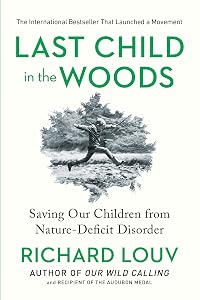
Last Child in the Woods: Saving Our Children from Nature-Deficit Disorder
by Richard Louv
On This Page
Description
"I like to play indoors better 'cause that's where all the electrical outlets are," reports a fourth grader. But it's not only computers, television, and video games that are keeping kids inside. It's also their parents' fears of traffic, strangers, Lyme disease, and West Nile virus; their schools' emphasis on more and more homework; their structured schedules; and their lack of access to natural areas. Local governments, neighborhood associations, and even organizations devoted to the show more outdoors are placing legal and regulatory constraints on many wild spaces, sometimes making natural play a crime. As children's connections to nature diminish and the social, psychological, and spiritual implications become apparent, new research shows that nature can offer powerful therapy for such maladies as depression, obesity, and attention deficit disorder. Environment-based education dramatically improves standardized test scores and grade-point averages and develops skills in problem solving, critical thinking, and decision making. Anecdotal evidence strongly suggests that childhood experiences in nature stimulate creativity. In "Last Child in the Woods", Louv talks with parents, children, teachers, scientists, religious leaders, child-development researchers, and environmentalists who recognize the threat and offer solutions. Louv shows us an alternative future, one in which parents help their kids experience the natural world more deeply, and find the joy of family connectedness in the process. show lessTags
Recommendations
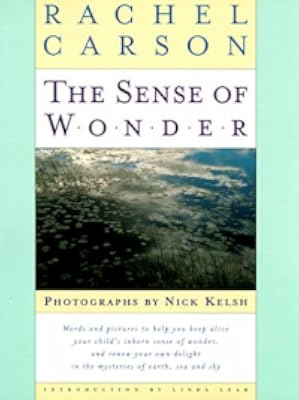
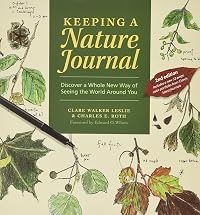
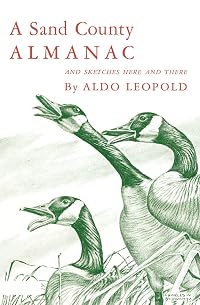
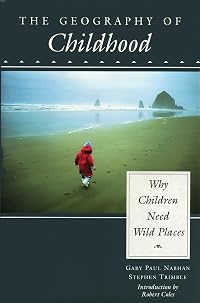
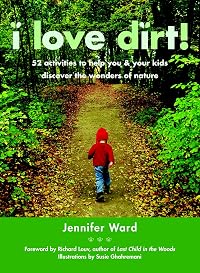

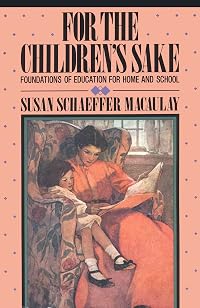
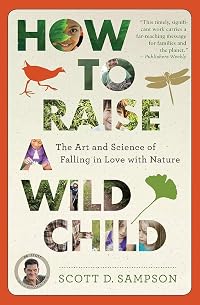
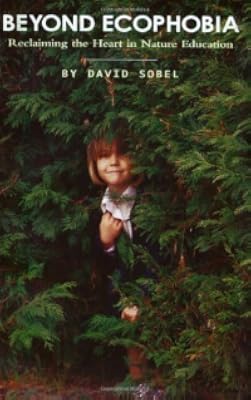









Member Recommendations
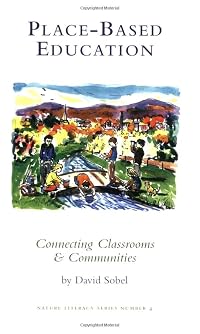
Beyond Ecophobia: Reclaiming the Heart in Nature Education (Nature Literacy Series, Vol. 1) (Nature Literacy) by David Sobel
sylvatica Louv references Sobel a couple of times. Read the original!
Musecologist Part of the issue with encountering the self in nature - and silence - is that there are fewer and fewer places for the ordinary person to do so.
Member Reviews
Okay, actually I read most of this book last year, but then it disappeared mysteriously -- until I finally discovered it behind the couch! It took a while to get back into the train of thought I'd left weeks (months?) ago, but I was very glad to finally finish it.
This was a life-changing book in many ways. It was one of those perfect books just two steps ahead of the reader's brain -- I was more than ready to agree with nearly everything contained within. And that covers a lot of ground! From research suggesting that exposure to nature is essential to a child's development to how sprawl and lawsuit-paranoid land-use policies have restricted this access to groups working to bring exposure to nature into the schools and into neighborhoods show more to play quality in "traditional" playgrounds vs natural areas to the effect of teaching environmentalism with an exclusively global focus while neglecting local flora & fauna and a sense of connection to place... It's exhaustive! But never exhausting. Each chapter spawned new ideas and grew new connections in my brain. The author made a deliberate effort to focus on causes for hope and suggestions for action, which I well appreciated.
I would recommend this book to anyone. Anyone with kids or who knows kids. Anyone interested in nature or the environment. Anyone interested in education. Anyone interested in changing the world and who dares to hope. show less
This was a life-changing book in many ways. It was one of those perfect books just two steps ahead of the reader's brain -- I was more than ready to agree with nearly everything contained within. And that covers a lot of ground! From research suggesting that exposure to nature is essential to a child's development to how sprawl and lawsuit-paranoid land-use policies have restricted this access to groups working to bring exposure to nature into the schools and into neighborhoods show more to play quality in "traditional" playgrounds vs natural areas to the effect of teaching environmentalism with an exclusively global focus while neglecting local flora & fauna and a sense of connection to place... It's exhaustive! But never exhausting. Each chapter spawned new ideas and grew new connections in my brain. The author made a deliberate effort to focus on causes for hope and suggestions for action, which I well appreciated.
I would recommend this book to anyone. Anyone with kids or who knows kids. Anyone interested in nature or the environment. Anyone interested in education. Anyone interested in changing the world and who dares to hope. show less
It's a great book - lives up to its promise. Two things though -- 1. though Louv makes a convincing case that nature is good for us psychologically, he doesn't say why that is. I don't think anyone knows. 2. though I can't help but love Louv's optimism, I found that as I read the last few chapters describing his vision for injecting more contact with nature in our lives, his idyllic description of our return to garden cities leaves out one essential point -- the 7.5 billion people who inhabit the rest of the globe as the state of degradation of nature, energy and food shortages, global warming, etc. spiral into catastrophe have to be relied on to back off and leave those of us in North America alone to bask in a new, happy, bucolic, show more dreamy state of bliss. I don't think they'll be so generous. show less
The book is fabulous. I grew up in a place where nature was never far away. We spent two weeks in the woods when I was a Boy Scout in England. After my return to my current home, I discovered we had been busy replacing trees with concrete.
Richard Louv's term, "nature-deficit disorder," is timely. As he mentioned, we study microbiology without smelling a plant or looking at an animal in its natural habitat. Our obsession with technology has taken us away from our natural roots, leaving fear in its place. We need to reclaim our connection with nature. It will make us whole again.
Richard Louv's book is a welcome reminder. It is a call. We must heed the call, and integrate the lessons into our education curriculum.
Richard Louv's term, "nature-deficit disorder," is timely. As he mentioned, we study microbiology without smelling a plant or looking at an animal in its natural habitat. Our obsession with technology has taken us away from our natural roots, leaving fear in its place. We need to reclaim our connection with nature. It will make us whole again.
Richard Louv's book is a welcome reminder. It is a call. We must heed the call, and integrate the lessons into our education curriculum.
I read this book a few years ago and have continually gone back to it. It presents an argument that is more profound with each passing year: that our children are disconnected from a world that is vanishing. Two ironies: the natural world is shrinking and children are kept from experiencing what's left of it. As a parent, I'm as guilty as anyone else. We spend too much time making connections on sites like this one and not enough time going out into nature. And we live in a culture that is increasingly disinterested in preservation of natural landscapes, that denies and diminishes science and research, that refuses to put resources and funding into ensuring that our children have the necessary grounding in natural science. Richard show more Louv's book is wonderful but tinged with heartbreaking realities. As a teacher, I can see how children connect immediately with even the smallest fragments of the nature that is around them. We owe it to our children to give them that kind of education every time there is an opportunity to do so. show less
Although this book has been around for years, I recently had the opportunity to listen to an audio version. It is a convincing and powerful book with a very focused message about children and the environment. What I found most interesting was the way Louv describes the positive consequences of outdoor play, nature education and creativity on both an individual and global scale (and the horror of the flip side). This continues to be an auspicious and pertinent message; a must-read for parents and educators.
I'm reviewing an older book that I recently read that pertains to the disconnection between modern society and nature,
“Last Child in the Woods-Saving our Children from Nature Deficit Disorder” by Richard Louv
I had been interested in this book for some time. Having read blog posts and articles by Richard Louv, and agreeing wholeheartedly that it is imperative that we get children outside and connected with nature, I was interested in his take on what I do believe is a profound disconnect.
This summer I found a copy at my free book “store.” It looked unread. I was giddy. The book thing is like random Christmas, to get something there that is actually on my book wish list, is rare.
I am someone who studies cognitive development, with show more emphasis in psychopathology (study of disorders not psychopaths), as well as someone with interest in how mental disorders and disability is portrayed in media. You can imagine I am leery of people making up random disorders based on what they dislike about society. They are a very real thing that people experience. They present very real challenges, in many cases are disabling and shouldn’t be made light of in this way.
That said, I wanted to give it a chance, as I believe significant differences of opinion aside, Louv and I are kindred spirits.
What did I find in this book? I found quite a bit of reminiscing, some interesting history on societal change, heartwarming anecdotes, and vague blaming of nearly all of society’s ills on lack of nature, and increased use technology. Some of it, was interesting. I found myself nodding along in agreement. The ideas for reconnecting people with nature are good ones.
Yet I cannot possibly recommend this book.
There is also ableism and ignorance.
One specific, most damning example being in the chapter: “Why the Young and The Rest of Us, Need Nature”
“The Rise of Cultural Autism
In the most nature deprived corners of our world we can se the rise of what might be called cultural autism. The symptoms? Tunneled Senses, and feelings of isolation and containment. Experience, including physical risk, is narrowing to about the size of a cathode ray tube, or flat panel if you prefer. Atrophy of the senses, was occurring long before we came to be isolated from the natural world…”
Phrases that stuck out were, “tunneled senses”, “isolation and containment,” “atrophy of the senses.”
Seriously?
My childhood was tough. There were two places I felt most free, going along with Sherlock and Watson on adventures (tucked safely in the public library) and out among the trees.
While walking the trails, watching the insects, chasing frogs, letting water run through my hands, I felt I was in paradise. I wandered and played for hours in the woods. Solitary? Yes. But I could feel the pulse of life there and knew I belonged to it. I think it’s a reason I’m still breathing. My senses were alive and FILLED. Not in the least atrophied. I’m still autistic.
That isn’t what is wrong with this paragraph though. I know many people are fond of a good analogy, a comparison of sorts. I am. However, writers must be responsible.
When you make such analogies, with real lived experiences of real people, you actually also encourage stereotype. If your cultural autism is atrophied, experience less, and isolated/contained (not a part of the world), then so are persons diagnosed with autism spectrum disorders.
This is how Louv sees us? The thought he wishes to convey? I cannot believe he has much direct experience with the spectrum.
It goes on though, because then he also, very slyly not really saying, but implying that “nature deficit disorder” is responsible at least in part for the attention difficulties of children. Mmm.hmmm.
I have ADD diagnosis as well. Nature makes me feel happier, at peace,and it eases my stress. It does not change how my mind works.
One of my three autistic sons also has an ADHD diagnosis. The boy does so much better handling stress when he has time to play outside. Guess what? When we come home from the park he’s still autistic. He still has attention, impulse, and learning retention problems. How about my other son, who barely speaks? The joy, the happiness being outside brings him, I cannot adequately describe with the written word.
It hasn’t improved his talking.
Just because studies show that spending time outside increases attention, it doesn't mean that the difficulties are a result of not spending time outside. Non causa pro causa. (and, converse problems or as we like to say round here "ass backwards") It is irresponsible to suggest it.
I know ADHD is an easy thing to bash and blame on modern life. I know too that autism is newsworthy, catchy thing that many people wish they understood the mechanism of.
However, it is irresponsible to hint around that all we need is more time outside, or that our home and school environment is creating these problems, especially when the person doing the hinting doesn’t appear to really understand either neurological condition. show less
“Last Child in the Woods-Saving our Children from Nature Deficit Disorder” by Richard Louv
I had been interested in this book for some time. Having read blog posts and articles by Richard Louv, and agreeing wholeheartedly that it is imperative that we get children outside and connected with nature, I was interested in his take on what I do believe is a profound disconnect.
This summer I found a copy at my free book “store.” It looked unread. I was giddy. The book thing is like random Christmas, to get something there that is actually on my book wish list, is rare.
I am someone who studies cognitive development, with show more emphasis in psychopathology (study of disorders not psychopaths), as well as someone with interest in how mental disorders and disability is portrayed in media. You can imagine I am leery of people making up random disorders based on what they dislike about society. They are a very real thing that people experience. They present very real challenges, in many cases are disabling and shouldn’t be made light of in this way.
That said, I wanted to give it a chance, as I believe significant differences of opinion aside, Louv and I are kindred spirits.
What did I find in this book? I found quite a bit of reminiscing, some interesting history on societal change, heartwarming anecdotes, and vague blaming of nearly all of society’s ills on lack of nature, and increased use technology. Some of it, was interesting. I found myself nodding along in agreement. The ideas for reconnecting people with nature are good ones.
Yet I cannot possibly recommend this book.
There is also ableism and ignorance.
One specific, most damning example being in the chapter: “Why the Young and The Rest of Us, Need Nature”
“The Rise of Cultural Autism
In the most nature deprived corners of our world we can se the rise of what might be called cultural autism. The symptoms? Tunneled Senses, and feelings of isolation and containment. Experience, including physical risk, is narrowing to about the size of a cathode ray tube, or flat panel if you prefer. Atrophy of the senses, was occurring long before we came to be isolated from the natural world…”
Phrases that stuck out were, “tunneled senses”, “isolation and containment,” “atrophy of the senses.”
Seriously?
My childhood was tough. There were two places I felt most free, going along with Sherlock and Watson on adventures (tucked safely in the public library) and out among the trees.
While walking the trails, watching the insects, chasing frogs, letting water run through my hands, I felt I was in paradise. I wandered and played for hours in the woods. Solitary? Yes. But I could feel the pulse of life there and knew I belonged to it. I think it’s a reason I’m still breathing. My senses were alive and FILLED. Not in the least atrophied. I’m still autistic.
That isn’t what is wrong with this paragraph though. I know many people are fond of a good analogy, a comparison of sorts. I am. However, writers must be responsible.
When you make such analogies, with real lived experiences of real people, you actually also encourage stereotype. If your cultural autism is atrophied, experience less, and isolated/contained (not a part of the world), then so are persons diagnosed with autism spectrum disorders.
This is how Louv sees us? The thought he wishes to convey? I cannot believe he has much direct experience with the spectrum.
It goes on though, because then he also, very slyly not really saying, but implying that “nature deficit disorder” is responsible at least in part for the attention difficulties of children. Mmm.hmmm.
I have ADD diagnosis as well. Nature makes me feel happier, at peace,and it eases my stress. It does not change how my mind works.
One of my three autistic sons also has an ADHD diagnosis. The boy does so much better handling stress when he has time to play outside. Guess what? When we come home from the park he’s still autistic. He still has attention, impulse, and learning retention problems. How about my other son, who barely speaks? The joy, the happiness being outside brings him, I cannot adequately describe with the written word.
It hasn’t improved his talking.
Just because studies show that spending time outside increases attention, it doesn't mean that the difficulties are a result of not spending time outside. Non causa pro causa. (and, converse problems or as we like to say round here "ass backwards") It is irresponsible to suggest it.
I know ADHD is an easy thing to bash and blame on modern life. I know too that autism is newsworthy, catchy thing that many people wish they understood the mechanism of.
However, it is irresponsible to hint around that all we need is more time outside, or that our home and school environment is creating these problems, especially when the person doing the hinting doesn’t appear to really understand either neurological condition. show less
The heavens declare the glory of God;
the skies proclaim the work of his hands. (Psalm 19:1 NIV)
"In my first counseling job, I took children with AIDS to the mountains who had never been out of their urban neighborhoods. One night, a nine year-old woke me up. She had to go to the bathroom. We stepped outside the tent and she looked up. She gasped and grabbed my leg. She had never seen the stars before." --Madhu Narayan
"I like to play indoors better 'cause that's where all the electrical outlets are." --San Diego 4th grader
Something has went wrong. Something very deep & fundamental, states Richard Louv, author of Last Child in the Woods.
Children in America have largely lost nature and wilderness. Their knowledge of it, their show more connection to it, their love of it.
Louv passionately pleads that immersion in God's creation is not just a "nice thing" for our children, but something vital for their physical, mental, emotional, and spiritual development. He goes so far as to give society's current state a name-- "nature-deficit disorder."
So, is this just one more idea, one more book, or is this something real?
I agree with Louv. I think both Scripture and experience tell us that God constructed both our bodies and our souls to exist in the rich, beautiful world that he created. God intended for us to be blessed, as Louv would put it, "biologically, cognitively, and spiritually--through positive physical connection to nature." That "time in nature is not leisure time; it's an essential investment in our children's health."
This is not some flower-child nature worship-- it's just an honest realization of how God made us. We were not made to be holed up in caves of wood and concrete and steel; we were made to live in God's creation. Louv says "in our bones we need the natural curves of hills, the scent of chaparral, the whisper of pines, the possibility of wildness."
His conclusion? Alienation from God's creation, just as alienation from the God Who made it, has deleterious effects on our body and soul. As Louv quotes Luther Standing Bear, "Man's heart, away from nature, becomes hard."
His solution? A realization of the importance of living in nature, and then a restoration of that life, both on a personal level, a community level, and a societal level, both in practical steps for today and visionary plans for the future.
I loved this book. I loved the careful thought that went into it. I loved all the peppery quotes, like "In our family, there was no clear line between religion and fly fishing" (author Norman Maclean referring about his father, a Presbyterian pastor) and "God communicates to us (nowhere) with such texture and forcefulness in detail and grace and joy, as through creation...this is what connects humanity, this is what we have in common. It's not the internet, it's the oceans." (Robert F. Kennedy, Jr.).
I loved what this book did to my soul, turning it to God's creation and its importance for both my children and me. I loved how it encouraged me to more actively involve my kids in contact with and appreciation of God's creation.
So what about the spiritual content? Louv writes very broadly and generically about spirituality, interviewing many people from many religious views. The whole area of our relationship with God's creation has long been primarily, if not exclusively, the domain of "liberals" and people far from a conservative Christian viewpoint. It is sad that in the book he could find no voice from a reformed theological tradition that could have forcefully and articulately praised his ideas while grounding them solidly in a Biblical worldview. I see some seeds of change within evangelical Christianity regarding a right view and right embracing of God's gift of His creation. Hopefully readers of this book can plant some of those seeds in their own lives and in the lives of others in their spheres of influence. show less
the skies proclaim the work of his hands. (Psalm 19:1 NIV)
"In my first counseling job, I took children with AIDS to the mountains who had never been out of their urban neighborhoods. One night, a nine year-old woke me up. She had to go to the bathroom. We stepped outside the tent and she looked up. She gasped and grabbed my leg. She had never seen the stars before." --Madhu Narayan
"I like to play indoors better 'cause that's where all the electrical outlets are." --San Diego 4th grader
Something has went wrong. Something very deep & fundamental, states Richard Louv, author of Last Child in the Woods.
Children in America have largely lost nature and wilderness. Their knowledge of it, their show more connection to it, their love of it.
Louv passionately pleads that immersion in God's creation is not just a "nice thing" for our children, but something vital for their physical, mental, emotional, and spiritual development. He goes so far as to give society's current state a name-- "nature-deficit disorder."
So, is this just one more idea, one more book, or is this something real?
I agree with Louv. I think both Scripture and experience tell us that God constructed both our bodies and our souls to exist in the rich, beautiful world that he created. God intended for us to be blessed, as Louv would put it, "biologically, cognitively, and spiritually--through positive physical connection to nature." That "time in nature is not leisure time; it's an essential investment in our children's health."
This is not some flower-child nature worship-- it's just an honest realization of how God made us. We were not made to be holed up in caves of wood and concrete and steel; we were made to live in God's creation. Louv says "in our bones we need the natural curves of hills, the scent of chaparral, the whisper of pines, the possibility of wildness."
His conclusion? Alienation from God's creation, just as alienation from the God Who made it, has deleterious effects on our body and soul. As Louv quotes Luther Standing Bear, "Man's heart, away from nature, becomes hard."
His solution? A realization of the importance of living in nature, and then a restoration of that life, both on a personal level, a community level, and a societal level, both in practical steps for today and visionary plans for the future.
I loved this book. I loved the careful thought that went into it. I loved all the peppery quotes, like "In our family, there was no clear line between religion and fly fishing" (author Norman Maclean referring about his father, a Presbyterian pastor) and "God communicates to us (nowhere) with such texture and forcefulness in detail and grace and joy, as through creation...this is what connects humanity, this is what we have in common. It's not the internet, it's the oceans." (Robert F. Kennedy, Jr.).
I loved what this book did to my soul, turning it to God's creation and its importance for both my children and me. I loved how it encouraged me to more actively involve my kids in contact with and appreciation of God's creation.
So what about the spiritual content? Louv writes very broadly and generically about spirituality, interviewing many people from many religious views. The whole area of our relationship with God's creation has long been primarily, if not exclusively, the domain of "liberals" and people far from a conservative Christian viewpoint. It is sad that in the book he could find no voice from a reformed theological tradition that could have forcefully and articulately praised his ideas while grounding them solidly in a Biblical worldview. I see some seeds of change within evangelical Christianity regarding a right view and right embracing of God's gift of His creation. Hopefully readers of this book can plant some of those seeds in their own lives and in the lives of others in their spheres of influence. show less
Members
- Recently Added By
Lists

Recommended Nature Writing
346 works; 180 members

Parenting is Hard, These Books Help
7 works; 1 member

TED 2013 Summer Reading List
190 works; 13 members

Youth: Earth Science
205 works; 1 member

Vlogbrothers Book Recommendations
307 works; 4 members
Author Information

16+ Works 3,850 Members
Richard Louv, recipient of the 2008 Audubon Medal, is the author of seven books. The chairman of the Children & Nature Network, he is also honorary co-chair of the National Forum on Children and Nature
Some Editions
Awards and Honors
Notable Lists
Common Knowledge
- Canonical title
- Last Child in the Woods: Saving Our Children from Nature-Deficit Disorder
- Original publication date
- 2005
- Epigraph
- There was a child who went forth every day, And the first object he look'd upon, that object he became, And that object became part of him for the day or a certain part of the day, Or for many years or stretching cycles of ye... (show all)ars. The early lilacs became part of this child, And grass and red and white morning glories, and white and red clover, and the song of the phoebe-bird, And the Third-month lambs and the sow's pink-faint litter, and the mare's foal, and the cow's calf,....
--Walt Whitman
I like to play indoors better 'cause that's where all the electrical outlets are. --A fourth-grader in San Diego - Dedication
- For Jason and Matthew
- First words
- One evening, when my boys were younger, Matthew, then ten, looked at me from across a restaurant table and said quite seriously, Dad, how come it was more fun when you were a kid?
- Last words
- (Click to show. Warning: May contain spoilers.)These will be their turtle tales.
- Blurbers
- Berry, Thomas
Classifications
- Genres
- Science & Nature, Nonfiction, General Nonfiction
- DDC/MDS
- 155.418 — Philosophy & psychology Psychology Differential and developmental psychology Childhood General Child Psychology Applied Psychology
- LCC
- BF353.5 .N37 .L68 — Philosophy, Psychology and Religion Psychology Psychology Consciousness. Cognition
- BISAC
Statistics
- Members
- 2,890
- Popularity
- 6,238
- Reviews
- 45
- Rating
- (4.01)
- Languages
- 8 — Danish, Dutch, English, German, Polish, Portuguese, Spanish, Turkish
- Media
- Paper, Audiobook, Ebook
- ISBNs
- 25
- UPCs
- 3
- ASINs
- 8