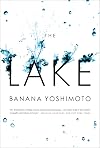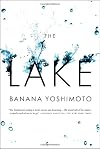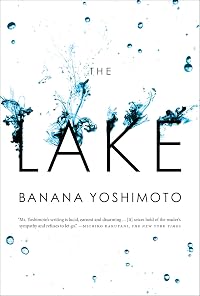
The Lake
by Banana Yoshimoto
On This Page
Description
A major literary sensation is back with a quietly stunning tour de force about the redemptive power of love.While The Lake shows off many of the features that have made Banana Yoshimoto famous—a cast of vivid and quirky characters, simple yet nuanced prose, a tight plot with an upbeat pace—it's also one of the most darkly mysterious books she's ever written.
It tells the tale of a young woman who moves to Tokyo after the death of her mother, hoping to get over her grief and start a show more career as a graphic artist. She finds herself spending too much time staring out her window, though ... until she realizes she's gotten used to seeing a young man across the street staring out his window, too.
They eventually embark on a hesitant romance, until she learns that he has been the victim of some form of childhood trauma. Visiting two of his friends who live a monastic life beside a beautiful lake, she begins to piece together a series of clues that lead her to suspect his experience may have had something to do with a bizarre secret from his past. . . .
With echoes of real life events, such as the Aum Shinrikyo cult (the group that released poison gas in the Tokyo subway system) and the kidnapping of Japanese citizens by North Korea, The Lake unfolds as the most powerful novel Banana Yoshimoto has written. And as the two young lovers overcome their troubled past to discover hope in the beautiful solitude of the lake in the countryside, it's also one of her most moving. show less
Tags
Recommendations




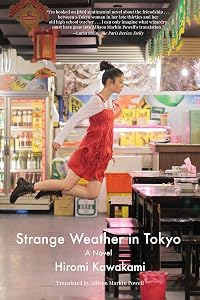

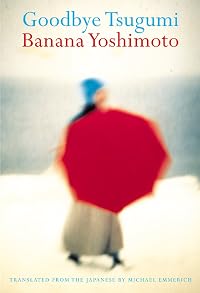
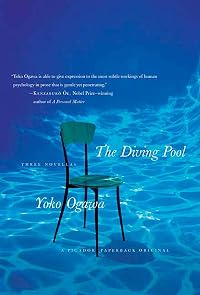



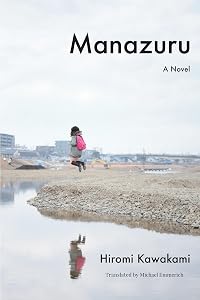




















Member Reviews
'The Lake' is one of my favorite books in recent years.
I paged through the book in order to write a more concise review, but without writing a long-winded ramble, all I can say is that I find immense charm in the way that Yoshimoto allows her narrator to tell not only her own story, but that of her lover. In this case, I cannot offer critique so much as a list of everything about 'The Lake' that I love.
I love the recognition of personal flaws that has been rounded out by a will to move forward. I love that Chihiro and Nakajima have found each other in such a way, and that they do not pity or necessarily humor one another, so much as allow the other to exist where they are. Everything about their bond feels simultaneously bulletproof and show more delicate. There's a feeling of healing and promise, but there's still a fear that the bleaker aspects of humanity could bring all of it crashing down.
'The Lake' is one of those books where I'll sit down and read it cover-to-cover, but also enjoy just casually leafing through. It's such lovely prose, and full of raw, but not overdramatic emotion. show less
I paged through the book in order to write a more concise review, but without writing a long-winded ramble, all I can say is that I find immense charm in the way that Yoshimoto allows her narrator to tell not only her own story, but that of her lover. In this case, I cannot offer critique so much as a list of everything about 'The Lake' that I love.
I love the recognition of personal flaws that has been rounded out by a will to move forward. I love that Chihiro and Nakajima have found each other in such a way, and that they do not pity or necessarily humor one another, so much as allow the other to exist where they are. Everything about their bond feels simultaneously bulletproof and show more delicate. There's a feeling of healing and promise, but there's still a fear that the bleaker aspects of humanity could bring all of it crashing down.
'The Lake' is one of those books where I'll sit down and read it cover-to-cover, but also enjoy just casually leafing through. It's such lovely prose, and full of raw, but not overdramatic emotion. show less
I bought this book because a) Banana Yoshimoto (Kitchen was one of my most beloved books of my college years) and b) Melville House (my favorite publisher).
There is a phrase in the discussion questions at the end of this book that I just can't get away from. Yoshimoto's writing has been described as "deceptively simple," and I think that's exactly right. Reading her prose is kind of like looking at pictures through the melancholic soft focus filters so popular on Instagram, but then, the actual subject matter is so incredibly sharp: losing a parent, classism, the commodification of the arts, and the central mystery of the book -- just what happened to Nakajima as a child?
Calling her characters quirky is dismissive to the point of show more rudeness. If they are odd, it is in their rare capacity to own and be honest about their woundedness, and in their respectful care of each other. Quirky if bravery and gentleness are quirks.
Not your ordinary love story. More lovely than that. show less
There is a phrase in the discussion questions at the end of this book that I just can't get away from. Yoshimoto's writing has been described as "deceptively simple," and I think that's exactly right. Reading her prose is kind of like looking at pictures through the melancholic soft focus filters so popular on Instagram, but then, the actual subject matter is so incredibly sharp: losing a parent, classism, the commodification of the arts, and the central mystery of the book -- just what happened to Nakajima as a child?
Calling her characters quirky is dismissive to the point of show more rudeness. If they are odd, it is in their rare capacity to own and be honest about their woundedness, and in their respectful care of each other. Quirky if bravery and gentleness are quirks.
Not your ordinary love story. More lovely than that. show less
This is a hard book to review, partly because I read it during a time when I was emotionally vulnerable, and partly because I read it in intervals over the course of two weeks, which makes me feel that I didn't do the book justice, and that I could've enjoyed it better.
Yoshimoto's strength is the intimacy with which she portrays emotions. Reading parts of the book feels like you are talking to your soulmate, the intensity of emotions and the frankness with which she portrays them makes you feel very close to the characters and forces you to make an emotional investment in them. Parts of the book are so powerful that I got misty-eyed and whimpered. I know I'm a sucker for damaged characters with troubled pasts, but Yoshimoto does more show more than just play to the tropes here. She creates characters and circumstances who are not only completely believable, but also act and behave with an intensity that makes them incredibly real. And there are profound displays of kindness peppered everywhere in the book, which makes it ultimately redeeming and leaves an optimistic aftertaste despite the darkness prevalent in the story.
A clear 5/5, and I cannot wait to read Goodbye, Tsugumi and Kitchen. show less
Yoshimoto's strength is the intimacy with which she portrays emotions. Reading parts of the book feels like you are talking to your soulmate, the intensity of emotions and the frankness with which she portrays them makes you feel very close to the characters and forces you to make an emotional investment in them. Parts of the book are so powerful that I got misty-eyed and whimpered. I know I'm a sucker for damaged characters with troubled pasts, but Yoshimoto does more show more than just play to the tropes here. She creates characters and circumstances who are not only completely believable, but also act and behave with an intensity that makes them incredibly real. And there are profound displays of kindness peppered everywhere in the book, which makes it ultimately redeeming and leaves an optimistic aftertaste despite the darkness prevalent in the story.
A clear 5/5, and I cannot wait to read Goodbye, Tsugumi and Kitchen. show less
The Lake was much more enjoyable than I thought it would be. I didn't really know what to expect. As usual, I read the description when I first chose to put the book on my TBR and didn't bother looking at it again when I sat down to read it. What's the point, I already knew I was interested. I have to say that I truly enjoy the surprises that has been giving me.
The book is about two broken young people and the barriers they've built around themselves. It's one of those books that really makes me appreciate WIT Month and the new points of view that it has been bringing with it. Had the book been written by an author in the US, it probably would have involved one broken person with barriers and one broken person with no barriers and the show more no-barrier person smashing everything the barrier person has until they relent. US books are kind of violent that way sometimes. But not this book. These barriers are in place and they aren't downright smashed. Instead, the method with which they are tried is more subtle. This was also not yet another story about a manic pixie dream girl (or boy) coaxing a member of the opposite sex out of their depression or any other form of extrovert convincing an introvert that there's something wrong with their introversion.
It's a beautiful story that I have fallen in love with for it's quiet little moments and realizations. I appreciated the way that Chihiro and Nakajima come together and the way they respect each other's boundaries, the way both entreated the other to come out of their shells without actually asking for it. I liked their comfortable discomfort, if that makes sense. It's in their brokenness. There was something about the way their embraced their brokenness rather than ran away from it, although some might say they were running. I never felt that way about them. They just knew who they were and who they weren't.
The idea behind the lake itself was interesting, and I won't spoil it. I'll just say that I spent some time wondering when we were going to get to where the title came from and it came in increments. The first time I saw the lake, I didn't get it's significance. Eventually it was made clear.
All together, I loved The Lake and look forward to checking out more work from Banana Yoshimoto. Every time I think about the characters in the days since I finished it, I get a wispy nostalgic feeling already. It was just adorable. show less
The book is about two broken young people and the barriers they've built around themselves. It's one of those books that really makes me appreciate WIT Month and the new points of view that it has been bringing with it. Had the book been written by an author in the US, it probably would have involved one broken person with barriers and one broken person with no barriers and the show more no-barrier person smashing everything the barrier person has until they relent. US books are kind of violent that way sometimes. But not this book. These barriers are in place and they aren't downright smashed. Instead, the method with which they are tried is more subtle. This was also not yet another story about a manic pixie dream girl (or boy) coaxing a member of the opposite sex out of their depression or any other form of extrovert convincing an introvert that there's something wrong with their introversion.
It's a beautiful story that I have fallen in love with for it's quiet little moments and realizations. I appreciated the way that Chihiro and Nakajima come together and the way they respect each other's boundaries, the way both entreated the other to come out of their shells without actually asking for it. I liked their comfortable discomfort, if that makes sense. It's in their brokenness. There was something about the way their embraced their brokenness rather than ran away from it, although some might say they were running. I never felt that way about them. They just knew who they were and who they weren't.
The idea behind the lake itself was interesting, and I won't spoil it. I'll just say that I spent some time wondering when we were going to get to where the title came from and it came in increments. The first time I saw the lake, I didn't get it's significance. Eventually it was made clear.
All together, I loved The Lake and look forward to checking out more work from Banana Yoshimoto. Every time I think about the characters in the days since I finished it, I get a wispy nostalgic feeling already. It was just adorable. show less
Chihiro, a painter of murals, tells the story of The Lake. Her late mother was the owner and ‘mama-san’ of a club and her father is of some prominence in their small rural town. The book opens with her mother’s hospitalisation and death, which leaves Chihiro feeling lost and distanced and eventually she moves to Tokyo, where she meets Nakajima, who lives in the building diagonally across. She finds herself attracted to him.
There’s a tenacity in him that’s beyond all that. The intensity of a person unafraid of death, at the end of his rope.
Maybe that’s how I knew we would get along.
Yes there is an actual lake in this book.
“The water was so still you almost felt like it would absorb any sounds that reached it. The surface show more might have been a mirror. Then a wind blew up and sent small waves drifting across it. The only sound was the chirping of birds that whirled around us, high and low.”
Nakajima and Chihiro travel several hours to get to it, to a little shack by the lake that Nakajima and his mother used to live in, and which is now the home of Mino and Chii, siblings who make their living as clairvoyants. That is, Mino voices what the bedridden Chii ‘sees’. Mino also makes the most delicious tea, from spring water.
“The tea, made from leaves with a subtly smoky aroma, was so good I could feel my senses sharpening. It had a sweetness to it, and at the end of each sip I’d catch a whiff of fruit.”
And this is that kind of book that is to be read with a pot of steaming tea (lapsang souchong perhaps?) next to you - and I suppose if you have a view of a lake, that would be helpful. Because this is story that gradually awakens.
I made the mistake of glancing at an interview with Banana Yoshimoto about The Lake which revealed more than I cared to know (at the point of my reading progress). The Goodreads description also reveals just a little too much about the story. So hopefully I’ve managed not to, and if you are interested in reading this book, just jump right in and read it, without reading too much about it! Because Yoshimoto (and her translator) has written a book that seems, at first glance, simple, direct. But there is so much more beneath.
“But sometimes we encounter people like Nakajima who compel us to remember it all. He doesn’t have to say or do anything in particular; just looking at him, you find yourself face-to-face with the enormousness of the world as a whole. Because he doesn’t try to live in just a part of it. Because he doesn’t avert his gaze.
He makes me feel like I’ve suddenly awakened, and I want to go on watching him forever. That, I think, is what it is. I’m awed by his terrible depths.” show less
There’s a tenacity in him that’s beyond all that. The intensity of a person unafraid of death, at the end of his rope.
Maybe that’s how I knew we would get along.
Yes there is an actual lake in this book.
“The water was so still you almost felt like it would absorb any sounds that reached it. The surface show more might have been a mirror. Then a wind blew up and sent small waves drifting across it. The only sound was the chirping of birds that whirled around us, high and low.”
Nakajima and Chihiro travel several hours to get to it, to a little shack by the lake that Nakajima and his mother used to live in, and which is now the home of Mino and Chii, siblings who make their living as clairvoyants. That is, Mino voices what the bedridden Chii ‘sees’. Mino also makes the most delicious tea, from spring water.
“The tea, made from leaves with a subtly smoky aroma, was so good I could feel my senses sharpening. It had a sweetness to it, and at the end of each sip I’d catch a whiff of fruit.”
And this is that kind of book that is to be read with a pot of steaming tea (lapsang souchong perhaps?) next to you - and I suppose if you have a view of a lake, that would be helpful. Because this is story that gradually awakens.
I made the mistake of glancing at an interview with Banana Yoshimoto about The Lake which revealed more than I cared to know (at the point of my reading progress). The Goodreads description also reveals just a little too much about the story. So hopefully I’ve managed not to, and if you are interested in reading this book, just jump right in and read it, without reading too much about it! Because Yoshimoto (and her translator) has written a book that seems, at first glance, simple, direct. But there is so much more beneath.
“But sometimes we encounter people like Nakajima who compel us to remember it all. He doesn’t have to say or do anything in particular; just looking at him, you find yourself face-to-face with the enormousness of the world as a whole. Because he doesn’t try to live in just a part of it. Because he doesn’t avert his gaze.
He makes me feel like I’ve suddenly awakened, and I want to go on watching him forever. That, I think, is what it is. I’m awed by his terrible depths.” show less
… semplice come sbucciare una banana.
Un altro tentativo di leggere autori contemporanei … andato in fondo al lago.
Nonostante l’età di Chihiro e Nakajima Il lago sembra più un romanzetto per adolescenti...
Da piccola, ogni volta che aprivo gli occhi durante la notte, la trovavo lì (mia madre), a massaggiarmi dolcemente la pancia, a sistemarmi il pigiama e coprirmi con la trapunta.
Me lo ricordavo ancora, lo ricordava il mio corpo: “Essere amati significa questo, avere qualcuno che desidera accarezzarti e trattarti con dolcezza”. Ecco perché il mio corpo è indifferente ai finti affetti. E’ stato “ben educato”. (20)
Da bambina mi bastava guardare in viso mia madre per capire dove mi trovassi, adesso non avevo altri che me show more stessa. (51)
In quel periodo credevo ancora che il mondo fosse un posto tutto sommato felice, fatto dei rumori delle famiglie a cena, del sorriso di una madre che saluta il marito quando va al lavoro, del tepore di un corpo accanto al nostro quando ci svegliamo nel cuore della notte.
Ma non era così per Nakajima: il suo mondo era immerso nel buio. (76)
(Nakajima)
Vedi, le persone come noi non stanno mai nel mezzo. Siamo sempre ai margini, e in linea generale sono convinto che sia meglio non distinguersi troppo. Il più delle volte vediamo le cose al contrario rispetto a tutti gli altri, e se ci distinguiamo finiamo inevitabilmente per attirarci inimicizie. Ma ci sono cose sulle quali è importante non cedere mai, o si finisce per vivere come degli eremiti. (99)
C’è la superficie, e poi c’è quello che vediamo sotto la superficie. Un tè delizioso, una stanza impolverata, il lago che luccica fuori dalla finestra… (138)
… e perfino il martin pescatore frena il suo volo apprezzando solamente il riflesso sull’acqua. show less
Un altro tentativo di leggere autori contemporanei … andato in fondo al lago.
Nonostante l’età di Chihiro e Nakajima Il lago sembra più un romanzetto per adolescenti...
Da piccola, ogni volta che aprivo gli occhi durante la notte, la trovavo lì (mia madre), a massaggiarmi dolcemente la pancia, a sistemarmi il pigiama e coprirmi con la trapunta.
Me lo ricordavo ancora, lo ricordava il mio corpo: “Essere amati significa questo, avere qualcuno che desidera accarezzarti e trattarti con dolcezza”. Ecco perché il mio corpo è indifferente ai finti affetti. E’ stato “ben educato”. (20)
Da bambina mi bastava guardare in viso mia madre per capire dove mi trovassi, adesso non avevo altri che me show more stessa. (51)
In quel periodo credevo ancora che il mondo fosse un posto tutto sommato felice, fatto dei rumori delle famiglie a cena, del sorriso di una madre che saluta il marito quando va al lavoro, del tepore di un corpo accanto al nostro quando ci svegliamo nel cuore della notte.
Ma non era così per Nakajima: il suo mondo era immerso nel buio. (76)
(Nakajima)
Vedi, le persone come noi non stanno mai nel mezzo. Siamo sempre ai margini, e in linea generale sono convinto che sia meglio non distinguersi troppo. Il più delle volte vediamo le cose al contrario rispetto a tutti gli altri, e se ci distinguiamo finiamo inevitabilmente per attirarci inimicizie. Ma ci sono cose sulle quali è importante non cedere mai, o si finisce per vivere come degli eremiti. (99)
C’è la superficie, e poi c’è quello che vediamo sotto la superficie. Un tè delizioso, una stanza impolverata, il lago che luccica fuori dalla finestra… (138)
… e perfino il martin pescatore frena il suo volo apprezzando solamente il riflesso sull’acqua. show less
(Reprinted from the Chicago Center for Literature and Photography [cclapcenter.com]. I am the original author of this essay, as well as the owner of CCLaP; it is not being reprinted illegally.)
It's pure coincidence that Japanese author Banana Yoshimoto started having her first American successes in the same early-'90s years when I myself first quit photography and started writing (and even further coincidence that one of the people in the writing workshop I belonged to at the time had a fetish for Asian nerds, bringing not only Banana but the Pizzicato Five to our attention in the first place); but nonetheless, it's because of this that I will always associate her closely with contemporary literature in general, one of the first writers show more my own age whose work I really fell in love with, in a way that I had previously only experienced with already proven classics. And that's because there's a kind of delicate nature to Banana's work, yet without being either fluffy or pretentious, a difficult balancing act to pull off, a lightness and minimalism that I find engaging rather than off-putting, and a sort of only slight surrealism to her style that most Western authors don't know how to even attempt; although I'm not sure if this is Banana in particular who's to thank for this, or if it's a more general sign of all contemporary Japanese literature these days (or perhaps even a side-effect of translating Japanese literature into English), in that it's for all these same reasons that I also love Haruki Murakami as well, the only other Japanese author I read on a regular basis.
In any case, I've been an avid follower of Banana throughout her English-language career; and now we have her latest, the predictably short, spooky and punchy The Lake, which both my colleague Oriana Leckert and I received advanced copies of via the generous publicity staff at the suddenly hot Melville House, creators of that new indie-lit award that's been all over the blogosphere lately as well. And indeed, as Oriana mentioned in her own review here last week, before anything else it's crucial to warn you to not read even a single word of the back cover if you can help it, in that the publisher has revealed there pretty much the biggest mystery of the entire story; and while it's easy to see why the money people behind this book would decide to do such a thing (it's a real "ripped from the headlines" subject which will draw people in simply from its nature), it's a shame that Melville House felt the need to reveal such a major spoiler just in the quest for a few new customers, which is why both Oriana and I feel the need to caution intelligent readers against ruining the surprise for themselves.
So, then, what can I actually say about the book? Well, like a lot of Banana's work, it's a quiet and charming character-based story, one in which we watch a damaged but earnest young woman float her way through creative-class Tokyo; and like a lot of her other work, it feels much of the time as if there is a bubble surrounding our main protagonist as she lives her isolated urban life, as if the only reality that even exists is the one forming a ten-foot diameter around our oversexed, public-muralist hero, as she slowly lets an even more damaged male neighbor into her life a little more and a little more. This is one of the main things to love about Banana's work in general, in fact, is the sense of real, concrete intimacy she manages to bring to her stories, the kind of unspoken bond that can exist between lovers that's so hard to get across in a medium like literature that relies so heavily on words for communication.
Also like much of Banana's other work, then, the plotline itself is a low-key one, important for making her bigger points but kind of incidental to the page-to-page story being told; our young lovers drink a lot of coffee, cook a lot of dinners, and eventually go on a trip to visit old friends of his at a rural lakeside cabin, which is where the title of this book is derived, and where it is that our narrator starts finally putting two and two together as to why her skittish new lover acts the way he does. And also like a lot of her other work, Banana uses this slight plot to comment in both grand and minute ways on various philosophical concepts, including grief and mourning, nature versus nurture in the developmental process, and whether it's possible to ever completely overcome the stains left on our souls from incidents in our youth.
Granted, such a thing is not going to be for everyone; and in fact, I think it fair for Banana's detractors to accuse her like they do of being in a way like a female Asian Chuck Palahniuk, in that one could argue that all of the twelve novels since her debut have basically been pale shades of her first, the exquisite Kitchen which in all truthfulness she has never really topped, and which requires a certain kind of personality to love in the first place. But I happen to actually have one of these personalities, which is why a new Banana novel is always such a delight for me, even if I do agree that they've delivered for the most part a series of slightly diminishing returns; and that's because Banana at mediocre is still better than a lot of other authors at their best, which combined with their more nebulous natures means that a stunningly original plot isn't really that necessary for her to work her magic. Some people are just never going to be able to accept a statement like that; but for those who can, this book comes strongly recommended, one which I suspect will be enjoyed even more by those not already familiar with her work.
Out of 10: 8.5 show less
It's pure coincidence that Japanese author Banana Yoshimoto started having her first American successes in the same early-'90s years when I myself first quit photography and started writing (and even further coincidence that one of the people in the writing workshop I belonged to at the time had a fetish for Asian nerds, bringing not only Banana but the Pizzicato Five to our attention in the first place); but nonetheless, it's because of this that I will always associate her closely with contemporary literature in general, one of the first writers show more my own age whose work I really fell in love with, in a way that I had previously only experienced with already proven classics. And that's because there's a kind of delicate nature to Banana's work, yet without being either fluffy or pretentious, a difficult balancing act to pull off, a lightness and minimalism that I find engaging rather than off-putting, and a sort of only slight surrealism to her style that most Western authors don't know how to even attempt; although I'm not sure if this is Banana in particular who's to thank for this, or if it's a more general sign of all contemporary Japanese literature these days (or perhaps even a side-effect of translating Japanese literature into English), in that it's for all these same reasons that I also love Haruki Murakami as well, the only other Japanese author I read on a regular basis.
In any case, I've been an avid follower of Banana throughout her English-language career; and now we have her latest, the predictably short, spooky and punchy The Lake, which both my colleague Oriana Leckert and I received advanced copies of via the generous publicity staff at the suddenly hot Melville House, creators of that new indie-lit award that's been all over the blogosphere lately as well. And indeed, as Oriana mentioned in her own review here last week, before anything else it's crucial to warn you to not read even a single word of the back cover if you can help it, in that the publisher has revealed there pretty much the biggest mystery of the entire story; and while it's easy to see why the money people behind this book would decide to do such a thing (it's a real "ripped from the headlines" subject which will draw people in simply from its nature), it's a shame that Melville House felt the need to reveal such a major spoiler just in the quest for a few new customers, which is why both Oriana and I feel the need to caution intelligent readers against ruining the surprise for themselves.
So, then, what can I actually say about the book? Well, like a lot of Banana's work, it's a quiet and charming character-based story, one in which we watch a damaged but earnest young woman float her way through creative-class Tokyo; and like a lot of her other work, it feels much of the time as if there is a bubble surrounding our main protagonist as she lives her isolated urban life, as if the only reality that even exists is the one forming a ten-foot diameter around our oversexed, public-muralist hero, as she slowly lets an even more damaged male neighbor into her life a little more and a little more. This is one of the main things to love about Banana's work in general, in fact, is the sense of real, concrete intimacy she manages to bring to her stories, the kind of unspoken bond that can exist between lovers that's so hard to get across in a medium like literature that relies so heavily on words for communication.
Also like much of Banana's other work, then, the plotline itself is a low-key one, important for making her bigger points but kind of incidental to the page-to-page story being told; our young lovers drink a lot of coffee, cook a lot of dinners, and eventually go on a trip to visit old friends of his at a rural lakeside cabin, which is where the title of this book is derived, and where it is that our narrator starts finally putting two and two together as to why her skittish new lover acts the way he does. And also like a lot of her other work, Banana uses this slight plot to comment in both grand and minute ways on various philosophical concepts, including grief and mourning, nature versus nurture in the developmental process, and whether it's possible to ever completely overcome the stains left on our souls from incidents in our youth.
Granted, such a thing is not going to be for everyone; and in fact, I think it fair for Banana's detractors to accuse her like they do of being in a way like a female Asian Chuck Palahniuk, in that one could argue that all of the twelve novels since her debut have basically been pale shades of her first, the exquisite Kitchen which in all truthfulness she has never really topped, and which requires a certain kind of personality to love in the first place. But I happen to actually have one of these personalities, which is why a new Banana novel is always such a delight for me, even if I do agree that they've delivered for the most part a series of slightly diminishing returns; and that's because Banana at mediocre is still better than a lot of other authors at their best, which combined with their more nebulous natures means that a stunningly original plot isn't really that necessary for her to work her magic. Some people are just never going to be able to accept a statement like that; but for those who can, this book comes strongly recommended, one which I suspect will be enjoyed even more by those not already familiar with her work.
Out of 10: 8.5 show less
Members
- Recently Added By
Lists

Speculative Fiction from around the World
610 works; 17 members

Books With Water Words in the Title
186 works; 12 members
Author Information

97+ Works 15,973 Members
Banana Yoshimoto, 1964 - Novelist Banana Yoshimoto was born Mahoko Yoshimoto on July 24, 1964 in Tokyo, Japan. She is the daughter of poet and commentator Yoshimoto Ryumei, who had an impact on the radical student movement of the late 1960's. She attended Tokyo's Nihon University, where she studied creative writing and won a faculty award for her show more 1987 graduation novel "Moonlight Shadow." While working as a waitress, she took moments out of her day to write a novel and, at the age of 24, the result was "Kitchen" (1988), which is the story of a lonely woman who moves her bed into the kitchen, finding comfort in the humming of the refrigerator. She also wrote "Pineapple Pudding" and "Fruit Basket," which were both bestsellers. Her novel "Lizard" was dedicated to the memory of the late rocker Kurt Cobain and the novel "Long Night of Marika/Bali Dream Diary" (1996) was considered a flop. (Bowker Author Biography) show less
Some Editions
Awards and Honors
Awards
Common Knowledge
- Canonical title
- The Lake
- Original title
- みずうみ (Mizuumi) (Mizuumi)
- Original publication date
- 2005 (original Japanese) (original Japanese)
- People/Characters
- Chihiro; Nakajima
- Important places
- Japan
- First words
- The first time Nakajima stayed over, I dreamed of my dead mom.
- Last words
- (Click to show. Warning: May contain spoilers.)"Even if it won't be as delicious as Mino's."
- Blurbers
- Kakutani, Michiko
- Original language
- Japanese
Classifications
- Genres
- Fiction and Literature, General Fiction
- DDC/MDS
- 895.6 — Literature & rhetoric Asian Literature Literatures of East and Southeast Asia Japanese
- LCC
- PL865 .O7138 .M5913 — Language and Literature Languages and literatures of Eastern Asia, Africa, Oceania Languages of Eastern Asia, Africa, Oceania Japanese language and literature Japanese literature Individual authors and works
- BISAC
Statistics
- Members
- 569
- Popularity
- 51,740
- Reviews
- 33
- Rating
- (3.51)
- Languages
- 9 — English, German, Hebrew, Italian, Japanese, Lithuanian, Norwegian (Bokmål), Russian, Spanish
- Media
- Paper, Ebook
- ISBNs
- 18
- ASINs
- 7