The Utilitarians : an introduction to the principles of morals and legislation
by Jeremy Bentham, John Stuart Mill
On This Page
Description
The Past Masters The Utilitarians database contains major works of Jeremy Bentham, John Stuart Mill, and Henry Sidgwick.Tags
Recommendations











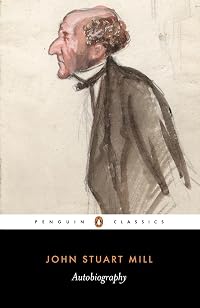




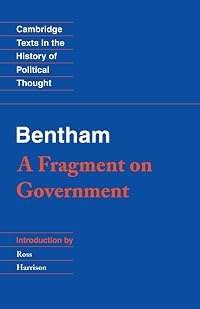










Member Reviews
Sections from Bentham's Principles of Morals and Legislation and Mill's On Liberty, and Utilitarianism.
Ratings
Members
- Recently Added By
Author Information

91+ Works 1,548 Members
Jeremy Bentham was born in London, on February 15, 1748, the son of an attorney. He was admitted to Queen's College, Oxford, at age 12 and graduated in 1763. He had his master's degree by 1766 and passed the bar exam in 1769. An English reformer and political philosopher, Bentham spent his life supporting countless social and political reform show more measures and trying as well to create a science of human behavior. He advocated a utopian welfare state and designed model cities, prisons, schools, and so on, to achieve that goal. He defined his goal as the objective study and measurement of passions and feelings, pleasures and pains, will and action. The principle of "the greatest happiness of the greatest number," set forth in his Introduction to the Principles of Morals and Legislation, governed all of his schemes for the improvement of society, and the philosophy he devised, called utilitarianism, set a model for all subsequent reforms based on scientific principles. Bentham also spoke about complete equality between the sexes, law reform, separation of church and state, the abolition of slavery, and animal rights. Bentham died on June 6, 1832, at the age of 84 at his residence in Queen Square Place in Westminster, London. He had continued to write up to a month before his death, and had made careful preparations for the dissection of his body after death and its preservation as an auto-icon. (Bowker Author Biography) show less

298+ Works 19,715 Members
John Stuart Mill, Classical economist, was born in 1806. His father was the Ricardian economist, James Mill. John Stuart Mill's writings on economics and philosophy were prodigious. His "Principles of Political Economy, With Some of Their Applications to Social Philosophy," published in 1848, was the leading economics textbook of the show more English-speaking world during the second half of the 19th century. Some of Mill's other works include "Considerations on Representative Government," "Auguste Comte and Positivism," "The Subjection of Women," and "Three Essays on Religion." John Mill died in 1873. (Bowker Author Biography) show less
Work Relationships
Common Knowledge
- Alternate titles
- Principles of morals and legislation; Utilitarianism; On liberty
Classifications
- Genres
- Philosophy, Nonfiction, Politics and Government, General Nonfiction
- DDC/MDS
- 144.6 — Philosophy & psychology Philosophical schools of thought Humanism and related systems and doctrines Utilitarianism
- LCC
- B1571 .U8 — Philosophy, Psychology and Religion Philosophy (General) By period Modern By region or country
Statistics
- Members
- 50
- Popularity
- 604,183
- Reviews
- 2
- Rating
- (4.67)
- Languages
- English
- Media
- Paper, Ebook
- ISBNs
- 2
- ASINs
- 2