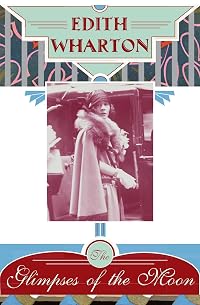
The Glimpses of the Moon
by Edith Wharton
On This Page
Description
From the author that penned beloved literary classics such as The Age of Innocence and The House of Mirth comes The Glimpses of the Moon, the surprisingly funny tale of an unlikely romance that arises between newlyweds on an extended honeymoon who have married for convenience, rather than for love..
Tags
Recommendations


























Member Reviews
7.5/10 🌟
I begin my re-reading of Wharton mid-way through her career with this novel. While it provided a pleasant dalliance with post-WWI society, it shows a few signs of moral tiredness, as if Wharton couldn't quite get up steam on this one.
Both Nick Lansing and Susy Branch, the main players, are more than a little world weary, and it shows in their actions: deciding too swiftly on marriage and even more swiftly, almost whimsically, on divorce. Why they are married is a mystery, as it hardly begins as one of the great romances; why they decide to divorce is equally a mystery, given the tangential evidence of "moral failure". Nick is more than a bit of an ass, and he rides his horse's ass very high, giving Susy barely a chance to show more explain her actions. They drift apart, and back into their meaningless existences, playing on the edges of a society for which they both have contempt, but which they need to survive.
[It's a very Gatsby-esque setting and sentiment; if it were the work of the same writer, one could almost call this a draft copy for Gatsby. There is a disturbing prescience in the appearance of young Clarissa, an 8 year old daughter of one of the society women, who announces she much prefers jewellery to books, when offered a choice. It immediately brought Daisy Buchanan to mind: a perfect portrait of how the Clarissas of the world grow up to be the Daisys, setting their eyes vacuously on bright flashy things.]
Wharton pulls the story along at a good pace with her skillful prose, but it lacked a bit of heart, somewhere in the centre. An enjoyable, entertaining read nonetheless. show less
I begin my re-reading of Wharton mid-way through her career with this novel. While it provided a pleasant dalliance with post-WWI society, it shows a few signs of moral tiredness, as if Wharton couldn't quite get up steam on this one.
Both Nick Lansing and Susy Branch, the main players, are more than a little world weary, and it shows in their actions: deciding too swiftly on marriage and even more swiftly, almost whimsically, on divorce. Why they are married is a mystery, as it hardly begins as one of the great romances; why they decide to divorce is equally a mystery, given the tangential evidence of "moral failure". Nick is more than a bit of an ass, and he rides his horse's ass very high, giving Susy barely a chance to show more explain her actions. They drift apart, and back into their meaningless existences, playing on the edges of a society for which they both have contempt, but which they need to survive.
[It's a very Gatsby-esque setting and sentiment; if it were the work of the same writer, one could almost call this a draft copy for Gatsby. There is a disturbing prescience in the appearance of young Clarissa, an 8 year old daughter of one of the society women, who announces she much prefers jewellery to books, when offered a choice. It immediately brought Daisy Buchanan to mind: a perfect portrait of how the Clarissas of the world grow up to be the Daisys, setting their eyes vacuously on bright flashy things.]
Wharton pulls the story along at a good pace with her skillful prose, but it lacked a bit of heart, somewhere in the centre. An enjoyable, entertaining read nonetheless. show less
It’s only a paper moon
Hanging over a cardboard sea,
But it wouldn’t be make believe
If you believed in me.
It’s a Barnum and Bailey world
Just as phony as it can be
But it wouldn’t be make believe
If you believed in me.
**************************
Say you don’t need no diamond rings
And I’ll be satisfied,
Tell me that you want the kind of things
That money just can’t buy.
I don’t care too much for money, money can’t buy me love.
This is the story of Suzy and Nick Lansing, two newly-weds who hang with the rich and famous, but have no money of their own. Their attempts to live in this world of pseudo-friendship and obligation takes its toll on them and their marriage, and the line that separates morality from indebtedness wears them show more thin.
I spent much of this novel thinking of Scarlett and Rhett, when they are both thinking they would like to make it up to one another but neither is willing to make the first move. I anguished over the pride and misunderstanding that seems to push these characters apart at every turn, and the influences of the so-called friends who are too shallow or self-interested to consider what they might be doing to a marriage of love.
She felt as though she were on the point of losing some new-found treasure, a treasure precious only to herself, but beside which all he offered her was nothing, the triumph of her wounded pride nothing, the security of her future nothing.
And, what we see here, among the fakes and pretenders, is real love. The kind a smart person would perish for; a meeting of the souls and the minds.
It was odd-once upon a time she had known exactly what to say to the man of the moment, whoever he was, and whatever kind of talk he required...But since then she had spoken the language of real love, looked with its eyes, embraced with its hands; and now the other trumpery art had failed her, and she was conscious of bungling and groping like a beginner…
I adored this lesser known but brilliant story by one of my favorite authors, Edith Wharton. Wharton is always able to cut to the essence of what ails the monied society, but she also knows what it is to be on the fringe of it and to want desperately to be included. All that glitters is not gold, but when you are standing at a certain distance, it might seem to be.
This is a short book, more a novelette than a novel, so there is no excuse--Read It! show less
Hanging over a cardboard sea,
But it wouldn’t be make believe
If you believed in me.
It’s a Barnum and Bailey world
Just as phony as it can be
But it wouldn’t be make believe
If you believed in me.
**************************
Say you don’t need no diamond rings
And I’ll be satisfied,
Tell me that you want the kind of things
That money just can’t buy.
I don’t care too much for money, money can’t buy me love.
This is the story of Suzy and Nick Lansing, two newly-weds who hang with the rich and famous, but have no money of their own. Their attempts to live in this world of pseudo-friendship and obligation takes its toll on them and their marriage, and the line that separates morality from indebtedness wears them show more thin.
I spent much of this novel thinking of Scarlett and Rhett, when they are both thinking they would like to make it up to one another but neither is willing to make the first move. I anguished over the pride and misunderstanding that seems to push these characters apart at every turn, and the influences of the so-called friends who are too shallow or self-interested to consider what they might be doing to a marriage of love.
She felt as though she were on the point of losing some new-found treasure, a treasure precious only to herself, but beside which all he offered her was nothing, the triumph of her wounded pride nothing, the security of her future nothing.
And, what we see here, among the fakes and pretenders, is real love. The kind a smart person would perish for; a meeting of the souls and the minds.
It was odd-once upon a time she had known exactly what to say to the man of the moment, whoever he was, and whatever kind of talk he required...But since then she had spoken the language of real love, looked with its eyes, embraced with its hands; and now the other trumpery art had failed her, and she was conscious of bungling and groping like a beginner…
I adored this lesser known but brilliant story by one of my favorite authors, Edith Wharton. Wharton is always able to cut to the essence of what ails the monied society, but she also knows what it is to be on the fringe of it and to want desperately to be included. All that glitters is not gold, but when you are standing at a certain distance, it might seem to be.
This is a short book, more a novelette than a novel, so there is no excuse--Read It! show less
Edith Wharton is known for her frank portrayal of New York society, often exposing their pettiness and hypocrisy. The Glimpses of the Moon is no exception. Nick and Susy are recently married, and while they care for one another it is primarily a marriage of convenience. Neither come from wealth, but both have recognized they could probably live for a year or more off of the wedding checks and invitations from their wealthy social circle. The novel opens during their honeymoon at an Italian villa belonging to a friend; after a few weeks they move on to another friend's property in Venice. Susy quickly finds that some of her arrangements come with a cost -- like looking after a child -- and one matter in particular comes between she and show more Nick. The rest of their story plays out as a classic case of two people who are completely unable to communicate openly with one another, and along the way they learn some valuable truths about the real value of material possessions. show less
29. The Glimpses of the Moon by Edith Wharton
OPD: 1922
format: ~300-page Kindle public domain copy
acquired: March read: Apr 11-30 time reading: 9:25, 1.9 mpp
rating: 4½
genre/style: Classic fiction theme: Wharton
locations: Lake Como, Venice, Genoa, Paris, London
about the author: 1862-1937. Born Edith Newbold Jones on West 23rd Street, New York City. Relocated permanently to France after 1911.
After a number of novels where marriage is socially sacred, and divorce a tool used only by the most immorally selfish, Wharton experiments with divorce as a game. Nick and Susy, each living parasitically off the leisure class community, having been accepted, supported and used socially, get married with no financial prospects and an agreement that show more should an opportunity arise, they will support each other towards it. It's temporary marriage by plan, and Susy has managed to work out a year of living off gifts and charity, all with strings.
This is a silly setup that should not work. But it works delightfully. Wharton seems to have been enjoying herself and she makes it very easy for her readers to embrace that. Although, knowing Wharton, we can only brace for catastrophe. Our homeless Americans never leave Europe, their break predetermined, shatters. And what next? The selfish, frivolous, socially exquisite, dorky, intellectually curious wealthy are all presented in all their flaws and elegance, exposed and accepted.
Wharton-lite doesn't mean her writing skills are compromised. This is a fine work of literature and a fun, rewarding read, even if she fails to dunk us, as expected, in deepest discomfort.
2023
https://www.librarything.com/topic/348551#8136388 show less
OPD: 1922
format: ~300-page Kindle public domain copy
acquired: March read: Apr 11-30 time reading: 9:25, 1.9 mpp
rating: 4½
genre/style: Classic fiction theme: Wharton
locations: Lake Como, Venice, Genoa, Paris, London
about the author: 1862-1937. Born Edith Newbold Jones on West 23rd Street, New York City. Relocated permanently to France after 1911.
After a number of novels where marriage is socially sacred, and divorce a tool used only by the most immorally selfish, Wharton experiments with divorce as a game. Nick and Susy, each living parasitically off the leisure class community, having been accepted, supported and used socially, get married with no financial prospects and an agreement that show more should an opportunity arise, they will support each other towards it. It's temporary marriage by plan, and Susy has managed to work out a year of living off gifts and charity, all with strings.
This is a silly setup that should not work. But it works delightfully. Wharton seems to have been enjoying herself and she makes it very easy for her readers to embrace that. Although, knowing Wharton, we can only brace for catastrophe. Our homeless Americans never leave Europe, their break predetermined, shatters. And what next? The selfish, frivolous, socially exquisite, dorky, intellectually curious wealthy are all presented in all their flaws and elegance, exposed and accepted.
Wharton-lite doesn't mean her writing skills are compromised. This is a fine work of literature and a fun, rewarding read, even if she fails to dunk us, as expected, in deepest discomfort.
2023
https://www.librarything.com/topic/348551#8136388 show less
Glimpses of the Moon by Edith Wharton is set in the 1920s and follows the romantic misadventures of Susie and Nick Lansing. They have been socializing with the wealthy even though each is actually quite poor. Relying on their good looks and clever conversation, they accept the patronage and gifts that are directed their way. Although each had planned on snagging themselves a rich spouse, they fall in love and decide to wed. Susie comes up with a plan whereby they will enjoy their honeymoon year together, accepting help from their rich and generous friends, but at any time if one of them finds a rich partner, they will part and divorce with no consequences.
I thoroughly enjoyed this book. The story-line reminded me of some of the show more screwball comedies that were made in Hollywood during the 1930s and I couldn’t help but picture Carole Lombard and Cary Grant in the roles of Susie and Nick. Although this could be looked at as a rather cliched love-or-money story, Edith Wharton elevates the book to another level with her beautiful writing and her clever satirical digs at the wealthy. Of course as in all screwball romances, there are misunderstandings, jealousy and troubled consciences that have our young couple losing their trust in one another, separating and perhaps exploring other options. Nick can be a little priggish at times and Susie is a definite schemer, but I grew attached to this couple and wanted to see them work it out.
Glimpses of the Moon shows the lighter side of Edith Wharton, this romantic romp through the world of 1920s privilege, is a book that is not meant to be taken seriously, it is sheer entertainment. It’s romantic settings such as Lake Como, Venice and Paris only add to it’s captivating magic. This book surprised, amused and entertained me. show less
I thoroughly enjoyed this book. The story-line reminded me of some of the show more screwball comedies that were made in Hollywood during the 1930s and I couldn’t help but picture Carole Lombard and Cary Grant in the roles of Susie and Nick. Although this could be looked at as a rather cliched love-or-money story, Edith Wharton elevates the book to another level with her beautiful writing and her clever satirical digs at the wealthy. Of course as in all screwball romances, there are misunderstandings, jealousy and troubled consciences that have our young couple losing their trust in one another, separating and perhaps exploring other options. Nick can be a little priggish at times and Susie is a definite schemer, but I grew attached to this couple and wanted to see them work it out.
Glimpses of the Moon shows the lighter side of Edith Wharton, this romantic romp through the world of 1920s privilege, is a book that is not meant to be taken seriously, it is sheer entertainment. It’s romantic settings such as Lake Como, Venice and Paris only add to it’s captivating magic. This book surprised, amused and entertained me. show less
Wharton with a happy ending for a change. Lacking fortunes, Nick and Susy marry for expediency since as newlyweds they can very easily sponge off their rich friends for at least a year, during which time they can each look for better prospects. A slight problem: I really did not buy this as a "business arrangement", since it's pretty clear Nick and Susy love each other. Also, she is the one driving the bus, and he is mostly along for the ride. As a result, Susy understand all the rules of the game. They are using their benefactors, sure, but this crowd with its very flexible morality, is also using them. Nick is far more scrupulous than Susy and once he discovers her role in some of the intrigue, he leaves her. At first it seems like he show more meant only to get away for a short while to think things over, but somehow he never goes back and the once-imaginary better prospects enter the picture and start complicating things further. Wharton had me totally invested in whether or not these two would get back together, and she really handles Susy's unlikely character development so skillfully that I bought it completely. show less
Published in 1922, this novel centers on the relationship between Susy Branch and Nick Lansing, two socially ambitious Americans, who marry for convenience, agreeing to live off the largesse of their friends. They embark on what they expect to be a year-long honeymoon, traveling to Italy and France, to stay at their wealthy friends’ properties. When Nick has a crisis of conscience, it leads the couple to quarrel. The storyline follows Susy and Nick as they grapple with their desire for luxury and a growing awareness of its cost to their self-respect.
It is written with empathy for its flawed characters. The tone shifts from light-hearted and humorous in its early chapters to more introspective as the characters’ moral dilemmas show more become more prominent. The novel suggests that true fulfillment comes from authenticity rather than external validation. I tend to avoid romances, so I was surprised to enjoy it as much as I did. Perhaps I should call it a love story than a romance since the characters spend much of the book apart. It certainly would have been progressive for its time. show less
It is written with empathy for its flawed characters. The tone shifts from light-hearted and humorous in its early chapters to more introspective as the characters’ moral dilemmas show more become more prominent. The novel suggests that true fulfillment comes from authenticity rather than external validation. I tend to avoid romances, so I was surprised to enjoy it as much as I did. Perhaps I should call it a love story than a romance since the characters spend much of the book apart. It certainly would have been progressive for its time. show less
Members
- Recently Added By
Lists

1001 Books You Must Read Before You Die
1,448 works; 1,134 members

Novels from The Guardian's Great American Novelist Tournament
148 works; 24 members

Favourite Virago Modern Classics
183 works; 38 members

20th Century Literature
1,161 works; 54 members

Out of Copyright
244 works; 14 members
1920s
141 works; 6 members

Books Read in 2015
3,299 works; 129 members

Books Read in 2020
4,379 works; 124 members
American Lit for Eng 11 Research Project
368 works; 6 members

Shakespeare Quote Titles
112 works; 12 members

Ambleside Books
459 works; 18 members

Book wishlist
78 works; 1 member

Books Read in 2024
4,623 works; 126 members
Talk Discussions
Past Discussions
Group Read, June 2021: The Glimpses of the Moon in 1001 Books to read before you die (July 2021)
Author Information

377+ Works 63,626 Members
Edith Wharton was a woman of extreme contrasts; brought up to be a leisured aristocrat, she was also dedicated to her career as a writer. She wrote novels of manners about the old New York society from which she came, but her attitude was consistently critical. Her irony and her satiric touches, as well as her insight into human character, show more continue to appeal to readers today. As a child, Wharton found refuge from the demands of her mother's social world in her father's library and in making up stories. Her marriage at age 23 to Edward ("Teddy") Wharton seemed to confirm her place in the conventional role of wealthy society woman, but she became increasingly dissatisfied with the "mundanities" of her marriage and turned to writing, which drew her into an intellectual community and strengthened her sense of self. After publishing two collections of short stories, The Greater Inclination (1899) and Crucial Instances (1901), she wrote her first novel, The Valley of Decision (1902), a long, historical romance set in eighteenth-century Italy. Her next work, the immensely popular The House of Mirth (1905), was a scathing criticism of her own "frivolous" New York society and its capacity to destroy her heroine, the beautiful Lily Bart. As Wharton became more established as a successful writer, Teddy's mental health declined and their marriage deteriorated. In 1907 she left America altogether and settled in Paris, where she wrote some of her most memorable stories of harsh New England rural life---Ethan Frome (1911) and Summer (1917)---as well as The Reef (1912), which is set in France. All describe characters forced to make moral choices in which the rights of individuals are pitted against their responsibilities to others. She also completed her most biting satire, The Custom of the Country (1913), the story of Undine Spragg's climb, marriage by marriage, from a midwestern town to New York to a French chateau. During World War I, Wharton dedicated herself to the war effort and was honored by the French government for her work with Belgian refugees. After the war, the world Wharton had known was gone. Even her Pulitzer Prize-winning novel, The Age of Innocence (1920), a story set in old New York, could not recapture the former time. Although the new age welcomed her---Wharton was both a critical and popular success, honored by Yale University and elected to The National Institute of Arts and Letters---her later novels show her struggling to come to terms with a new era. In The Writing of Fiction (1925), Wharton acknowledged her debt to her friend Henry James, whose writings share with hers the descriptions of fine distinctions within a social class and the individual's burdens of making proper moral decisions. R.W.B. Lewis's biography of Wharton, published in 1975, along with a wealth of new biographical material, inspired an extensive reevaluation of Wharton. Feminist readings and reactions to them have focused renewed attention on her as a woman and as an artist. Although many of her books have recently been reprinted, there is still no complete collected edition of her work. (Bowker Author Biography) show less
Awards and Honors
Notable Lists
Series
Belongs to Publisher Series
Work Relationships
Common Knowledge
- Canonical title
- The Glimpses of the Moon
- Original title
- The Glimpses of the Moon
- Alternate titles*
- Gli sguardi della luna
- Original publication date
- 1922
- People/Characters
- Susy Lansing; Nick Lansing; Clarissa
- Important places*
- Lago di Como, Italia; Venezia, Veneto, Italia
- Related movies
- The Glimpses of the Moon (1923 | IMDb)
- First words
- It rose for them -- their honeymoon -- over the waters of a lake so famed as the scence of romantic raptures that they were rather proud of not having been afraid to choose it as the setting of their own.
- Last words
- (Click to show. Warning: May contain spoilers.)They leaned on the sill in the darkness, and through the clouds, from which a few drops were already falling, the moon labouring upward, swam into a space of sky, cast her troubled glory on them, and was again hidden.
- Original language
- English
*Some information comes from Common Knowledge in other languages. Click "Edit" for more information.
Classifications
Statistics
- Members
- 1,146
- Popularity
- 21,949
- Reviews
- 31
- Rating
- (3.74)
- Languages
- 6 — English, French, German, Italian, Spanish, Swedish
- Media
- Paper, Audiobook, Ebook
- ISBNs
- 119
- ASINs
- 33