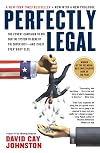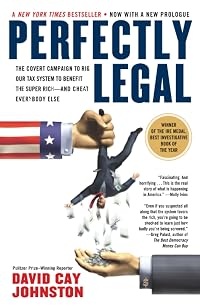
Perfectly Legal: The Covert Campaign to Rig Our Tax System to Benefit the Super Rich - and Cheat Everybody Else
by David Cay Johnston
On This Page
Description
HTML:Now updated with a new prologue!Since the mid-1970s, there has been a dramatic shift in America's socioeconomic system, one that has gone virtually unnoticed by the general public. Tax policies and their enforcement have become a disaster, and thanks to discreet lobbying by a segment of the top 1 percent, Washington is reluctant or unable to fix them. The corporate income tax, the estate tax, and the gift tax have been largely ignored by the media. But the cumulative results are show more remarkable: today someone who earns a yearly salary of $60,000 pays a larger percentage of his income in taxes than the four hundred richest Americans.
Pulitzer Prize-winning investigative reporter David Cay Johnston exposes exactly how the middle class is being squeezed to create a widening wealth gap that threatens the stability of the country. By relating the compelling tales of real people across all areas of society, he reveals the truth behind:
• "Middle class" tax cuts and exactly whom they benefit.
• How workers are being cheated out of their retirement plans while disgraced CEOs walk away with millions.
• How some corporations avoid paying any federal income tax.
• How a law meant to prevent cheating by the top 2 percent of Americans no longer affects most of them, but has morphed into a stealth tax on single mothers making just $28,000.
• Why the working poor are seven times more likely to be audited by the IRS than everyone else.
• How the IRS became so weak that even when it was handed complete banking records detailing massive cheating by 1,600 people, it prosecuted only 4 percent of them.
Johnston has been breaking pieces of this story on the front page of The New York Times for seven years. With Perfectly Legal, he puts the whole shocking narrative together in a way that will stir up media attention and make readers angry about the state of our country.
. Nonfiction. Politics. Business. show less
Tags
Recommendations
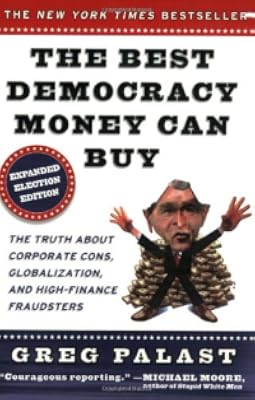
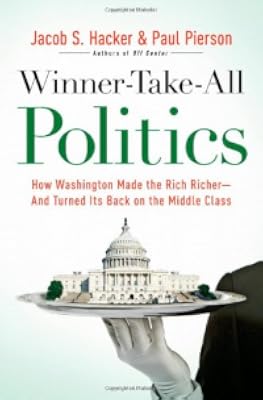
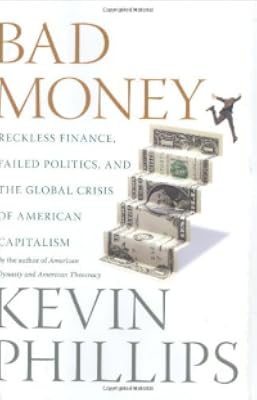
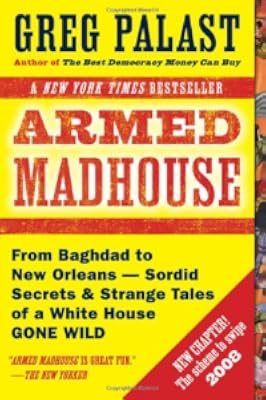






Member Recommendations
Member Reviews
After reading Johnston's Free Lunch, I picked up a copy of this book and was again impressed with his research. The book details a number of ways that our government, under the influence of both Democrats and Republicans, has made life easier on the super-rich and tougher on everyone else. He details a loss of many billions of dollars of revenue, all belonging to the already-wealthy, leaving the rest of us to take up the burdens of keeping the government running. The techniques range from tax loopholes to interference with the IRS. Most of the politicians touting "fiscal conservatism" need to be turned over a patriotic knee and soundly spanked with a copy of this book.
After reading Johnston’s subsequent Free Lunch, I assumed I’d love this book. Here Johnston condenses his experience as an NYT tax journalist in order to pinpoint the big issues – circa 2003 – that enable the top percent to pay less tax than their minimum wage and middling counterparts. As startling as this story is, I found the authors investigations of the innumerable devices, shelters, and strategies granted by Congress, and the IRS, and exploited by clever lawyers to be, well, taxing. The breakdown of corporate subsidies in Free Lunch was far more accessible and interesting. Here there’s necessarily too many numbers, statistics and the like that tends to harsh one’s buzz. Important information, no doubt, but none of it show more as engaging as the anecdote told by my ex-hockey player friend Sara that when a tooth gets knocked out, dip it in milk and reinsert within two hours – and it’ll take! On top of this there’s the occasional overlapping of different studies that, while telling the same overall story statistically, the author picks and chooses random particulars from to shore up different arguments. It made my head spin like an unfortunate Evan Williams incident a couple decades back.
Part of my ambivalence may revolve around the fact that this was written six or seven years ago and I’m not sure how certain forecasts (many up to 2010) have played out. What is the status of the Alternative Minimum Tax that’s supposed to negatively affect most of us by next year? I dunno if it’s even still on the books. Probably is. I should do further research, but as this is my second tax book of late, I don’t think so. And what is this pension thing that the Government supposedly regulates and “requires”? Who gets those?!? I thought that was just for municipal employees and 50s sitcom dads.
Most conspicuously, of course, is that this was written before our latest recession. He writes from a vantage point after the 2000-2001 downturn. I personally felt that one to be a huge pain in the ass, but everyone within our current context seems to have forgotten it existed. And indeed the issues around the dot.com bust do seem almost quaint in comparison to our “Great Depression 2009.” Somehow the government now has an endless supply of (taxpayer) billions to pour into a domestic auto industry that, if I recall correctly, has been an indisputable embarrassment my whole lifetime – and I’m no spring chicken. No doubt our children who won’t be driving a GM product and certainly won’t be working in their long-shuttered factories will be paying for this questionable subsidy. Or the Feds can just pilfer the remainder of our Social Security to cover it (perhaps the most alarming fact covered by this book is how taxpayers between the early 70s and 90s paid such a high rate of SS taxes that the system was supposed be easily supported, basically forever…had our elected officials not stolen almost all of the funds for other purposes).
If there’s one important point to take away from Johnston’s narrative is that our pent-up angst towards the IRS is perhaps a bit misguided. Congress (and our executive leaders) are the main villains here and the IRS – not 100% blameless of course - is mostly just operating with the crappy hand dealt to them from the Capitol. Startling cuts in enforcement and funding, coupled with performance quotas led to that bizarre situation where the lowest level of taxpayers get audited (and penalized) at a significantly higher rate than big corporations and billionaires. Johnston’s exposé is yet another example of how the US appears to be on the express train to becoming the butt of Mexican and Kazakhstanian jokes. show less
Part of my ambivalence may revolve around the fact that this was written six or seven years ago and I’m not sure how certain forecasts (many up to 2010) have played out. What is the status of the Alternative Minimum Tax that’s supposed to negatively affect most of us by next year? I dunno if it’s even still on the books. Probably is. I should do further research, but as this is my second tax book of late, I don’t think so. And what is this pension thing that the Government supposedly regulates and “requires”? Who gets those?!? I thought that was just for municipal employees and 50s sitcom dads.
Most conspicuously, of course, is that this was written before our latest recession. He writes from a vantage point after the 2000-2001 downturn. I personally felt that one to be a huge pain in the ass, but everyone within our current context seems to have forgotten it existed. And indeed the issues around the dot.com bust do seem almost quaint in comparison to our “Great Depression 2009.” Somehow the government now has an endless supply of (taxpayer) billions to pour into a domestic auto industry that, if I recall correctly, has been an indisputable embarrassment my whole lifetime – and I’m no spring chicken. No doubt our children who won’t be driving a GM product and certainly won’t be working in their long-shuttered factories will be paying for this questionable subsidy. Or the Feds can just pilfer the remainder of our Social Security to cover it (perhaps the most alarming fact covered by this book is how taxpayers between the early 70s and 90s paid such a high rate of SS taxes that the system was supposed be easily supported, basically forever…had our elected officials not stolen almost all of the funds for other purposes).
If there’s one important point to take away from Johnston’s narrative is that our pent-up angst towards the IRS is perhaps a bit misguided. Congress (and our executive leaders) are the main villains here and the IRS – not 100% blameless of course - is mostly just operating with the crappy hand dealt to them from the Capitol. Startling cuts in enforcement and funding, coupled with performance quotas led to that bizarre situation where the lowest level of taxpayers get audited (and penalized) at a significantly higher rate than big corporations and billionaires. Johnston’s exposé is yet another example of how the US appears to be on the express train to becoming the butt of Mexican and Kazakhstanian jokes. show less
A very readable and understandable description of how our tax policy works.
The Wikipedia article about the book:
Perfectly Legal: The Covert Campaign to Rig Our Tax System to Benefit the Super-Rich–and Cheat Everybody Else (ISBN 1-59184-019-8) is a book by Pulitzer Prize-winning New York Times reporter David Cay Johnston that argues that the American tax system has been tilted to supplement the incomes and extravagant lifestyles of the wealthy (which he dubs the "Political Donor Class"). According to Johnston, while politicians can claim that money does not buy influence, they cannot deny that money buys access.
Johnston argues the tax system squeezes the middle class, which creates a widening income gap that threatens the stability of the country. Workers are being cheated out of their retirement plans while show more failed CEOs walk away with hundreds of millions (the "golden parachute"). Some corporations avoid paying any federal income tax at all. The difference in taxable income (here zero) from GAAP income reported to financial analysts and SEC statements to investors has been called the book-tax gap in the tax policy literature by scholars, the Joint Committee on Taxation and the IRS. Corporate CEOs take vacations using corporate jets, while paying less money than ordinary people pay for a middle seat in coach seating and then sticking others with most of the bill. The working poor are seven times more likely to be audited by the IRS than anyone else. The book claims the IRS has become so weak that even when it was handed complete banking records detailing massive tax fraud by 1,600 people, only four percent were prosecuted. show less
Perfectly Legal: The Covert Campaign to Rig Our Tax System to Benefit the Super-Rich–and Cheat Everybody Else (ISBN 1-59184-019-8) is a book by Pulitzer Prize-winning New York Times reporter David Cay Johnston that argues that the American tax system has been tilted to supplement the incomes and extravagant lifestyles of the wealthy (which he dubs the "Political Donor Class"). According to Johnston, while politicians can claim that money does not buy influence, they cannot deny that money buys access.
Johnston argues the tax system squeezes the middle class, which creates a widening income gap that threatens the stability of the country. Workers are being cheated out of their retirement plans while show more failed CEOs walk away with hundreds of millions (the "golden parachute"). Some corporations avoid paying any federal income tax at all. The difference in taxable income (here zero) from GAAP income reported to financial analysts and SEC statements to investors has been called the book-tax gap in the tax policy literature by scholars, the Joint Committee on Taxation and the IRS. Corporate CEOs take vacations using corporate jets, while paying less money than ordinary people pay for a middle seat in coach seating and then sticking others with most of the bill. The working poor are seven times more likely to be audited by the IRS than anyone else. The book claims the IRS has become so weak that even when it was handed complete banking records detailing massive tax fraud by 1,600 people, only four percent were prosecuted. show less
Ratings
Members
- Recently Added By
Author Information

7 Works 1,624 Members
David Cay Johnston was born in San Francisco, California on December 24, 1948. He received his education at San Francisco State University, Michigan State University and the University of Chicago. He is a columnist for The Daily Beast, Investopedia, USA Today, NationalMemo.com, Tax Analysts and the Rochester Democrat & Chronicle. Johnston is also show more Distinguished Visiting Lecturer, Syracuse University College of Law and Whitman School of Management - The property, tax and regulatory law of the ancient world. David is the Past President, Investigative Reporters & Editors (IRE) and Board President, InvestigativePost.com Buffalo, NY. David Cay Johnston is the author of New York Times bestseller The Making of Donald Trump. His other titles include It's Even Worse Than You Think: What the Trump Administration Is Doing to America (2018); The Fine Print: How Big Companies Use "Plain English" to Rob You Blind (2012); Free Lunch: How the Wealthiest Americans Enrich Themselves at Government Expense (and Stick You With the Bill), a 2008 New York Times and Wall Street Journal best seller; Perfectly Legal: The Covert Campaign to Rig Our Tax System to Benefit the Super Rich -- and Cheat Everybody Else which was the 2004 Investigative Book of the Year award winner and a New York Times and Wall Street Journal best seller; Temples of Chance: How America Inc. Bought Out Murder Inc. To Win Control of the Casino Business (1992). David Cay Johnston is the Recipient of the Pulitzer Prize, an IRE Medal and the George Polk Award. (Bowker Author Biography) show less
Awards and Honors
Awards
Distinctions
Common Knowledge
- People/Characters
- Charles O. Rossotti; Senator William Roth; Frank Luntz; Paul H. O'Neill; Ron Paul; Charles Rangel (show all 14); Ronald Reagan; Bill Gates; Bill Gates, Sr.; Warren Buffett; George W. Bush; Bill Clinton; Jonathan Blattmachr; Jerry Curnutt
- Important places
- Caribbean Region; Cayman Islands; USA
Classifications
- Genres
- Economics, Nonfiction, Politics and Government, General Nonfiction, Business
- DDC/MDS
- 336.200973 — Society, government, & culture Economics Economic Development - Taxes Taxation General topics of taxes Standard subdivisions Biography; History By Place North America United States
- LCC
- HJ2362 .J64 — Social sciences Public finance Public finance Revenue. Taxation. Internal revenue By region or country
- BISAC
Statistics
- Members
- 475
- Popularity
- 64,376
- Reviews
- 4
- Rating
- (4.06)
- Languages
- English, Korean
- Media
- Paper, Ebook
- ISBNs
- 5
- ASINs
- 4