On This Page
Description
Humanity pushed its way to the stars—and encountered the Gbaba, a ruthless alien race that nearly wiped us out. Earth and her colonies are now smoldering ruins, and the few survivors have fled to distant, Earth-like Safehold, to try to rebuild. But the Gbaba can detect the emissions of an industrial civilization, so the human rulers of Safehold have taken extraordinary measures: with mind control and hidden high technology, they've built a religion in which every Safeholdian believes, a show more religion designed to keep Safehold society medieval forever.800 years pass. In a hidden chamber on Safehold, an android from the far human past awakens. This android, Merlin, emerges into Safeholdian society to begin the process of provoking technological progress, which the Church of God Awaiting has worked for centuries to prevent. To conceal his formidable powers he finds a base of operations in Charis, a mid-sized kingdom with a talent for naval warfare, where he plans to make the acquaintance of King Haarahld and Crown Prince Cayleb, and maybe, just maybe, kick off a new era of invention. Which is bound to draw the attention of the Church...and, inevitably, lead to war.
It's going to be a long, long process. And David Weber's Off Armageddon Reef is going to be the can't-miss Sci-Fi epic of the decade.
. show less
Tags
Recommendations


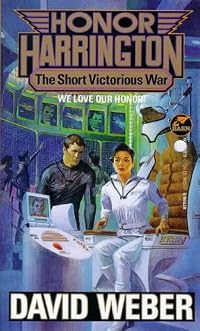
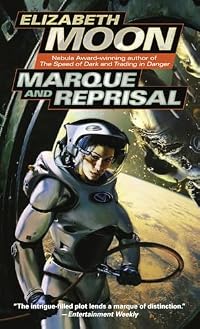
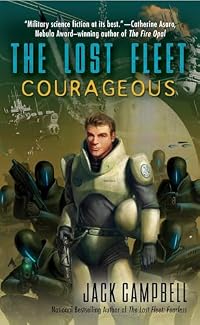
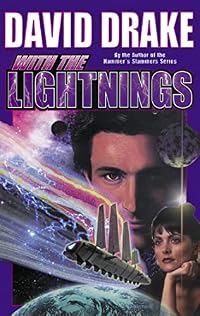





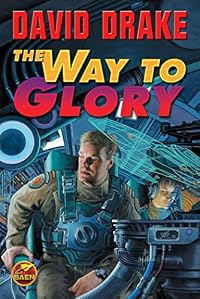
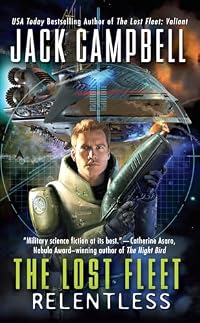
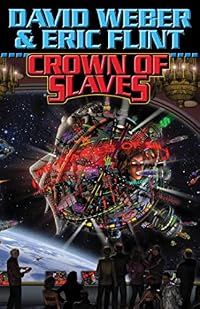
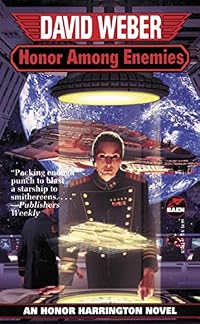

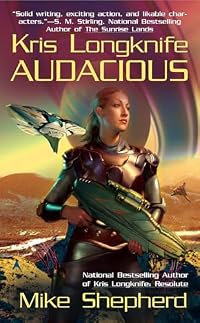
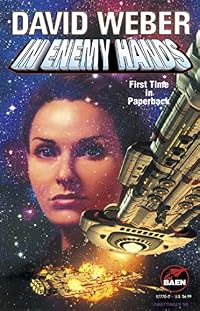

Member Recommendations
1633 by Eric Flint
Dragget These two are similar in a several ways:
1) Freedom of conscience versus religious intolerance.
2) Advanced technology introduced into a medieval/renaissance society
3) Military and political conflicts are the main focus of both works.
3) A large cast of characters with viewpoints alternating among them.

theapparatus When I was reading this book, I kept thinking how much it was like the compute game Sid Meier's Alpha Centauri.
02
bunnygirl another story of human/alien war and confrontation, perhaps due to computers...or not?

humouress Both books deal with a human colonised planet forced to go back to pre-industrial levels rediscovering technology of their space-going forebearers
Member Reviews
Predictable and long-winded, to an extent, but still interesting, moving and thought-provoking in parts. Humanity has been virtually wiped out by a relentless alien race, who have detected and destroyed every offshoot colony by their emissions. So a new colony is established, complete with a new religion, the tenets of which strictly prohibit any form of technological innovation. The founders of the colony who disagreed with this approach have an ace up their sleeves, but what can Merlin, our protagonist, do in the face of a society built from the ground up on these beliefs?
This certainly wouldn't appeal to everyone, but I liked thinking about the questions that it raised for me. How do you fight a religion that has been developed only show more as a means of social control? To what extent can these deeply held beliefs be shifted, and with what consequences? How can you free people who don’t realise that they’re in chains?
I'm intrigued enough to continue the series ... show less
This certainly wouldn't appeal to everyone, but I liked thinking about the questions that it raised for me. How do you fight a religion that has been developed only show more as a means of social control? To what extent can these deeply held beliefs be shifted, and with what consequences? How can you free people who don’t realise that they’re in chains?
I'm intrigued enough to continue the series ... show less
World building, for both Science Fiction and Fantasy, take a lot of work to develop the story to the point where the action can move without having to explain a lot of what one wants to have happen. David Weber has shown a knack for building amazing worlds with Honor Harrington, The Oathriders, and the Dahak series. This new series proves no difference than those listed. The world is detailed, and extensively designed by a man who has something to say about the Church and its strangle hold on political practices. This is a series about making a statement.
Of note, Mr. Weber does a masterful job with naval battle description and vivid detail to put you on the bridge of the ship in question. Doesn't matter if the vessel is naval in the show more nautical sense or the space faring sense. The important part of these descriptions is the ships, their distance, and their tactics. When the battles get down to actual hand to hand connections, they do have a little difficulty.
I thoroughly enjoyed this book, though admit it took time to spin up its drive and get going to decent action. Now that the world is built, the rest of the series should flow much smoother. show less
Of note, Mr. Weber does a masterful job with naval battle description and vivid detail to put you on the bridge of the ship in question. Doesn't matter if the vessel is naval in the show more nautical sense or the space faring sense. The important part of these descriptions is the ships, their distance, and their tactics. When the battles get down to actual hand to hand connections, they do have a little difficulty.
I thoroughly enjoyed this book, though admit it took time to spin up its drive and get going to decent action. Now that the world is built, the rest of the series should flow much smoother. show less
This was good, although I kind of wish he wasn't starting on Yet Another New Series right now. In some ways it's typical Weber: lots of political/diplomatic maneuvering, leading up to a few climactic battles. Here, though, those battles are fought with sailing ships and cannons rather than starship and nukes. It's very definitely science fiction, but most of the book resembles a medievaloid fantasy (okay, 18th century). My biggest gripe is with the names, which are all subtly and systematically mutated from modern English. There are excellent world-building reasons for this (although I think some of them should have been based on Chinese etc.), but it drove me crazy. They were just familiar enough to not trigger my weird-names filter*, show more but just different enough to not really be familiar. I kept tripping over them in the beginning. I eventually got used to them, sort of, but I still kept slowing down when I hit a new one, to figure out the origin.
*When reading SF/fantasy, I just let the unusual names flow over me, not worrying too much about pronunciation, just memorizing the shapes enough to keep the characters separate. It usually works very well. show less
*When reading SF/fantasy, I just let the unusual names flow over me, not worrying too much about pronunciation, just memorizing the shapes enough to keep the characters separate. It usually works very well. show less
I enjoyed this book a lot more when it was called Heirs of Empire.
The premise is pretty cool. At some point in the future, interstellar humanity encounters a genocidal alien empire. Overmatched by sheer numbers, they come up with a desperate plan to plant a secret colony, hinder its technological development until the threat has passed, and then tech back up and kick alien ass. The plan gets highjacked by the high command, who brainwash the colonists to regard them as divine entities and set up an even more brutally stultifying theocracy. Internecine fighting wipes out these 'archangels', and 900 years later a contingency plan of an AI based off a young officer wakes up in a robot body with instructions to kick off the scientific show more revolution.
That's the first three chapters, and then the rest is a slog though Weber's usual themes. The superiority of enlightened despotism; using 18th century military technology to beat up more primitive weapons; adoration of Nelsonian England; multiple points of view, including the antagonists. The story pits Merlin and his chosen maritime power of the Kingdom of Charis as the seed for the industrial revolution. We get descriptions of ships of the line, intrigues, swordfights, etc, as Merlin and Charis build a navy that outmatches anything on the planet. Galleons armed with carronades and backed up by satellite recon and bugs in the chambers of the holy alliance against them give Merlin's forces an incredible advantage, and they win a lopsided victory that took the Honorverse five books to settle into. The king is dead, but his sacrifice creates a noble example against the harsh repression of the anti-innovation Church.
This book basically mashes up a bunch of Weber's previous works, and it's overlong and melodramatic to boot. I got this book for free, and I still feel like I overpaid. The only reason for two stars is that Weber is still a decent writer on a sentence to sentence level, and hey, you didn't expect to do much thinking. I'll be passing on the rest of the Safehold series. show less
The premise is pretty cool. At some point in the future, interstellar humanity encounters a genocidal alien empire. Overmatched by sheer numbers, they come up with a desperate plan to plant a secret colony, hinder its technological development until the threat has passed, and then tech back up and kick alien ass. The plan gets highjacked by the high command, who brainwash the colonists to regard them as divine entities and set up an even more brutally stultifying theocracy. Internecine fighting wipes out these 'archangels', and 900 years later a contingency plan of an AI based off a young officer wakes up in a robot body with instructions to kick off the scientific show more revolution.
That's the first three chapters, and then the rest is a slog though Weber's usual themes. The superiority of enlightened despotism; using 18th century military technology to beat up more primitive weapons; adoration of Nelsonian England; multiple points of view, including the antagonists. The story pits Merlin and his chosen maritime power of the Kingdom of Charis as the seed for the industrial revolution. We get descriptions of ships of the line, intrigues, swordfights, etc, as Merlin and Charis build a navy that outmatches anything on the planet. Galleons armed with carronades and backed up by satellite recon and bugs in the chambers of the holy alliance against them give Merlin's forces an incredible advantage, and they win a lopsided victory that took the Honorverse five books to settle into. The king is dead, but his sacrifice creates a noble example against the harsh repression of the anti-innovation Church.
This book basically mashes up a bunch of Weber's previous works, and it's overlong and melodramatic to boot. I got this book for free, and I still feel like I overpaid. The only reason for two stars is that Weber is still a decent writer on a sentence to sentence level, and hey, you didn't expect to do much thinking. I'll be passing on the rest of the Safehold series. show less
Excellent science fiction...fine example of SF's ability to ask what if. In this case, what if a space-faring humanity meets an alien race that destroys any other civilization they find? Humanity is almost extinct, but manages to hide one colony world. To enable Safehold's survival, the colonists have implanted memories that their world was created by God and his Archangels. Holy Writ sets out technologies that are proscribed, and Holy Mother Church has the Inquisition as its enforcers.
The side opposed to this invented religion were all killed - except one human-like robot that survives with the memories of Nimue, and is awakened 900 years after the founding of Safehold. Nimue transforms into Merlin, and Merlin uses his technology in show more hidden ways to help the kingdom of Charis, a place where human innovation is beginning to recover.
Weber has done a really marvelous job of world building. Given the premise, the world he describes is believable, and it is believable that these characters would have come from this culture. The good guys are extraordinary and use both their reason and their heart. They are believable, however, in that in any world there will be some people who are superlative. The bad guys are, more than anything, the result of one institution having far too much power and having been corrupted thereby. And by their lights they are acting to preserve the culture handed to them by God.
It is a pleasure to read a work so well-crafted and imagined. I have the next book in hand and anticipate more wonderful reading. Mark, I owe you a dinner or something for introducing me to this author. show less
The side opposed to this invented religion were all killed - except one human-like robot that survives with the memories of Nimue, and is awakened 900 years after the founding of Safehold. Nimue transforms into Merlin, and Merlin uses his technology in show more hidden ways to help the kingdom of Charis, a place where human innovation is beginning to recover.
Weber has done a really marvelous job of world building. Given the premise, the world he describes is believable, and it is believable that these characters would have come from this culture. The good guys are extraordinary and use both their reason and their heart. They are believable, however, in that in any world there will be some people who are superlative. The bad guys are, more than anything, the result of one institution having far too much power and having been corrupted thereby. And by their lights they are acting to preserve the culture handed to them by God.
It is a pleasure to read a work so well-crafted and imagined. I have the next book in hand and anticipate more wonderful reading. Mark, I owe you a dinner or something for introducing me to this author. show less
{first of 10 in [[[Safehold]]] series; sci-fi/ fantasy, space warfare, sea battles, pre-industrial level society}(2007)
The prologue opens with the last hours of a space battle. It is the 31st century and humankind has scattered to the stars. However they have come into contact with an alien race called the Gbaba which is about to eradicate the last human occupied worlds. Even newly set up colonies have been hunted down and the suspicion is that it was their technological emissions which led the Gbaba to them. So the last, best hope for mankind is to send colony and terraforming ships far, far away on a random heading hidden in hyperspace until they can find an obscure planet and start a colony with pre-industrial level technology which show more would then hide for hundreds of years and then begin to evolve until it could find a way to defeat the Gbaba.
The story proper opens on the planet of Safehold in the Year of God 890. An android with the memories of a young lieutenant commander from the 31st century named Nimue Alban is awakened, as preprogrammed by her mentor Pei Kau-yung. 'She' learns from recordings that he has left her that the administrators in charge of this project had mind-wiped the volunteers who colonialised the planet to remove all memories of technology (as agreed) but reprogrammed them to believe that the administrators (who stayed awake during the journey and had the advantage of therapies to lengthen their lifespans to several centuries) were archangels and that technological progress was proscribed by the church that they devised (not as agreed); the result of which was that humans would never reach a point where they could attract the attention of the Gbaba let alone work out how to defeat them. Those who opposed them, therefore, had smuggled in this android with 'memories' and access to data and some technology from their space-going past to somehow kickstart technological progress.
(To be honest, I thought this solution of going back to pre-industrialisation was a bit of a reach but I suppose if it really happened desperate times would call for desperate measures.)
Having analysed data inputs and realising that the world she is now in is medieval (the church holds the reins of power) and male dominated, 'Nimue' recalibrates her body to become male, renames himself Merlin and sets off for the land of Charis. Charis, being physically distant from the city of Zion where the church is headquartered (it takes two months of travel by land and sea between the two and the journey cannot be made during the cold months when part of the passage is frozen over), is already regarded by those at the head of the church with some alarm for its Royal College and as being a hotbed of innovation despite strict oversight by the church. Merlin, having saved the life of the heir to the throne with his apparently superhuman powers, introduces 'innovations' such as Arabic numerals, new ways of spinning and more efficient ways of using gunpowder (basically helping the society reinvent the wheel). He helps to secretly overhaul the Charis navy - already the best on Safehold - into a superior fighting force.
The corrupt heads of the church (which has grown bloated on tithes of 20% demanded from each kingdom and empire), now feeling that these upstarts need to be quashed, orders the neighbouring kingdoms to band together and destroy Charis and its naval and merchant fleets, leading to epic sea battles.
I thought the story was engaging but there was a lot of padding and the book could have been shorter. My library e-book was about to expire with people waiting for it so, having already started it once and been through the cycle already, I thought I'd finish it once and for all so I had to read this quickly. Consequently I was frustrated by issues that slowed down my reading such as people‘s names; they were normal (Western) names of our world but with y's and h's and superfluous vowels swapped in such as Dynnys, Myllyr, Haarahld. I spent a lot of mental energy trying to work out how to pronounce the names (maybe if you said it with a South African accent? I give up) and a lot more trying to work out what names they had evolved from. I wish Weber had invented totally new names or just stuck with common spellings; I was about three quarters of the way through the book before I managed to ignore this issue. I was also irritated by an overuse of italics which emphasised things that didn't need emphasising.
I also noticed (probably because I was pushed for time) that there was a fair bit of padding (did I say that already?) and explaining to wade through. There were too many explanations of things which either I knew already so they were redundant and repeating them again was also redundant or I had no clue even with all the explanation (eg baseball - in a medieval setting?! - or ship rigging) so it was wasted (adding italics didn't explain it any better) - and, to be honest, though I read it, I didn't bother absorbing it.
About a sixth of the way in I noted that I was losing track of characters and it was taking a while to work out who the good guys were. I also was not sure where dragons and wyverns had come from in this terraformed world based on Earth - though that was explained much later in the book. I felt that pretty much all of the 'good guys' were located on Charis, as were most of the intelligent characters. Even the few members of the church whom we were shown who were not corrupt were based in Charis which gave this story a rather 'black or white' slant.
I did like the banter; it reminded me, somewhat, of the [[[Belgariad]]] which was one of my first favourite fantasy series.
Somehow I assumed that, having kicked off innovation and invention in this medieval society, Merlin would disappear into his cave and reappear at later dates to continue to steer mankind in the 'right' direction (as the original Merlin did). But, as of book 10, it looks like they‘re still with the same characters. One wonders how they're going to get to space flight let alone work out how to defeat an alien enemy that 31st century humans couldn‘t overcome. There are nods, via names (Nimue, Merlin, Excalibur) to the Arthurian legend but that's about it; I didn't identify an 'Arthur' or even a 'Mordred' or 'Morgain'.
I think I may continue with this series but I'm not in a rush to do so. [[Anne McCaffrey]] addressed humans colonising a planet and going back to pre-industrialisation level civilisation better with her [[[Pern]]] series (even if she did retrofit it).
(October 2025)
3-3.5 stars show less
The prologue opens with the last hours of a space battle. It is the 31st century and humankind has scattered to the stars. However they have come into contact with an alien race called the Gbaba which is about to eradicate the last human occupied worlds. Even newly set up colonies have been hunted down and the suspicion is that it was their technological emissions which led the Gbaba to them. So the last, best hope for mankind is to send colony and terraforming ships far, far away on a random heading hidden in hyperspace until they can find an obscure planet and start a colony with pre-industrial level technology which show more would then hide for hundreds of years and then begin to evolve until it could find a way to defeat the Gbaba.
The story proper opens on the planet of Safehold in the Year of God 890. An android with the memories of a young lieutenant commander from the 31st century named Nimue Alban is awakened, as preprogrammed by her mentor Pei Kau-yung. 'She' learns from recordings that he has left her that the administrators in charge of this project had mind-wiped the volunteers who colonialised the planet to remove all memories of technology (as agreed) but reprogrammed them to believe that the administrators (who stayed awake during the journey and had the advantage of therapies to lengthen their lifespans to several centuries) were archangels and that technological progress was proscribed by the church that they devised (not as agreed); the result of which was that humans would never reach a point where they could attract the attention of the Gbaba let alone work out how to defeat them. Those who opposed them, therefore, had smuggled in this android with 'memories' and access to data and some technology from their space-going past to somehow kickstart technological progress.
(To be honest, I thought this solution of going back to pre-industrialisation was a bit of a reach but I suppose if it really happened desperate times would call for desperate measures.)
Having analysed data inputs and realising that the world she is now in is medieval (the church holds the reins of power) and male dominated, 'Nimue' recalibrates her body to become male, renames himself Merlin and sets off for the land of Charis. Charis, being physically distant from the city of Zion where the church is headquartered (it takes two months of travel by land and sea between the two and the journey cannot be made during the cold months when part of the passage is frozen over), is already regarded by those at the head of the church with some alarm for its Royal College and as being a hotbed of innovation despite strict oversight by the church. Merlin, having saved the life of the heir to the throne with his apparently superhuman powers, introduces 'innovations' such as Arabic numerals, new ways of spinning and more efficient ways of using gunpowder (basically helping the society reinvent the wheel). He helps to secretly overhaul the Charis navy - already the best on Safehold - into a superior fighting force.
The corrupt heads of the church (which has grown bloated on tithes of 20% demanded from each kingdom and empire), now feeling that these upstarts need to be quashed, orders the neighbouring kingdoms to band together and destroy Charis and its naval and merchant fleets, leading to epic sea battles.
I thought the story was engaging but there was a lot of padding and the book could have been shorter. My library e-book was about to expire with people waiting for it so, having already started it once and been through the cycle already, I thought I'd finish it once and for all so I had to read this quickly. Consequently I was frustrated by issues that slowed down my reading such as people‘s names; they were normal (Western) names of our world but with y's and h's and superfluous vowels swapped in such as Dynnys, Myllyr, Haarahld. I spent a lot of mental energy trying to work out how to pronounce the names (maybe if you said it with a South African accent? I give up) and a lot more trying to work out what names they had evolved from. I wish Weber had invented totally new names or just stuck with common spellings; I was about three quarters of the way through the book before I managed to ignore this issue. I was also irritated by an overuse of italics which emphasised things that didn't need emphasising.
I also noticed (probably because I was pushed for time) that there was a fair bit of padding (did I say that already?) and explaining to wade through. There were too many explanations of things which either I knew already so they were redundant and repeating them again was also redundant or I had no clue even with all the explanation (eg baseball - in a medieval setting?! - or ship rigging) so it was wasted (adding italics didn't explain it any better) - and, to be honest, though I read it, I didn't bother absorbing it.
Her square-rigged spritsail had been replaced with three of Sir Dustyn Olyvyr’s new “jibs”—triangular staysails set “fore-and-aft” on the forward-leading stays supporting the foremast, and the mizzenmast’s lateen sail had been replaced by a “spanker,” a gaff-rigged fore-and-aft sail, with its foot spread by a heavy boom. They looked decidedly … odd to Gray Harbor’s eye, but he had no intention of complaining. Nothing was likely to change the fact that square-rigged vessels always had been (and would remain) clumsy and awkward to maneuver. The improvement the new headsails and spanker made possible, however, had to be seen to be believed.Commendable detail I'm sure but, as someone who doesn't sail and hasn't studied sailing ships, it's lost on me.
About a sixth of the way in I noted that I was losing track of characters and it was taking a while to work out who the good guys were. I also was not sure where dragons and wyverns had come from in this terraformed world based on Earth - though that was explained much later in the book. I felt that pretty much all of the 'good guys' were located on Charis, as were most of the intelligent characters. Even the few members of the church whom we were shown who were not corrupt were based in Charis which gave this story a rather 'black or white' slant.
I did like the banter; it reminded me, somewhat, of the [[[Belgariad]]] which was one of my first favourite fantasy series.
Somehow I assumed that, having kicked off innovation and invention in this medieval society, Merlin would disappear into his cave and reappear at later dates to continue to steer mankind in the 'right' direction (as the original Merlin did). But, as of book 10, it looks like they‘re still with the same characters. One wonders how they're going to get to space flight let alone work out how to defeat an alien enemy that 31st century humans couldn‘t overcome. There are nods, via names (Nimue, Merlin, Excalibur) to the Arthurian legend but that's about it; I didn't identify an 'Arthur' or even a 'Mordred' or 'Morgain'.
I think I may continue with this series but I'm not in a rush to do so. [[Anne McCaffrey]] addressed humans colonising a planet and going back to pre-industrialisation level civilisation better with her [[[Pern]]] series (even if she did retrofit it).
(October 2025)
3-3.5 stars show less
Jul11:
Characters: There are a shit ton of them. Frankly, I find them all enjoyable. And that's *very* hard to achieve. Bravo.
Plot: Quite amazing depth. I love how many different levels are working at the same time. Additionally, the action scenes involved were stupendous as well. Including the naval battles.
Style: Almost old-school sci-fi. There are many places were he pauses to give background on production in the middle ages or naval warefar. And yet I find myself reading and enjoying these sections anyway.
Characters: There are a shit ton of them. Frankly, I find them all enjoyable. And that's *very* hard to achieve. Bravo.
Plot: Quite amazing depth. I love how many different levels are working at the same time. Additionally, the action scenes involved were stupendous as well. Including the naval battles.
Style: Almost old-school sci-fi. There are many places were he pauses to give background on production in the middle ages or naval warefar. And yet I find myself reading and enjoying these sections anyway.
Members
- Recently Added By
Published Reviews
ThingScore 75
This series is closer to fantasy than the overtly science fictional Honor Harrington series, but they are both Napoleonic in their different ways. Those for whom this is a plus will find a great deal to enjoy here. It’s a lot of fun—and seeing the mechanics of how the universe has been wound up is part of what makes it fun, even if it does have me muttering that some people really will do show more anything to justify writing a Napoleonic sea-battle show less
added by Shortride
Lists

Best Science Fiction Novels
816 works; 430 members
Author Information

222+ Works 77,417 Members
David Weber was born in Cleveland, Ohio on October 24, 1952. He received an undergraduate degree from Warren Wilson College and attended graduate school at Appalachian State University. He ran Weber Associates, a small advertising and public relations agency, for several years. He currently writes science fiction and fantasy full-time. His first show more novel, Insurrection, in collaboration with Steve White, was published in 1990. He has authored or co-authored over 40 books including The Honor of the Queen, In Enemy Hands, The Service of the Sword, Storm from the Shadows, the Honor Harrington series, the Safehold series, and the Star Kingdom series. Weber's first book in the Manticore Ascendant Series, co-authored with Timothy Zahn, made the New York Times bestseller list in October 2014. At the Sign of Triumph, book 9 in the Safehold series, made the New York Times bestseller list in 2016. Book 10, Through Fiery Trials, was published in January 2019. (Bowker Author Biography) show less
Some Editions
Awards and Honors
Awards
Series

Work Relationships
Common Knowledge
- Canonical title
- Off Armageddon Reef
- Original publication date
- 2007-01-09
- People/Characters
- Merlin Athrawes / Nimue Alban; King Haarahld; Cayleb Ahrmahk
- Important places
- Kingdom of Charis, Safehold
- Dedication*
- Für Fred Saberhagen, dessen Werke mir - und so vielen anderen - so viel Freude bereitet haben. Es ist immer schön festzustellen, dass jemand, dessen Werke man so sehr liebt, ein noch viel liebenswürdigerer Mensch ist.
<... (show all)br> Und...
Für Sharon, die mich liebt, die meinen verrückten Zeitplan erträgt, die mir immer dabei hilft, im Kopf zu behalten, welcher Tag welchen Monats gerade ist, - Publisher's editor
- Nielsen Hayden, Patrick
*Some information comes from Common Knowledge in other languages. Click "Edit" for more information.
Classifications
Statistics
- Members
- 1,884
- Popularity
- 11,345
- Reviews
- 40
- Rating
- (3.81)
- Languages
- English, French, German, Polish
- Media
- Paper, Audiobook, Ebook
- ISBNs
- 20
- ASINs
- 11