On This Page
Description
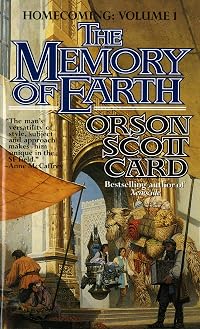
High above the planet Harmony, the Oversoul watches. Its task, programmed so many millennia ago, is to guard the human settlement on this planet—to protect this fragile remnant of Earth from all threats. To protect them, most of all, from themselves.The Oversoul has done its job well. There is no war on Harmony. There are no weapons of mass destruction. There is no technology that could lead to weapons of war. By control of the data banks, and subtle interference in the very thoughts of show more the people, the artificial intelligence has fulfilled its mission.
But now there is a problem. In orbit, the Oversoul realizes that it has lost access to some of its memory banks, and some of its power systems are failing. And on the planet, men are beginning to think about power, wealth, and conquest.
. show less
Tags
Recommendations





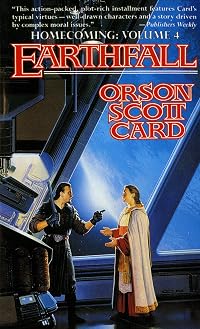
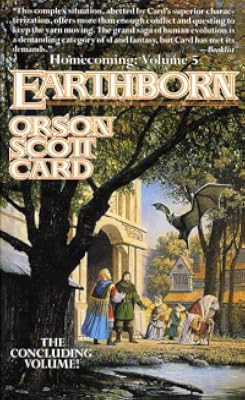
Member Recommendations

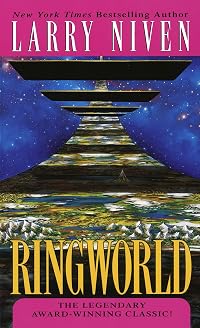
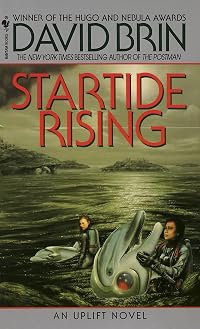
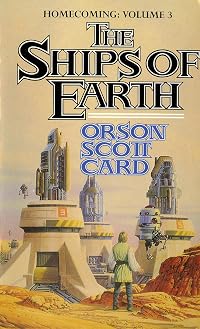
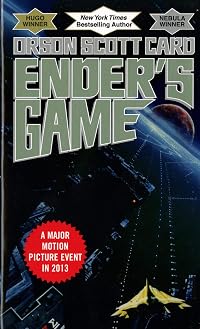
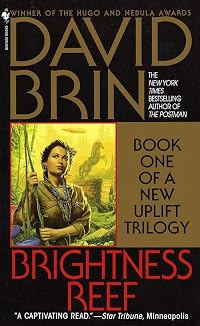
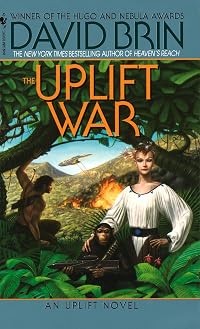
aulandez Lost World setting in which simplicity has been used to avoid the past failings of humanity. Similar use of sci-fi tools, similar characterization, straightforward yet not overly simple.
Member Reviews
It's funny. Even the religions we put in our Science Fiction are works-based religions. I'm glad my God isn't as limited as the Oversoul. The implications of a God that isn't omniscient or omnipresent is devastating. I like how Card makes me think about these things though, and I really enjoyed the two main characters of this book.
I fall in love with OSC's writing time and time again, and The Memory of Earth was not an exception for me.
It is a new world in which I had some trouble finding my bearings, but I was grateful that OSC didn't spend too much time giving me all of the bits of information that I would have needed to be completely comfortable. Instead, this familiarity came with the passing pages, as I became more in tune with the characters.
There are still many questions that I have, such as, how would humans come to the decision that a computer is a necessary watch dog? How can a human even begin to hope that their programming is intricate enough to deal with humanity's many paths? How can a parent who knows the truth that an ultimate being is a computer show more program teach his child to believe in the Almighty as a power, and not as satellite?
Perhaps these questions will be answered in the next books, which I will be sure to pick up. show less
It is a new world in which I had some trouble finding my bearings, but I was grateful that OSC didn't spend too much time giving me all of the bits of information that I would have needed to be completely comfortable. Instead, this familiarity came with the passing pages, as I became more in tune with the characters.
There are still many questions that I have, such as, how would humans come to the decision that a computer is a necessary watch dog? How can a human even begin to hope that their programming is intricate enough to deal with humanity's many paths? How can a parent who knows the truth that an ultimate being is a computer show more program teach his child to believe in the Almighty as a power, and not as satellite?
Perhaps these questions will be answered in the next books, which I will be sure to pick up. show less
Great premise, decent plot, but the story itself plodded along and the characters were annoying.
High above the planet Harmony, the Oversoul watches. Its task, programmed so many millennia ago, is to guard the human settlement on this planet, to protect this fragile remnant of Earth from all threats...to protect them, most of all, from themselves.
The Oversoul has done its job well. There is no war on Harmony. There are no weapons of mass destruction. There is no technology that could lead to weapons of war. By control of the data banks, and subtle interference in the very thoughts of the people, the artificial intelligence has fulfilled its mission.
But now there is a problem. In orbit, the Oversoul realizes that it has lost access to some of its memory banks, and some of its power systems are failing. And on the planet, men are show more beginning to think about power, wealth, and conquest. show less
The Oversoul has done its job well. There is no war on Harmony. There are no weapons of mass destruction. There is no technology that could lead to weapons of war. By control of the data banks, and subtle interference in the very thoughts of the people, the artificial intelligence has fulfilled its mission.
But now there is a problem. In orbit, the Oversoul realizes that it has lost access to some of its memory banks, and some of its power systems are failing. And on the planet, men are show more beginning to think about power, wealth, and conquest. show less
OSC is one of those authors I have lived with in the back of my mind for as long as I can remember. Friends' descriptions of Ender's Game never really intrigued me, and I was never really aware of any of his other works. Card's voice is light and his storytelling straightforward and unencumbered. Issac Asimov meets Anne McCaffrey.
Card seems to be an idea writer who uses the sci-fi setting merely as a tool for showing off great ideas. This is great in that he presents technologies and a very heavy in-setting history in passing, allowing you to become involved with the characters and ideas immediately. It is disappointing however that he doesn't dwell a little more on all the worldbuilding that went into this novel, because as the book goes on I found myself continually going "Ooh, that sounds cool, I want to know more about how that works" and then you get whisked off in another direction. Hopefully more books will alleviate rather than extend this problem.
In what seems to be an attempt to flesh out some of the minor characters (and make some of them more likeable) the perspective of the book switches a few times for a chapter or less. While the characters we see more of really did need fleshing out, we learn very little about their motivations that couldn't be more easily told through Nafai's eyes (and in every case, is just a little later in the book) and the characters do not end up becoming any more or less likeable as a result. OSC should have stuck with a single point of view, Nafai is likeable and the ideas of the story are told best through his story.
LDS themes abound, and even as someone who has not studied the Book of Mormon and has only studied LDS theology and prophetology on a surface level, very little of what Scott had to say escaped me. While these themes may detract from the book for some people they are not distracting, are strongly integrated and would not even be obviously Mormon to someone with only cursory knowledge of LDS theology and ideas. Preachiness is avoided, and the complexities and shortfalls of religious faith are not ignored. In the end Nafai's story is strong and the themes fit well in a sci-fi coming-of-age story.
The ending of this book really does just seem like the end of a first chapter of a book. Does not stand on it's own successfully except when I only look at it a a character novel revolving around Nafai. This isn't really a problem as it definitely left me wanting to read more, and it was only a 300 page novel so if it hadn't it wasn't a huge investment. show less
The Memory of Earth is another name for the Oversoul - a mystical supercomputer tasked with keeping humanity away from the technological discoveries that allowed it to destroy itself on Earth. But after 40 million years, the Oversoul is weakening and it needs to enlist the aid of those humans most capable of hearing its call for help. Unfortunately, the only source of help is back on Earth.
I really enjoyed this book. I think the author is following in the best traditions of Sci-Fi by raising interesting questions and allowing us to explore some of the possible answers with him. One of the obvious ones is, of course, the nature of God. Do we know what God is? Really? What are His purposes? Another question is the based in the nature of show more the sexes - the thinking in the book is apparently that men are dominant when survival is in question while women are the bringers of civilization. We also explore questions of family and leadership. Interesting topics and presented in a way that I found to be very compelling.
The things I didn't care for were the odd handling of some of the characters' youth. Card goes from showing them to be exceptionally mature to whiny to perceptive and able to handle complex social interactions with stunning insight to being completely naive to being ruthlessly brutal to being filled with the proverbial teen angst.
Overall, though, I was surprised by how quickly I consumed the book and will certainly be powering my way through the rest of the series. show less
I really enjoyed this book. I think the author is following in the best traditions of Sci-Fi by raising interesting questions and allowing us to explore some of the possible answers with him. One of the obvious ones is, of course, the nature of God. Do we know what God is? Really? What are His purposes? Another question is the based in the nature of show more the sexes - the thinking in the book is apparently that men are dominant when survival is in question while women are the bringers of civilization. We also explore questions of family and leadership. Interesting topics and presented in a way that I found to be very compelling.
The things I didn't care for were the odd handling of some of the characters' youth. Card goes from showing them to be exceptionally mature to whiny to perceptive and able to handle complex social interactions with stunning insight to being completely naive to being ruthlessly brutal to being filled with the proverbial teen angst.
Overall, though, I was surprised by how quickly I consumed the book and will certainly be powering my way through the rest of the series. show less
I have such respect for Orson Scott Card that it was hard to rate this low. The writing is fantastic, the effort in weaving the tale commendable, but the fact that I felt that it was pretty much plagiarized from the Book of Mormon left a really bad taste in my mouth.
Members
- Recently Added By
Lists

Best-selling Books by Latter-day Saints
58 works; 2 members

al.vick-series
381 works; 2 members

Space Colonization
100 works; 26 members
Talk Discussions
Past Discussions
Found: Forgotten/lost Earth sci-fi novel set in a matriarchal society in Name that Book (August 2024)
Author Information

575+ Works 214,334 Members
Orson Scott Byron Walley Card, was born in 1951 and studied theater at Brigham Young University. He received his B.A. in 1975 and his M.A. in English in 1981. He wrote plays during that time, including Stone Tables (1973) and the musical, Father, Mother, Mother and Mom (1974). A Mormon, Scott served a two-year mission in Brazil before starting show more work as a journalist in Utah. He also designed games at Lucas Film Games, 1989-92. He is best known for his science fiction novels, including the popular Ender series. Well known titles include A Planet Called Treason (1979), Treasure Box (1996), and Heartfire (1998). He has also written the guide called How to Write Science Fiction and Fantasy (1990). His novel Ender's Game and its sequel Speaker for the Dead, both won Hugo and Nebula awards, making Card the only author to win both prizes in consecutive years. His titles Shadows in Flight, Ruins and Ender's Game made The New York Times Best Seller List. He is also the author of The First Formic War Series, which includes the titles Earth Unaware, Earth Afire, and Earth Awakens. (Bowker Author Biography) show less
Some Editions
Awards and Honors
Awards
Series

Belongs to Publisher Series
Bastei Science Fiction-Special (24167)
Work Relationships
Is contained in
Was inspired by
Common Knowledge
- Canonical title
- The Memory of Earth
- Original title
- The Memory of Earth
- Alternate titles
- Homecoming: Volume I The memory of earth
- Original publication date
- 1992-03
- People/Characters
- The Oversoul
- Important places
- Harmony
- Dedication
- To a good reader, a good friend,
and, most important, a good man,
Jeff Alton - First words
- The master computer of the planet Harmony was afraid.
- Last words
- (Click to show. Warning: May contain spoilers.)Others have been here before me, and are with me now, and will be with me through all that is to come.
- Blurbers
- McCaffrey, Anne
- Original language
- English
Classifications
Statistics
- Members
- 3,198
- Popularity
- 5,421
- Reviews
- 23
- Rating
- (3.39)
- Languages
- 9 — Czech, Dutch, English, French, German, Italian, Polish, Romanian, Spanish
- Media
- Paper, Audiobook, Ebook
- ISBNs
- 33
- ASINs
- 12