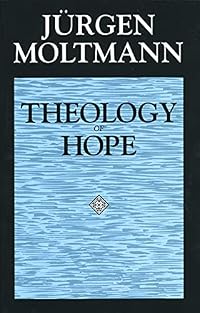
Theology of Hope
by Jürgen Moltmann
On This Page
Description
The following efforts bear the title Theology of Hope, not because they set out once again to present eschatology as a separate doctrine and to compete with the well known textbooks. Rather, their aim is to show how theology can set out from hope and begin to consider its theme in an eschatological light. For this reason they inquire into the ground of the hope of Christian faith and into the responsible exercise of this hope in thought and action in the world today. The various critical show more discussions should not be understood as rejections and condemnations. They are necessary conversations on a common subject which is so rich that it demands continual new approaches. show lessTags
Recommendations








Member Reviews
This book, which brought Moltmann to prominence, is considered one of the central works of mid-twentieth-century German theology. In it, Moltmann argues for the central role of eschatology (the study of the last, or ultimate things) in Christian teaching. In the common Christian triad of faith, hope, and love, it expresses hope. This hope is not, however, restricted to a distant judgment day, but should permeate our daily lives. It is not hope that the soul floats off from this vale of tears to an imagined heaven. It recognizes in the resurrection of Christ not an eternity in heaven but the future of the earth on which the cross stood. In a memorable image, Moltmann argues that eschatology should not be relegated to carrying the train show more of Christian theology, but rather carrying a torch at the head of the procession.
The proclamation of the crucified and risen Christ points to his coming, to the fulfilment of history, which, refreshingly, Moltmann does not see as fixed in advance according to a divine plan, but as a forward-looking field in which the church has its mission (“Sendung”) or commission (“Auftrag”). This emphasis on history marks a departure from Karl Barth, who was otherwise a significant influence on Moltmann.
The strongest objection to the theology of hope, Moltmann concedes, is that which focuses on the present moment as an expression of eternity. He traces this view to the pre-Socratic philosopher Parmenides and, through him, to Greek thinking as a whole. Greek thought, throughout this book, is something Moltmann views as distinct from Christian teaching, although he concedes that the concept of the God of Parmenides has deeply permeated Christian theology.
I was taken by Moltmann’s sorting of arguments for the existence of God into three groups: arguments from the existence of the cosmos, from human consciousness, and from the concept of God. None of these proves that God exists, Moltmann concedes, but they all give occasion to inquire after or seek God (German: “nach Gott zu fragen”).
Central to Moltmann’s claims is the reality or truth of the resurrection. His discussion of that occupies the third of his five chapters: structurally, as well as thematically, the middle of the book.
The book concludes with an examination of the mission of Christianity in the world, including an update on the Reformation view of the calling (“vocatio”) of a Christian. Christianity has lost the dominant role it had in Western society since Constantine and has been relegated to an acceptable niche as something private. Moltmann emphasizes, however, that “sotēria” (the Greek word usually translated as salvation) is more than individual deliverance, but should be understood in the comprehensive Old Testament sense of “shalom.”
This book gave me much to think about, both in aspects with which I agreed and some points for further consideration. For instance, how does this emphasis on the cross and resurrection of Christ as pointing toward the world’s future work out in interreligious dialogue?
I’ll confess, though, that I nearly bailed on this book nearly halfway through; it is written in the dense style beloved of German scholars since Kant and Hegel. I decided to persevere and found that it began to make sense, only to be pulled up short by an opaque four-and-a-half-line sentence containing a dozen or so abstract terms. Thinking that perhaps part of the difficulty is that German is my second language, I sampled a few pages of James W. Leitch’s English translation. He did a valiant job, faithful to the original, but the difficulty remained. Nor does the original book’s layout help, with no paragraph indentation, and some paragraphs nearly two pages long (I read the first edition; perhaps later printings were more reader-friendly). I made it to the end and got enough out of the book to have made reading it worth the effort. If I give this book three stars, perhaps one of the stars is for me for not giving up. show less
The proclamation of the crucified and risen Christ points to his coming, to the fulfilment of history, which, refreshingly, Moltmann does not see as fixed in advance according to a divine plan, but as a forward-looking field in which the church has its mission (“Sendung”) or commission (“Auftrag”). This emphasis on history marks a departure from Karl Barth, who was otherwise a significant influence on Moltmann.
The strongest objection to the theology of hope, Moltmann concedes, is that which focuses on the present moment as an expression of eternity. He traces this view to the pre-Socratic philosopher Parmenides and, through him, to Greek thinking as a whole. Greek thought, throughout this book, is something Moltmann views as distinct from Christian teaching, although he concedes that the concept of the God of Parmenides has deeply permeated Christian theology.
I was taken by Moltmann’s sorting of arguments for the existence of God into three groups: arguments from the existence of the cosmos, from human consciousness, and from the concept of God. None of these proves that God exists, Moltmann concedes, but they all give occasion to inquire after or seek God (German: “nach Gott zu fragen”).
Central to Moltmann’s claims is the reality or truth of the resurrection. His discussion of that occupies the third of his five chapters: structurally, as well as thematically, the middle of the book.
The book concludes with an examination of the mission of Christianity in the world, including an update on the Reformation view of the calling (“vocatio”) of a Christian. Christianity has lost the dominant role it had in Western society since Constantine and has been relegated to an acceptable niche as something private. Moltmann emphasizes, however, that “sotēria” (the Greek word usually translated as salvation) is more than individual deliverance, but should be understood in the comprehensive Old Testament sense of “shalom.”
This book gave me much to think about, both in aspects with which I agreed and some points for further consideration. For instance, how does this emphasis on the cross and resurrection of Christ as pointing toward the world’s future work out in interreligious dialogue?
I’ll confess, though, that I nearly bailed on this book nearly halfway through; it is written in the dense style beloved of German scholars since Kant and Hegel. I decided to persevere and found that it began to make sense, only to be pulled up short by an opaque four-and-a-half-line sentence containing a dozen or so abstract terms. Thinking that perhaps part of the difficulty is that German is my second language, I sampled a few pages of James W. Leitch’s English translation. He did a valiant job, faithful to the original, but the difficulty remained. Nor does the original book’s layout help, with no paragraph indentation, and some paragraphs nearly two pages long (I read the first edition; perhaps later printings were more reader-friendly). I made it to the end and got enough out of the book to have made reading it worth the effort. If I give this book three stars, perhaps one of the stars is for me for not giving up. show less
In Theology of Hope: On the Ground and Implications of a Christian Eschatology, Jürgen Moltmann, a German Reformed Theologian, presents an argument for the hope that is within every Christian, and links that hope to the final end to which Christians look for assurance and direction. The work may be briefly described as a theological/philosophical discussion as to the why of one’s hope. Originally published in 1964, the reviewed edition was translated from the German by James W. Leithch in 1967.
Moltmann begins by attempting to help us understand his vision of the interrelationship between the idea of hope and one’s perception of their place in the reality of now. As we exist, always leaving the past and moving toward the future, the show more now is the optimal place for the expression of hope. This results from the fact that in the Scriptures the Christian’s hope is always pointed “towards what is not visible” (18). Hence, when the Christian expresses his hope, he is simultaneously expressing his faith in the risen Christ. It is in the risen Christ that one is able to find the path to eternal life, but it is the expression of hope that keeps one on the path to that life. Therefore, one lives in the present with a hope for a future that extends into eternity; this is why Christians are moving forward to the beginning of their life, not headed toward the end. This is the hope expressed by Paul in Romans 8:19 when he speaks of the “earnest expectation of the creature,” as he redirects the attention of the believer to the future.
Considering the nature of hope, Moltmann relates his forward-looking theology to such considerations as ESCHATOLOGY AND REVELATION, PROMISE AND HISTORY, THE RESURRECTION AND THE FUTURE OF JESUS CHRIST, ESCHATOLOGY AND HISTORY, and EXODUS CHURCH. These divisions form the basic sections of Moltmann’s work, and in each case the theological considerations presented – following a discussion of the contemporary philosophies or theological positions – are insightful and carefully crafted. At times, one seemed to be walking through a dense philosophical fog and stumbling upon a ray of light that not only pierces but clears the fog for a moment. One example of this occurs in the ESCHATOLOGY AND HISTORY section. Moltmann goes through a discussion of several different “historical heuristics” (241) and then proceeds to outline several different directions which is eventually related to the Christian perspective. Then the insight:
"What is the result of this for the process of Christian proclamation, for its ‘tradition’? Christian tradition is then not to be understood as a handing on of something that has to be preserved, but as an event which summons the dead and the godless to life. The process and procedure of the Christian proclamation is the calling of the heathen, the justification of the godless, the rebirth to a living hope" (302).
This isn’t a new insight, but in light of how we as a people understand and use history, Christianity is presented as a unique philosophical stance as opposed to other major philosophical understandings that tend to look back instead of forward.
This book has assumed place in the top ten on the “List of Difficult Books I’ve Read.” First, the work was translated from German into English and there were spots that required rereading several times. The quality of the translation is not under consideration, just the simple fact that what was being translated presented some very difficult material. There are also several times when Moltmann uses Latin, Greek, and German expressions that, for a more complete understanding of the topic, requires having a source for quick interpretation. This leads to the second reason the work landed on the list, the philosophical nature of Moltmann’s considerations. At many points the conversation seemed to circle around a specific concept which often stemmed from a blend of Moltmann’s and other philosopher/theologian’s presented work. The effect of which makes for difficult reading when Moltmann is attempting to relay what he obviously considers an important point for consideration. This blending is the third reason the work makes it into the top ten. Each section and sub-section begins with a review of the contemporary philosophical work (contemporary for Moltmann) related to the topic under consideration. Often in Moltmann’s writing his perspective seems to proceed from a point that assumes the reader also has read and understood those contemporary writers.
A difficult but enjoyable read in which the hope to which Christians cling is examined and highlighted from a number of different directions. Moltmann’s work remains a call to a forward vision in which hope is seen as a primary foundation of the Christian experience in this life. Hope calls us forward. Hope gives us vision for ourselves, for mankind, and for the Church. Hope in the future is a defining characteristic of the Christian mindset.
Some quotes from the work:
“As long as hope does not embrace and transform the thought and action of men, it remains topsy-turvy and ineffective. Hence Christian eschatology must make the attempt to introduce hope into worldly thinking, and thought into the believing hope” (33).
“The goal gives meaning to the journey and its distresses; and today’s decision to trust in the call of God is a decision pregnant with future” (97).
“The gospel of revelation of God in Christ is thus in danger of being incomplete and of collapsing altogether, if we fail to notice the dimension of promise in it” (139-40).
“The Christian hope for the future comes of observing a specific, unique event – that of the resurrection and appearing of Jesus Christ” (194).
“This tradition of promise turns our eyes not towards some primaeval, original event, but towards the future and finally towards an eschaton of fulfilment” (298).
"If, however, the vital decisions are delegated to the Church as an institution, which is then regarded as an institute for relieving us of them, then the result is the religious attitude of an institutionalized non-committal outlook” (323). show less
Moltmann begins by attempting to help us understand his vision of the interrelationship between the idea of hope and one’s perception of their place in the reality of now. As we exist, always leaving the past and moving toward the future, the show more now is the optimal place for the expression of hope. This results from the fact that in the Scriptures the Christian’s hope is always pointed “towards what is not visible” (18). Hence, when the Christian expresses his hope, he is simultaneously expressing his faith in the risen Christ. It is in the risen Christ that one is able to find the path to eternal life, but it is the expression of hope that keeps one on the path to that life. Therefore, one lives in the present with a hope for a future that extends into eternity; this is why Christians are moving forward to the beginning of their life, not headed toward the end. This is the hope expressed by Paul in Romans 8:19 when he speaks of the “earnest expectation of the creature,” as he redirects the attention of the believer to the future.
Considering the nature of hope, Moltmann relates his forward-looking theology to such considerations as ESCHATOLOGY AND REVELATION, PROMISE AND HISTORY, THE RESURRECTION AND THE FUTURE OF JESUS CHRIST, ESCHATOLOGY AND HISTORY, and EXODUS CHURCH. These divisions form the basic sections of Moltmann’s work, and in each case the theological considerations presented – following a discussion of the contemporary philosophies or theological positions – are insightful and carefully crafted. At times, one seemed to be walking through a dense philosophical fog and stumbling upon a ray of light that not only pierces but clears the fog for a moment. One example of this occurs in the ESCHATOLOGY AND HISTORY section. Moltmann goes through a discussion of several different “historical heuristics” (241) and then proceeds to outline several different directions which is eventually related to the Christian perspective. Then the insight:
"What is the result of this for the process of Christian proclamation, for its ‘tradition’? Christian tradition is then not to be understood as a handing on of something that has to be preserved, but as an event which summons the dead and the godless to life. The process and procedure of the Christian proclamation is the calling of the heathen, the justification of the godless, the rebirth to a living hope" (302).
This isn’t a new insight, but in light of how we as a people understand and use history, Christianity is presented as a unique philosophical stance as opposed to other major philosophical understandings that tend to look back instead of forward.
This book has assumed place in the top ten on the “List of Difficult Books I’ve Read.” First, the work was translated from German into English and there were spots that required rereading several times. The quality of the translation is not under consideration, just the simple fact that what was being translated presented some very difficult material. There are also several times when Moltmann uses Latin, Greek, and German expressions that, for a more complete understanding of the topic, requires having a source for quick interpretation. This leads to the second reason the work landed on the list, the philosophical nature of Moltmann’s considerations. At many points the conversation seemed to circle around a specific concept which often stemmed from a blend of Moltmann’s and other philosopher/theologian’s presented work. The effect of which makes for difficult reading when Moltmann is attempting to relay what he obviously considers an important point for consideration. This blending is the third reason the work makes it into the top ten. Each section and sub-section begins with a review of the contemporary philosophical work (contemporary for Moltmann) related to the topic under consideration. Often in Moltmann’s writing his perspective seems to proceed from a point that assumes the reader also has read and understood those contemporary writers.
A difficult but enjoyable read in which the hope to which Christians cling is examined and highlighted from a number of different directions. Moltmann’s work remains a call to a forward vision in which hope is seen as a primary foundation of the Christian experience in this life. Hope calls us forward. Hope gives us vision for ourselves, for mankind, and for the Church. Hope in the future is a defining characteristic of the Christian mindset.
Some quotes from the work:
“As long as hope does not embrace and transform the thought and action of men, it remains topsy-turvy and ineffective. Hence Christian eschatology must make the attempt to introduce hope into worldly thinking, and thought into the believing hope” (33).
“The goal gives meaning to the journey and its distresses; and today’s decision to trust in the call of God is a decision pregnant with future” (97).
“The gospel of revelation of God in Christ is thus in danger of being incomplete and of collapsing altogether, if we fail to notice the dimension of promise in it” (139-40).
“The Christian hope for the future comes of observing a specific, unique event – that of the resurrection and appearing of Jesus Christ” (194).
“This tradition of promise turns our eyes not towards some primaeval, original event, but towards the future and finally towards an eschaton of fulfilment” (298).
"If, however, the vital decisions are delegated to the Church as an institution, which is then regarded as an institute for relieving us of them, then the result is the religious attitude of an institutionalized non-committal outlook” (323). show less
This is the first part of Moltmann's theological trinity. (The Crucificed God and The Church in the Power of the Spirit being the other two.)
Here Moltmann tries to give eschatology a new grounding, and is pretty succesful at it. I wish more people would read this, and not the Left Behind series! I read it as a layperson, and a theological vocabulary is needed, as well as an overview of major theological thinkers, but it could easily be read by any intelligent lay person.
Here Moltmann tries to give eschatology a new grounding, and is pretty succesful at it. I wish more people would read this, and not the Left Behind series! I read it as a layperson, and a theological vocabulary is needed, as well as an overview of major theological thinkers, but it could easily be read by any intelligent lay person.
Moltmann's Theology of Hope is challenging and stimulating.
Rest well, Servant of God #RIP
La escatología no solo se ocupa de la salvación o condenación de los últimos días, sino también de la felicidad que puede alcanzare en el presente.
Sep 27, 2016Spanish
HG5
Oct 17, 2020Catalan
Members
- Recently Added By
Lists

In Our Time books
4,934 works; 2 members
Author Information

130+ Works 7,493 Members
Jurgen Moltmann is Professor of Systematic Theology Emeritus in the Protestant Faculty of the University of Tubingen, Germany.
Some Editions
Awards and Honors
Awards
Common Knowledge
- Canonical title
- Theology of Hope
- Original title
- Theologie der Hoffnung
- Original publication date
- 1967
- Blurbers
- Cox, Harvey G.
- Original language
- German
Classifications
Statistics
- Members
- 964
- Popularity
- 27,277
- Reviews
- 7
- Rating
- (4.09)
- Languages
- 5 — English, French, German, Portuguese, Spanish
- Media
- Paper
- ISBNs
- 14
- ASINs
- 15