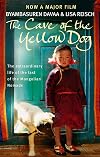
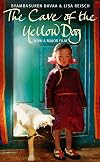
The Cave of the Yellow Dog
by Byambasuren Davaa, Lisa Reisch
On This Page
Description
Davaa, a young filmmaker, returns to her native country and to the region where she grew up to show us life among the nomadic people. Through the touching story of the young girl Nansaa and her little dog Zochor, she depicts the freedom of life on the steppes, as well as the spirituality of the people and the significance of the Buddhist faith. Delicate and poignant, Davaa's story also highlights the increasing tensions as these rich traditions come into conflict with the demands of modern show more urban life. Following the international success of The Story of the Weeping Camel, director Byambasuren Davaa takes us on a journey into another world, and through poetic writing and exquisite photography she reveals the magic of a culture very different from our own. show lessTags
Recommendations















Member Reviews
This was a quick but very interesting read. From the moment I could read, I've been interested in books about how other people live. Not meaning people similar like me (from Italy, Russia etc.) but really different like Native Americans, Inuit. I never came across a book about people in Mongolia.
So... I read this book and I liked it. That there are tensions between old ways and new ways of living didn't come out clearly to me. But I liked the mixture of cultural facts, Nansaa's adventures and the wonderful pictures.
So... I read this book and I liked it. That there are tensions between old ways and new ways of living didn't come out clearly to me. But I liked the mixture of cultural facts, Nansaa's adventures and the wonderful pictures.
The Cave Of The Yellow Dog is a depiction of the everyday life of Mongolia’s nomads, and some of the struggles they face. Most of this short novella focuses on the Batchuluun family at their summer camp, although throughout the book there are also short chapters that give information on various aspects of nomadic Mongolian life including the gers (tents), food and diet, a very brief overview of Mongolian politics, the education system, traditional deel clothing and various customs.
There are also three sections of beautiful photos, many of which showcase the stunning Mongolian landscape.
The Batchuluun family is just Dad, Mum and three kids (the oldest is 6) out on the vast Mongolian Steppes with 300 animals. It amazed me what chores show more Nansaa (6yo) and Nansalmaa (4yo) had to do to help out their family. This includied Nansaa on horseback taking the herd away from the camp for a day, by herself, to find better grazing while her father was away selling sheep skins. Or Nansalmaa being left in charge of her 18 month old brother for periods of time. Self reliance is obviously important and while these kids seem to be very mature and take on some big responsibilities, they still find time to just be kids.
I was particularly interested in how the nomadic lifestyle works in today’s world of land ownership etc. A brief overview is given, but I would have liked more details. Actually I would have liked more details on most of what this book covers. We are only with the Batchuluun family during summer when it is just their family and the animals. In winter they camp in a larger camp with extended family and I would’ve liked to read about this part of their life as well. This book was written as a companion to a documentary of the same name, and it shows.
This is a very quick and easy book to read. It's only a basic introduction, but it offers an extremely interesting insight into the lifestyle of nomadic Mongolians. show less
There are also three sections of beautiful photos, many of which showcase the stunning Mongolian landscape.
The Batchuluun family is just Dad, Mum and three kids (the oldest is 6) out on the vast Mongolian Steppes with 300 animals. It amazed me what chores show more Nansaa (6yo) and Nansalmaa (4yo) had to do to help out their family. This includied Nansaa on horseback taking the herd away from the camp for a day, by herself, to find better grazing while her father was away selling sheep skins. Or Nansalmaa being left in charge of her 18 month old brother for periods of time. Self reliance is obviously important and while these kids seem to be very mature and take on some big responsibilities, they still find time to just be kids.
I was particularly interested in how the nomadic lifestyle works in today’s world of land ownership etc. A brief overview is given, but I would have liked more details. Actually I would have liked more details on most of what this book covers. We are only with the Batchuluun family during summer when it is just their family and the animals. In winter they camp in a larger camp with extended family and I would’ve liked to read about this part of their life as well. This book was written as a companion to a documentary of the same name, and it shows.
This is a very quick and easy book to read. It's only a basic introduction, but it offers an extremely interesting insight into the lifestyle of nomadic Mongolians. show less
Quick, interesting book by two student film makers one of whom is travelling back to her homeland to make her graduation film (also available as a film by the same name). The book follows their time with a nomadic Mongolian family and contains insights into everyday life, Mongolian culture -its poetry and love of singing - and very briefly, Mongolian political history. The brevity of all these descriptions led me scouring the interwebs for further information on a couple of accounts. I enjoyed it.
The Cave of the Yellow Dog is part memoir, part "child find a dog" story. It is okay, but not brilliant, at both. I think this book would be most helpful to someone who is going to watch the movie version of Cave, where this book provides the necessary background and cultural information needed to enjoy the film without trying to figure out what is going on every minue or so.
The book was not a long or difficult read. I think part of why I did not explicitly enjoy it is because I was reading it for a class. I would recommend it to someone who would like to learn more about Mongolian culture.
The book was not a long or difficult read. I think part of why I did not explicitly enjoy it is because I was reading it for a class. I would recommend it to someone who would like to learn more about Mongolian culture.
„Die Höhle des gelben Hundes“ ist der Abschlussfilm von Byambasuren Davaa an der Münchner Filmhochschule. Das Buch beschreibt einerseits die Entstehung, andererseits die Handlung des Films. Irgendwie wird es beiden nicht ganz gerecht. Am Schönsten sind die Fotos aus der Mongolei.
Oct 14, 2023German
Ratings
Members
- Recently Added By
Lists

Mongolia
21 works; 1 member
Author Information
3 Works 94 Members
1 Work 52 Members
All Editions
Some Editions
Common Knowledge
- Important places*
- Mongolië
*Some information comes from Common Knowledge in other languages. Click "Edit" for more information.
Classifications
- Genres
- Nonfiction, Anthropology, Travel, General Nonfiction, Religion & Spirituality
- DDC/MDS
- 951.70086918 — History & geography History of Asia East Asia: China, Taiwan, Hong Kong, Korea Mongolia
- LCC
- GN635 .M65 .D3913 — Geography, Anthropology and Recreation Anthropology Anthropology Ethnology. Social and cultural anthropology Ethnic groups and races By region or country
- BISAC
Statistics
- Members
- 52
- Popularity
- 585,011
- Reviews
- 5
- Rating
- (3.31)
- Languages
- 5 — Dutch, English, French, German, Mongolian
- Media
- Paper
- ISBNs
- 6
- UPCs
- 1
- ASINs
- 2