On This Page
Description
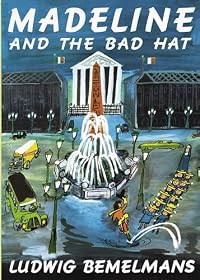
When the Spanish ambassador moves in next door, Madeline and the rest of the twelve little girls discover that his son is not the best neighbor.Tags
Recommendations





Member Reviews
Feisty French schoolgirl meets high-spirited Spanish schoolboy in this third picture-book adventure from Austrian-American children's author Ludwig Bemelmans, and sparks fly. When the Spanish Ambassador and his family move in next door to her boarding school in Paris, Miss Clavel is thrilled, but Madeline has her doubts, especially when it comes to his son Pepito, whom she nicknames "The Bad Hat." Her dislike appears at first to be well founded, as Pepito engages in all sorts of bad behavior - throwing rocks at the girls, during their morning exercise; using a toolbox given to him by Miss Clavel to create a guillotine for chickens; releasing a hapless cat in the midst of a pack of hungry dogs, in order to see what happens - but when his show more stunts take him too far, and Miss Clavel and Madeline must come to his rescue, his reformation is soon put into motion...
Originally published in 1956, Madeline and the Bad Hat contains some very interesting themes - Pepito's initial mistreatment of animals, his subsequent reformation and conversion to vegetarianism, and his exuberant freeing of all the animals in the zoo - and introduces a character, in the form of Pepito, who plays an important role in the two subsequent books, Madeline in London and Madeline and the Gypsies. Unfortunately, any interest elicited in this reader by the themes, or enjoyment created through the humor - I did love Madeline's "Bad Hat" nickname for Pepito, as I found it very funny - was not enough to compensate for artwork that left me cold, and a rhyming text that I found clunky and unappealing. I'm having difficulty accounting for all the glowing reviews that mention the poetic narrative with this one, as I thought the rhyming was forced - "On hot summer nights he ghosted; / In the autumn wind he boasted" - and the lines often read awkwardly. Definitely the weakest, of the three Madeline books I've read thus far. show less
Originally published in 1956, Madeline and the Bad Hat contains some very interesting themes - Pepito's initial mistreatment of animals, his subsequent reformation and conversion to vegetarianism, and his exuberant freeing of all the animals in the zoo - and introduces a character, in the form of Pepito, who plays an important role in the two subsequent books, Madeline in London and Madeline and the Gypsies. Unfortunately, any interest elicited in this reader by the themes, or enjoyment created through the humor - I did love Madeline's "Bad Hat" nickname for Pepito, as I found it very funny - was not enough to compensate for artwork that left me cold, and a rhyming text that I found clunky and unappealing. I'm having difficulty accounting for all the glowing reviews that mention the poetic narrative with this one, as I thought the rhyming was forced - "On hot summer nights he ghosted; / In the autumn wind he boasted" - and the lines often read awkwardly. Definitely the weakest, of the three Madeline books I've read thus far. show less
Madeline and her friends in the French private school are continuing in their regular routines, until the day the Spanish Ambassador moves in nearby. While his son, Pepito, is deceptively polite to the adults, the girls read his true nature. He is mean to animals and likes to tease the girls. His only occupations during the day are mischievous and mean-spirited. Even Miss Clavel begins to notice his darker nature, but she magnanimously decides he just needs healthy habits to occupy his mind. She gives him a tool kit, and he uses it to build a guillotine for the chickens he eats.
When Miss Clavel sees Pepito lugging a large sack surrounded by a pack of dogs, she admonishes the girls that he just needed a positive outlet for his energies. show more Until she sees that he has a cat trapped in the bag, which he plans to loose among the snarling dogs. This prank turns on Pepito, for a change, as the cat jumps on his head and the dogs jump on him. Miss Clavel saves him from a mauling, but Pepito has to go to the hospital. Miss Clavel and her charges visit him, and his parents thank her for saving their son, and insist that Madeline see him first. When they are alone, Madeline whispers to the bandaged Pepito that he got what he deserved. Pepito swears, however, that he has decided to change his ways. Once he is back on his feet, he proves his sincerity, especially with his love for animals. The girls forgive him, and embrace Pepito as a new friend.
I really like this book in the Madeline series. As with Madeline's Rescue, what appeals to me most is the quirky humor embedded in the story. Pepito's naughtiness adds zest to the familiar setting and characters, and Madeline is further shown to be strong and spirited by her reactions to him. My favorite part is when Madeline whispers to Pepito that he got what he deserved, the little brat. It made me laugh out loud the first time I read it. The rhyming couplets keep a steady rhythm and add to the readability, and the beginning refers to earlier stories while playfully altering the structure. The narrative is well-developed, playful, and ends on a sweet note. I definitely would choose this book out of a batch of Madeline titles. show less
When Miss Clavel sees Pepito lugging a large sack surrounded by a pack of dogs, she admonishes the girls that he just needed a positive outlet for his energies. show more Until she sees that he has a cat trapped in the bag, which he plans to loose among the snarling dogs. This prank turns on Pepito, for a change, as the cat jumps on his head and the dogs jump on him. Miss Clavel saves him from a mauling, but Pepito has to go to the hospital. Miss Clavel and her charges visit him, and his parents thank her for saving their son, and insist that Madeline see him first. When they are alone, Madeline whispers to the bandaged Pepito that he got what he deserved. Pepito swears, however, that he has decided to change his ways. Once he is back on his feet, he proves his sincerity, especially with his love for animals. The girls forgive him, and embrace Pepito as a new friend.
I really like this book in the Madeline series. As with Madeline's Rescue, what appeals to me most is the quirky humor embedded in the story. Pepito's naughtiness adds zest to the familiar setting and characters, and Madeline is further shown to be strong and spirited by her reactions to him. My favorite part is when Madeline whispers to Pepito that he got what he deserved, the little brat. It made me laugh out loud the first time I read it. The rhyming couplets keep a steady rhythm and add to the readability, and the beginning refers to earlier stories while playfully altering the structure. The narrative is well-developed, playful, and ends on a sweet note. I definitely would choose this book out of a batch of Madeline titles. show less
In this Madeline book we meet Pepito ......the Spanish Ambassadors son, who moves next door. Pepito is a mischievous and bad behaved boy...." The Bad Hat" Madeline has coined him....who terrorizes the girls, and local animals.
Written in 1956, the themes run darker than would be allowed in modern children's literature....a guillotine to kill chickens ...enticing dogs to attack a cat....a slingshot for birds....this doesn't bother me, as my children realize its only a book and always find this unexpected wickedness shockingly humorous....but, I can see where some parents may take umbrage with these aspects of the book.
My personal gripe lies in the choppy flow, word choices, and ineffective rhyming at times.....ie; "Please come over some show more time and I'll let you see, my toys and my menagerie"..." Please don't molest us, your menagerie does not interest us"......these are obviously forced lines, and most children would not be familiar with the word menagerie. Not to mention the word molest being a poor choice for children's literature. Another example...." He changed his clothes and said I bet, this invitation they'll accept."....no effort here at all it seems.
One part I do find clever and delightfully humorous comes when Pepito finds himself in the hospital after being attacked by the cat ...." So Madeline went in on tiptoe, and whispered "Can you hear me Pepito? It serves you right you horrid brat, for what you did to that poor cat". My children crack up at this part lol!!
Overall.....my children love this one.....I think it's the knavery lol! Despite the negatives, I do love the vibe....and I always enjoy the illustrations in Madeline books. show less
Written in 1956, the themes run darker than would be allowed in modern children's literature....a guillotine to kill chickens ...enticing dogs to attack a cat....a slingshot for birds....this doesn't bother me, as my children realize its only a book and always find this unexpected wickedness shockingly humorous....but, I can see where some parents may take umbrage with these aspects of the book.
My personal gripe lies in the choppy flow, word choices, and ineffective rhyming at times.....ie; "Please come over some show more time and I'll let you see, my toys and my menagerie"..." Please don't molest us, your menagerie does not interest us"......these are obviously forced lines, and most children would not be familiar with the word menagerie. Not to mention the word molest being a poor choice for children's literature. Another example...." He changed his clothes and said I bet, this invitation they'll accept."....no effort here at all it seems.
One part I do find clever and delightfully humorous comes when Pepito finds himself in the hospital after being attacked by the cat ...." So Madeline went in on tiptoe, and whispered "Can you hear me Pepito? It serves you right you horrid brat, for what you did to that poor cat". My children crack up at this part lol!!
Overall.....my children love this one.....I think it's the knavery lol! Despite the negatives, I do love the vibe....and I always enjoy the illustrations in Madeline books. show less
32 months - The age of this book shows. I'm pretty sure a lot of parents these days will have a fit over the guillotine for cutting off the heads of chickens and taking a cat in a bag out into a field to tease a bunch of dog. However, I always enjoy reading older less PC books to O. It gets her thinking and asking questions and I don't mind trying to explain the authors odd and sometimes gruesome choices. And in the end he's not such a bad hat.
Madeline and the Bad Hat is the first book in the series that introduces the mischievous and misunderstood neighbor boy, Pepito. He attempts to gain the girls' friendship and attention through mean pranks and animal cruelty, but only manages to gain their mistrust and disgust. These activities in their ever-growing danger eventually put him in the hospital where the twelve little girls are forced to visit him. Here, Madeline tells Pepito he deserves what happened to him due to his horrid actions and he swears never to hurt another creature again. At first, the girls don't believe him, but when Pepito goes to such extremes as to attempt to free all the animals from the zoo- including the lions, Madeline takes a giant step forward and show more forgives him.
This book teaches many important lessons; mainly forgiveness and understanding. It also emphasizes the importance of looking deeper and seeing someone complexly. Just because someone acts mean and vulgar, doesn't mean they are that way. Pepito was bored and lonely so he acted out and misbehaved. He was able to learn his lesson and change his ways, but still needed acceptance and forgiveness from the twelve little girls. This shows there is more to him than his actions just as there is more to people then just their actions. Motives and reasoning are always a factor and it takes empathy to understand this. show less
This book teaches many important lessons; mainly forgiveness and understanding. It also emphasizes the importance of looking deeper and seeing someone complexly. Just because someone acts mean and vulgar, doesn't mean they are that way. Pepito was bored and lonely so he acted out and misbehaved. He was able to learn his lesson and change his ways, but still needed acceptance and forgiveness from the twelve little girls. This shows there is more to him than his actions just as there is more to people then just their actions. Motives and reasoning are always a factor and it takes empathy to understand this. show less
My son's all time favorite Madeline book. He laughed so hard! And not just once. But EVERY time we read the book.
Mischievious little bugger that Bad Hat! Better than Calvin and Hobbes or Dennis the Menace.
Mischievious little bugger that Bad Hat! Better than Calvin and Hobbes or Dennis the Menace.
I greatly enjoyed reading Madeline and the Bad Hat. Ludwig Bemelmans does a fantastic job of grabbing the reader’s attention through the use of rhyming words. For example, in the book when the little boy gets hurt and is sent to the hospital, Bemelmans writes “There was sorrowing and pain. In the Embassy of Spain.” This text also allows the reader to feel empathy towards the character. I also really liked how the colors and details of the pictures related to what was happening in the story. For example, when Madeline was trying to tiptoe over to the bed where the little boy was sleeping, the colors are all light and dull and there aren’t many details in the picture. However, when Madeline is outside playing the colors are bright show more and vivid and the details are so incredible that you can see every knot in the tree.
The message of the story in Madeline and the Bad Hat is, what goes around comes around. Throughout the story, a little boy is being very mean to Madeline and her schoolmates. He is constantly tricking them and trying to scare them. One night when he tries to get a group of dogs to attack a small cat, the dogs instead attack him and he ends up in the hospital. show less
The message of the story in Madeline and the Bad Hat is, what goes around comes around. Throughout the story, a little boy is being very mean to Madeline and her schoolmates. He is constantly tricking them and trying to scare them. One night when he tries to get a group of dogs to attack a small cat, the dogs instead attack him and he ends up in the hospital. show less
Members
- Recently Added By
Lists

Favorite Childhood Books
1,646 works; 513 members

Books About Girls
219 works; 17 members

Written and Illustrated By
805 works; 1 member
Author Information

96+ Works 30,890 Members
Ludwig Bemelmans, April 27, 1898 - October 1, 1962 Ludwig Bemelmans was born on April 27, 1898 in Meran, then Austria. At the age of eight, his parents divorced and he moved with his mother to Regensburg, Germany. He was enrolled into various public and private schools and failed out of most of them. At the age of twelve, unsure of what else to do show more with him, Bemelmans was apprenticed to an uncle in the hotel business and proceeded to go through many jobs, being repeatedly dismissed. After supposedly shooting and almost killing a waiter, his family gave him the ultimatum of reform school or emigration to the United States. He arrived in America in 1914 with reference letters from his uncle to various hotel managers in New York. Bemelmans obtained a job as a waiter in the Ritz-Carlton, but left that job to join the Army in 1917. In the Army, he worked with German speaking recruits and as a military hospital guard. In 1918, Bemelmans became a naturalized citizen, returning to hotel and restaurant work a year later, eventually opening his own restaurant. In the 1934, at the suggestion of one of his friends, Bemelmans began to write, producing his first children's book, "Hansi." He was best known though, for his series of books about the little french girl, "Madeline," which is still a childhood favorite. "Madeline's Rescue," the second book in the series, won the Caldecott Medal in 1953. His first book for adults was entitled, "My War with the United States" and was a diary of his experiences in the service during World War I. In fact, Bemelmans usually wrote his books based on his life experiences, such as "Life Class" and "Hotel Splendide," about his life as a restaurateur, his travels to Ecuador and Italy appeared in "The Donkey Inside" and "Italian Holiday," and his brief stint as a screenwriter in Hollywood was the basis for "Dirty Eddie." Bemelmans wrote about a book or two a year and was a contributor to Town and Country and Horizon, as well as a cover illustrator for The New Yorker. In his later years, Bemelmans enjoyed some small fame from painting, with some of his work appearing in various galleries. Ludwig Bemelmans died of pancreatic cancer in New York on October 1, 1962. (Bowker Author Biography) show less
Series

Work Relationships
Common Knowledge
- Canonical title
- Madeline and the Bad Hat
- Original title
- Madeline and the Bad Hat
- Original publication date
- 1956
- People/Characters
- Madeline Fogg
- Important places
- Paris, France; France
- Original language
- English
Classifications
Statistics
- Members
- 2,440
- Popularity
- 7,933
- Reviews
- 21
- Rating
- (3.92)
- Languages
- English, French
- Media
- Paper, Audiobook, Ebook
- ISBNs
- 31
- UPCs
- 1
- ASINs
- 20