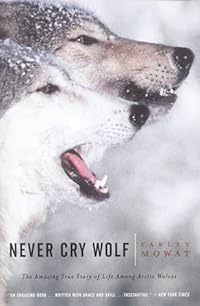
Never Cry Wolf
by Farley Mowat
On This Page
Description
The bestselling nature classic that stands as a hallmark of conservation writing and forever changed the way we look at wolves In 1948, Farley Mowat landed in the far north of Manitoba, Canada, a young biologist sent to investigate the region's dwindling population of caribou. Many people thought that the caribous' conspicuous decline had been caused by the tundra's most notorious predator: the wolf. Alone among the howling canine packs, Mowat expected to find the bloodthirsty beasts of show more popular conception. Instead, over the course of a summer spent observing the powerful animals, Mowat discovered an animal species with a remarkable capacity for loyalty, virtue, and playfulness. Praised for its humor and engrossing narrative, Never Cry Wolf describes a group of wolves whose interactions and behaviors seem strikingly similar to our own. Mowat humanizes these animals that have long been demonized, turning the widespread narrative of the "savage wolf" on its head and inspiring many governments to enact protective legislation for the North's most mysterious creature. show lessTags
Recommendations







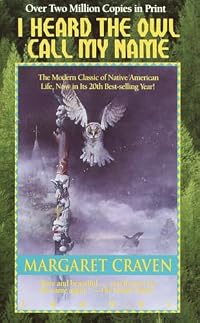
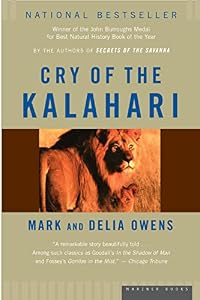

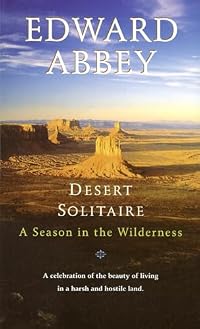
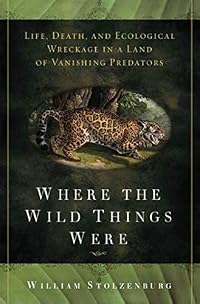






Member Recommendations

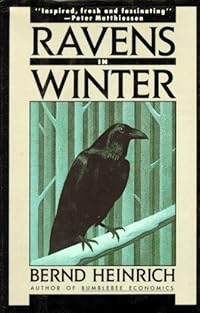
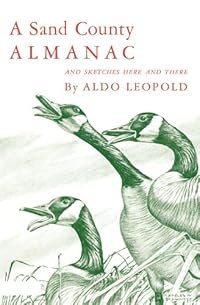
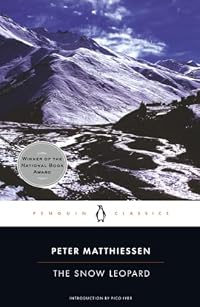
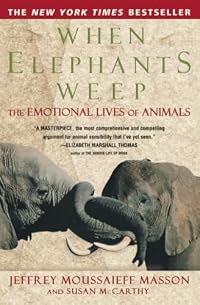
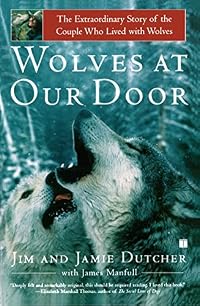
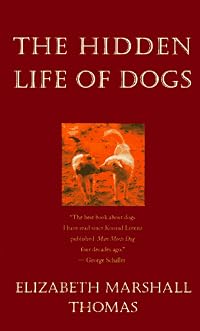
Sandydog1 A very similar theme of man's indiscriminate killing of animals.

Member Reviews
One of the most human books I've read that wasn't about humans at all. Mowat started his book as an attempt to rail against the asinine world of scientific politics, only to be pulled in to a love letter about the wolf. This is a surprisingly deep, and humorous book—for those who love nature, and those who just love a good adventure. However, beware, whatever your assumptions about conservation, wolves, natural selection, and even human behaviour; you will be challenged and delighted by this particularly engaging story about what actually goes on in the frigid North.
“We have doomed the wolf not for what it is, but for what we deliberately and mistakenly perceive it to be...”
Mowat, a naturalist/biologist is given an assignment: spend the summer in the subarctic and study wolf behavior, particularly, their feeding habits. Mowat discovers one wolf family and follows them closely, for several months. It is an eye-opening experience, giving him a deeper understanding and compassion for this misunderstood animal.
This is a terrific read. Funny and adventurous. I have heard much of it is fictionalized, but as a story, it really resounds. Surprisingly, it was written, about 50 years ago but still remains fresh and entertaining.
Mowat, a naturalist/biologist is given an assignment: spend the summer in the subarctic and study wolf behavior, particularly, their feeding habits. Mowat discovers one wolf family and follows them closely, for several months. It is an eye-opening experience, giving him a deeper understanding and compassion for this misunderstood animal.
This is a terrific read. Funny and adventurous. I have heard much of it is fictionalized, but as a story, it really resounds. Surprisingly, it was written, about 50 years ago but still remains fresh and entertaining.
This delightful memoir is based on two summers and a winter that Farley Mowat spent in the subarctic regions of southern Keewatin Territory and northern Manitoba as a biologist studying wolves and caribou. Sent there by the Canadian government to, as he describes it, confirm the hateful myths then firmly held about wolves, Mowat instead learned about the symbiotic relationship between wolves and caribou and the terrible toll being wrought on both populations by white man's intrusion into the ecosystem. With humor and respect, Mowat tells the story of one family of wolves. Through this storytelling, he captures the vast beauty of the region, the majesty of both the wolves and the caribou on which they depend (although he illuminates the show more fact that the wolves primarily eat mice when such are plentiful), and the bemused innocence of the local natives as they worked to understand this white man's behavior. I chuckled out loud more than once and finished this quick read with a resounding sense of satisfaction. Four happy stars. show less
As many have said - I would rate this more stars if it were actually a true story. But it's been completely and thoroughly discredited, it's all fiction. Mr. Mowat did no observation of Arctic wolves, his entire body of evidence is fabricated, and his conclusions about their behavior are now recognized by experts in the field as being largely wrong.
Otherwise, this book is extremely well-written and engrossing! Were it reclassed as fiction, I'd put it on the same recommended reading list as Jack London's work!
Otherwise, this book is extremely well-written and engrossing! Were it reclassed as fiction, I'd put it on the same recommended reading list as Jack London's work!
How did I fail to read this book before now? Certainly I knew of it and that there was controversy about whether it was factual. But somehow I had neglected actually cracking open the pages. When I saw that it was one of the Canadian audiobooks my library's streaming service was highlighting for this special birthday year I decided it was time to remedy my dereliction.
Mowat tells a story of his journey on behalf of the Canadian Wildlife Service to study wolves in the subarctic and their responsibility for the cataclysmic fall in the number of caribou. Contrary to the then current thinking he found that the wolf pack he studied rarely killed caribou and instead much of their diet was small mammals such as mice and lemmings. He discovered show more that trappers and hunters were responsible for the slide in caribou numbers. He also saw that the family life of the wolf was quite social. There was a bachelor male who acted as "uncle" to the wolf cubs in addition to the mother and father. As well other wolves came to visit, something that astounded Mowat but was treated as commonplace by the resident Inuit. His book turned public opinion in favour of wolves and changed management practices such as offering bounties for wolves which resulted in wholescale poisoning of wolf packs (plus other animals).
If you read (or listen to) this book as a fictionalized amalgam of many researchers' findings written in a humourous and entertaining fashion in order to make a point then you will get out of it what Mowat wanted you to. On the other hand if you want every word to be true then you will be disappointed because, although Mowat did go to the north on a similar study, he did not go alone and he employs hyperbole with a heavy hand. show less
Mowat tells a story of his journey on behalf of the Canadian Wildlife Service to study wolves in the subarctic and their responsibility for the cataclysmic fall in the number of caribou. Contrary to the then current thinking he found that the wolf pack he studied rarely killed caribou and instead much of their diet was small mammals such as mice and lemmings. He discovered show more that trappers and hunters were responsible for the slide in caribou numbers. He also saw that the family life of the wolf was quite social. There was a bachelor male who acted as "uncle" to the wolf cubs in addition to the mother and father. As well other wolves came to visit, something that astounded Mowat but was treated as commonplace by the resident Inuit. His book turned public opinion in favour of wolves and changed management practices such as offering bounties for wolves which resulted in wholescale poisoning of wolf packs (plus other animals).
If you read (or listen to) this book as a fictionalized amalgam of many researchers' findings written in a humourous and entertaining fashion in order to make a point then you will get out of it what Mowat wanted you to. On the other hand if you want every word to be true then you will be disappointed because, although Mowat did go to the north on a similar study, he did not go alone and he employs hyperbole with a heavy hand. show less
Never Cry Wolf was a "must read" book in the 1970s, and I can't think of a person I knew who would admit not having read it. This new edition will not have the same broad reach or cultural importance, but a reader coming to it in 2015 should know that it is on many people's "Great Books" list, and that Farley Mowat (I have always loved that name.), primarily with Never Cry Wolf, helped shape the environmental movement (or perhaps "movements") that we know today.
Mr. Mowat's work is controversial because it is fictionalized. Many of his books, including Never Cry Wolf, are like films "based on a true story." Estimating the degree of fictionalization depends a bit on the politics of the critic and the Wikipedia article on NCW outlines the show more controversy. More detailed discussion of Mowat's background story can be found with a quick web search that will also bring up many obituaries and memorial tributes. Mowat was vocal and pugnacious about his ideas. He was denied entry to the USA in 1985, purportedly for his leftist leanings. He tells that story in the 1986 "My Discovery of America," now out of print.
Never Cry Wolf became so important in part because it is so very readable. Laugh out loud funny in places, it is warmly appealing to even the youngest reader. It is the kind of gift to give a child to induce book addiction. Anyone with any love of nature will like it, in part because it is so exotic.
Never Cry Wolf is set in a world we can't remember and can hardly imagine, one where naturalists retained direct methodological links with 19th century luminaries. A world where it is normal for naturalists and explorers (and, latterly, Peace Corps volunteers) to revel in fieldwork that kept them out of sight for months and years at a time. Today communication is too easy and our fear of the world is out of control. Grant-making agencies, and the organizations they fund, impose strict fieldwork safety guidelines, and Peace Corps has been sued into becoming a nanny agency tasked with reporting every time a Volunteer burps. It is nearly impossible to imagine naturalists and anthropologists who preferred, and were able to pull off, an uninterrupted scientific life.
This new edition of Never Cry Wolf includes a nice little Farley Mowat biography with photos that makes it even more appealing as a gift for a young person you are trying to subvert. It ignores the controversy surrounding the book and I think this is a bad choice by the publisher.
I received a review copy of Never Cry Wolf by Farley Mowat (Open Road) through NetGalley.com. show less
Mr. Mowat's work is controversial because it is fictionalized. Many of his books, including Never Cry Wolf, are like films "based on a true story." Estimating the degree of fictionalization depends a bit on the politics of the critic and the Wikipedia article on NCW outlines the show more controversy. More detailed discussion of Mowat's background story can be found with a quick web search that will also bring up many obituaries and memorial tributes. Mowat was vocal and pugnacious about his ideas. He was denied entry to the USA in 1985, purportedly for his leftist leanings. He tells that story in the 1986 "My Discovery of America," now out of print.
Never Cry Wolf became so important in part because it is so very readable. Laugh out loud funny in places, it is warmly appealing to even the youngest reader. It is the kind of gift to give a child to induce book addiction. Anyone with any love of nature will like it, in part because it is so exotic.
Never Cry Wolf is set in a world we can't remember and can hardly imagine, one where naturalists retained direct methodological links with 19th century luminaries. A world where it is normal for naturalists and explorers (and, latterly, Peace Corps volunteers) to revel in fieldwork that kept them out of sight for months and years at a time. Today communication is too easy and our fear of the world is out of control. Grant-making agencies, and the organizations they fund, impose strict fieldwork safety guidelines, and Peace Corps has been sued into becoming a nanny agency tasked with reporting every time a Volunteer burps. It is nearly impossible to imagine naturalists and anthropologists who preferred, and were able to pull off, an uninterrupted scientific life.
This new edition of Never Cry Wolf includes a nice little Farley Mowat biography with photos that makes it even more appealing as a gift for a young person you are trying to subvert. It ignores the controversy surrounding the book and I think this is a bad choice by the publisher.
I received a review copy of Never Cry Wolf by Farley Mowat (Open Road) through NetGalley.com. show less
Farley Mowat has never disguised the fact that he's a man with a wagon of axes to grind, and that comes across clearly in his 1993 preface to the 30th anniversary edition of Never Cry Wolf. Happily he was drawn away from his originally intended depiction of "bureaucratic and scientific buffoonery" to tell this engaging story of his experience among the wolves of northern Manitoba's barrens in the 1940s.
There's no question wolves have been given a bad rap over the centuries in everything from Little Red Riding Hood to Dracula, etc. Mr. Mowat would have you believe you have far more to fear from an unfamiliar dog in your own neighbourhood. At one point he even shoos several of them away from one of their fresh kills he wishes to examine show more - this while he's completely naked and unarmed. The Canadian government hired him with the expectation he would return evidence of the beast's decimation of wild caribou, but what he discovers is just the opposite. The wolf is being vilified for the reckless hunting practices of men (largely for sport) that are quickly driving the caribou herds towards extinction.
This book has had a worldwide influence on how wolves are perceived, including a Russian piece of legislature I'd like to know more about. It reminded me of similar efforts to redeem the reputation of other animals such as sharks. Some facts are hotly debated, for example his claim that wolves live mainly on a diet of mice. How far to interpret Mowat's story as non-fiction (from the preface: "it is my practice never to allow facts to interfere with the truth") is a question inviting every reader to research and ponder.
A quick read with the right mix of insight and humour; alternatively a great book to read a chapter of now and then, easy to come back to. show less
There's no question wolves have been given a bad rap over the centuries in everything from Little Red Riding Hood to Dracula, etc. Mr. Mowat would have you believe you have far more to fear from an unfamiliar dog in your own neighbourhood. At one point he even shoos several of them away from one of their fresh kills he wishes to examine show more - this while he's completely naked and unarmed. The Canadian government hired him with the expectation he would return evidence of the beast's decimation of wild caribou, but what he discovers is just the opposite. The wolf is being vilified for the reckless hunting practices of men (largely for sport) that are quickly driving the caribou herds towards extinction.
This book has had a worldwide influence on how wolves are perceived, including a Russian piece of legislature I'd like to know more about. It reminded me of similar efforts to redeem the reputation of other animals such as sharks. Some facts are hotly debated, for example his claim that wolves live mainly on a diet of mice. How far to interpret Mowat's story as non-fiction (from the preface: "it is my practice never to allow facts to interfere with the truth") is a question inviting every reader to research and ponder.
A quick read with the right mix of insight and humour; alternatively a great book to read a chapter of now and then, easy to come back to. show less
Members
- Recently Added By
Lists

Living Among Wild Animals
13 works; 8 members

Recommended Nature Writing
346 works; 180 members

501 Must-Read Books
508 works; 71 members

Best Travel Writing - Non-Fiction
110 works; 6 members

Books about Animals
86 works; 4 members

A Child's Book Tour of the Canadian Arctic ::: Nunavut, Yukon
26 works; 2 members

The Best of Canadian Literature
235 works; 32 members

Works That Inspired Disney Movies
119 works; 13 members
CBC Books - Canada's 100 (+ bonus 10): Which have you read?
110 works; 23 members

Animals in the Title
498 works; 11 members

Best Books set in Manitoba
85 works; 2 members

CBC's Great Canadian Reading List
149 works; 5 members

Books Set in Canada
57 works; 10 members

Books You Couldn't Finish
202 works; 29 members

Favorite Animal Non-Fiction
293 works; 144 members

Books without bar code
13 works; 1 member
Talk Discussions
Past Discussions
DECEMBER READ - Never Cry Wolf in The Green Dragon (December 2013)
Author Information

59+ Works 15,254 Members
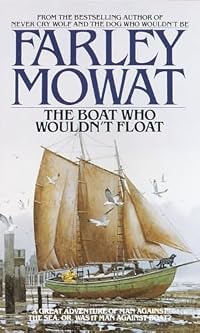
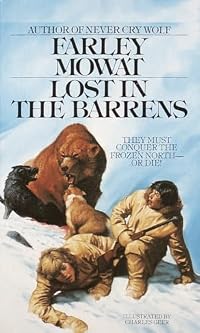
Farley Mowat's nearly forty books have sold millions of copies & have been published in more than twenty languages. His books include "Never Cry Wolf", "Sea of Slaughter", "The Farfarers", "People of the Deer", "The Dog Who Wouldn't Be", "The Desperate People", & "Ordeal by Ice". (Publisher Provided) He is one of Canada's most popular & show more distinguished writers. Through the past five decades he has recorded his experiences in several highly successful books for both adults & children. He has received scores of literary awards & his works have been translated into more than 30 languages. (Publisher Provided) Farley Mowat was born in Belleville, Ontario, Canada on May 12, 1921. During World War II, he fought in the Allied invasion of Sicily. He was discharged in 1945 with the rank of Captain. He studied at the University of Toronto. Farley was an author, activist, and environmentalist. He wrote more than 40 books during his lifetime including both novels and non-fiction works. His books include Never Cry Wolf, My Father's Son, Otherwise, and Eastern Passage. He received several awards including the Queen Elizabeth II Jubilee Medal in 1956, the Governor General's Award for Lost in the Barrens in 1956, the Leacock Medal for Humour for The Boat Who Wouldn't Float in 1970, and the Order of Canada in 1981. He died on May 6, 2014 at the age of 92. (Bowker Author Biography) show less
Awards and Honors
Work Relationships
Is contained in
Is abridged in
Sélection du Livre No. 137 : (1) La bicyclette bleue (1939-1942) - (2) 101, avenue Henri Martin - (3) Mes amis les loups - (4) Les contgrebandiers de Moonfleet by Reader's Digest
Common Knowledge
- Canonical title
- Never Cry Wolf
- Original title
- Never Cry Wolf
- Original publication date
- 1963
- People/Characters
- Farley Mowat
- Important places
- Churchill, Manitoba, Canada; Nueltin Lake, Manitoba, Canada; Canadian Arctic
- Related movies
- Never Cry Wolf (1983 | IMDb)
- Dedication
- For Angeline - the Angel!
- First words
- It is a long way in time and space from the bathroom of my Grandmother Mowat's house in Oakville, Ontario, to the bottom of a wolf den in the Barren Lands of central Keewatin, and I have no intention of retracing the entire r... (show all)oad which lies between.
- Quotations
- The caribou feeds the wolf, but it is the wolf who keeps the caribou strong.
- Last words
- (Click to show. Warning: May contain spoilers.)But for me it was a voice which spoke of the lost world which once was ours before we chose the alien role; a world which I had glimpsed and almost entered . . . only to be excluded, at the end, by my own self.
- Blurbers
- Adams, Phoebe; Dolbier, Maurice; Fuller, Edmund; Gottlieb, Gerald; Graber, David; Kenney, Harry C. (show all 11); Maxwell, George; O'Brien, Tim; Poore, Charles; Prescott, Orville; Schickel, Richard
- Canonical DDC/MDS
- 599.773; 599.8
- Canonical LCC
- QL795.W8
Classifications
Statistics
- Members
- 3,049
- Popularity
- 5,762
- Reviews
- 66
- Rating
- (4.11)
- Languages
- 14 — Chinese, Dutch, English, Estonian, Finnish, French, German, Hungarian, Italian, Norwegian (Bokmål), Norwegian, Polish, Russian, Spanish
- Media
- Paper, Audiobook, Ebook
- ISBNs
- 70
- UPCs
- 1
- ASINs
- 51