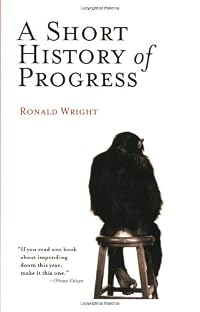
A Short History of Progress
by Ronald Wright
On This Page
Description
"Each time history repeats itself, so it's said, the price goes up. The twentieth century was a time of runaway growth in human population, consumption, and technology, placing a colossal load on all natural systems, especially earth, air, and water -- the very elements of life. The most urgent questions of the twenty-first century are: where will this growth lead? can it be consolidated or sustained? and what kind of world is our present bequeathing to our future? In his #1 bestseller A show more Short History of Progress Ronald Wright argues that our modern predicament is as old as civilization, a 10,000-year experiment we have participated in but seldom controlled. Only by understanding the patterns of triumph and disaster that humanity has repeated around the world since the Stone Age can we recognize the experiment's inherent dangers, and, with luck and wisdom, shape its outcome."-- show lessTags
Recommendations







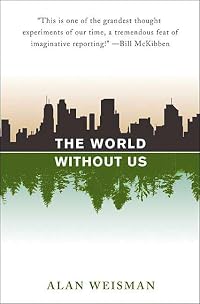
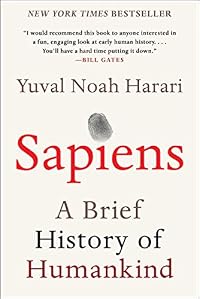
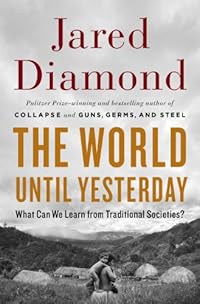









Member Recommendations

Member Reviews
If people had listened to thinking this, we’d living in a civilization ravaged by polio and small pox.
This book aches with shallow thinking, and features the same old Rousseauian pseudo-historical fantasy of the noble savage being more free, and that a better humankind would be possible if we could just stop the people (read those who disagree) who ‘mess it up’. For Rousseau, the problem lay in the social orders of the family, the church, and the local community. For Wright, the problem is found among those who advance the economic strategies or technologies he doesn’t like. Like Rousseau and the socialists of the 19th century who drank down Rousseau’s ideas, Wright looks to the state, regulations, and the use of even show more international power to advance his agenda. We have a name for people who believe that the state should enforce their vision of society on others with global regulations and power. We call them tyrants.
Wright envisions a world where every possible development or invention has to meet his standards of forethought (and political bias) or else presumably be shut down. His uncritical and trendy defacement of the west and our technological advances will win over some undergraduates and the leftist zealots that run the CBC, but the thinking is based on shallow assumptions that come out of the whining of the 60′s and have no basis in fact.
Western culture and progress have lifted millions and generations out of desperate poverty, need and sickness. There’s more to do. There’s risks in going forward. But there are risks in standing still. Wright pretends he has a big perspective that allows him to see “the whole game” and that he is not distracted merely by “watching the ball.” He seems to think that those who’ve advanced technology have been short sighted or unaware in a way that he has avoided. But his pretension is false. His gross generalizations have the appearance of breadth of thought, but they’re actually means of avoiding the details. History runs like a greased pig through his book. His historical trivia is conjectural at best and smacks of a post-structuralist reading of ancient civilizations. His idea that America receives notions of liberty from the North American native community, for example, is just patently false – those ideas originate in Christian thought among Anabaptists in England and on the Continent in the 16th century. And Wright’s suggestion that their communities once had greater degrees of social order sounds quite like Rousseau and other statists who romanticize the noble savage and look in their innocence for some justification of the power structures they want to bring into being.
Indeed, Wright is driven not by history, not by facts, not by evidence, but by fantasy and fear: he’s been suckered by the utopian imaginations of statists; his quivering belly about the future in fact robs him of the future. He’s not thinking deeply and honestly about ‘what will happen next,’ he’s projecting his fears of success and political bias on the future and so comes up with the only answer he can – stop it all and roll us backwards. If Eden is lost, Wright would take us back there by force of government power. What else could possibly constitute “the tools and means to share resources, clean up pollution, dispense basic health care and birth control, set economic limits in line with natural ones”? Only international government power. Wright is a fascist, and probably has such romantic fantasies he doesn’t even recognize it in himself.
All advances come with risk, and that means that those who are risk adverse, if given given the totalitarian power implied in this book, will persecute individual dissenters from their dogma (“the hard men and women of big oil and the far right”), and thereby trap human civilization where it is, or in a worsened limited state. In doing so, they will condemn millions of future human beings to poverty, suffering, and political imprisonment. I say the latter, because people who think like Wright are the despots and villains who rationalize the mistreatment of dissenters, because they won’t let the facts get in the way of their thinking. In the film based on the book, for example, David Suzuki is shown actually calling economics ‘insanity’. Of course no one in the production actually talks to articulate economists openly in order to try and understand their discipline; instead, because economic common sense disables his political agenda, he just ridicules it and pushes it aside. So also Wright. Wright is another prophet of doom that has set himself up for a lucrative university speaking tour. But he is a false prophet, and offers only ideas that will ultimately ruin the lives of millions of people, and sacrifice their freedom, all based on the fears he’s projected, and now sown. show less
This book aches with shallow thinking, and features the same old Rousseauian pseudo-historical fantasy of the noble savage being more free, and that a better humankind would be possible if we could just stop the people (read those who disagree) who ‘mess it up’. For Rousseau, the problem lay in the social orders of the family, the church, and the local community. For Wright, the problem is found among those who advance the economic strategies or technologies he doesn’t like. Like Rousseau and the socialists of the 19th century who drank down Rousseau’s ideas, Wright looks to the state, regulations, and the use of even show more international power to advance his agenda. We have a name for people who believe that the state should enforce their vision of society on others with global regulations and power. We call them tyrants.
Wright envisions a world where every possible development or invention has to meet his standards of forethought (and political bias) or else presumably be shut down. His uncritical and trendy defacement of the west and our technological advances will win over some undergraduates and the leftist zealots that run the CBC, but the thinking is based on shallow assumptions that come out of the whining of the 60′s and have no basis in fact.
Western culture and progress have lifted millions and generations out of desperate poverty, need and sickness. There’s more to do. There’s risks in going forward. But there are risks in standing still. Wright pretends he has a big perspective that allows him to see “the whole game” and that he is not distracted merely by “watching the ball.” He seems to think that those who’ve advanced technology have been short sighted or unaware in a way that he has avoided. But his pretension is false. His gross generalizations have the appearance of breadth of thought, but they’re actually means of avoiding the details. History runs like a greased pig through his book. His historical trivia is conjectural at best and smacks of a post-structuralist reading of ancient civilizations. His idea that America receives notions of liberty from the North American native community, for example, is just patently false – those ideas originate in Christian thought among Anabaptists in England and on the Continent in the 16th century. And Wright’s suggestion that their communities once had greater degrees of social order sounds quite like Rousseau and other statists who romanticize the noble savage and look in their innocence for some justification of the power structures they want to bring into being.
Indeed, Wright is driven not by history, not by facts, not by evidence, but by fantasy and fear: he’s been suckered by the utopian imaginations of statists; his quivering belly about the future in fact robs him of the future. He’s not thinking deeply and honestly about ‘what will happen next,’ he’s projecting his fears of success and political bias on the future and so comes up with the only answer he can – stop it all and roll us backwards. If Eden is lost, Wright would take us back there by force of government power. What else could possibly constitute “the tools and means to share resources, clean up pollution, dispense basic health care and birth control, set economic limits in line with natural ones”? Only international government power. Wright is a fascist, and probably has such romantic fantasies he doesn’t even recognize it in himself.
All advances come with risk, and that means that those who are risk adverse, if given given the totalitarian power implied in this book, will persecute individual dissenters from their dogma (“the hard men and women of big oil and the far right”), and thereby trap human civilization where it is, or in a worsened limited state. In doing so, they will condemn millions of future human beings to poverty, suffering, and political imprisonment. I say the latter, because people who think like Wright are the despots and villains who rationalize the mistreatment of dissenters, because they won’t let the facts get in the way of their thinking. In the film based on the book, for example, David Suzuki is shown actually calling economics ‘insanity’. Of course no one in the production actually talks to articulate economists openly in order to try and understand their discipline; instead, because economic common sense disables his political agenda, he just ridicules it and pushes it aside. So also Wright. Wright is another prophet of doom that has set himself up for a lucrative university speaking tour. But he is a false prophet, and offers only ideas that will ultimately ruin the lives of millions of people, and sacrifice their freedom, all based on the fears he’s projected, and now sown. show less
Way back in 2004, Ronald Wright delivered five lectures for the Massey Lectures series. Together they took as their theme a short history of progress. With the framing device of Paul Gauguin’s questions — Where did we come from? Who are we? Where are we going? — Wright examines civilizations of the past and identifies the factors that caused them to collapse, then highlights the parallels between those civilizations and our current one. The message: history is repeating itself, and the price will be catastrophic if we don’t do anything about it.
The edition I read was the 15th anniversary edition, with a new introduction by the author. The introduction notes that the situation has not improved in the intervening period; in fact, show more it’s become worse. We are continuing, as a society, to put off long-term solutions in favour of short-term convenience, and the window of opportunity to preserve some form of this society is closing rapidly. And the parallels with past civilizations are compelling, particularly those where wealth is concentrated at the top and the rich therefore have a vested interest in preserving the status quo.
The lectures overlap and repeat themselves to a degree; because the lectures are given as a series over several days, this repetition is likely intentional, in case a listener tunes in for the second and has missed the first lecture, for example. The repetition also reinforces the author’s key messages. For the text reader, the lectures are extensively (and visibly!) endnoted.
I would recommend this book in addition to more current ones about the environment and the state of the world. show less
The edition I read was the 15th anniversary edition, with a new introduction by the author. The introduction notes that the situation has not improved in the intervening period; in fact, show more it’s become worse. We are continuing, as a society, to put off long-term solutions in favour of short-term convenience, and the window of opportunity to preserve some form of this society is closing rapidly. And the parallels with past civilizations are compelling, particularly those where wealth is concentrated at the top and the rich therefore have a vested interest in preserving the status quo.
The lectures overlap and repeat themselves to a degree; because the lectures are given as a series over several days, this repetition is likely intentional, in case a listener tunes in for the second and has missed the first lecture, for example. The repetition also reinforces the author’s key messages. For the text reader, the lectures are extensively (and visibly!) endnoted.
I would recommend this book in addition to more current ones about the environment and the state of the world. show less
Wright's presentation is an engaging critique of human technical/material progress from the origin of the species to the present. He satisfied my appreciation for doom and gloom but not so much my guilty desire for evidence of widespread unspoiled life in harmony with nature prior to civilization. Instead he suggests that humans built civilization as soon as they had the chance, evidenced by the development of agriculture, etc., apparently at the same time the longest period of climate stability (the Holocene) commenced. He suspects Homo sapiens of violent conflict and eventual genocide against neanderthals as well having as a significant role in the extinctions of the Pleistocene megafauna, which he also suggests was a reason for the show more advent of agriculture and mass migration.
He sees all these as just the first in a recurrent, seemingly inevitable, series of "progress traps" into which every previous civilization has fallen and subsequently collapsed. He also recognizes the the qualitatively different character of this particular iteration of the "great experiment," pointing out that while all previous collapses have had causes and consequences that were localized, the modern environmental crisis and civilization responsible are both global. The collapse must be global too.
But his solution is insufficient at best: "The reform that is needed is not anti-capitalist, anti-American, or even deep environmentalist; it is simply the transition from short-term to long-term thinking." He, like almost everyone who remains in the mainstream, naively thinks the necessary changes can be made as long as the New Right and Christians anticipating the end of the world are kept at bay so that this magical political change may proceed. Instead, the predictable "ideological pathology" of progress persists in a post-Bush world. As the world observes in 2009, Wright's warning rings true: "Hope elects the politician with the biggest empty promise."
The "ideological pathology" (my favorite term in the book) of the pursuit of infinite growth isn't limited to the Christians or Republicans, and there is no reason to hope that it will be challenged within the mainstream as long as the Orwellian illusions like "green shoots" can be effectively evoked. But I agree that long-term thinking is the key to escaping the progress trap. Governments have proven they are part of the trap, however. show less
He sees all these as just the first in a recurrent, seemingly inevitable, series of "progress traps" into which every previous civilization has fallen and subsequently collapsed. He also recognizes the the qualitatively different character of this particular iteration of the "great experiment," pointing out that while all previous collapses have had causes and consequences that were localized, the modern environmental crisis and civilization responsible are both global. The collapse must be global too.
But his solution is insufficient at best: "The reform that is needed is not anti-capitalist, anti-American, or even deep environmentalist; it is simply the transition from short-term to long-term thinking." He, like almost everyone who remains in the mainstream, naively thinks the necessary changes can be made as long as the New Right and Christians anticipating the end of the world are kept at bay so that this magical political change may proceed. Instead, the predictable "ideological pathology" of progress persists in a post-Bush world. As the world observes in 2009, Wright's warning rings true: "Hope elects the politician with the biggest empty promise."
The "ideological pathology" (my favorite term in the book) of the pursuit of infinite growth isn't limited to the Christians or Republicans, and there is no reason to hope that it will be challenged within the mainstream as long as the Orwellian illusions like "green shoots" can be effectively evoked. But I agree that long-term thinking is the key to escaping the progress trap. Governments have proven they are part of the trap, however. show less
Most of us take civilization for granted—Ronald Wright does not.
For Wright, civilization is a relatively recent experiment with devastating consequences in many of its forms. He centres his talks on four main societies that all self-destructed:
1. Sumer
2. Rome
3. Maya
4. Easter Island
Societies destroy themselves when they (seemingly inevitably) overuse their environmental assets. The societies which didn't self-destruct (Egypt and China) only remained viable because of their special-case natural resources. China had an abnormal amount of topsoil which sustained their soil-degrading farming practices, while Egypt had the Nile which brought new resources from the South every season.
This is a stern warning to us since Western society is show more following all the societies that crashed before it. As the cynical graffiti says, "Each time history repeats itself, the price goes up" (107).
Wright's argument is solid, although his cavalier throw-away statements towards Judaism and Christianity are irritating. Take this example in his discussion about ancient Sumer:
"Legends we know from the Hebrew Bible—the Garden of Eden, the Flood—appear in Gilgamesh in earlier forms, along with other tales deemed too racy, perhaps, for inclusion in the Pentateuch" (65).
He's half right—the Garden of Eden and the Flood do exist in earlier literary form in Gilgamesh. He wildly misunderstands the nature of the Pentateuch, though. Those ancient stories were rewritten as a polemic against the surrounding nation's polytheistic milieu.
(Also, if Wright thinks Gilgamesh contains stories too racy for the Pentateuch, then he clearly hasn't read the Pentateuch!)
Despite these minor irritations, A Short History of Progress is a highly readable ecological treatise. It deserves a wide reading today. show less
For Wright, civilization is a relatively recent experiment with devastating consequences in many of its forms. He centres his talks on four main societies that all self-destructed:
1. Sumer
2. Rome
3. Maya
4. Easter Island
Societies destroy themselves when they (seemingly inevitably) overuse their environmental assets. The societies which didn't self-destruct (Egypt and China) only remained viable because of their special-case natural resources. China had an abnormal amount of topsoil which sustained their soil-degrading farming practices, while Egypt had the Nile which brought new resources from the South every season.
This is a stern warning to us since Western society is show more following all the societies that crashed before it. As the cynical graffiti says, "Each time history repeats itself, the price goes up" (107).
Wright's argument is solid, although his cavalier throw-away statements towards Judaism and Christianity are irritating. Take this example in his discussion about ancient Sumer:
"Legends we know from the Hebrew Bible—the Garden of Eden, the Flood—appear in Gilgamesh in earlier forms, along with other tales deemed too racy, perhaps, for inclusion in the Pentateuch" (65).
He's half right—the Garden of Eden and the Flood do exist in earlier literary form in Gilgamesh. He wildly misunderstands the nature of the Pentateuch, though. Those ancient stories were rewritten as a polemic against the surrounding nation's polytheistic milieu.
(Also, if Wright thinks Gilgamesh contains stories too racy for the Pentateuch, then he clearly hasn't read the Pentateuch!)
Despite these minor irritations, A Short History of Progress is a highly readable ecological treatise. It deserves a wide reading today. show less
"Where do we come from? What are we? Where are we going?"
Ronald Wright attempts to answer the last question in this eye-opening exposition. The first two questions are to some extent already answered; evolution splintered us from the ape family and thousands of years later we became homo-sapiens.
Wright explains that the ruins that were left behind from past civilizations tell a story. Just like the black box of a downed plane, we should study and learn why these empires fell. This is where the concept of "progress traps" comes in. These traps are pitfalls that early humans fell victim to which lead to their eventual downfall. One example is the perfecting of hunting which lead to the extinction of many animals. Over-cultivating the land show more is another. If we overkill a population of animal or we continually farm the land over and over until it becomes an arid wasteland (like ancient Sumer in present day Iraq) then we are doomed. No more meat to eat and no land to grow crops on.
Are we currently in a progress trap? Nuclear weapons are still a threat. Deforestation is still happening throughout our planet. Pollution via the burning of fossil fuels and other noxious gases continues to harm the biosphere. The earth will repair itself despite our repeated mistakes however the human race will be but a memory.
"There is still hope; though not for us" show less
Ronald Wright attempts to answer the last question in this eye-opening exposition. The first two questions are to some extent already answered; evolution splintered us from the ape family and thousands of years later we became homo-sapiens.
Wright explains that the ruins that were left behind from past civilizations tell a story. Just like the black box of a downed plane, we should study and learn why these empires fell. This is where the concept of "progress traps" comes in. These traps are pitfalls that early humans fell victim to which lead to their eventual downfall. One example is the perfecting of hunting which lead to the extinction of many animals. Over-cultivating the land show more is another. If we overkill a population of animal or we continually farm the land over and over until it becomes an arid wasteland (like ancient Sumer in present day Iraq) then we are doomed. No more meat to eat and no land to grow crops on.
Are we currently in a progress trap? Nuclear weapons are still a threat. Deforestation is still happening throughout our planet. Pollution via the burning of fossil fuels and other noxious gases continues to harm the biosphere. The earth will repair itself despite our repeated mistakes however the human race will be but a memory.
"There is still hope; though not for us" show less
I have read many, but not all of the CBC Massey Lectures and this one for me is the best of them rivalled only by Richard Lewontin's Biology as Ideology. It is a thoughtful exposition on the impact that previous cultures have had on their environment leading to their own demise. Wright is clearly using these historical examples to shed light on our current situation and is saying "if those goes on..."
I like this rating system by ashleytylerjohn of LibraryThing (https://www.librarything.com/profile/ashleytylerjohn) that I have also adopted:
(Note: 5 stars = rare and amazing, 4 = quite good book, 3 = a decent read, 2 = disappointing, 1 = awful, just awful.)
I like this rating system by ashleytylerjohn of LibraryThing (https://www.librarything.com/profile/ashleytylerjohn) that I have also adopted:
(Note: 5 stars = rare and amazing, 4 = quite good book, 3 = a decent read, 2 = disappointing, 1 = awful, just awful.)
What made ancient civilizations die? Rome? Mesopotamia? China? Egypt? The Maya? Even Easter Islanders? That's the central question of this book by Canadian author and thinker Ronald Wright. I understand he first introduced these themes as part of a famous Canadian lecture series.
He argues that ancient Egypt, Mesopotamia, Rome, China, Maya, Incas, and others destroyed themselves, in large part, by using up and not replenishing their natural resources. Eventually, there were no fertile fields to farm, and thus no food to feed their populations. China and Egypt managed to endure longer than the others because they had the natural endowment of a more fertile floodplain that replenished the soil regularly, whereas Mesopotamia (Iraq) and show more others did not. There is a predictable cycle for this destruction, Wright explains, hoping that we can learn lessons for our own day and age before we follow their destructive patterns to the point of no return.
I picked this book up in a used library book sale at the St. George branch of the Washington County library a week ago and found his thesis interesting. I enjoyed his cross-disciplinary expertise, his pithy style, and his ability to explain and connect the major events in these civilizations' history in a way that gave me a bigger picture view of what was happening concurrently across the earth.
Towards the end of the book, he injects his modern-day political opinions into the conversation--which I did not appreciate. I'm trying to move away from that type of discourse because it is so partisan and narrow. Overall though, Wright gives a quick but erudite take on what we can learn from the great civilizations of the past before we follow their unfortunate, but predictable path. show less
He argues that ancient Egypt, Mesopotamia, Rome, China, Maya, Incas, and others destroyed themselves, in large part, by using up and not replenishing their natural resources. Eventually, there were no fertile fields to farm, and thus no food to feed their populations. China and Egypt managed to endure longer than the others because they had the natural endowment of a more fertile floodplain that replenished the soil regularly, whereas Mesopotamia (Iraq) and show more others did not. There is a predictable cycle for this destruction, Wright explains, hoping that we can learn lessons for our own day and age before we follow their destructive patterns to the point of no return.
I picked this book up in a used library book sale at the St. George branch of the Washington County library a week ago and found his thesis interesting. I enjoyed his cross-disciplinary expertise, his pithy style, and his ability to explain and connect the major events in these civilizations' history in a way that gave me a bigger picture view of what was happening concurrently across the earth.
Towards the end of the book, he injects his modern-day political opinions into the conversation--which I did not appreciate. I'm trying to move away from that type of discourse because it is so partisan and narrow. Overall though, Wright gives a quick but erudite take on what we can learn from the great civilizations of the past before we follow their unfortunate, but predictable path. show less
Members
- Recently Added By
Published Reviews
...a brief, trenchant essay.
added by GYKM
What really needs some psychological excavation is Ronald Wright's mind, which carries a set of inflated, emotionally based moralistic assumptions derived from the structure of his primitive ignorance about markets and economics.
added by GYKM
...an elegant and learned discussion
added by GYKM
Lists

Massey Lectures
6 works; 1 member

The Joe Rogan Experience Library
254 works; 3 members
The (So-Called) Canada Pill
150 works; 1 member

Books cited in Progress by Samuel McDonald
160 works; 1 member
Author Information

Awards and Honors
Series
Belongs to Publisher Series
CBC Massey Lectures (2004)
Common Knowledge
- Original publication date
- 2004-10-23
- Related movies
- Surviving Progress (2011 | IMDb)
- Epigraph
- Long ago ...
No one tore the ground with ploughshares
or parcelled out the land
or swept the sea with dipping oars --
the shore was the world's end.
Clever human nature, victim of your inventions,
disastrous... (show all)ly creative,
why cordon cities with towered walls?
Why arm for war?
-- Ovid, Amores, Book 3 - Dedication
- For my mother,
Shirley Phyllis Wright - First words
- The French painter and writer Paul Gauguin -- by most accounts mad, bad, and dangerous to know -- suffered acutely from cosmological vertigo induced by the work of Darwin and other Victorian scientists.
- Last words
- (Click to show. Warning: May contain spoilers.)Now is our last chance to get the future right.
Classifications
Statistics
- Members
- 1,274
- Popularity
- 19,022
- Reviews
- 30
- Rating
- (3.89)
- Languages
- 9 — Dutch, English, French, German, Italian, Portuguese, Serbian, Spanish, Turkish
- Media
- Paper, Audiobook, Ebook
- ISBNs
- 25
- ASINs
- 8