The Autobiography of a Runaway Slave
by Miguel Barnet, Esteban Montejo
On This Page
Description
"Valuable new version of Biografía de un cimarrón includes Hill's expert translation; brief but informative preface about Esteban Montejo (the book's first-person narrator); Barnet's afterword (which replaces, albeit partially, his original introduction), in which he explains his understanding of literatura testimonal; and a glossary of terms. Original work was first translated as Autobiography of a runaway slave by Jocasta Innes (1968)"--Handbook of Latin American Studies, v. 58.Tags
Recommendations


















Member Reviews
This is an extraordinary memoir from a man who was born a slave on a plantation in Cuba circa 1860. Montejo came to the attention of Barnet because of a 1963 newspaper article celebrating Cubans who were over 100 years old. Barnet began interviewing Montejo at the Veteran’s Home, and later transcribed those interviews into this book. It covers at most the first 40 years of Montejo’s life, ending shortly after Cuba won independence from Spain.
I was almost immediately reminded of the stories my grandfather (and later my father) would tell about his youthful escapades; this is no doubt a result of Barnet having transcribed Montejo’s oral storytelling. I particularly enjoyed his memories of living by his wits in the jungle forests show more after escaping slavery. He outlines the ways he found (or made) shelter, food, and healing plants. Montejo also gives us a lot of his own personal philosophy – how he judges the people he meets, why he keeps his own counsel, opinions on Spaniards, Americans and Catholic priests. He recounts the legends and foundations of various African, Creole or Canary Island religions, and explains how to avoid curses, ghosts, witches, and demons. He is an astute judge of character and is brutally honest about the virtues and vices of people he encountered during these years. Some of his political observations ring just as true about today’s situations as about Cuba in the late 19th century. And he is open about the brutalities of war as well.
Having read this memoir, I wish I could have met this man … who learned to read at age 108 so he could read the book! (He lived to the age of 113.) show less
I was almost immediately reminded of the stories my grandfather (and later my father) would tell about his youthful escapades; this is no doubt a result of Barnet having transcribed Montejo’s oral storytelling. I particularly enjoyed his memories of living by his wits in the jungle forests show more after escaping slavery. He outlines the ways he found (or made) shelter, food, and healing plants. Montejo also gives us a lot of his own personal philosophy – how he judges the people he meets, why he keeps his own counsel, opinions on Spaniards, Americans and Catholic priests. He recounts the legends and foundations of various African, Creole or Canary Island religions, and explains how to avoid curses, ghosts, witches, and demons. He is an astute judge of character and is brutally honest about the virtues and vices of people he encountered during these years. Some of his political observations ring just as true about today’s situations as about Cuba in the late 19th century. And he is open about the brutalities of war as well.
Having read this memoir, I wish I could have met this man … who learned to read at age 108 so he could read the book! (He lived to the age of 113.) show less
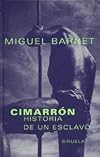
Esteban Montejo, un viejo revolucionario mambí, afrocubano y nacido esclavo, cuenta su vida a un joven autor de veintitrés años, Miguel Barnet. Lo hace en 1963, en un país en el que una revolución triunfante apuesta por recuperar «la historia de la gente sin historia», por desenterrar la memoria silenciada de las rebeliones populares. Los recuerdos de la vida cotidiana del anciano se imbrican con algunos hechos históricos trascendentales para la historia de Cuba: el régimen de terror en los ingenios azucareros, los cimarrones huidos al monte, la abolición de la esclavitud, la guerra de Independencia... Y así, con paso discreto y dejando a su memoria discurrir libremente, Montejo incorpora a la suya muchas otras voces, las de show more tantos hombres y mujeres anónimos que han conformado el sustrato identitario de la isla caribeña. show less
Jul 5, 2022Spanish
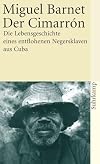
Miguel Barnet erzählt die die Geschichte von Esteban Montejo, einem 1859 auf Kuba geborenen schwarzen Sklaven, der als Jugendlicher von der Plantage flieht und bis zur Abschaffung der Sklaverei 1880 als sogenannter "Cimarrón" in den Bergen versteckt lebt. Weiters beschreibt das Werk auch noch die Teilnahme Montejos als Guerillero am kubanischen Unabhängigkeitskrieg.
Barnet gibt vor, die Geschichte Montejos auf der Basis von 1963 gemachten Tonbandaufzeichnungen in dessen eigenen Worten zu erzählen. Die Sprache ist dementsprechend schlicht, dennoch hat Barnet die Erinnerungen Montejos äußerst überzeugend arrangiert. Er verschafft dem Leser einen spannenden und lebhaften Einblick in das Leben der Schwarzen im Kuba des 19. show more Jahrhunderts, wie es ein Geschichtsbuch nicht zu tun vermag. Mittlerweile geht die Literaturwissenschaft davon aus, dass Barnet sich einige künstlerische Freiheit herausgenommen hat, was die Lesefreude aber nicht im Geringsten trübt. show less
Barnet gibt vor, die Geschichte Montejos auf der Basis von 1963 gemachten Tonbandaufzeichnungen in dessen eigenen Worten zu erzählen. Die Sprache ist dementsprechend schlicht, dennoch hat Barnet die Erinnerungen Montejos äußerst überzeugend arrangiert. Er verschafft dem Leser einen spannenden und lebhaften Einblick in das Leben der Schwarzen im Kuba des 19. show more Jahrhunderts, wie es ein Geschichtsbuch nicht zu tun vermag. Mittlerweile geht die Literaturwissenschaft davon aus, dass Barnet sich einige künstlerische Freiheit herausgenommen hat, was die Lesefreude aber nicht im Geringsten trübt. show less
Mar 31, 2015German
La obra trata sobre el testimonio que Barnet obtuvo en entrevistas a Esteban Montejo, un hombre negro de 104 años que había pasado tres etapas en su vida que reflejan el contexto de los momentos históricos que le toco vivir: como esclavo, como trabajador emancipado y como combatiente en la guerra de independencia de Cuba.
Oct 31, 2024Spanish
Relato testimonial recogido por Miguel Barnet a partir de la vida de Esteban Montejo, un cimarrón cubano cuya historia ofrece una de las fuentes más significativas sobre la esclavitud, el cimarronaje y la vida rural en el siglo XIX en Cuba.
Dec 7, 2025Spanish
Esteban Montejo,através de él actor del proceso Histórico Cubano.
Miembro del Partido Socialista Popular.
Miembro del Partido Socialista Popular.
Jun 7, 2020Spanish
Ratings
Members
- Recently Added By
Lists

Reading list
170 works; 1 member
Author Information

31+ Works 142 Members
Miguel Barnet, director of the Fernando Ortiz Foundation in Havana
5 Works 267 Members
All Editions
Some Editions
Awards and Honors
Series
Belongs to Publisher Series
Common Knowledge
- Canonical title
- The Autobiography of a Runaway Slave
- Original title
- Biografía de un cimarrón
- Original publication date
- 1966 (1e édition originale cubaine, Instituto de etnología y folklore, La Havane, Cuba) (1e édition originale cubaine, Instituto de etnología y folklore, La Havane, Cuba); 1968-01-26 (1e traduction et édition française ∙ Témoins ∙ Gallimard) (1e traduction et édition française ∙ Témoins ∙ Gallimard)
- Important places*
- Cuba
- Original language*
- Espagnol (Cuba) (Cuba)
*Some information comes from Common Knowledge in other languages. Click "Edit" for more information.
Classifications
Statistics
- Members
- 263
- Popularity
- 122,427
- Reviews
- 6
- Rating
- (3.52)
- Languages
- 6 — English, French, German, Italian, Portuguese, Spanish
- Media
- Paper, Audiobook, Ebook
- ISBNs
- 36
- ASINs
- 9