The Book: A Cover-to-Cover Exploration of the Most Powerful Object of Our Time
by Keith Houston
On This Page
Description
Reveals how books and the materials that make them reflect the history of human civilization, tracing the development of writing, printing, illustrating, and binding to demonstrate the transition from cuneiform tablets and papyrus scrolls to the mass-distributed books of today. "We may love books, but do we know what lies behind them? In The Book, Keith Houston reveals that the paper, ink, thread, glue, and board from which a book is made tell as rich a story as the words on its pages--of show more civilizations, empires, human ingenuity, and madness. In an invitingly tactile history of this 2,000-year-old medium, Houston follows the development of writing, printing, the art of illustrations, and binding to show how we have moved from cuneiform tablets and papyrus scrolls to the hardcovers and paperbacks of today. Sure to delight book lovers of all stripes with its lush, full-color illustrations, The Book gives us the momentous and surprising history behind humanity's most important--and universal--information technology."--Back cover. show lessTags
Recommendations












Member Reviews
“All this painstaking excavation, chemical analysis, and historical investigation only hinted at what Chinese scholars, historians, and even schoolchildren had known all along. Paper was invented in China
. . . Had those nineteenth-century Westerners thought to ask, the Chinese could have even told them the name of the man who invented it.”
In what may be the most meta- publication ever, it’s a book about books: their history, construction, and evolution from clay tablets to papyrus to parchment to Chinese woodblocks to Gutenberg prints to pulp paperbacks to computer typesetting to e-readers.
It’s a very satisfying book in a very physical, bookish sort of way that no screen device could ever be. It features color photos and show more illustrations and beautiful typography with ornamented section breaks and drop caps picked out in scarlet. There are even labels pointing out what the names of all the elements of a book are, like “chapter title,” “frontmatter head,” and so on. These may seem like whimsical additions now but who knows? Kids who grow up reading nothing longer than the captions on social media posts might need this information if they decide to become archaeologists or something.
The content is as rewarding as the form. Many might not think that the historical progression of papyrus scrolls to modern paperbacks could be terribly exciting, but it’s more interesting than you’d suspect. Like the curious fact that books have been roughly the same size and shape since at least the fourth century. Why have they been that size? Or how, without going into too much detail, you may not realize how the fate of book-making in general depended on how much underwear people threw out. This and other interesting tidbits become clear as you read. And the reading is easy. Houston’s style is open, entertaining, and informative.
So if you enjoy books for the sake of them just being books, and you’re the kind of person like me who’d rather know something than not know something, you may find it interesting too. show less
. . . Had those nineteenth-century Westerners thought to ask, the Chinese could have even told them the name of the man who invented it.”
In what may be the most meta- publication ever, it’s a book about books: their history, construction, and evolution from clay tablets to papyrus to parchment to Chinese woodblocks to Gutenberg prints to pulp paperbacks to computer typesetting to e-readers.
It’s a very satisfying book in a very physical, bookish sort of way that no screen device could ever be. It features color photos and show more illustrations and beautiful typography with ornamented section breaks and drop caps picked out in scarlet. There are even labels pointing out what the names of all the elements of a book are, like “chapter title,” “frontmatter head,” and so on. These may seem like whimsical additions now but who knows? Kids who grow up reading nothing longer than the captions on social media posts might need this information if they decide to become archaeologists or something.
The content is as rewarding as the form. Many might not think that the historical progression of papyrus scrolls to modern paperbacks could be terribly exciting, but it’s more interesting than you’d suspect. Like the curious fact that books have been roughly the same size and shape since at least the fourth century. Why have they been that size? Or how, without going into too much detail, you may not realize how the fate of book-making in general depended on how much underwear people threw out. This and other interesting tidbits become clear as you read. And the reading is easy. Houston’s style is open, entertaining, and informative.
So if you enjoy books for the sake of them just being books, and you’re the kind of person like me who’d rather know something than not know something, you may find it interesting too. show less
Fascinating, well-written, and nicely designed exploration into the varied histories of the main aspects of what makes a book, a book. Materials to write on (the march from papyrus to parchment to paper), the development of text (from hieroglyphics and cuneiform to mechanical and photo-mechanical typesetting machines), the parallel development of printing techniques as required for non-type elements such as illustrations (from woodcut via copper plate up to offset lithography) and the physical form of pages and bookbinding.
Of necessity, the author jumps about a bit (chronologically and geographically) but his reasons for doing so are clear and it doesn't result in a messy tangle as it easily could have done. Also, I don't think I was show more distracted by a single typo throughout.
(The only drop of half a star is, ironically, for one aspect of the physical form of the thing: the bare, uncovered boards of the cover are already softening and fraying at the corners. For this reason I've ordered some brass book corner protectors, which I intend – when they arrive – to affix for strengthening. This will be apt, I think, as it will impart a little personalization and craftsmanship befitting the subject's history.) show less
Of necessity, the author jumps about a bit (chronologically and geographically) but his reasons for doing so are clear and it doesn't result in a messy tangle as it easily could have done. Also, I don't think I was show more distracted by a single typo throughout.
(The only drop of half a star is, ironically, for one aspect of the physical form of the thing: the bare, uncovered boards of the cover are already softening and fraying at the corners. For this reason I've ordered some brass book corner protectors, which I intend – when they arrive – to affix for strengthening. This will be apt, I think, as it will impart a little personalization and craftsmanship befitting the subject's history.) show less
I have to start by saying this poor book was an innocent bystander to the just-completed 2017 BookLikes-opoly game. That is the only reason it took me 2.5 months to read it; it certainly wasn't due to any shortcomings on the part of the subject or writing itself.
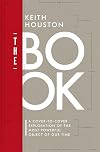
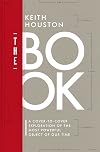
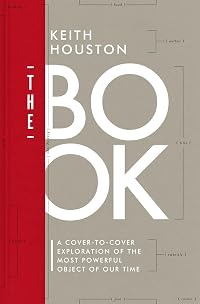
The Book is exactly what it says it is on the cover: a history of every physical aspect of the book as we know it today; from the creation of the writing surface (clay, wax, papyrus, parchment, paper) to the development of writing itself, the process of putting one on the other, and the evolution of the useable and practical units (scrolls, codices, etc.) of collection. Each part of what makes up the book is labeled, as can be seen on the cover itself. No part is ever labeled show more more than once so it doesn't become tedious.
Far from being the dry, academic dissertation my description makes it sound like, The Book is really well written and very easy reading. The author is knowledgeable and just relaxed enough and funny enough to remind you of a really good, relatable professor whose lectures you never mind attending. Enjoyable enough, even, that a few dropped articles from the text weren't quite enough for me to ding my rating. For those academically minded, there are very comprehensive notes and bibliography sections at the back.
I have the hardcover edition of this and it is beautiful. As close as you can come, I imagine, to a handmade book on a mass market scale. My only quibble is that in the spirit of showing the reader what a book is made of, the covers are left as the raw fibreboard; it looks nice but it's not going to be durable unless care is taken with the corners. I intend to take care, but still, I half wish they'd at least varnished the boards as a way of reinforcing those delicate corners.
If you not only love books for the stories they contain, but for the physical objects that they are, and you enjoy a bit of history, this book might be one for your permanent collection and it's very much worth having the physical hardcover edition - just make sure to watch those corners. show less
The Book is exactly what it says it is on the cover: a history of every physical aspect of the book as we know it today; from the creation of the writing surface (clay, wax, papyrus, parchment, paper) to the development of writing itself, the process of putting one on the other, and the evolution of the useable and practical units (scrolls, codices, etc.) of collection. Each part of what makes up the book is labeled, as can be seen on the cover itself. No part is ever labeled show more more than once so it doesn't become tedious.
Far from being the dry, academic dissertation my description makes it sound like, The Book is really well written and very easy reading. The author is knowledgeable and just relaxed enough and funny enough to remind you of a really good, relatable professor whose lectures you never mind attending. Enjoyable enough, even, that a few dropped articles from the text weren't quite enough for me to ding my rating. For those academically minded, there are very comprehensive notes and bibliography sections at the back.
I have the hardcover edition of this and it is beautiful. As close as you can come, I imagine, to a handmade book on a mass market scale. My only quibble is that in the spirit of showing the reader what a book is made of, the covers are left as the raw fibreboard; it looks nice but it's not going to be durable unless care is taken with the corners. I intend to take care, but still, I half wish they'd at least varnished the boards as a way of reinforcing those delicate corners.
If you not only love books for the stories they contain, but for the physical objects that they are, and you enjoy a bit of history, this book might be one for your permanent collection and it's very much worth having the physical hardcover edition - just make sure to watch those corners. show less
I’ve been meaning to read this for a long time, even before I picked up Houston’s Shady Characters a few years ago. Although I had more fun reading that one, I’m glad I finally got to this meticulously researched history of books.
This book has everything—every little detail about the history of the book. There are nearly 80 pages dedicated to the origin and development of paper, from papyrus to parchment to paper in its various forms. So many interesting facts, and I fear many of them will fall out of my head. For some reason the one that springs to mind as I write this is that paper used to be made from old rags. Weird, right?
So besides all the stuff about paper, there’s a lot on the evolution of writing, from cuneiform to show more typesetting; the history of illustration in books; and the structure of books, from scrolls to codex.
One of my favorite chapters was “Ties That Bind: binding the paged book.” It was neat, because I could look at the book in my hand and see what he was describing, even when he was talking about techniques dating back 1,000 years. So even though in some respects I wish I’d had this on kindle so I could have highlighted, I’m glad I had the hardcover. And not only so I could study the binding—the design of the book is really cool. Every part is labeled like it’s in a diagram, it has a nifty cover, and the page color and font (11 point Adobe Jenson Pro Light, if you must know) are easy on the eyes.
It really is lovely. show less
This book has everything—every little detail about the history of the book. There are nearly 80 pages dedicated to the origin and development of paper, from papyrus to parchment to paper in its various forms. So many interesting facts, and I fear many of them will fall out of my head. For some reason the one that springs to mind as I write this is that paper used to be made from old rags. Weird, right?
So besides all the stuff about paper, there’s a lot on the evolution of writing, from cuneiform to show more typesetting; the history of illustration in books; and the structure of books, from scrolls to codex.
One of my favorite chapters was “Ties That Bind: binding the paged book.” It was neat, because I could look at the book in my hand and see what he was describing, even when he was talking about techniques dating back 1,000 years. So even though in some respects I wish I’d had this on kindle so I could have highlighted, I’m glad I had the hardcover. And not only so I could study the binding—the design of the book is really cool. Every part is labeled like it’s in a diagram, it has a nifty cover, and the page color and font (11 point Adobe Jenson Pro Light, if you must know) are easy on the eyes.
It really is lovely. show less
If you enjoy book history and/or discussions of the book as object, you should definitely pick up this book. Divided into four sections (the page, the text, illustrations, and form), Houston explores the history of the book from its early roots to its current form. He covers thousands of years of history with thoroughly enjoyable writing and occasional dashes of humour that had me laughing out loud. The book is also a gorgeous object on its own (I highly recommend picking this one up in hardcover), with lovely high quality paper and, as evidenced from the annotations on the cover, it also highlights the technical terms for the content in a fun way. Solidly recommended if you enjoy the subject.
If you have any interest in books as books, i.e. as a physical object, then The Book is the book for you. Weaving together the histories of paper, writing, illustration, printing, and book binding Houston delivers an epic tale that explains the cultures, individuals, and occasional humorous incidents that lead to the development of the object that changed the world. He also manages to use The Book itself as a practical exhibit in describing the technical aspects of how a book is made and why its design has remained essentially unchanged for millennia. An essential read for any bibliophile.
I judged this book by its cover. That is, I bought it because of its cover. The large explanatory brackets illustrating parts of the book: "title"; "head"; "fore-edge"; "hinge"; et cetera. This continues inside the book as well. There are numerous illustrations, most of them in color, which is rare for most books. It is put together well, it is pretty.
It is also breezingly written. It is fun, it is interesting. The history of paper, scrolls, codices, printing, ink, movable type, and so forth. If you enjoy the history of the book, this book will not disappoint.
There are citations, which is nice. Almost everything is sourced to secondary sources, though many of them are to web site URLs, which is a bit odd. In a book about the history show more and importance of books. One thing bugged me, at the end. "...Secretary of State Herbert Hoover's personal letter paper..." (p. 327). Herbert Hoover was never Secretary of State. In 1921, he was newly appointed Secretary of Commerce. If such a minor, but glaring, error can creep into Houston's text, it makes me wonder and doubt many of the facts that preceded the error. Oops. show less
It is also breezingly written. It is fun, it is interesting. The history of paper, scrolls, codices, printing, ink, movable type, and so forth. If you enjoy the history of the book, this book will not disappoint.
There are citations, which is nice. Almost everything is sourced to secondary sources, though many of them are to web site URLs, which is a bit odd. In a book about the history show more and importance of books. One thing bugged me, at the end. "...Secretary of State Herbert Hoover's personal letter paper..." (p. 327). Herbert Hoover was never Secretary of State. In 1921, he was newly appointed Secretary of Commerce. If such a minor, but glaring, error can creep into Houston's text, it makes me wonder and doubt many of the facts that preceded the error. Oops. show less
Members
- Recently Added By
Lists

Top Five Books of 2017
757 works; 230 members

Top Five Books of 2016
795 works; 229 members

Reading Glasses Podcast
410 works; 3 members

On Books
70 works; 1 member

Books Read in 2025
4,091 works; 97 members
Author Information

4 Works 1,777 Members
Keith Houston is the creator of the Shady Characters blog, ShadyCharacters.co.uk. He and his wife live in Edinburgh, Scotland.
Awards and Honors
Distinctions
Notable Lists
Common Knowledge
- Canonical title*
- The Book
- Original title
- The Book: A Cover-to-Cover Exploration of the Most Powerful Object of Our Time
- Original publication date
- 2016
- People/Characters
- Cai Lun; Gaius Plinius Secundus
- Dedication
- To my parents, Liz and Jim
- First words
- Introduction
This is a book about books.
Part 1
The Page
1
A Clean Sheet: The Invention of Papyrus
Ever since Napoleon swept into Egypt at the tail end of the eighteenth century, ushering in the modern era of Egyptology, the outside world has thri... (show all)lled to successive revelations of golden death masks and boy kings; of beautiful queens and matchless libraries; and of million-ton pyramids aligned to the points of the compass with uncanny precision. - Quotations
- Confronted with an ivory sheet of taut, smooth vellum, it is easy to forget its origins in the flesh.
For all its preternatural smoothness and seductive appearance, though, parchment cannot escape its provenance. Whether it was made yesterday or a thousand years ago, a sheet of parchment is the end product of a bloody, protra... (show all)cted, and very physical process that begins with the death of a calf, lamb, or kid, and proceeds thereafter through a series of grimly anatomical steps until parchment emerges at the other end. Like laws and sausages, if you love parchment it is perhaps best not to see it being made.
This, then, is parchment: the pale, virginal product of a bloody manufacturing process; a delicate writing surface that can withstand desert heat and European chill for centuries or even millennia; the medium upon which ancie... (show all)nt and medieval writers set down the most important religious, literary, and scientific tracts of their times. Write with a good pen on a piece of parchment and you may wish you never had to go back to paper again—so why are none of today's books printed on it? - Last words
- (Click to show. Warning: May contain spoilers.)Five centuries on, Aldus Manutius's experiment is alive and well.
(Click to show. Warning: May contain spoilers.)Welcome to The Book.
(Click to show. Warning: May contain spoilers.)Thank you all! - Blurbers
- Spiekermann, Erik
- Original language
- English
*Some information comes from Common Knowledge in other languages. Click "Edit" for more information.
Classifications
- Genres
- History, Nonfiction, General Nonfiction, Art & Design
- DDC/MDS
- 002.09 — Computer science, information & general works Computer science, knowledge & systems Books (Science and history of the book) Standard subdivisions Biography and History
- LCC
- Z4 .H68 — Bibliography, Library Science and Information Resources Books (General). Writing. Paleography History of books and bookmaking
- BISAC
Statistics
- Members
- 826
- Popularity
- 33,206
- Reviews
- 17
- Rating
- (4.08)
- Languages
- Chinese, Dutch, English, Polish
- Media
- Paper, Audiobook, Ebook
- ISBNs
- 6
- UPCs
- 1
- ASINs
- 3