
Roderick Cave (1935–2019)
Author of The History of the Book in 100 Books
About the Author
Image credit: Roderick Cave with George lll at the British Library
Works by Roderick Cave
Associated Works
The Private Library: Vol 2 No 2 Summer1969 : Quarterly Journal of the Private Libraries Association (1969) — Contributor — 2 copies
Tagged
Common Knowledge
- Birthdate
- 1935-09-08
- Date of death
- 2019-06-12
- Gender
- male
- Organizations
- Loughborough College of Further Education (School of Librarianship)
Private Libraries Association - Nationality
- UK
- Associated Place (for map)
- UK
Members
Reviews
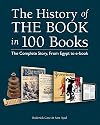
A well-illustrated romp through book history through examples, and mostly not the same old examples that every other book uses. I thought sometimes the authors fell into the bad habit of using undefined jargon (even with an extensive glossary) or assuming specific knowledge that beginners might not have, but overall, a very useful introductory book.
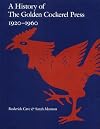
It's surprising, perhaps, to find that a book about the history of a private press could actually possess such qualities as suspense, humor, sparkling characterization, even pathos. Formally, the book is structured into 3 acts, with an epilogue, each act corresponding to the tenure of the successive owners & their partners. Act 1: Taylor and his wife and her two chums and the wolf in the henhouse, A.E. Coppard. Act 2: Robert Gibbings & co. -- the epoch of printing in the nude (when those show more platens & rollers & grippers get to churning, be sure to keep your hand close to the throw-off lever!). Act 3: Christopher Sandford & Owen Rutter -- hard times, good times, war and peace. Just about every title ever printed by Golden Cockerel is at least mentioned, and the masterpieces Four Gospels, Endymion, etc. are addressed in some detail. The book itself is well designed and executed. My only reservation is likely due to the fact that the two authors had worked independently for some time before realizing that they were, as it were, headed for a collision at publication time. So they pooled their efforts and a few seams show, to mix my clichés. Small potatoes, really, not worth making a federal case over. I need to stop. show less
The History of the Book in 100 Books is not merely about books per se, instead, it is about the attempt to store information in formats that ensure future generations may have access to that information. Across the globe, humanity has come to grips with the issue of information retrieval and come up with myriad ways to solve it.
The book goes with Chronological Order, beginning with Cave Paintings and going all the way through to the ebook. Since the book is more about information storage and show more retrieval, it includes counting aids and other things like the Ishango Bone and so on. The book contains a number of other interesting entries coming from China, Japan, Korea, and India. For instance, take the Yongle Dadian. It is an attempt to make a comprehensive encyclopedia, but only four sets survive. Another interesting one is the Complutensian Polyglot Bible, a Bible printed in seven languages on the same page.
Contains a Glossary for unusual terms used in the book, along with a bibliography, picture credits, and an index. show less
The book goes with Chronological Order, beginning with Cave Paintings and going all the way through to the ebook. Since the book is more about information storage and show more retrieval, it includes counting aids and other things like the Ishango Bone and so on. The book contains a number of other interesting entries coming from China, Japan, Korea, and India. For instance, take the Yongle Dadian. It is an attempt to make a comprehensive encyclopedia, but only four sets survive. Another interesting one is the Complutensian Polyglot Bible, a Bible printed in seven languages on the same page.
Contains a Glossary for unusual terms used in the book, along with a bibliography, picture credits, and an index. show less
This was a fun and interesting look at the evolution of the book. The authors take us from the first things that were used as books all the way to the current ebooks. They cover books of all kind from all over the world. From the palm leaf books of south Indochina to forgotten penny dreadfuls of the 19th century. The research is good, easy to follow and easy to find more if you want to. I really liked seeing what other countries were doing to make and preserve books in the pre-Gutenberg show more time. The writing was good, with little witticisms from the authors that added to the overall enjoyment of the journey. One thing that they did that I really enjoyed is that they mostly used books that were not very famous. The Book of Kells and one of the original Gutenberg bibles are the one really famous books in this piece. All of the rest are lesser or unknown books.
I give this book a Five out of Five stars. show less
I give this book a Five out of Five stars. show less
You May Also Like


Associated Authors
Statistics
- Works
- 29
- Also by
- 8
- Members
- 491
- Popularity
- #50,319
- Rating
- 3.9
- Reviews
- 7
- ISBNs
- 34
- Languages
- 4