
David Pearson (2) (1955–)
Author of Books as History: The Importance of Books Beyond Their Texts
For other authors named David Pearson, see the disambiguation page.
About the Author
David Pearson is Director of the University of London Research Library Services.
Image credit: David Pearson
Works by David Pearson
London 1000 Years: Treasures from the Collections of the City of London (2011) — Editor — 12 copies, 1 review
Associated Works
Books on the Move: Tracking Copies Through Collections and the Book Trade (2007) — Contributor — 19 copies, 1 review
The Book Trade & Its Customers 1450-1900: Historical Essays for Robin Myers (Publishing Pathways Series) (1997) — Contributor — 13 copies
Readers, printers, churchmen, and travellers : essays in honour of David Selwyn (2004) — Contributor — 1 copy
Tagged
Common Knowledge
- Canonical name
- Pearson, David
- Legal name
- Pearson, David Robert Stanley
- Birthdate
- 1955-05-07
- Gender
- male
- Education
- University of Loughborough (Dip.Lib.|1981)
University of Cambridge (MA|Ph.D|1977)
St Bees School - Occupations
- librarian
book historian
editor - Organizations
- City of London Corporation
University of London (Research Library Services|director)
Wellcome Trust (librarian)
National Art Library
British Library
Bibliographical Society (show all 12)
The National Trust
Oxford Bibliographical Society
Consortium of European Research Libraries
Research Libraries UK
Joint Information Systems Committee
Worshipful Company of Stationers - Nationality
- UK
- Places of residence
- London, England, UK
- Associated Place (for map)
- England, UK
Members
Reviews

David Pearson's Books as History (first published 2008; revised edition published by the British Library and Oak Knoll Press, 2011) ought to be read by, well, everyone, frankly, but at the very least anyone with even the slightest interest in books. Most especially, perhaps, it should be required reading for those who pen breathless screeds about "the death of the book," or who simply don't understand the fact that books can be important historical artifacts, imparting lessons far more show more important than the text contained within them. "Books may cease to be read," Pearson writes, "but let us recognise that we may have other reasons to value them" (p. 5).
Pearson, director of the City of London's Library, Archives, and Guildhall Art Gallery, is one of the best-qualified people in the world to write a book about the importance of books as history. An expert on both bookbindings and provenance research (among other aspects of book history), he puts that knowledge to good use here, pointing out in several chapters the various ways in which a book can become, as he puts it, "a preservable object with an individual history" (p. 22), a "unique artefact in the fabric of cultural heritage, with a wealth of meaning worth preserving and interpreting" (p. 25).
Through different typographic choices, design styles, illustration techniques, &c., Pearson first examines how a single text can be changed and altered, and he shows how, do to the production processes during the hand-press period, no two books even from the same edition are likely to be identical, strictly speaking. And then he digs deeper, noting that even in cases where the text and design may be identical, all of the individual copies of a particular edition become unique objects in their own right. He uses the example of 1,000 unbound copies of an 18th-century book, all of which go to different owners, each to be bound to the purchaser's own preferences, and later to be marked up, used, and passed on to subsequent owners. Each of those copies is a unique historical object, different, however slightly, from all of its edition-mates. A case study at the end of the book examines in detail five copies of a single book, to prove the point.
In his penultimate chapter, Pearson examines the role of libraries as historical artifacts themselves: "Knowing the contents of private and institutional libraries of the past allows us to compare them with other collections of the time, and to build up wider pictures of book ownership over the centuries, looking at average sizes, changing trends in language or subject, and in the place of origin of the books. We can see which books were popular and which were not; books have survived today in very uneven ways, and ones which are very rare today may once have been much more widely read than ones which have survived in relatively large quanitities. ... Looking carefully at [historical peoples'] collections, and the physical evidence of the ways in which they treated them, helps us to better understand these various roles which books have played in history" (p. 166-7).
Looking forward, Pearson makes the very important point that "If [books'] rationale is solely textual, their obsolescence seems guaranteed; the key point is that it is not, and that we are collectively in danger of making bad decisions about what should and should not be preserved for posterity if we overlook this" (p. 21).
Books as History as a book-object also happens to be very well designed, and is thoroughly illustrated with example images that nicely complement Pearson's text. A good list of sources for further reading is included for those who find something intriguing and want to read more. It's an excellent introduction to the book history field, and a book which should, as I said at the outset, be read by anyone with even a remote interest in the subject.
http://philobiblos.blogspot.com/2012/01/book-review-books-as-history.html show less
Pearson, director of the City of London's Library, Archives, and Guildhall Art Gallery, is one of the best-qualified people in the world to write a book about the importance of books as history. An expert on both bookbindings and provenance research (among other aspects of book history), he puts that knowledge to good use here, pointing out in several chapters the various ways in which a book can become, as he puts it, "a preservable object with an individual history" (p. 22), a "unique artefact in the fabric of cultural heritage, with a wealth of meaning worth preserving and interpreting" (p. 25).
Through different typographic choices, design styles, illustration techniques, &c., Pearson first examines how a single text can be changed and altered, and he shows how, do to the production processes during the hand-press period, no two books even from the same edition are likely to be identical, strictly speaking. And then he digs deeper, noting that even in cases where the text and design may be identical, all of the individual copies of a particular edition become unique objects in their own right. He uses the example of 1,000 unbound copies of an 18th-century book, all of which go to different owners, each to be bound to the purchaser's own preferences, and later to be marked up, used, and passed on to subsequent owners. Each of those copies is a unique historical object, different, however slightly, from all of its edition-mates. A case study at the end of the book examines in detail five copies of a single book, to prove the point.
In his penultimate chapter, Pearson examines the role of libraries as historical artifacts themselves: "Knowing the contents of private and institutional libraries of the past allows us to compare them with other collections of the time, and to build up wider pictures of book ownership over the centuries, looking at average sizes, changing trends in language or subject, and in the place of origin of the books. We can see which books were popular and which were not; books have survived today in very uneven ways, and ones which are very rare today may once have been much more widely read than ones which have survived in relatively large quanitities. ... Looking carefully at [historical peoples'] collections, and the physical evidence of the ways in which they treated them, helps us to better understand these various roles which books have played in history" (p. 166-7).
Looking forward, Pearson makes the very important point that "If [books'] rationale is solely textual, their obsolescence seems guaranteed; the key point is that it is not, and that we are collectively in danger of making bad decisions about what should and should not be preserved for posterity if we overlook this" (p. 21).
Books as History as a book-object also happens to be very well designed, and is thoroughly illustrated with example images that nicely complement Pearson's text. A good list of sources for further reading is included for those who find something intriguing and want to read more. It's an excellent introduction to the book history field, and a book which should, as I said at the outset, be read by anyone with even a remote interest in the subject.
http://philobiblos.blogspot.com/2012/01/book-review-books-as-history.html show less

A tremendously important book for anyone working on book history in general and the history of personal libraries in particular. Pearson handles British sources on bindings, bookplates/stamps/labels, sale and library catalogs, &c. very well (it's not a stretch to say comprehensively), offering a wealth of ideas for further research. The book is very well illustrated, which certainly enhances the text (visualizing binding stamps and bookplate designs are much easier with pictures).
The person show more who writes the American version of this book will earn my eternal gratitude - it would be of monumental importance. But even for researching American provenance, Pearson will be of great utility. show less
The person show more who writes the American version of this book will earn my eternal gratitude - it would be of monumental importance. But even for researching American provenance, Pearson will be of great utility. show less
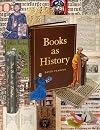
This book was really enjoyable, it was a required text for a Rare Books class. Pearson traces the history of books as objects and the book was loaded with full colour illustrations, so the reader could see the details that were being discussed. The author's love and respect for the printed word really shine through. In many cases it provided full page photos of covers, title pages, marginalia, and other bibliographic examples to show variations among editions. Some of the chapters include: show more individuality among mass production, variety through ownership, books beyond text, and the collective value of libraries.
Pearson also includes a case study which shows variety among copies, he compares 5 copies of Francis Bacon's account of the reign of Henry VII. Each book contains the same text block published in 1622, but each copy is now unique. He shows the 5 different covers, relates differences in bookplates, annotations, and ownership down through the years. I found the case study to be a useful application of much of the information from the book. show less
Pearson also includes a case study which shows variety among copies, he compares 5 copies of Francis Bacon's account of the reign of Henry VII. Each book contains the same text block published in 1622, but each copy is now unique. He shows the 5 different covers, relates differences in bookplates, annotations, and ownership down through the years. I found the case study to be a useful application of much of the information from the book. show less
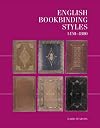
The title of David Pearson's English Bookbinding Styles 1450-1800 suggests a somewhat narrow treatment, and it is, strictly speaking. But this is an in-depth introduction to English binding, and provides incredibly useful illustrations of bindings, techniques, decorations, edge treatments, binders' advertisements, &c. Pearson ably traces the chronological development of various binding styles and materials, including both "permanent" and "temporary" bindings. The final, very interesting, show more chapter, covers binders' role within the larger book trade. An extensive bibliography rounds out the coverage, and offers many suggestions for further reading. show less
Lists
You May Also Like


Associated Authors
Statistics
- Works
- 13
- Also by
- 6
- Members
- 410
- Popularity
- #59,367
- Rating
- 4.2
- Reviews
- 10
- ISBNs
- 141
- Languages
- 5
