A Thousand Rooms of Dream and Fear
by Atiq Rahimi
On This Page
Description
Iarhad lives in Kabul in 1979, and the early days of the pro-Soviet coup are about to change his life forever.Tags
Recommendations

































Member Reviews
I walk into the lecture theater. Above the huge blackboard they’ve rigged up a red banner on which a famous slogan has been written in white:
If I do not stand up,
If you do not stand up,
If he does not stand up,
Then who will light a torch in the midst of this darkness?
- from A Thousand Rooms of Dream and Fear, page 92 -
Farhad is a young college student living in Kabul in 1979 during the early days of the pro-Soviet coup. He has been out drinking with a friend whose politics are against the current government. Farhad doesn’t realize it, but his association with this friend and his stumbling into the path of a group of soldiers on his way home will change his life forever. He is brutally beaten by the soldiers and left laying in a show more sewer. As he drifts in and out of consciousness he remembers the words of his religious grandfather and is confused by the presence of a woman and her son who drag Farhad into their home to hide him from the soldiers who come back looking for him.
What is going on? What could possibly explain this confusion? Why does this night never come to an end? Who were those soldiers and why did they stop and question me? How did I end up her, with this woman and child? Why does she call me “Brother” and he calls me “Father?” - from A Thousand Rooms of Dream and Fear, page 36 -
A Thousand Rooms of Dream and Fear takes place over a period of a couple of days and is written from the limited point of view of Farhad. The protagonist finds himself inexplicably attracted to Mahnaz, the beautiful and widowed woman who becomes his savior. Love for her is clearly prohibited (even being in her home would be seen as a crime), yet Farhad fantasizes about taking Mahnaz away from the difficulties in Afghanistan and marrying her.
I’ve never felt this close to a woman before apart from my mother and Parwaneh. I’ve never been part of another woman’s life. No other woman has ever entered my consciousness like this. In the space of just one night, I have gone through a thousand different emotions with this woman, as though something momentous has happened between us. She has given me shelter. My life is in her hands. It is hers. – from A Thousand Rooms of Dream and Fear, page 100 -
Atiq Rahimi’s writing is simple, yet beautiful in its stark language. There is a strong theme about women’s roles in Afghanistan as mothers and wives: Farhad’s mother leaves him with her veil hiding her grief, Mahnaz ministers to her damaged brother by offering him her breast for comfort yet hides her face from Farhad in the shadows of her hair. Rahimi uses strong imagery and symbolism in this novella – Mahnaz and her son offer him grapes and the image of grapes is repeated again and again (grapes can symbolize blood and sacrifice) and Farhad continually notes the red and black colors woven into a rug (the black stripe in the Afghanistan flag represents the darkness of the past history of Afghanistan, while the red stripe represents blood shed and war in the history of Afghanistan). The political unrest during this period of Afghanistan history informs the novella from start to finish by giving the reader dramatic and disturbing images of a country in terror.
What else can you call those moments of nameless terror other than “annihilation?” Those moments when you begin to doubt your very existence. When you’re so paralyzed with fear that you turn to fantasies for reassurance, to imaginary women, to dijinn, to angels, to life after death … – from A Thousand Rooms of Dream and Fear, page 83 -
A Thousand Rooms of Dream and Fear is a complex story despite its short length (less than 150 pages). I appreciated Rahimi’s use of language and imagery, although I feel like I missed some of the underlying meaning in the novella. Students of Afghanistan history will likely be able to tease even more out of this book than I have. Luckily, I am participating in a discussion of this book on January 25th in the inaugural meeting of BOOK CLUB and I hope to gain even more insight into this beautifully wrought translation.
I’ll leave you with a quote from the book which I loved as it seems to imply that we are in great need of others, and without our connection to others, we must rely only on ourselves to survive.
"If you meet someone on your journey, grab him by the scruff of the neck and hang on!”
The dervish is getting fainter. The sound of his voice roots me to the spot.
“And if you never meet anyone…then hang on to yourself!” - from A Thousand Rooms of Dream and Fear, page 143 -
Readers who enjoy translated literary fiction, and who are drawn to poetic writing, will want to pick up a copy of Rahimi’s book.
Highly recommended. show less
If I do not stand up,
If you do not stand up,
If he does not stand up,
Then who will light a torch in the midst of this darkness?
- from A Thousand Rooms of Dream and Fear, page 92 -
Farhad is a young college student living in Kabul in 1979 during the early days of the pro-Soviet coup. He has been out drinking with a friend whose politics are against the current government. Farhad doesn’t realize it, but his association with this friend and his stumbling into the path of a group of soldiers on his way home will change his life forever. He is brutally beaten by the soldiers and left laying in a show more sewer. As he drifts in and out of consciousness he remembers the words of his religious grandfather and is confused by the presence of a woman and her son who drag Farhad into their home to hide him from the soldiers who come back looking for him.
What is going on? What could possibly explain this confusion? Why does this night never come to an end? Who were those soldiers and why did they stop and question me? How did I end up her, with this woman and child? Why does she call me “Brother” and he calls me “Father?” - from A Thousand Rooms of Dream and Fear, page 36 -
A Thousand Rooms of Dream and Fear takes place over a period of a couple of days and is written from the limited point of view of Farhad. The protagonist finds himself inexplicably attracted to Mahnaz, the beautiful and widowed woman who becomes his savior. Love for her is clearly prohibited (even being in her home would be seen as a crime), yet Farhad fantasizes about taking Mahnaz away from the difficulties in Afghanistan and marrying her.
I’ve never felt this close to a woman before apart from my mother and Parwaneh. I’ve never been part of another woman’s life. No other woman has ever entered my consciousness like this. In the space of just one night, I have gone through a thousand different emotions with this woman, as though something momentous has happened between us. She has given me shelter. My life is in her hands. It is hers. – from A Thousand Rooms of Dream and Fear, page 100 -
Atiq Rahimi’s writing is simple, yet beautiful in its stark language. There is a strong theme about women’s roles in Afghanistan as mothers and wives: Farhad’s mother leaves him with her veil hiding her grief, Mahnaz ministers to her damaged brother by offering him her breast for comfort yet hides her face from Farhad in the shadows of her hair. Rahimi uses strong imagery and symbolism in this novella – Mahnaz and her son offer him grapes and the image of grapes is repeated again and again (grapes can symbolize blood and sacrifice) and Farhad continually notes the red and black colors woven into a rug (the black stripe in the Afghanistan flag represents the darkness of the past history of Afghanistan, while the red stripe represents blood shed and war in the history of Afghanistan). The political unrest during this period of Afghanistan history informs the novella from start to finish by giving the reader dramatic and disturbing images of a country in terror.
What else can you call those moments of nameless terror other than “annihilation?” Those moments when you begin to doubt your very existence. When you’re so paralyzed with fear that you turn to fantasies for reassurance, to imaginary women, to dijinn, to angels, to life after death … – from A Thousand Rooms of Dream and Fear, page 83 -
A Thousand Rooms of Dream and Fear is a complex story despite its short length (less than 150 pages). I appreciated Rahimi’s use of language and imagery, although I feel like I missed some of the underlying meaning in the novella. Students of Afghanistan history will likely be able to tease even more out of this book than I have. Luckily, I am participating in a discussion of this book on January 25th in the inaugural meeting of BOOK CLUB and I hope to gain even more insight into this beautifully wrought translation.
I’ll leave you with a quote from the book which I loved as it seems to imply that we are in great need of others, and without our connection to others, we must rely only on ourselves to survive.
"If you meet someone on your journey, grab him by the scruff of the neck and hang on!”
The dervish is getting fainter. The sound of his voice roots me to the spot.
“And if you never meet anyone…then hang on to yourself!” - from A Thousand Rooms of Dream and Fear, page 143 -
Readers who enjoy translated literary fiction, and who are drawn to poetic writing, will want to pick up a copy of Rahimi’s book.
Highly recommended. show less
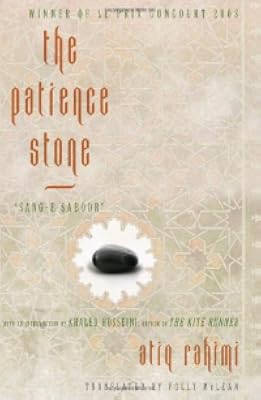
Having recently read and enjoyed "The Patience Stone", the author's most recent novella, I wanted to read more by Afghan author and filmmaker Atiq Rahimi. Set in 1979 in Afghanistan, this novella tells the story of Farhad, a university student who, when heading home after curfew (a bit drunk) is stopped by soldiers, beaten and thrown into a roadside ditch. A young widow risks much to take the battered Farhad into her home where she cares for him. Farhad is semi-conscious and drifts in and out of reality. He is also somewhat naive and it takes time for him to realize the gravity of his situation.
There is a sense that "A Thousand Rooms of Dream and Fear" is very allegorical even if one doesn't exactly understand the allegory. In its show more telling, the story belies a great sympathy for the women of Afghanistan in particular. And while I think I like [The Patience Stone] better, this imaginative novella has weighed its words carefully and carries with it a deep soulfulness that lingers well beyond its pages. show less
There is a sense that "A Thousand Rooms of Dream and Fear" is very allegorical even if one doesn't exactly understand the allegory. In its show more telling, the story belies a great sympathy for the women of Afghanistan in particular. And while I think I like [The Patience Stone] better, this imaginative novella has weighed its words carefully and carries with it a deep soulfulness that lingers well beyond its pages. show less
A man wakes up beaten and bloody in the sewer beside the road unsure of who he is or how he got there. Over the next 24 hours his memory comes back in bits and pieces, told in reverse chronological order in alternating chapters with the present. Within the span of a few days, the life of an ordinary young man is destroyed during the violent, hopeless period of coups and invasion that defined the 1970s in Afghanistan. A grim but moving story of loss and unfulfilled hope.
Set in 1970s Afghanistan, A Thousand Rooms of Dream and Fear tells the story of Farhad, a young man who runs afoul of the repressive regime's police. He's badly beaten, and much of the book is concerned with him trying to understand what's happened to him, where he is now, and what he should do next. A Thousand Rooms would probably work better for you if you know more about mid-century Afghan history than I do, to provide the context for Farhad's circumstances, and I have no idea what to make of the book's slightly Oedipal weirdness about women—I think a lot hinges on whether or not you decide that what's happening is "really" happening or whether it's Farhad dreaming or hallucinating. A surreal and tense novella.
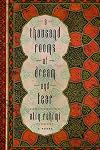
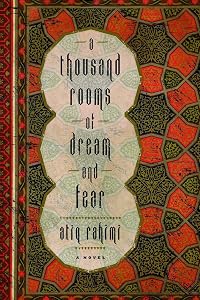
Very intense! Excellent chilling novella/short novel of only 147 pp. set in 1980's Afghanistan. A young student, Farhad, is drunk and out after curfew. Stopped by some soldiers on patrol, he's roughed up very badly then rescued by a young widow, Mahnaz, and taken to her house as he lies injured and bleeding on the ground. Much of the novel consists of his stream-of-consciousness thoughts, trying to reconstruct events in his mind, interspersed with distorted and twisted dreams, nightmares, and memories. He thinks of fleeing the harsh political situation to Pakistan. He begins to feel an infatuation for the woman for which he feels guilty--conservative Muslim men are never supposed to see or be in the company of a woman not their wife or show more family member. He is breaking a social taboo; the drinking was bad enough. The author's terse and incisive style put me right into Farhad's mind: with his dreams, fears, hallucinations... This is a must-read!! Fortunately, a glossary defined many Muslim, Persian or Afghani terms or place names used in the story. For instance, the "thousand rooms" is the Afghani expression for a labyrinth. The cover of the book displays the carpet in Farhad's family home; this carpet is incidental to the story. show less
A book that got me. Not right from the start, that was strange. I had no idea where I was, who I was or when.
But gradually following the shards of the main character's story, things get clearer and more grim. Until you grasp the bigger (nearly the complete) picture and then the book stops. It left me quite alone, I would have liked to learn what happened, instead of guessing. I've never been a fan of that kind of endings and that still hasn't changed.
But gradually following the shards of the main character's story, things get clearer and more grim. Until you grasp the bigger (nearly the complete) picture and then the book stops. It left me quite alone, I would have liked to learn what happened, instead of guessing. I've never been a fan of that kind of endings and that still hasn't changed.
A young man is completely discombobulated. He doesn’t know whether he is alive or dead; what he does realise is that his body is battered and that he’s in terrible agony over it. The first few pages of this novella are confusing, as the protagonist tries to figure out his situation. And then, light slowly dawns and, as he remembers what happened, the reader comes to learn about it as well. It’s wonderfully done!
Farhad is a university student who seems to just have been in the wrong place at the wrong time. And he paid for it dearly. It is 1979 in Russian-occupied Afghanistan. Farhad and a friend were out drinking and, as a result, he forgot about the imposed curfew time. So finds himself in desperate trouble when the security show more forces find him on the road. He subsequently endures a cruel beating at their hands. When he is finally left alone, a young woman finds him and with all the strength that she can muster, pulls him into her home where she tends to him as best she can under the harsh conditions in her country at the time.
This is a beautifully written book. Rahimi has a special, poetic way with words that I enjoy. It was a bit grating in parts because of the harsh content, but it was definitely a worthwhile read. show less
Farhad is a university student who seems to just have been in the wrong place at the wrong time. And he paid for it dearly. It is 1979 in Russian-occupied Afghanistan. Farhad and a friend were out drinking and, as a result, he forgot about the imposed curfew time. So finds himself in desperate trouble when the security show more forces find him on the road. He subsequently endures a cruel beating at their hands. When he is finally left alone, a young woman finds him and with all the strength that she can muster, pulls him into her home where she tends to him as best she can under the harsh conditions in her country at the time.
This is a beautifully written book. Rahimi has a special, poetic way with words that I enjoy. It was a bit grating in parts because of the harsh content, but it was definitely a worthwhile read. show less
Members
- Recently Added By
Lists

Afghanistan
42 works; 2 members
Author Information

17+ Works 1,307 Members
Awards and Honors
Notable Lists
Work Relationships
Common Knowledge
- Canonical title
- A Thousand Rooms of Dream and Fear
- Original title
- Hazakhana-e khwah wa ekhtenagh
- Original publication date
- 2002; 2006 (English translation) (English translation)
- People/Characters
- Mahnaz; Parwaneh; Humairah; Yahya; Farhad
- Important places
- Afghanistan; Kabul, Afghanistan
- Important events
- Soviet occupation of Afghanistan
- Epigraph
- Unless sleep is less restless than wakefulness, do not rest!
Shams-e Tabrizi - Dedication
- To my mother and her abandoned dreams
- First words
- "Fuck you father!"
- Last words
- (Click to show. Warning: May contain spoilers.)So soon!
- Original language
- Dari
Classifications
- Genres
- Fiction and Literature, General Fiction
- DDC/MDS
- 891.543 — Literature & rhetoric Literatures of other languages East Indo-European and Celtic literatures Iranian literatures [see 891.992 for Armenian] Fiction
- LCC
- PK6878.9 .R34 .H3913 — Language and Literature Indo-Iranian languages and literatures Indo-Iranian philology and literature Iranian philology and literature
- BISAC
Statistics
- Members
- 165
- Popularity
- 198,919
- Reviews
- 15
- Rating
- (3.56)
- Languages
- 9 — Catalan, Czech, Danish, Dutch, English, Finnish, French, Italian, Portuguese
- Media
- Paper, Ebook
- ISBNs
- 13
- ASINs
- 1