On This Page
Description
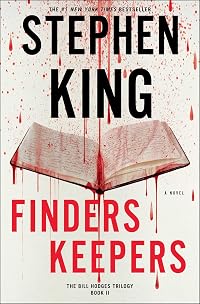
"A masterful, intensely suspenseful novel about a reader whose obsession with a reclusive writer goes far too far--a book about the power of storytelling, starring the same trio of unlikely and winning heroes King introduced in Mr. Mercedes" -- ""Wake up, genius." So begins King's instantly riveting story about a vengeful reader. The genius is John Rothstein, an iconic author who created a famous character, Jimmy Gold, but who hasn't published a book for decades. Morris Bellamy is livid, not show more just because Rothstein has stopped providing books, but because the nonconformist Jimmy Gold has sold out for a career in advertising. Morris kills Rothstein and empties his safe of cash, yes, but the real treasure is a trove of notebooks containing at least one more Gold novel. Morris hides the money and the notebooks, and then he is locked away for another crime. Decades later, a boy named Pete Saubers finds the treasure, and now it is Pete and his family that Bill Hodges, Holly Gibney, and Jerome Robinson must rescue from the ever-more deranged and vengeful Morris when he's released from prison after thirty-five years" -- show lessTags
Recommendations

Member Recommendations
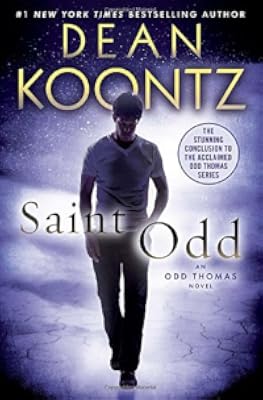
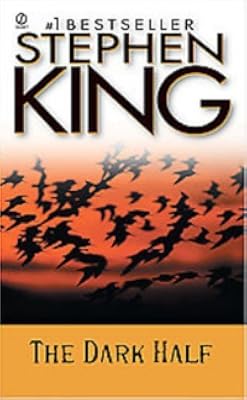
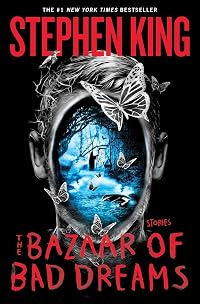
sturlington Finders Keepers is the sequel to Mr. Mercedes
Also recommended by anonymous user
40
Member Reviews
Finder's Keepers is the second book in the Bill Hodges trilogy, and it’s an easy 5 stars for me! While I still prefer Mr. Mercedes (which was a no-brainer 6 stars in my heart), this one is just a small step below, still absolutely brilliant.
The whole writer/fan obsession arc, already explored in Misery makes a strong comeback here, and I was SO into it. Even though the theme isn’t new, King makes it feel fresh, intense, and deeply unsettling. Why? Because no one develops characters quite like he does. Mr Bellamy is terrifying, fascinating, and unpredictable all at once, a true masterclass of obsession spiraling into madness in just over 300 pages.
The plot hooked me right away, slowed down a little in the middle, but then ramped up show more in the final act so hard I couldn’t stop reading. I devoured the last part in basically two sittings. I also realized I have a real soft spot for teen/kid heroic arcs, and King writes them so damn well. Pete was such a great character brave, complex, and easy to root for.
I also loved the subtle paranormal touche, the dark, lingering thread connecting this story to the first one. There’s something so haunting in the way the writter explores unhealthy obsession and the almost supernatural power of certain places or objects. It’s not in-your-face horror (not the usual King type at least) but it creeps in & I recognized that signature King vibe I love so much.
My only (tiny) letdown would be that the Hodges, Holly, and Jerome trio didn’t have quite as much page time as I’d hoped. I just love them so much show less
The whole writer/fan obsession arc, already explored in Misery makes a strong comeback here, and I was SO into it. Even though the theme isn’t new, King makes it feel fresh, intense, and deeply unsettling. Why? Because no one develops characters quite like he does. Mr Bellamy is terrifying, fascinating, and unpredictable all at once, a true masterclass of obsession spiraling into madness in just over 300 pages.
The plot hooked me right away, slowed down a little in the middle, but then ramped up show more in the final act so hard I couldn’t stop reading. I devoured the last part in basically two sittings. I also realized I have a real soft spot for teen/kid heroic arcs, and King writes them so damn well. Pete was such a great character brave, complex, and easy to root for.
I also loved the subtle paranormal touche, the dark, lingering thread connecting this story to the first one. There’s something so haunting in the way the writter explores unhealthy obsession and the almost supernatural power of certain places or objects. It’s not in-your-face horror (not the usual King type at least) but it creeps in & I recognized that signature King vibe I love so much.
My only (tiny) letdown would be that the Hodges, Holly, and Jerome trio didn’t have quite as much page time as I’d hoped. I just love them so much show less
Mr. Mercedes made it to my Best Reads list, so I was eager to reacquaint myself with Bill Hodges, Holly Gibney, and Jerome Robinson in Finders Keepers. At first I kept waiting for those three to make their appearance, but I quickly fell into the story and stopped missing them. By the time they were ready for some real action (roughly halfway through), I welcomed them with open arms because Morris Bellamy was giving me the creeps.
For some reason, certain characters kept reminding me of other things in this book. John Rothstein reminded me of J.D. Salinger, and not only did Morris Bellamy remind me of another of King's literary fans named Annie Wilkes, his physical appearance made me think of Pennywise... the character from It that put a show more face on my loathing of clowns.
It was good to see that Bill Hodges is doing better than he was at the end of Mr. Mercedes, and I really liked the dynamic between him and his two younger cohorts, Holly and Jerome. They're good for each other. King has always had a knack for creating marvelous young characters, and Pete and Tina Saubers continue this tradition. Everything Pete does in order to salvage his parents' marriage is heart-breaking, especially when you know that it is bound to come crashing down around his ears. Pete is a sharp kid, but there's no way he has the experience to deal with someone like Morris Bellamy. And... lurking in the background... is the psychopath from Mr. Mercedes, Brady Hartsfield. He's come out of his coma but is still in a vegetative state... or so everyone in the hospital thinks. (Any Stephen King fan worth his salt knows better.)
Once again-- good storytelling, some marvelous characters, and a feeling of growing dread that sets us up nicely for the last book in the trilogy: End of Watch. It will be interesting to read that third book. Mr. Mercedes was a murder mystery. Finders Keepers is more of a literary thriller. Where will we be taken next?
Stephen King may show us the crazy side of life, but it's not all that far-fetched when compared to what's really going on in the world today. He's more than capable of scaring the living daylights out of us, but he also reminds us of something important: how good humans can be. show less
For some reason, certain characters kept reminding me of other things in this book. John Rothstein reminded me of J.D. Salinger, and not only did Morris Bellamy remind me of another of King's literary fans named Annie Wilkes, his physical appearance made me think of Pennywise... the character from It that put a show more face on my loathing of clowns.
It was good to see that Bill Hodges is doing better than he was at the end of Mr. Mercedes, and I really liked the dynamic between him and his two younger cohorts, Holly and Jerome. They're good for each other. King has always had a knack for creating marvelous young characters, and Pete and Tina Saubers continue this tradition. Everything Pete does in order to salvage his parents' marriage is heart-breaking, especially when you know that it is bound to come crashing down around his ears. Pete is a sharp kid, but there's no way he has the experience to deal with someone like Morris Bellamy. And... lurking in the background... is the psychopath from Mr. Mercedes, Brady Hartsfield. He's come out of his coma but is still in a vegetative state... or so everyone in the hospital thinks. (Any Stephen King fan worth his salt knows better.)
Once again-- good storytelling, some marvelous characters, and a feeling of growing dread that sets us up nicely for the last book in the trilogy: End of Watch. It will be interesting to read that third book. Mr. Mercedes was a murder mystery. Finders Keepers is more of a literary thriller. Where will we be taken next?
Stephen King may show us the crazy side of life, but it's not all that far-fetched when compared to what's really going on in the world today. He's more than capable of scaring the living daylights out of us, but he also reminds us of something important: how good humans can be. show less
Di solito il secondo volume di una trilogia è un libro un po' calante, che è necessario leggere perché sia chiaro che cosa succede tra il primo volume, dove le carte vengono messe in tavola, e l'ultimo, dove scoppiano i fuochi d'artificio. Non è questo il caso di Finder Keepers, che pur contenendo chiari riferimenti a Mr. Mercedes e preparando la strada al volume conclusivo, può essere letto come se fosse un romanzo a se stante. D'altra parte il Re è abituato a maneggiare senza cali di tensione serialità ben più corpose di una trilogia.
Qualcuno ha comparato Finders Keepers a Misery, devo dire che mai paragone fu più sbagliato.
L'unica cosa che hanno in comune i due romanzi è l'ossessione di un lettore per un personaggio show more romanzesco, ma in Misery questa ossessione viene sviscerata tramite un complesso rapporto tra lettore e autore, in questo caso l'autore viene ucciso nelle prime pagine, lasciando all'ossessione lo spazio per crescere in purezza e dando a King lo spazio per fare ciò che sa fare meglio: parlare di scrittura, entrando nei dettagli del processo creativo, e di lettura, descrivendo con minuzia la vera e propria agnizione che è la droga motrice del lettore appassionato.
Senza contare che, differenza di altri, io amo questo "nuovo" Stephen King, dedito all'orrore in modo più sottile rispetto ai suoi primi libri, e il suo addentrarsi sempre pi profondamente nella quotidiana umanità che nasconde al suo interno sacche di pura paura.
Come però dicevo, il romanzo è pur sempre un secondo volume, e nel corso delle pagine King non dimentica di affilare quelli che saranno i due personaggi principali dell'ultimo volume, e ho l'impressione che il finale sarà davvero col botto.
Usually the second book a falls trilogy a bit, and should be read because it clarifies what happened in the first volume, where the cards are placed on the table, and prepares what will happen in the last, where the fireworks artifice burst. This is not the case of Finder Keepers, which, while containing clear references to Mr. Mercedes and paving the way to the concluding volume, can be read like a novel of its own. On the other hand King is accustomed to handling without voltage drops seriality far more substantial than a trilogy.
Someone has compared Finders Keepers with Misery, I have to say that a comparison was never more wrong.
The only thing that the two novels have in common is the obsession of a reader for a fictional character, but this obsession in Misery is eviscerated by a complex relationship between reader and author and in this case the author is killed in the first pages leaving to the obsession the space to grow in purity and giving King the space to do what he does best: talk about writing, entering into the details of the creative process, and reading, describing in great detail the actual recognitions that is the drug that moves passionate readers.
Not to mention that, unlike others, I love this "new" Stephen King, dedicated to horror in a more subtle way than in his first books, and his penetrate ever more deeply into everyday humanity that hides inside pockets of pure fear .
But as I said, the novel is still a second volume, and in the course of pages King not forget to sharpen the will be two main characters of the last volume, and I have the impression that the ending will be really a bang. show less
Qualcuno ha comparato Finders Keepers a Misery, devo dire che mai paragone fu più sbagliato.
L'unica cosa che hanno in comune i due romanzi è l'ossessione di un lettore per un personaggio show more romanzesco, ma in Misery questa ossessione viene sviscerata tramite un complesso rapporto tra lettore e autore, in questo caso l'autore viene ucciso nelle prime pagine, lasciando all'ossessione lo spazio per crescere in purezza e dando a King lo spazio per fare ciò che sa fare meglio: parlare di scrittura, entrando nei dettagli del processo creativo, e di lettura, descrivendo con minuzia la vera e propria agnizione che è la droga motrice del lettore appassionato.
Senza contare che, differenza di altri, io amo questo "nuovo" Stephen King, dedito all'orrore in modo più sottile rispetto ai suoi primi libri, e il suo addentrarsi sempre pi profondamente nella quotidiana umanità che nasconde al suo interno sacche di pura paura.
Come però dicevo, il romanzo è pur sempre un secondo volume, e nel corso delle pagine King non dimentica di affilare quelli che saranno i due personaggi principali dell'ultimo volume, e ho l'impressione che il finale sarà davvero col botto.
Usually the second book a falls trilogy a bit, and should be read because it clarifies what happened in the first volume, where the cards are placed on the table, and prepares what will happen in the last, where the fireworks artifice burst. This is not the case of Finder Keepers, which, while containing clear references to Mr. Mercedes and paving the way to the concluding volume, can be read like a novel of its own. On the other hand King is accustomed to handling without voltage drops seriality far more substantial than a trilogy.
Someone has compared Finders Keepers with Misery, I have to say that a comparison was never more wrong.
The only thing that the two novels have in common is the obsession of a reader for a fictional character, but this obsession in Misery is eviscerated by a complex relationship between reader and author and in this case the author is killed in the first pages leaving to the obsession the space to grow in purity and giving King the space to do what he does best: talk about writing, entering into the details of the creative process, and reading, describing in great detail the actual recognitions that is the drug that moves passionate readers.
Not to mention that, unlike others, I love this "new" Stephen King, dedicated to horror in a more subtle way than in his first books, and his penetrate ever more deeply into everyday humanity that hides inside pockets of pure fear .
But as I said, the novel is still a second volume, and in the course of pages King not forget to sharpen the will be two main characters of the last volume, and I have the impression that the ending will be really a bang. show less
Non voglio dire che questo libro mi è piaciuto solo perché Hodges compare pochissimo... ma in realtà è così.
Il villain mi fa impazzire: è una persona terribile, ma è un personaggio con cui il lettore può empatizzare perché è reale. Tutta la riflessione metaletteraria mi ha ricordato moltissimo Scream ed è meravigliosa.
Il villain mi fa impazzire: è una persona terribile, ma è un personaggio con cui il lettore può empatizzare perché è reale. Tutta la riflessione metaletteraria mi ha ricordato moltissimo Scream ed è meravigliosa.
Call it the curse of the sequel. Call it whatever you want. The fact is that Finders Keepers does not live up to its predecessor in the Bill Hodges series. It would be easy to blame the villain, as Morris is not nearly as fascinating as Brady. Blame it on the story, which revolves around one young boy and his family rather than an entire city filled with potential victims. Blame it on high expectations. No matter where you put the blame, it still remains a boring story.
Part of the issue is the fact that there is no real life-or-death scenario. Pete and Morris are two entities circling each other for most of the novel but only meet face-to-face towards the end. Pete is not in any immediate danger, and, as such, you are not as vested in show more his fate as you perhaps should be. Instead, for most of the story, Pete is the good kid just trying to help his parents and keep his family happy and together. Any angst Pete displays creates no tension, as he is just a teenager in over his head. In other words, Pete is just like every other teen hero, trying to be more adult than he is capable of being at this stage in his development.
Along those same lines, Morris is a sympathetic figure. Sure, he may be obsessed with a fictional character. However, as you learn more about Morris’ life and his experiences in juvenile detention and in jail, his obsession begins to make sense. In the age-old debate between nature and nurture, you can make a great argument that Morris’ psychopathology originates more by his experiences (nurture) versus any inherent tendencies in his personality (nature). In turn, while there is no doubt that Morris lacks rational thought processes by the end of the story, he is more of a tragic figure than a true villain. Without a despicable bad guy and a hero with whom you connect at a more emotional level, the story falters. Your sympathies are with the wrong characters, and the innate suspense created by the opposition of the two sides disappears, if it ever exists. The rest of the story then shrinks to nothing more than a property dispute.
The only vital scenes within the entire novel are those when Bill visits Brady at the hospital, and the reasons why these scenes are so important are obvious upon the first time the two appear together. Because of this, Finders Keepers is just filler until all of the characters from the first novel reach a certain development point to allow their story to continue. By the end of Finders Keepers, most of them are there, which gives me hope about the series finale. The sad part is that if this is the case, then King could explain everything that occurs to Bill, Holly, Jerome, and Brady within Finders Keepers in a prologue or the opening chapters of the novel and spare readers this lackluster story. I guess the importance of Finders Keepers as a separate story remains to be seen.
Regardless of its importance, or lack thereof, in the Bill Hodges series, I finished Finders Keepers feeling almost cheated in the lack of true evil. I had to force myself to finish the story, even via audio, and that is not an experience I have ever had with a King novel. I just did not care enough about any of the characters, and at the same time the whole drama behind the missing journals dragged overlong. I will finish the series because the few things we get about Brady and Bill hints at some amazing things to come with their story. I just wish I did not have to slog through this disappointing story to get there. show less
Part of the issue is the fact that there is no real life-or-death scenario. Pete and Morris are two entities circling each other for most of the novel but only meet face-to-face towards the end. Pete is not in any immediate danger, and, as such, you are not as vested in show more his fate as you perhaps should be. Instead, for most of the story, Pete is the good kid just trying to help his parents and keep his family happy and together. Any angst Pete displays creates no tension, as he is just a teenager in over his head. In other words, Pete is just like every other teen hero, trying to be more adult than he is capable of being at this stage in his development.
Along those same lines, Morris is a sympathetic figure. Sure, he may be obsessed with a fictional character. However, as you learn more about Morris’ life and his experiences in juvenile detention and in jail, his obsession begins to make sense. In the age-old debate between nature and nurture, you can make a great argument that Morris’ psychopathology originates more by his experiences (nurture) versus any inherent tendencies in his personality (nature). In turn, while there is no doubt that Morris lacks rational thought processes by the end of the story, he is more of a tragic figure than a true villain. Without a despicable bad guy and a hero with whom you connect at a more emotional level, the story falters. Your sympathies are with the wrong characters, and the innate suspense created by the opposition of the two sides disappears, if it ever exists. The rest of the story then shrinks to nothing more than a property dispute.
The only vital scenes within the entire novel are those when Bill visits Brady at the hospital, and the reasons why these scenes are so important are obvious upon the first time the two appear together. Because of this, Finders Keepers is just filler until all of the characters from the first novel reach a certain development point to allow their story to continue. By the end of Finders Keepers, most of them are there, which gives me hope about the series finale. The sad part is that if this is the case, then King could explain everything that occurs to Bill, Holly, Jerome, and Brady within Finders Keepers in a prologue or the opening chapters of the novel and spare readers this lackluster story. I guess the importance of Finders Keepers as a separate story remains to be seen.
Regardless of its importance, or lack thereof, in the Bill Hodges series, I finished Finders Keepers feeling almost cheated in the lack of true evil. I had to force myself to finish the story, even via audio, and that is not an experience I have ever had with a King novel. I just did not care enough about any of the characters, and at the same time the whole drama behind the missing journals dragged overlong. I will finish the series because the few things we get about Brady and Bill hints at some amazing things to come with their story. I just wish I did not have to slog through this disappointing story to get there. show less
Let me get this out of the way: Stephen King's portrayal of fat characters highlight a recurring issue that has sparked conversations among readers before. In much of King's work, "fat" seems to be more than just a physical descriptor; it's frequently used as shorthand for negative traits like laziness, greed, or malevolence. This can feel lazy and reductive, especially when it appears so consistently that it becomes difficult to dismiss as mere coincidence.
However, once you move past this unfortunate tendency, the strengths of King’s writing come to the forefront. The "good guys" in the story, particularly Holly, are compelling and well-crafted, drawing you into their struggles and making you genuinely invested in their survival. show more King’s ability to make you care deeply for his protagonists is one of his great talents, and it shines through despite the flaws in his character descriptions.
The young protagonist who discovers the notebooks will most likely frustrate readers with his lack of foresight; he was really too stupid to live and I found myself not really caring if he survived. The portrayal of the old hippie teacher feels somewhat anachronistic, not quite fitting the time period in which the story is set. These inconsistencies do give pause.
Overall, the book is worth reading, though it’s not without its caveats. And there definitely are the expected gross-out moments that are a staple of King's work. It’s a reminder that while King is a master storyteller, he can be repetitive and heavy handed with his character descriptions, particularly in how he portrays certain types of characters. With a bit more care in character depiction and less reliance on demeaning stereotypes, this work would be even stronger. Despite these issues, the tension and thrill that King is known for are very much present, making it a recommendable read for fans, albeit with some reservations. show less
However, once you move past this unfortunate tendency, the strengths of King’s writing come to the forefront. The "good guys" in the story, particularly Holly, are compelling and well-crafted, drawing you into their struggles and making you genuinely invested in their survival. show more King’s ability to make you care deeply for his protagonists is one of his great talents, and it shines through despite the flaws in his character descriptions.
The young protagonist who discovers the notebooks will most likely frustrate readers with his lack of foresight; he was really too stupid to live and I found myself not really caring if he survived. The portrayal of the old hippie teacher feels somewhat anachronistic, not quite fitting the time period in which the story is set. These inconsistencies do give pause.
Overall, the book is worth reading, though it’s not without its caveats. And there definitely are the expected gross-out moments that are a staple of King's work. It’s a reminder that while King is a master storyteller, he can be repetitive and heavy handed with his character descriptions, particularly in how he portrays certain types of characters. With a bit more care in character depiction and less reliance on demeaning stereotypes, this work would be even stronger. Despite these issues, the tension and thrill that King is known for are very much present, making it a recommendable read for fans, albeit with some reservations. show less
I usually find middle novels don't hold up. Usually they serve as connective tissue between the beginning in book one and the big pay off of book three. That's not the case with this, the second book in the Bill Hodges trilogy.
I found the pace of this one much faster, much more enjoyable and, though the character motives were a touch heavy handed--with Morris consistently blaming all his misfortune on others (though, to be honest, I know far too many people like that, so this one actually rang quite true), and Pete, who is altruistic to a fault--but even with these minor quibbles, overall, this novel just ticked along nicely.
Which is a good thing and a bad thing.
Stephen King, at this point, could very likely put a little "TM" beside his show more name, because his output of a couple of books a year is expected, and many of his characters seem remarkably familiar, even though we've never met them before.
So, when I pick up a King novel, unless he's gone completely off the rails like he's done very few times (The Tommyknockers, Lisey's Story--yeah, yeah, I know, but it was still boring-- and Doctor Sleep), I'll always find something to love, some character that I will enjoy, and the story will tick along nicely.
But if the man's on, then there's no one better. Much of the time when he was on can be listed in the first few books of his, but he's had his moments lately, as well, most notably in 11/22/63.
What I'm finding is, he's pushing less and less, relying on his reliable, intuitive grasp of story and character more and more, and giving us novels like this one, that are fun, entertaining, but give no hint to the master that could have done so much more.
I'm hoping the glimpse we got at the end to foreshadow the final book pays off. There's a lot he can do there. Let's see if he decides to push hard, or just be old reliable.
Either way, you know damn well I'm going to read it. show less
I found the pace of this one much faster, much more enjoyable and, though the character motives were a touch heavy handed--with Morris consistently blaming all his misfortune on others (though, to be honest, I know far too many people like that, so this one actually rang quite true), and Pete, who is altruistic to a fault--but even with these minor quibbles, overall, this novel just ticked along nicely.
Which is a good thing and a bad thing.
Stephen King, at this point, could very likely put a little "TM" beside his show more name, because his output of a couple of books a year is expected, and many of his characters seem remarkably familiar, even though we've never met them before.
So, when I pick up a King novel, unless he's gone completely off the rails like he's done very few times (The Tommyknockers, Lisey's Story--yeah, yeah, I know, but it was still boring-- and Doctor Sleep), I'll always find something to love, some character that I will enjoy, and the story will tick along nicely.
But if the man's on, then there's no one better. Much of the time when he was on can be listed in the first few books of his, but he's had his moments lately, as well, most notably in 11/22/63.
What I'm finding is, he's pushing less and less, relying on his reliable, intuitive grasp of story and character more and more, and giving us novels like this one, that are fun, entertaining, but give no hint to the master that could have done so much more.
I'm hoping the glimpse we got at the end to foreshadow the final book pays off. There's a lot he can do there. Let's see if he decides to push hard, or just be old reliable.
Either way, you know damn well I'm going to read it. show less
Members
- Recently Added By
Lists

Stephen King Bibliography
77 works; 3 members

Writers as Characters in Fiction
120 works; 19 members

Bustle: 10 Addictive Book Trilogies To Read This Year
10 works; 1 member

READ in 2023
244 works; 1 member

Kirkus Starred Fiction Reviews of Books Published in 2015
310 works; 6 members

Books Read 2025
70 works; 2 members

Eerie eTales
192 works; 3 members

2023
32 works; 1 member

Everand 2023
53 works; 1 member

Novels/Poems/Short Stories/Anything Storytelling Related
112 works; 2 members

Books About Murder
313 works; 7 members

Top Five Books of 2017
757 works; 231 members

Luetut kirjat
74 works; 1 member

Detective Stories
343 works; 5 members

Allie's Wishlist
217 works; 2 members

Books Read in 2017
4,249 works; 129 members
Books Read in 2016
4,666 works; 199 members

To Read
617 works; 7 members

Top Five Books of 2015
811 works; 241 members
Books read in 2015
213 works; 5 members

Best Crime Fiction
262 works; 39 members
Treasure Lost and Found
8 works; 5 members
Best books about books
209 works; 105 members
Books Read in 2015
3,299 works; 129 members

Stephen King books
81 works; 1 member
Talk Discussions
Past Discussions
Finders Keepers in King's Dear Constant Readers (December 2015)
Author Information

966+ Works 867,771 Members
Stephen King was born in Portland, Maine, on September 21, 1947. After graduating with a Bachelor's degree in English from the University of Maine at Orono in 1970, he became a teacher. His spare time was spent writing short stories and novels. King's first novel would never have been published if not for his wife. She removed the first few show more chapters from the garbage after King had thrown them away in frustration. Three months later, he received a $2,500 advance from Doubleday Publishing for the book that went on to sell a modest 13,000 hardcover copies. That book, Carrie, was about a girl with telekinetic powers who is tormented by bullies at school. She uses her power, in turn, to torment and eventually destroy her mean-spirited classmates. When United Artists released the film version in 1976, it was a critical and commercial success. The paperback version of the book, released after the movie, went on to sell more than two-and-a-half million copies. Many of King's other horror novels have been adapted into movies, including The Shining, Firestarter, Pet Semetary, Cujo, Misery, The Stand, and The Tommyknockers. Under the pseudonym Richard Bachman, King has written the books The Running Man, The Regulators, Thinner, The Long Walk, Roadwork, Rage, and It. He is number 2 on the Hollywood Reporter's '25 Most Powerful Authors' 2016 list. King is one of the world's most successful writers, with more than 100 million copies of his works in print. Many of his books have been translated into foreign languages, and he writes new books at a rate of about one per year. In 2003, he received the National Book Foundation Medal for Distinguished Contribution to American Letters. In 2012 his title, The Wind Through the Keyhole made The New York Times Best Seller List. King's title's Mr. Mercedes and Revival made The New York Times Best Seller List in 2014. He won the Edgar Allan Poe Award in 2015 for Best Novel with Mr. Mercedes. King's title Finders Keepers made the New York Times bestseller list in 2015. Sleeping Beauties is his latest 2017 New York Times bestseller. (Bowker Author Biography) Stephen King is the author of more than thirty books, all of them worldwide bestsellers. Among his most recent are "Hearts in Atlantis", "The Girl Who Loved Tom Gordon", "Bag of Bones", & "The Green Mile". "On Writing" is his first book of nonfiction since "Danse Macabre", published in 1981. He served as a judge for Prize Stories: The Best of 1999, The O. Henry Awards. He lives in Bangor, Maine with his wife, novelist Tabitha King. King's book, The Bazaar of Bad Dreams: Stories, made the 2015 New York Times bestseller list. (Publisher Provided) show less
Some Editions
Awards and Honors
Awards
Distinctions
Series


Work Relationships
Common Knowledge
- Canonical title
- Finders Keepers
- Original title
- Finders Keepers
- Original publication date
- 2015-06-02
- People/Characters
- Peter Saubers; Morris Bellamy (Morris Randolph Bellamy, called "Morrie"); Kermit William "Bill" Hodges; Tina Saubers (Tina Annette Saubers, sister of Pete Saubers); Barbara Robinson; Jerome Robinson (show all 30); Holly Gibney; Thomas "Tom" Saubers (father of Pete Saubers); Brady Hartsfield; Linda Saubers (mother of Pete Saubers); John Rothstein (author); Curtis Rogers; Freddy Dow; Todd Paine; Anita Bellamy (mother of Morris Bellamy); Pauline Muller; Andrew Halliday (called "Andy" and "Drew"); Elmer Cafferty (lawyer); Margaret "Peggy" Brennan (ex-wife of John Rothstein); Roy Allgood; Warren "Duck" Duckworth; Jimmy Gold; Howard Ricker (teacher); Cora Ann Hooper; Oliver Madden; Peter "Pete" Huntley; Charlie Roberson; Ellen Bran (teacher); Tanya Robinson (mother of Jerome Robinson); Becky Helmington (nurse)
- Important places
- City Center; Northfield; Talbot Corners, New Hampshire, USA; Waynesville State Prison, USA
- Important events*
- Haftentlassung
- Epigraph
- "It is by going down into the abyss that we recover the treasures of life." Joseph Campbell
"Shit don't mean shit." Jimmy Gold - Dedication
- Thinking of John D. MacDonald
- First words
- "Wake up, genius."
- Quotations
- For readers, one of life’s most electrifying discoveries is that they are readers—not just capable of doing it (which Morris already knew), but in love with it. Hopelessly. Head over heels. The first book that does that i... (show all)s never forgotten, and each page seems to bring a fresh revelation, one that burns and exalts: Yes! That’s how it is! Yes! I saw that, too! And, of course, That’s what I think! That’s what I FEEL!
A good novelist does not lead his characters, he follows them. A good novelist does not create events, he watches them happen and then writes down what he sees.
No. I was going to say his work changed my life, but that’s not right. I don’t think a teenager has much of a life to change. I just turned eighteen last month. I guess what I mean is his work changed my heart.
Shit don't mean shit.
His chief interest was in reading fiction, then trying to analyze what he had read, fitting it into a larger pattern. - Last words
- (Click to show. Warning: May contain spoilers.)The picture falls over.
Clack. - Original language
- English
- Canonical DDC/MDS
- 813.54
- Canonical LCC
- PS3561.I483
*Some information comes from Common Knowledge in other languages. Click "Edit" for more information.
Classifications
Statistics
- Members
- 5,755
- Popularity
- 2,274
- Reviews
- 220
- Rating
- (3.93)
- Languages
- 18 — Danish, Dutch, English, Estonian, Finnish, French, German, Hungarian, Italian, Japanese, Polish, Portuguese, Croatian, Slovak, Spanish, Swedish, Turkish, Ukrainian
- Media
- Paper, Audiobook, Ebook
- ISBNs
- 83
- ASINs
- 18