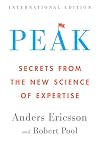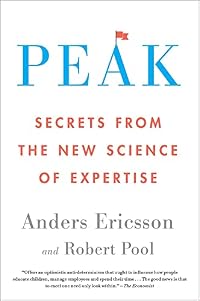
Peak: Secrets from the New Science of Expertise
by Anders Ericsson, Robert Pool
On This Page
Description
Anders Ericsson has made a career studying chess champions, violin virtuosos, star athletes, and memory mavens. Peak distills three decades of myth-shattering research into a powerful learning strategy that is fundamentally different from the way people traditionally think about acquiring new abilities. Whether you want to stand out at work, improve your athletic or musical performance, or help your child achieve academic goals, Ericsson's revolutionary methods will show you how to improve show more at almost any skill that matters to you. show lessTags
Recommendations


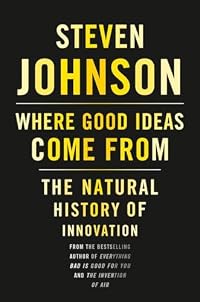
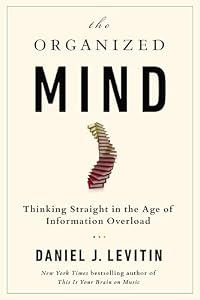
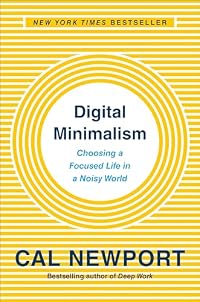
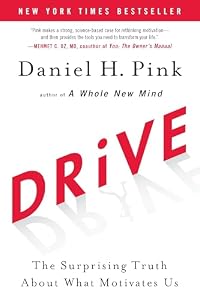
Member Recommendations
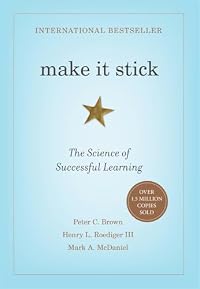
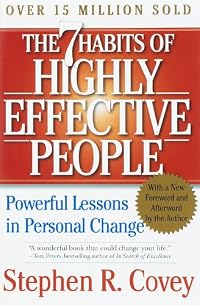
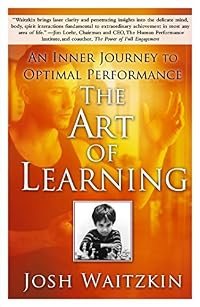
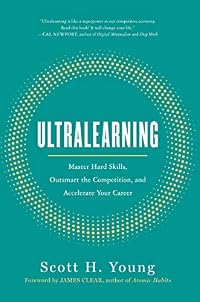
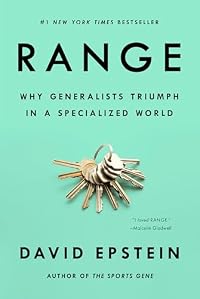
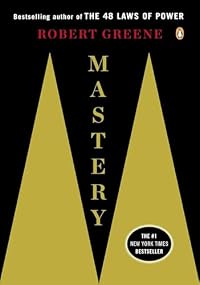
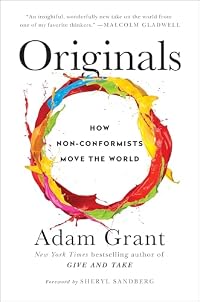
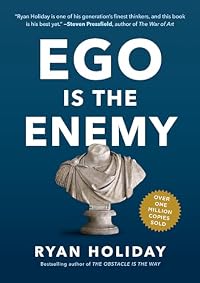
caimanjosh Both deal with the science behind expert performance...Sports Gene is more focused on athletic performance, but Peak provides more detail on just what "deliberate practice" actually entails. Both are worth a read.
Member Reviews
This book by Anders Ericsson is superb. I often wondered where the concepts of 'deliberate practice' and the '10,000-hour rule' originated. Now, I know!
The book is replete with case studies, all of which have been carefully chosen to highlight certain principles. There is a weakness in the book, and it is this: sometimes when he specifies the principles, it is difficult to spot them. You can miss them if you are not focused when reading the book. Treat this as an exercise in concentration!
Apart from this, Anders Ericsson has written an excellent book. There is a crucial chapter for those who cannot afford an expensive coach. This chapter is essential for most of us!
The book is replete with case studies, all of which have been carefully chosen to highlight certain principles. There is a weakness in the book, and it is this: sometimes when he specifies the principles, it is difficult to spot them. You can miss them if you are not focused when reading the book. Treat this as an exercise in concentration!
Apart from this, Anders Ericsson has written an excellent book. There is a crucial chapter for those who cannot afford an expensive coach. This chapter is essential for most of us!
In "Peak: Secrets from the New Science of Expertise," Anders Ericsson, a psychology professor, and Robert Pool, a science writer, debunk the myth that child prodigies are born with so much talent that they are destined to become standouts. Isn't it the case that Mozart was performing and composing as a small child? Ericsson and Pool look into the prodigy question and find that the issue is more complex than it seems. Leopold Mozart, Wolfgang's father, was a musician who taught his daughter and son to play a variety of instruments at very young ages. He immersed them in musicology and encouraged them to practice deliberately. Therefore, whatever gifts they had were incalculably enhanced by their father's tutelage.
What does this mean for show more the average person? The authors insist that, by approaching the learning of new skills with deliberation, focus, and proper motivation—preferably with the support and feedback of an excellent coach or teacher—many individuals, even those without obvious promise, can reach undreamed of heights. For the most part, greatness is cultivated, not genetic, and using methods that have proved effective, we can educate our youngsters to be more accomplished musicians, scientists, mathematicians, and athletes. Those who succeed devise "mental representations," break up specific skills into concrete steps, and work through them one by one. Not everyone will be a Nobel Prize winner, a world-class pianist, or an Olympian, but that is beside the point. Improvement over time is the desired result.
This work of non-fiction is enriched with anecdotes about individuals who set out to accomplish something special. Some found ways to memorize long strings of numbers; become chess grandmasters; beat top opponents at Scrabble; master the violin; or improve their medical skills. According to this book, any of these tasks can be made more achievable by going about them methodically and productively. Merely practicing is not enough, especially if you make the same mistakes over and over. Deliberate and focused practice of the right kind, accomplished at the proper pace, preferably with the help of outstanding instructors, is what separates ordinary from extraordinary achievers. Ericsson and Poole make the case that our brains and bodies are adaptable, and that, with the necessary incentive and training, children in particular (but adults, as well) can become more capable learners. Although this contradicts what some of us believe, this thesis is supported by a well-documented research. "Peak" is relatively jargon-free, well-organized, entertaining, and persuasive. The good news is that "potential is an expandable vessel, shaped by the various things we do throughout our lives." show less
What does this mean for show more the average person? The authors insist that, by approaching the learning of new skills with deliberation, focus, and proper motivation—preferably with the support and feedback of an excellent coach or teacher—many individuals, even those without obvious promise, can reach undreamed of heights. For the most part, greatness is cultivated, not genetic, and using methods that have proved effective, we can educate our youngsters to be more accomplished musicians, scientists, mathematicians, and athletes. Those who succeed devise "mental representations," break up specific skills into concrete steps, and work through them one by one. Not everyone will be a Nobel Prize winner, a world-class pianist, or an Olympian, but that is beside the point. Improvement over time is the desired result.
This work of non-fiction is enriched with anecdotes about individuals who set out to accomplish something special. Some found ways to memorize long strings of numbers; become chess grandmasters; beat top opponents at Scrabble; master the violin; or improve their medical skills. According to this book, any of these tasks can be made more achievable by going about them methodically and productively. Merely practicing is not enough, especially if you make the same mistakes over and over. Deliberate and focused practice of the right kind, accomplished at the proper pace, preferably with the help of outstanding instructors, is what separates ordinary from extraordinary achievers. Ericsson and Poole make the case that our brains and bodies are adaptable, and that, with the necessary incentive and training, children in particular (but adults, as well) can become more capable learners. Although this contradicts what some of us believe, this thesis is supported by a well-documented research. "Peak" is relatively jargon-free, well-organized, entertaining, and persuasive. The good news is that "potential is an expandable vessel, shaped by the various things we do throughout our lives." show less
An interesting look at how the world's most exceptional people got that way, and the lessons the rest of us can learn from it. Ericsson is the academic whose research formed the basis of Malcolm Gladwell's famous "10,000 hours" rule; Ericsson criticizes Gladwell for misunderstanding and misrepresenting his research and seems to have written this book in part as a response. (If the popularizers are getting my stuff wrong, then I'll just hire a co-author and popularize it myself!)
From studying people becoming great at things consequential (classical music) and not (memorizing long lists of numbers), Ericsson identifies a few key factors necessary for success: true growth comes from practicing at a level that pushes boundaries, with show more expert guidance from teachers familiar with good habits, all in the interests of developing "mental representations" of success (everything from exactly what one's body should do in an athletic competition to what a particular position on a chess board means) that encode this vital information in durable, accessible long-term memory.
Ericsson doesn't get into a few angles I would be curious to learn more of: how happy, successful and adjusted his single-subject experts are when not doing their specialty, and exactly how efficient his "deliberate practice" techniques are. That is, even if every all-time great got so through diligent application of a particular method, that doesn't mean that everyone who diligently applies that particular method will become an all-time great. Spending 10,000 hours may be worth it to become a world-class violinist, but is it worth sacrificing an entire childhood just to become a pretty good violinist?
More significantly, I wish Ericsson had focused less on experts and more on how ordinary people can use his talents to become better (but not necessarily the best) at matters of everyday life. He devotes one chapter, and bits of others, to this question, but perpetually returns to the question of how to become world-class. Since very few of us are going to devote our entire lives to becoming experts in one particular area, I'd have found a book that segued from what we can learn from experts in Part 1 to how the rest of us can apply that in our own lives in Part 2 to be more interesting.
If there is one overwhelming takeaway from the book about how to become a world-class expert, I'd say it's this: pick an immature field for your expertise. Mature fields like classical music or chess will require far more investment of time and practice to be better than everyone else, simply because so many other people are already putting in those huge investments. But you could become the best in the world at something less developed by devoting a few thousand or even a few hundred hours, rather than 10,000 or 20,000. show less
From studying people becoming great at things consequential (classical music) and not (memorizing long lists of numbers), Ericsson identifies a few key factors necessary for success: true growth comes from practicing at a level that pushes boundaries, with show more expert guidance from teachers familiar with good habits, all in the interests of developing "mental representations" of success (everything from exactly what one's body should do in an athletic competition to what a particular position on a chess board means) that encode this vital information in durable, accessible long-term memory.
Ericsson doesn't get into a few angles I would be curious to learn more of: how happy, successful and adjusted his single-subject experts are when not doing their specialty, and exactly how efficient his "deliberate practice" techniques are. That is, even if every all-time great got so through diligent application of a particular method, that doesn't mean that everyone who diligently applies that particular method will become an all-time great. Spending 10,000 hours may be worth it to become a world-class violinist, but is it worth sacrificing an entire childhood just to become a pretty good violinist?
More significantly, I wish Ericsson had focused less on experts and more on how ordinary people can use his talents to become better (but not necessarily the best) at matters of everyday life. He devotes one chapter, and bits of others, to this question, but perpetually returns to the question of how to become world-class. Since very few of us are going to devote our entire lives to becoming experts in one particular area, I'd have found a book that segued from what we can learn from experts in Part 1 to how the rest of us can apply that in our own lives in Part 2 to be more interesting.
If there is one overwhelming takeaway from the book about how to become a world-class expert, I'd say it's this: pick an immature field for your expertise. Mature fields like classical music or chess will require far more investment of time and practice to be better than everyone else, simply because so many other people are already putting in those huge investments. But you could become the best in the world at something less developed by devoting a few thousand or even a few hundred hours, rather than 10,000 or 20,000. show less
In "Peak: Secrets from the New Science of Expertise," Anders Ericsson, a psychology professor, and Robert Pool, a science writer, debunk the myth that child prodigies are born with so much talent that they are destined to become standouts. Isn't it the case that Mozart was performing and composing as a small child? Ericsson and Pool look into the prodigy question and find that the issue is more complex than it seems. Leopold Mozart, Wolfgang's father, was a musician who taught his daughter and son to play a variety of instruments at very young ages. He immersed them in musicology and encouraged them to practice deliberately. Therefore, whatever gifts they had were incalculably enhanced by their father's tutelage.
What does this mean for show more the average person? The authors insist that, by approaching the learning of new skills with deliberation, focus, and proper motivation—preferably with the support and feedback of an excellent coach or teacher—many individuals, even those without obvious promise, can reach undreamed of heights. For the most part, greatness is cultivated, not genetic, and using methods that have proved effective, we can educate our youngsters to be more accomplished musicians, scientists, mathematicians, and athletes. Those who succeed devise "mental representations," break up specific skills into concrete steps, and work through them one by one. Not everyone will be a Nobel Prize winner, a world-class pianist, or an Olympian, but that is beside the point. Improvement over time is the desired result.
This work of non-fiction is enriched with anecdotes about individuals who set out to accomplish something special. Some found ways to memorize long strings of numbers; become chess grandmasters; beat top opponents at Scrabble; master the violin; or improve their medical skills. According to this book, any of these tasks can be made more achievable by going about them methodically and productively. Merely practicing is not enough, especially if you make the same mistakes over and over. Deliberate and focused practice of the right kind, accomplished at the proper pace, preferably with the help of outstanding instructors, is what separates ordinary from extraordinary achievers. Ericsson and Poole make the case that our brains and bodies are adaptable, and that, with the necessary incentive and training, children in particular (but adults, as well) can become more capable learners. Although this contradicts what some of us believe, this thesis is supported by a well-documented research. "Peak" is relatively jargon-free, well-organized, entertaining, and persuasive. The good news is that "potential is an expandable vessel, shaped by the various things we do throughout our lives." show less
What does this mean for show more the average person? The authors insist that, by approaching the learning of new skills with deliberation, focus, and proper motivation—preferably with the support and feedback of an excellent coach or teacher—many individuals, even those without obvious promise, can reach undreamed of heights. For the most part, greatness is cultivated, not genetic, and using methods that have proved effective, we can educate our youngsters to be more accomplished musicians, scientists, mathematicians, and athletes. Those who succeed devise "mental representations," break up specific skills into concrete steps, and work through them one by one. Not everyone will be a Nobel Prize winner, a world-class pianist, or an Olympian, but that is beside the point. Improvement over time is the desired result.
This work of non-fiction is enriched with anecdotes about individuals who set out to accomplish something special. Some found ways to memorize long strings of numbers; become chess grandmasters; beat top opponents at Scrabble; master the violin; or improve their medical skills. According to this book, any of these tasks can be made more achievable by going about them methodically and productively. Merely practicing is not enough, especially if you make the same mistakes over and over. Deliberate and focused practice of the right kind, accomplished at the proper pace, preferably with the help of outstanding instructors, is what separates ordinary from extraordinary achievers. Ericsson and Poole make the case that our brains and bodies are adaptable, and that, with the necessary incentive and training, children in particular (but adults, as well) can become more capable learners. Although this contradicts what some of us believe, this thesis is supported by a well-documented research. "Peak" is relatively jargon-free, well-organized, entertaining, and persuasive. The good news is that "potential is an expandable vessel, shaped by the various things we do throughout our lives." show less
How do the exceptional become the exceptional? Is you kid who isn’t learning Calculus by age 6 doomed to a life of mediocrity? And what about this “10,000 hours makes you an expert” thing I hear about?
Peak is, at it’s core, a book about how we learn. The 4 word answer to that question is “practice the right way”, and Anders Ericsson uses his own research and the work of others to provide you a path to improving your ability to learn a new subject and to, with time, achieve expertise.
Malcolm Gladwell popularized the 10,000 hour idea in his book Outliers, and there’s an element of merit to it, but it’s incomplete. Ericsson was responsible for that research, and goes into detail, but the short version is that the research show more was done in highly specialized fields with a lot of shared expertise already. He calls this deliberate practice.
Deliberate practice, as he defines it, may rely on a solidly established field with clear definitions and outcomes, but that doesn’t mean there’s nothing we can take away to our own areas of interest. Setting goals, finding a way to get feedback to evaluate outcomes, and ensuring that you are engaged and challenging yourself the right amount are all strategies encouraged through the book.
Overall, the message is that the human brain is incredibly adaptable and that systematically approaching new subjects (or old subjects you want to improve) can allow you to reach levels you didn’t believe were possible.
This is a must read if you have interest in the brain. show less
Peak is, at it’s core, a book about how we learn. The 4 word answer to that question is “practice the right way”, and Anders Ericsson uses his own research and the work of others to provide you a path to improving your ability to learn a new subject and to, with time, achieve expertise.
Malcolm Gladwell popularized the 10,000 hour idea in his book Outliers, and there’s an element of merit to it, but it’s incomplete. Ericsson was responsible for that research, and goes into detail, but the short version is that the research show more was done in highly specialized fields with a lot of shared expertise already. He calls this deliberate practice.
Deliberate practice, as he defines it, may rely on a solidly established field with clear definitions and outcomes, but that doesn’t mean there’s nothing we can take away to our own areas of interest. Setting goals, finding a way to get feedback to evaluate outcomes, and ensuring that you are engaged and challenging yourself the right amount are all strategies encouraged through the book.
Overall, the message is that the human brain is incredibly adaptable and that systematically approaching new subjects (or old subjects you want to improve) can allow you to reach levels you didn’t believe were possible.
This is a must read if you have interest in the brain. show less
A nice book, based on original research by the authors as well as a review of others' studies. Some of it may be already familiar, some of it looks like common sense, but the authors do stress the point that mastery is attained by assiduous practice over a long period, rather than just some original 'talent'. Drawing on examples from a wide range of disciplines, both intellectual and physical, the authors give some very practical guidance: how to device a mindful regimen and programme of practice, the need o identify specific goals for each phase, breaking down the huge task, and formulating an overall mental representation to develop one's pedagogical approach. For my own struggle to master Hindustani classical music, it gives me a new show more impetus to devise a programme for myself based on what I have attained so far and what I know to be the gaps. show less
Interesting book. At first it stressed me out because if deliberate practice means I can become great at anything, then what's my excuse for NOT being the best at every fucking thing? Buut then I realized it probably just means that if I want to be good at something, I can absolutely become so if I just practice in the right way. Which is a much less stressful way to live.
Took me a while to get through though, it's hardly a page-turner.
Took me a while to get through though, it's hardly a page-turner.
Members
- Recently Added By
Lists

Books Read in 2018
4,360 works; 110 members

The Great Courses: The Learning Brain
61 works; 1 member
Author Information
17 Works 1,373 Members
Anders Ericsson Ph.D., is a Conradi Eminent Scholar and professor of psychology at Florida State University. His work has been cited in bestsellers from Moonwalking with Einstein to Outliers to How Children Succeed. He lives in Florida. Robert Pool has worked at Science and Nature, and has been published in Discover and Technology Review, among show more others. His books include Eves Rib: Searching for the Biological Roots of Sex Differences. He holds a Ph.D. in mathematics from Rice University. show less
20 Works 1,152 Members
Some Editions
Work Relationships
Common Knowledge
- Original publication date
- 2016
Classifications
Statistics
- Members
- 974
- Popularity
- 26,927
- Reviews
- 15
- Rating
- (4.05)
- Languages
- 6 — Chinese, Dutch, English, German, Serbian, Swedish
- Media
- Paper, Audiobook, Ebook
- ISBNs
- 21
- ASINs
- 8