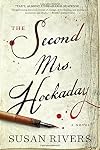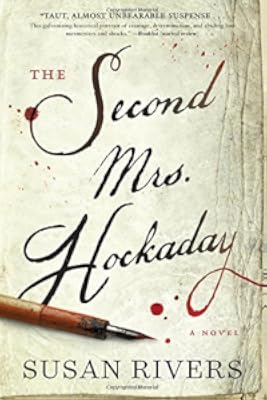
The Second Mrs Hockaday
by Susan Rivers
On This Page
Description
"The Civil War South comes to vivid life in this electrifying story of a woman's plight and a legacy of deceit that echoes for generations. When Major Gryffth Hockaday is called to the front lines of the Civil War, his new bride is left to care for her husband's three-hundred-acre farm and infant son. Placidia, a mere teenager herself living far from her family and completely unprepared to run a farm or raise a child, must endure the darkest days of the war on her own. By the time Major show more Hockaday returns two years later, Placidia is bound for jail, accused of having borne a child in his absence and murdering it. What really transpired in the two years he was away? To what extremes can war and violence push a woman who is left to fend for herself? Told through letters, court inquests, and journal entries, this saga, inspired by a true incident, unfolds with gripping intensity, conjuring the era with uncanny immediacy. Amid the desperation of wartime, Placidia sees the social order of her Southern homeland unravel. As she comes to understand how her own history is linked to one runaway slave, her perspective on race and family are upended. A love story, a story of racial divide, and a story of the South as it fell in the war, The Second Mrs. Hockaday reveals how this generation--and the next--began to see their world anew"-- show lessTags
Recommendations

Member Reviews
My first reaction upon finishing The Second Mrs Hockaday was stunned silence immediately followed by a powerful sense of loss. Placidia’s story so entranced me that it took me several hours to mourn the fact that I had finished it. The silence came about because her story was so powerful it swept me into her world and made me forget my own. It has been a long time since any novel has made me feel this way.
Susan Rivers’ second novel is the epitome of exemplary use of the epistolary literary format and stellar writing. Through the use of personal correspondence, diary entries, and legal documents, Ms. Rivers not only tells Placidia’s tragic story but recreates the South at the end of the Civil War with vivid clarity. Each document show more has a distinct voice that adds to the story as much as their words do. Other than the inquest documents, the letters are so natural and honest that it is all too easy to get sucked into reading just one more letter, and one more, and yet one more. The Second Mrs Hockaday is the perfect example of an unputdownable novel. show less
Susan Rivers’ second novel is the epitome of exemplary use of the epistolary literary format and stellar writing. Through the use of personal correspondence, diary entries, and legal documents, Ms. Rivers not only tells Placidia’s tragic story but recreates the South at the end of the Civil War with vivid clarity. Each document show more has a distinct voice that adds to the story as much as their words do. Other than the inquest documents, the letters are so natural and honest that it is all too easy to get sucked into reading just one more letter, and one more, and yet one more. The Second Mrs Hockaday is the perfect example of an unputdownable novel. show less
Decently researched as far as battles, clothes, foods, chores and interesting if unnecessarily complicated.
The main character is an extremely romanticized view of a southern white woman who participated in the chattel slave trade. In fact was born and raised and married in it but seems to hold no prejudiced views towards her 'servants'.
When a white author is too fragile to accurately label chattel slaves they should take that as a clue and choose a new subject.
Benevolent chattel slave owners only exist in the imagination of racist white folks. Every single person who participated in any aspect of the chattel slave trade was a bad person who's character is irredeemably scarred. The main character is not realistic to her time and class show more but is sanitized so modern audiences can sympathize with her.
I don't.
I don't care about her or her husband's pain. It is just that they suffered and I sincerely hope their existence was forever haunted.
None of the black characters are developed or have story lines outside of their usefulness to the main white characters.
I've read a fair bit of non fiction about southern women before and during the Civil War; black free, enslaved and white chattel slave oppressing, none of the views expressed or behaviors match the diaries or letters written at that time. Mrs Hockaday does not feel like her contemporaries and her differences are never explained.
White women left on plantations and farms with enslaved peoples had very negative and fearful views of those enslaved peoples the longer the war carried out. They were very angry with them for leaving, fearful of their desire for freedom and many white women took it very personally. Also they were terrified of armed black union troops. As white slave 'owners' felt entitled enough to black folks labor to steal it for centuries, why would the Civil War and it's trials change that?
We all know it did not.
Miscegenation is invented as a word and becomes illegal in 1864. Post Civil War the KKK is created. If southern whites suddenly realized their 'slaves' were people, why did we have and continue to have racial segregation and lynching? Both attest to southern white anxiety resulting in terrorist behaviors carried out on fellow citizens.
This narrative is just grossly apologist in nature. show less
The main character is an extremely romanticized view of a southern white woman who participated in the chattel slave trade. In fact was born and raised and married in it but seems to hold no prejudiced views towards her 'servants'.
When a white author is too fragile to accurately label chattel slaves they should take that as a clue and choose a new subject.
Benevolent chattel slave owners only exist in the imagination of racist white folks. Every single person who participated in any aspect of the chattel slave trade was a bad person who's character is irredeemably scarred. The main character is not realistic to her time and class show more but is sanitized so modern audiences can sympathize with her.
I don't.
I don't care about her or her husband's pain. It is just that they suffered and I sincerely hope their existence was forever haunted.
None of the black characters are developed or have story lines outside of their usefulness to the main white characters.
I've read a fair bit of non fiction about southern women before and during the Civil War; black free, enslaved and white chattel slave oppressing, none of the views expressed or behaviors match the diaries or letters written at that time. Mrs Hockaday does not feel like her contemporaries and her differences are never explained.
White women left on plantations and farms with enslaved peoples had very negative and fearful views of those enslaved peoples the longer the war carried out. They were very angry with them for leaving, fearful of their desire for freedom and many white women took it very personally. Also they were terrified of armed black union troops. As white slave 'owners' felt entitled enough to black folks labor to steal it for centuries, why would the Civil War and it's trials change that?
We all know it did not.
Miscegenation is invented as a word and becomes illegal in 1864. Post Civil War the KKK is created. If southern whites suddenly realized their 'slaves' were people, why did we have and continue to have racial segregation and lynching? Both attest to southern white anxiety resulting in terrorist behaviors carried out on fellow citizens.
This narrative is just grossly apologist in nature. show less
Extraordinary.
This was the first of two books I coincidentally read in recent months which described the horrors of the Southern homefront during the Civil War. Here the horrors were more tangential, dealt with more matter-of-factly, never the main focus of the story but a backdrop for the central question of what happened to the Second Mrs. Hockaday, and yet those horrors were just as successfully conveyed as horrors here as in that other book, where they were more closely detailed. It's for damn sure that when the Doctor finally lands in my living room and asks me when and where I want to go, my answer may be "anywhere but the Confederate States of America anytime in the late 1800's".
But that is not the main point of the narrative. show more That would be too easy. What it actually is is the slow and gradual unraveling of a terrible secret– the sort of mystery that you're warned against trying to unravel, because it will change you forever. The first Mrs. Hockaday, the second Mrs. Hockaday, slave and master, infant and adult, death and life – all are tangled and entwined into a knot of pain … and a little surprising joy.
I thought of Gryffth's mouth on my neck, his laughter shaking the bed. Can one die of loneliness, I asked myself? I thought I heard the first Mrs. Hockaday's voice in my head, saying: I did.
The usual disclaimer: I received this book via Netgalley for review. show less
This was the first of two books I coincidentally read in recent months which described the horrors of the Southern homefront during the Civil War. Here the horrors were more tangential, dealt with more matter-of-factly, never the main focus of the story but a backdrop for the central question of what happened to the Second Mrs. Hockaday, and yet those horrors were just as successfully conveyed as horrors here as in that other book, where they were more closely detailed. It's for damn sure that when the Doctor finally lands in my living room and asks me when and where I want to go, my answer may be "anywhere but the Confederate States of America anytime in the late 1800's".
But that is not the main point of the narrative. show more That would be too easy. What it actually is is the slow and gradual unraveling of a terrible secret– the sort of mystery that you're warned against trying to unravel, because it will change you forever. The first Mrs. Hockaday, the second Mrs. Hockaday, slave and master, infant and adult, death and life – all are tangled and entwined into a knot of pain … and a little surprising joy.
I thought of Gryffth's mouth on my neck, his laughter shaking the bed. Can one die of loneliness, I asked myself? I thought I heard the first Mrs. Hockaday's voice in my head, saying: I did.
The usual disclaimer: I received this book via Netgalley for review. show less
First, I LOVE the name Placidia. It stands on its own as a signal, a beacon of a different time, and it almost evokes a sense of place. Fascinating too, is that this book is based on true events. I admire Rivers' ability to track this story given the construct. (I think my head would have exploded) She takes care with each character's role, and as I read, I imagined a stage where each one spoke their part, giving hints and details on what they knew about the dramatic event that captivated and horrified all who knew - or thought they knew - Placidia's story.
One of the most commendable aspects of the narrative is the way Susan Rivers has captured the essence of voices from the past. I have a couple of Civil War diaries and she has show more written this book (in epistolary form) with the unique lilt and cadence of language at that time. It makes me wonder - if in one hundred and fifty years, we can sound so different, what will our language be one hundred years plus from now?
Another is the tension she creates as the reader gleans a tiny bit more knowledge of the facts with each letter written, each diary entry, and each inquest. Even while a reader might begin to suspect that the accusations ARE suspect, Rivers confidently, and capably delivers the conclusion at exactly the right time.
Highly recommend for those who like reading books set during the Civil War, and written in epistolary form. show less
One of the most commendable aspects of the narrative is the way Susan Rivers has captured the essence of voices from the past. I have a couple of Civil War diaries and she has show more written this book (in epistolary form) with the unique lilt and cadence of language at that time. It makes me wonder - if in one hundred and fifty years, we can sound so different, what will our language be one hundred years plus from now?
Another is the tension she creates as the reader gleans a tiny bit more knowledge of the facts with each letter written, each diary entry, and each inquest. Even while a reader might begin to suspect that the accusations ARE suspect, Rivers confidently, and capably delivers the conclusion at exactly the right time.
Highly recommend for those who like reading books set during the Civil War, and written in epistolary form. show less
Seventeen year old Palcidia (Dia) marries Major Hockaday after knowing him only briefly. The Civil War is going on so decisions must be made quickly. The first Mrs. Hockaday has passed leaving her small son in need of a mother before his father goes back to war. Though they spend only two (passionate) nights together before Mr. Hockaday leaves, a strong bond is formed between the new couple who plan to be reunited after the war. Unfortunately for the star crossed lovers two years go by and a lot of horrible things happen to the both of them before they can be reunited. When the appointed time comes Major Hockaday has the unfortunate shock of finding out that his wife has given birth to someone else's child while he was away and even show more worse than that the towns people think she murdered the baby. To complicate matters further she refuses to speak about it even to save herself. The question of whether Mr. Hockaday can forgive his wife will shape his family and reverberate throughout the future generations.
The story is told epistolary, using letters and court documents. The first part of the book is told from Dia's viewpoint. As her portion of the story nears it's conclusion you feel that you are finally going to get some answers on why someone who seems so dedicated to her husband is pregnant by another man. You realize that the answers will remain ever elusive when the next section is compromised of correspondence between Dia's son Achilles and his aunt in the future after Dia has passed away. At times I found myself becoming impatient with the story but it was worth hanging in until the end when family connections are revealed as well as the identity of the baby's father. Reading the story made me think about how little choice people had in their lives at this time in history. The story highlights how much women and African Americans suffered in the south during the war years. show less
The story is told epistolary, using letters and court documents. The first part of the book is told from Dia's viewpoint. As her portion of the story nears it's conclusion you feel that you are finally going to get some answers on why someone who seems so dedicated to her husband is pregnant by another man. You realize that the answers will remain ever elusive when the next section is compromised of correspondence between Dia's son Achilles and his aunt in the future after Dia has passed away. At times I found myself becoming impatient with the story but it was worth hanging in until the end when family connections are revealed as well as the identity of the baby's father. Reading the story made me think about how little choice people had in their lives at this time in history. The story highlights how much women and African Americans suffered in the south during the war years. show less
 This review was written for LibraryThing Early Reviewers.
The Second Mrs. Hockaday tells a story of love, suffering and survival during the Civil War. It begins with a letter from one woman to her beloved aunt, seeking help while she is on trial for infanticide.
This is not the normal narrative. We can’t call it an epistolary novel as there are other documents as well, but much of it is told through letters. There are letters she wrote to her aunt and her aunt’s replies, letters from her husband and letters from her children as well as testimony from an inquest into the death of that child and her diary entries.
The central mystery is what Placidia did while her husband was off to war and held captive as a prisoner of war. What we know is that somehow she became pregnant and somehow that show more baby died. The rest is a mystery that is told slowly and painfully as people overcome the societal reticence against speaking about such things.
The novel succeeds in creating the sense of isolation and despair that Placidia must have felt, caring for her stepson, trying to keep a farm going with just a few slaves while her husband is off fighting for the Confederacy. There’s a reality and honesty in her portrayal, kind, friendly and solicitous of her slaves but ready to snap when they presume more than she allows. She represents well the way many slaveowners who regarded themselves as being kind were kind only up to a point.
I find her resistance to being honest with her husband less understandable, but then if she told him the truth when he came home, there never would have been any book, so there is that. Otherwise, I question how much their mutual trust and mutual love when that sort of secret could not be shared—after the need to protect any third party was moot.
I liked Placidia and most of the main characters in the book. She was plucky and tough. I thought her husband Gryffyth was less sympathetic, but I find nothing romantic about the Old South, the antebellum aristocracy or the Confederacy. People like to defend that society by saying they were of their time, but they were not. They were defending an institution that the world was leaving behind. They were against their time, not of it. They were aware that the world disagreed with them and continued to practice, defend, and expand slavery.
I enjoyed The Second Mrs. Hockaday. It’s well-written with a fairly fast pace and there is a small mystery that frames the narrative. While the mystery seems to be the central point of the novel, it seems to me, the real story is about what the nature of love and marriage must be to survive. What is trust, what is love and what does that mean? As one of their children described it, “a fine line divides love from misery.” Learning how to be on the right side of that line is the challenge.
The Second Mrs. Hockaday will be released January 10, 2017. I was provided an e-galley from the publisher via Net Galley.
★★★
http://tonstantweaderreviews.wordpress.com/2016/12/11/the-second-mrs-hockaday/ show less
This is not the normal narrative. We can’t call it an epistolary novel as there are other documents as well, but much of it is told through letters. There are letters she wrote to her aunt and her aunt’s replies, letters from her husband and letters from her children as well as testimony from an inquest into the death of that child and her diary entries.
The central mystery is what Placidia did while her husband was off to war and held captive as a prisoner of war. What we know is that somehow she became pregnant and somehow that show more baby died. The rest is a mystery that is told slowly and painfully as people overcome the societal reticence against speaking about such things.
The novel succeeds in creating the sense of isolation and despair that Placidia must have felt, caring for her stepson, trying to keep a farm going with just a few slaves while her husband is off fighting for the Confederacy. There’s a reality and honesty in her portrayal, kind, friendly and solicitous of her slaves but ready to snap when they presume more than she allows. She represents well the way many slaveowners who regarded themselves as being kind were kind only up to a point.
I find her resistance to being honest with her husband less understandable, but then if she told him the truth when he came home, there never would have been any book, so there is that. Otherwise, I question how much their mutual trust and mutual love when that sort of secret could not be shared—after the need to protect any third party was moot.
I liked Placidia and most of the main characters in the book. She was plucky and tough. I thought her husband Gryffyth was less sympathetic, but I find nothing romantic about the Old South, the antebellum aristocracy or the Confederacy. People like to defend that society by saying they were of their time, but they were not. They were defending an institution that the world was leaving behind. They were against their time, not of it. They were aware that the world disagreed with them and continued to practice, defend, and expand slavery.
I enjoyed The Second Mrs. Hockaday. It’s well-written with a fairly fast pace and there is a small mystery that frames the narrative. While the mystery seems to be the central point of the novel, it seems to me, the real story is about what the nature of love and marriage must be to survive. What is trust, what is love and what does that mean? As one of their children described it, “a fine line divides love from misery.” Learning how to be on the right side of that line is the challenge.
The Second Mrs. Hockaday will be released January 10, 2017. I was provided an e-galley from the publisher via Net Galley.
★★★
http://tonstantweaderreviews.wordpress.com/2016/12/11/the-second-mrs-hockaday/ show less
Prescriptivist that I am, I normally eschew books that don't use punctuation, especially in relaying dialog. I am, however, a big fan of epistolary novels, and this story was so interesting, I got over it quickly. I also love books that have me convinced I have everything figured out, and when I turn the page, I discover I have been proven wrong! I could not put this one down.
Members
- Recently Added By
Lists

Fiction: Historical
288 works; 3 members
Author Information
1 Work 366 Members
Awards and Honors
Awards
Distinctions
Common Knowledge
- Canonical title
- The Second Mrs Hockaday
- Original publication date
- 2017
- People/Characters
- Placidia Hockaday; Gryffth Hockaday
- Important places
- South Carolina, USA
- Important events
- American Civil War
- Epigraph
- Know that in time those things toward which we move come to be. —Marcus Aurelius, Book Six, The Emperor's Handbook, Translated by C. Scot Hicks and David V. Hicks
- Dedication
- to Frederick and Lily
the soil and the sun - First words
- Dearest Mildred,
On my deathbed I shall remember that April day if I remember anything at all. - Last words
- (Click to show. Warning: May contain spoilers.)The cord, or something like it, sustaining me.
Classifications
Statistics
- Members
- 373
- Popularity
- 84,462
- Reviews
- 61
- Rating
- (3.79)
- Languages
- English
- Media
- Paper, Audiobook, Ebook
- ISBNs
- 9
- ASINs
- 2