
Susan Rivers (1)
Author of The Second Mrs Hockaday
For other authors named Susan Rivers, see the disambiguation page.
Works by Susan Rivers
Tagged
Common Knowledge
- Legal name
- Rivers, Susan Jane
- Gender
- female
- Nationality
- USA
- Associated Place (for map)
- USA
Members
Reviews
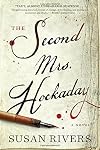
Decently researched as far as battles, clothes, foods, chores and interesting if unnecessarily complicated.
The main character is an extremely romanticized view of a southern white woman who participated in the chattel slave trade. In fact was born and raised and married in it but seems to hold no prejudiced views towards her 'servants'.
When a white author is too fragile to accurately label chattel slaves they should take that as a clue and choose a new subject.
Benevolent chattel slave owners show more only exist in the imagination of racist white folks. Every single person who participated in any aspect of the chattel slave trade was a bad person who's character is irredeemably scarred. The main character is not realistic to her time and class but is sanitized so modern audiences can sympathize with her.
I don't.
I don't care about her or her husband's pain. It is just that they suffered and I sincerely hope their existence was forever haunted.
None of the black characters are developed or have story lines outside of their usefulness to the main white characters.
I've read a fair bit of non fiction about southern women before and during the Civil War; black free, enslaved and white chattel slave oppressing, none of the views expressed or behaviors match the diaries or letters written at that time. Mrs Hockaday does not feel like her contemporaries and her differences are never explained.
White women left on plantations and farms with enslaved peoples had very negative and fearful views of those enslaved peoples the longer the war carried out. They were very angry with them for leaving, fearful of their desire for freedom and many white women took it very personally. Also they were terrified of armed black union troops. As white slave 'owners' felt entitled enough to black folks labor to steal it for centuries, why would the Civil War and it's trials change that?
We all know it did not.
Miscegenation is invented as a word and becomes illegal in 1864. Post Civil War the KKK is created. If southern whites suddenly realized their 'slaves' were people, why did we have and continue to have racial segregation and lynching? Both attest to southern white anxiety resulting in terrorist behaviors carried out on fellow citizens.
This narrative is just grossly apologist in nature. show less
The main character is an extremely romanticized view of a southern white woman who participated in the chattel slave trade. In fact was born and raised and married in it but seems to hold no prejudiced views towards her 'servants'.
When a white author is too fragile to accurately label chattel slaves they should take that as a clue and choose a new subject.
Benevolent chattel slave owners show more only exist in the imagination of racist white folks. Every single person who participated in any aspect of the chattel slave trade was a bad person who's character is irredeemably scarred. The main character is not realistic to her time and class but is sanitized so modern audiences can sympathize with her.
I don't.
I don't care about her or her husband's pain. It is just that they suffered and I sincerely hope their existence was forever haunted.
None of the black characters are developed or have story lines outside of their usefulness to the main white characters.
I've read a fair bit of non fiction about southern women before and during the Civil War; black free, enslaved and white chattel slave oppressing, none of the views expressed or behaviors match the diaries or letters written at that time. Mrs Hockaday does not feel like her contemporaries and her differences are never explained.
White women left on plantations and farms with enslaved peoples had very negative and fearful views of those enslaved peoples the longer the war carried out. They were very angry with them for leaving, fearful of their desire for freedom and many white women took it very personally. Also they were terrified of armed black union troops. As white slave 'owners' felt entitled enough to black folks labor to steal it for centuries, why would the Civil War and it's trials change that?
We all know it did not.
Miscegenation is invented as a word and becomes illegal in 1864. Post Civil War the KKK is created. If southern whites suddenly realized their 'slaves' were people, why did we have and continue to have racial segregation and lynching? Both attest to southern white anxiety resulting in terrorist behaviors carried out on fellow citizens.
This narrative is just grossly apologist in nature. show less

My first reaction upon finishing The Second Mrs Hockaday was stunned silence immediately followed by a powerful sense of loss. Placidia’s story so entranced me that it took me several hours to mourn the fact that I had finished it. The silence came about because her story was so powerful it swept me into her world and made me forget my own. It has been a long time since any novel has made me feel this way.
Susan Rivers’ second novel is the epitome of exemplary use of the epistolary show more literary format and stellar writing. Through the use of personal correspondence, diary entries, and legal documents, Ms. Rivers not only tells Placidia’s tragic story but recreates the South at the end of the Civil War with vivid clarity. Each document has a distinct voice that adds to the story as much as their words do. Other than the inquest documents, the letters are so natural and honest that it is all too easy to get sucked into reading just one more letter, and one more, and yet one more. The Second Mrs Hockaday is the perfect example of an unputdownable novel. show less
Susan Rivers’ second novel is the epitome of exemplary use of the epistolary show more literary format and stellar writing. Through the use of personal correspondence, diary entries, and legal documents, Ms. Rivers not only tells Placidia’s tragic story but recreates the South at the end of the Civil War with vivid clarity. Each document has a distinct voice that adds to the story as much as their words do. Other than the inquest documents, the letters are so natural and honest that it is all too easy to get sucked into reading just one more letter, and one more, and yet one more. The Second Mrs Hockaday is the perfect example of an unputdownable novel. show less
Extraordinary.
This was the first of two books I coincidentally read in recent months which described the horrors of the Southern homefront during the Civil War. Here the horrors were more tangential, dealt with more matter-of-factly, never the main focus of the story but a backdrop for the central question of what happened to the Second Mrs. Hockaday, and yet those horrors were just as successfully conveyed as horrors here as in that other book, where they were more closely detailed. It's show more for damn sure that when the Doctor finally lands in my living room and asks me when and where I want to go, my answer may be "anywhere but the Confederate States of America anytime in the late 1800's".
But that is not the main point of the narrative. That would be too easy. What it actually is is the slow and gradual unraveling of a terrible secret– the sort of mystery that you're warned against trying to unravel, because it will change you forever. The first Mrs. Hockaday, the second Mrs. Hockaday, slave and master, infant and adult, death and life – all are tangled and entwined into a knot of pain … and a little surprising joy.
I thought of Gryffth's mouth on my neck, his laughter shaking the bed. Can one die of loneliness, I asked myself? I thought I heard the first Mrs. Hockaday's voice in my head, saying: I did.
The usual disclaimer: I received this book via Netgalley for review. show less
This was the first of two books I coincidentally read in recent months which described the horrors of the Southern homefront during the Civil War. Here the horrors were more tangential, dealt with more matter-of-factly, never the main focus of the story but a backdrop for the central question of what happened to the Second Mrs. Hockaday, and yet those horrors were just as successfully conveyed as horrors here as in that other book, where they were more closely detailed. It's show more for damn sure that when the Doctor finally lands in my living room and asks me when and where I want to go, my answer may be "anywhere but the Confederate States of America anytime in the late 1800's".
But that is not the main point of the narrative. That would be too easy. What it actually is is the slow and gradual unraveling of a terrible secret– the sort of mystery that you're warned against trying to unravel, because it will change you forever. The first Mrs. Hockaday, the second Mrs. Hockaday, slave and master, infant and adult, death and life – all are tangled and entwined into a knot of pain … and a little surprising joy.
I thought of Gryffth's mouth on my neck, his laughter shaking the bed. Can one die of loneliness, I asked myself? I thought I heard the first Mrs. Hockaday's voice in my head, saying: I did.
The usual disclaimer: I received this book via Netgalley for review. show less
Using the epistolary technique, this story is told through letters and diary entries. It worked well although I did have to frequently jump to the end of the letter to see who the letter was from. The time line also was a bit confusing at times – letters written between 1863 – 1865 jumping back and forth – then forward to 1892 interspersed with diary entries from 1864. But it really did not distract from the story.
As their husbands went off to war, wives were left behind to tend to the show more crops and livestock. But Union troops (and men dressed as troops) took food and livestock from them, not caring how the families were to survive. Slaves were leaving as the opportunity presented itself. Newly-wed Placidia barely knew her husband when he left her to tend their huge farm and his young son from his previous marriage. This was not a marriage of convenience as they seemed to truly love each other.
But two years later when Major Hockaday returns home, he finds that Placidia has been arrested for killing her newborn child, a child that definitely was not his. Can he forgive his love for whatever happened while he was away? And what did happen? Can she be honest with him? Can their love survive?
Placidia had to make many critical decisions on her own. Was she an irresponsible teenager? Or wise beyond her years? Did the Major return a cold, heartless man after the horrors of the war, or did his love for his wife cool the anger and shock?
Toward the end of the book I was totally engrossed wanting to know how life would treat these brave characters who had to do whatever it took to survive. show less
As their husbands went off to war, wives were left behind to tend to the show more crops and livestock. But Union troops (and men dressed as troops) took food and livestock from them, not caring how the families were to survive. Slaves were leaving as the opportunity presented itself. Newly-wed Placidia barely knew her husband when he left her to tend their huge farm and his young son from his previous marriage. This was not a marriage of convenience as they seemed to truly love each other.
But two years later when Major Hockaday returns home, he finds that Placidia has been arrested for killing her newborn child, a child that definitely was not his. Can he forgive his love for whatever happened while he was away? And what did happen? Can she be honest with him? Can their love survive?
Placidia had to make many critical decisions on her own. Was she an irresponsible teenager? Or wise beyond her years? Did the Major return a cold, heartless man after the horrors of the war, or did his love for his wife cool the anger and shock?
Toward the end of the book I was totally engrossed wanting to know how life would treat these brave characters who had to do whatever it took to survive. show less
Lists
Awards


You May Also Like


Statistics
- Works
- 1
- Members
- 369
- Popularity
- #65,263
- Rating
- 3.8
- Reviews
- 61
- ISBNs
- 42
