On This Page
Description
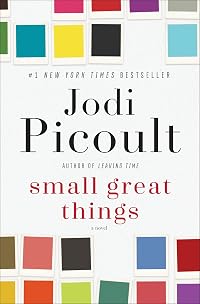
A woman and her husband admitted to a hospital to have a baby requests that their nurse be reassigned -- they are white supremacists and don't want Ruth, who is black, to touch their baby. The hospital complies, but the baby later goes into cardiac distress when Ruth is on duty. She hesitates before rushing in to perform CPR. When her indecision ends in tragedy, Ruth finds herself on trial, represented by a white public defender who warns against bringing race into a courtroom. As the two show more come to develop a truer understanding of each other's lives, they begin to doubt the beliefs they each hold most dear. show lessTags
Recommendations








Member Recommendations
princejacon This book is recommended mostly for Senior Secondary School students in schools across the world.
Member Reviews
What if the puzzle of the world was a shape you didn’t fit into? And the only way to survive was to mutilate yourself, carve away your corners, sand yourself down, modify yourself to fit?A truly brave, challenging, and prescient book in today’s America, and one that Jodi Picoult should be—and has been—rightly lauded for having had the tenacity to write. As she notes in her seminal afterward, this book was twenty years in the writing, as she—a white woman of a privileged social class—began to wonder how she could write about racism in America.
How come we haven’t been able to change the puzzle instead?
The result is a staggering exploration of grand-scale racism and smaller-scale acts of almost-imperciptible privilege show more of which those in power (read: white) are often ignorant and unaware, but of which African Americans are all too aware, having to navigate and maneuver these power structures on a constant, daily basis. Told from three points of view—Turk, a white supremacist whose baby dies in the labor and delivery ward at a Connecticut hospital in the early chapters; Ruth, an African American L&D nurse who is asked by Turk and his wife, Brit, not to touch their child; and Kennedy, a white, privileged public defender (Picoult’s stand-in, as she indicates in the afterward) who takes on Ruth’s case when the child dies and Turk blames her for it.
Entangled in all of this are Ruth’s feelings of alienation from her own sister, Adisa, a welfare mother, due to her own struggle to be educated and become a nurse, and wanting the same for her son, Edison; a preacher-like media figure, not unlike Al Sharpton; members of the neo-Nazi and White Power groups that proliferate in America to this day (think that happened in 2017 in Charlottesville, VA with the Unite the Right rally); and countless minor characters who cause the reader to see race and its various aspects from multiple angles.
Everyone living in America right now should read this book, as should the rest of the world, to understand how race and American identity are so intrinsically intertwined and why our nation is so divided on many issues regarding race. This is the world in which we live, and it’s examined in such painstaking depth and with such immense humanity by Picoult, who never seems to be scared to tackle the big subjects—cf. her most recent book, and the first book of hers I read, on abortion, A Spark of Light.
If you think that you are not racist, you might see that position a bit differently by the end of Small Great Things, named after Martin Luther King, Jr.’s famous statement: “If I cannot do great things, I can do small things in a great way.”
And that’s exactly what Picoult does here: tackling great things in a small way, and small things in a great way—all at once, with exceptional power and bravado.
4.5/5 stars show less
This book about social justice and racism, written from multiple perspectives should be required reading for every person out there. No one required me to read it, but I'm glad I did. Originally I wrote it should be required for privileged people, but to me, it offers depth that anyone could appreciate.
Jodi Piccoult takes a news story and adds layers of complexity to her narrative. The reader gets inside the head of the accused, the accuser, and the defense attorney. The accused is a black nurse who's been charged with murder. The accused is a young, white supremacist man and father of the baby at the center of the case. The defense attorney is a privileged, female, white woman.
Each character's perspective teaches the reader show more something. But it's never preachy or vague. It's relevant to our lives now more than ever. And each chapter makes you want to read the perspective in the following chapter.
As for the writing style, Piccoult is skillful in bringing all these perspective together. The story moves at a good pace, and she throws a couple of "didn't see that coming" plot points into the mix.
The author thanks her early readers for "being outraged, moved and humbled in all the right places." That is exactly how this book made me feel. It helped give me words to discuss racism with a friend in a way we never have. It touched my heart. And it made me pissed off!
Again from Piccoult's acknowledgments, "When it comes to social justice, the role of the white ally is not to be a savior or a fixer. Instead, the role of the ally is to find other white people and talk to make them see that many of the benefits they’ve enjoyed in life are direct results of the fact that someone else did not have the same benefits." That's exactly what I want to do going forward.
Okay friends, go out and get this book!
Thanks to NetGalley, Random House, and Ballantine Books for an advance copy in exchange for an honest review. show less
Jodi Piccoult takes a news story and adds layers of complexity to her narrative. The reader gets inside the head of the accused, the accuser, and the defense attorney. The accused is a black nurse who's been charged with murder. The accused is a young, white supremacist man and father of the baby at the center of the case. The defense attorney is a privileged, female, white woman.
Each character's perspective teaches the reader show more something. But it's never preachy or vague. It's relevant to our lives now more than ever. And each chapter makes you want to read the perspective in the following chapter.
As for the writing style, Piccoult is skillful in bringing all these perspective together. The story moves at a good pace, and she throws a couple of "didn't see that coming" plot points into the mix.
The author thanks her early readers for "being outraged, moved and humbled in all the right places." That is exactly how this book made me feel. It helped give me words to discuss racism with a friend in a way we never have. It touched my heart. And it made me pissed off!
Again from Piccoult's acknowledgments, "When it comes to social justice, the role of the white ally is not to be a savior or a fixer. Instead, the role of the ally is to find other white people and talk to make them see that many of the benefits they’ve enjoyed in life are direct results of the fact that someone else did not have the same benefits." That's exactly what I want to do going forward.
Okay friends, go out and get this book!
Thanks to NetGalley, Random House, and Ballantine Books for an advance copy in exchange for an honest review. show less
What an overwritten piece of dreck. It’s basically a (bad, shallow, preachy) textbook dressed up as a morality play. If you’re interested in the actual issues that Jodi Picoult wants to club you over the head with, there are numerous more interesting books about them. (I recommend [b:The New Jim Crow|6792458|The New Jim Crow Mass Incarceration in the Age of Colorblindness|Michelle Alexander|https://i.gr-assets.com/images/S/compressed.photo.goodreads.com/books/1328751532l/6792458._SX50_.jpg|6996712] or [b:The Warmth of Other Suns|8171378|The Warmth of Other Suns The Epic Story of America's Great Migration|Isabel Wilkerson|https://i.gr-assets.com/images/S/compressed.photo.goodreads.com/books/1433354252l/8171378._SY75_.jpg|13341052] as show more good ones to begin with.) If you’re interested in a novel about bad things happening to good people, well, anyone could recommend a dozen of those. But unless you deeply, truly want a white author to give you a crash course on the history of race in America in the form of a badly written novel from the co-opted eyes of a woman of color, with unbearable dialogue, uninteresting characters, and unsurprising plot twists, you should avoid this particular book. show less
Timely and powerful I found this book really distressing to read but also fabulous and informative. Tackling the issues of privilege, racism, race bias, etc in a way that I think will open many eyes and lead to some really great discussions. While people may think that the story line is not something that would actually happen in America unfortunately it does happen in real life.
Turk's story reminds me a little of the movie American History X with Edward Norton in that you get to see through the eyes of a white supremacist. Its scary how people can be taught to hate so much, that history can be twisted in such a way, but its not a problem of yesterday, this is something that continues, and is systemic in the American culture and seems show more to be growing again.
Picoult's book couldn't have come at a better time and hopefully will get people talking and really thinking about racism, white privilege, and unconscious bias. Was Ruth guilty? Was she just following orders? What would you have done? And why did the hospital put her in this situation? Like all Picoult's books there is no easy answer, but maybe thats the point, there is no easy answer and fixing this is not going to be easy or comfortable for many. show less
Turk's story reminds me a little of the movie American History X with Edward Norton in that you get to see through the eyes of a white supremacist. Its scary how people can be taught to hate so much, that history can be twisted in such a way, but its not a problem of yesterday, this is something that continues, and is systemic in the American culture and seems show more to be growing again.
Picoult's book couldn't have come at a better time and hopefully will get people talking and really thinking about racism, white privilege, and unconscious bias. Was Ruth guilty? Was she just following orders? What would you have done? And why did the hospital put her in this situation? Like all Picoult's books there is no easy answer, but maybe thats the point, there is no easy answer and fixing this is not going to be easy or comfortable for many. show less
Like the other Picoult books I have read, this one had me hooked from the beginning. The writing is so compelling and the subject of current-day racism is so relevant.
I jumped right in, hating Turk, pulling for Ruth, wary of Adisa, and cheering for Kennedy. Living in the deep south, where the most heinous acts occurred during the civil rights era, I have a different perspective than I think people in other regions of the US may have. Like Kennedy's mother, I don't tend to look at how far we have yet to go, but how far we've come.
With that said, it was very difficult to read some of the sections, and made me put the book down so I could consider the text. I didn't read this book lightly, and am glad of the conversations that I feel it show more will inspire. Conversations that need to happen.
Then I got to the end. I am not going to spoil it for you, but the ending of the book left me completely deflated. I wanted the situation to be handled realistically. I wanted a real-world outcome, with all of its consequences. I wanted commentary on how the struggle for racial equity continues. I wanted evidence of small steps making a difference. I wanted to see how people changed perspectives from both sides of the color wheel. This struggle is not a tidy one, and that's what I expected to see reflected here.
Instead, I felt robbed of all of that. Instead, I got theatrics. And not even realistic, at that. The ending is out of left field, and so out of any realm of remote possibility that it almost ruined the rest of the story for me. If it were not for the strong social commentary throughout, I would have put this at a rating of two, but I think Picoult had more to offer than that rating would indicate. However, she also had a great opportunity to shine a spotlight while holding a mirror up to her readers. That opportunity was squandered.
Recommended, but prepare to be disappointed.
This book is available October 11, 2016.
Thank you to LibraryThing Early Reviewers for a copy of this prerelease in exchange for my honest opinion. show less
I jumped right in, hating Turk, pulling for Ruth, wary of Adisa, and cheering for Kennedy. Living in the deep south, where the most heinous acts occurred during the civil rights era, I have a different perspective than I think people in other regions of the US may have. Like Kennedy's mother, I don't tend to look at how far we have yet to go, but how far we've come.
With that said, it was very difficult to read some of the sections, and made me put the book down so I could consider the text. I didn't read this book lightly, and am glad of the conversations that I feel it show more will inspire. Conversations that need to happen.
Then I got to the end. I am not going to spoil it for you, but the ending of the book left me completely deflated. I wanted the situation to be handled realistically. I wanted a real-world outcome, with all of its consequences. I wanted commentary on how the struggle for racial equity continues. I wanted evidence of small steps making a difference. I wanted to see how people changed perspectives from both sides of the color wheel. This struggle is not a tidy one, and that's what I expected to see reflected here.
Instead, I felt robbed of all of that. Instead, I got theatrics. And not even realistic, at that. The ending is out of left field, and so out of any realm of remote possibility that it almost ruined the rest of the story for me. If it were not for the strong social commentary throughout, I would have put this at a rating of two, but I think Picoult had more to offer than that rating would indicate. However, she also had a great opportunity to shine a spotlight while holding a mirror up to her readers. That opportunity was squandered.
Recommended, but prepare to be disappointed.
This book is available October 11, 2016.
Thank you to LibraryThing Early Reviewers for a copy of this prerelease in exchange for my honest opinion. show less
 This review was written for LibraryThing Early Reviewers.
Well dammit she got me again. When you read a book with a tightness in your chest and an uncomfortable knot in your stomach, you know you're in the right place and hopefully on the right side of the issue. I think if you don't feel anything, or think this story isn't necessary, you're part of the problem. I'll be honest, I was hesitant that a white woman could tell the story about the black experience, I mean, of course because how in the world could she possibly have any idea. But man she sure did her research and I am grateful for the people of color that did the emotional labor for her to tell the whole story, especially the ugly parts that we overlook or take for granted. I also appreciate that she spoke with former white show more supremacists to get their stories and make sure she was accurately writing them, which could not be easy at all. I've seen reviews that claimed the ending was too tidy or too "nice", but I do believe that people can change and grow, if they are willing to do the work so I'd like to think it would be possible. I also was ready to not finish the book for fear of what I thought was going to happen, I am so relieved that I was wrong; I won't tell you what I was thinking, you should also have that same horrific apprehension.
So now I'm going to wallow in my shame and overthink every interaction I've ever had and hope I did it right, knowing full well I did not. Then tomorrow I will do better and continue to grow and learn and improve. show less
So now I'm going to wallow in my shame and overthink every interaction I've ever had and hope I did it right, knowing full well I did not. Then tomorrow I will do better and continue to grow and learn and improve. show less
(A light 5 star, leaning towards 4.5)
This book raises an interesting question. Whose story was this truly to tell? Picoult, a white woman from an upper-class family, or a person of color, who has personally experienced the injustice in society that is reflected in this book.
As a writer myself, I've always found my life boring. That's why I write about others, people of different genders, sexuality, race, and wealth. I have found many criticisms about this book, being that Picoult shouldn't have been the one to write it because of the color of her skin. It's funny how racism goes both ways.
After reading the author's note, I've come to understand that deep research has come with the task of writing this book. She even admits that she was show more unsure if it was her story to tell, but she knew it had to be told. I believe that just because, in this case, you are not black or a person of color, it doesn't mean that you can't write a story that showcases the inherent issues we have when it comes to race. I believe that yes, perhaps Picoult may have made some mistakes in the process of writing this, but it's clear she tried her best, and we should give her that.
I'm neither white nor black, but then again, most things in life aren't.
Small Great Things follows Ruth Jefferson, an African-American nurse. One day, she is assigned to parents who are white supremacists and who refuse to let her touch their baby. Later on, she is the only nurse in the room when the baby goes into cardiac distress, before passing away, and she is accused of negligent homicide. It's a gripping tale that really got me thinking about the world we live in, and what that might mean.
Though the main character is black, I found one of the characters, namely Kennedy, felt like a self-insert for those misguided white people who believe they aren't racist but are. One of my biggest complaints about the book is that many of these characters are the stereotypical roles set on certain races. There's the "chocolate milk" Ruth, who blends into white society, pale skin, good manners, smart, etc. but has to be painfully reminded that her race sets her apart from others. There's her sister, who is a stereotypical black woman, far different from Ruth. There are the racists, and again, Kennedy.
The best part of this book was when Kennedy admitted she was racist. I think it was coming from Picoult, who knew that there are many like her, those who think they've changed but harbor some suspicions towards people of a certain color. And I believe that I am similar in a way, too. Passive racism is still racism. I just wish the story were a bit less predictable when it came to how the characters acted, but it wasn't bad.
One of the scariest parts of the book was reading from the perspective of Turk, the white supremacist father. I feel like Picoult did a great job at showing the reader the inside of someone like him. I live in an area where I don't usually meet people like this, and it was a painful reminder that somewhere out there, there are still people who harbor so much hate, anger, and pain. Towards the end, he gets some character development, but it may have felt a bit strange to some.
What I found crazy was that there are people in real life, skinheads and those who were Neo-Nazis, who have changed their way of life. It may be hard to find it true, and I think another gripe people had was that they thought it was unrealistic that people with such severe beliefs could change their minds so easily, but as Picoult says, it's the same part of our brain that tells us to hate that allows us to love. After hearing stories of real development when it comes to the ideas that some have, those who have changed for the better, I can't help but feel hope for our society.
This is a good book for anyone to read. I don't believe that everyone will enjoy it the way I did, but I think it's important to see this perspective on life. Sure, people may complain about the white savior trope, or the fact that the author herself is not black, but in the grand scheme of it all, that's not what the book is about. It's about shedding light on a real issue that runs rampant. It's about overcoming hatred with love, and it's hope that maybe one day we can finally heal from the cuts they stabbed into us. show less
This book raises an interesting question. Whose story was this truly to tell? Picoult, a white woman from an upper-class family, or a person of color, who has personally experienced the injustice in society that is reflected in this book.
As a writer myself, I've always found my life boring. That's why I write about others, people of different genders, sexuality, race, and wealth. I have found many criticisms about this book, being that Picoult shouldn't have been the one to write it because of the color of her skin. It's funny how racism goes both ways.
After reading the author's note, I've come to understand that deep research has come with the task of writing this book. She even admits that she was show more unsure if it was her story to tell, but she knew it had to be told. I believe that just because, in this case, you are not black or a person of color, it doesn't mean that you can't write a story that showcases the inherent issues we have when it comes to race. I believe that yes, perhaps Picoult may have made some mistakes in the process of writing this, but it's clear she tried her best, and we should give her that.
I'm neither white nor black, but then again, most things in life aren't.
Small Great Things follows Ruth Jefferson, an African-American nurse. One day, she is assigned to parents who are white supremacists and who refuse to let her touch their baby. Later on, she is the only nurse in the room when the baby goes into cardiac distress, before passing away, and she is accused of negligent homicide. It's a gripping tale that really got me thinking about the world we live in, and what that might mean.
Though the main character is black, I found one of the characters, namely Kennedy, felt like a self-insert for those misguided white people who believe they aren't racist but are. One of my biggest complaints about the book is that many of these characters are the stereotypical roles set on certain races. There's the "chocolate milk" Ruth, who blends into white society, pale skin, good manners, smart, etc. but has to be painfully reminded that her race sets her apart from others. There's her sister, who is a stereotypical black woman, far different from Ruth. There are the racists, and again, Kennedy.
The best part of this book was when Kennedy admitted she was racist. I think it was coming from Picoult, who knew that there are many like her, those who think they've changed but harbor some suspicions towards people of a certain color. And I believe that I am similar in a way, too. Passive racism is still racism. I just wish the story were a bit less predictable when it came to how the characters acted, but it wasn't bad.
One of the scariest parts of the book was reading from the perspective of Turk, the white supremacist father. I feel like Picoult did a great job at showing the reader the inside of someone like him. I live in an area where I don't usually meet people like this, and it was a painful reminder that somewhere out there, there are still people who harbor so much hate, anger, and pain. Towards the end, he gets some character development, but it may have felt a bit strange to some.
What I found crazy was that there are people in real life, skinheads and those who were Neo-Nazis, who have changed their way of life. It may be hard to find it true, and I think another gripe people had was that they thought it was unrealistic that people with such severe beliefs could change their minds so easily, but as Picoult says, it's the same part of our brain that tells us to hate that allows us to love. After hearing stories of real development when it comes to the ideas that some have, those who have changed for the better, I can't help but feel hope for our society.
This is a good book for anyone to read. I don't believe that everyone will enjoy it the way I did, but I think it's important to see this perspective on life. Sure, people may complain about the white savior trope, or the fact that the author herself is not black, but in the grand scheme of it all, that's not what the book is about. It's about shedding light on a real issue that runs rampant. It's about overcoming hatred with love, and it's hope that maybe one day we can finally heal from the cuts they stabbed into us. show less
Members
- Recently Added By
Lists

Top Five Books of 2016
795 works; 229 members

Books Read in 2023
5,638 works; 147 members

Books by Jewish Authors
68 works; 5 members

Books Mentioned in the A+ Autostraddle Pop Up Discords Nov 2022 & Dec 2022
223 works; 3 members
Author Information

116+ Works 146,686 Members
Jodi Picoult was born in Nesconset, New York on May 19, 1966. She received a degree in creative writing from Princeton University in 1987 and a master's degree in education from Harvard University. She published two short stories in Seventeen magazine while still in college. Immediately after graduation, she landed a variety of jobs, ranging from show more editing textbooks to teaching eighth-grade English. Her first book, Songs of the Humpback Whale, was published in 1992. Her other works include Picture Perfect, Mercy, The Pact, Salem Falls, The Tenth Circle, Nineteen Minutes, Change of Heart, Handle with Care, House Rules, Sing You Home, Lone Wolf, Leaving Time, and Small Great Things. My Sister's Keeper was made into a movie starring Cameron Diaz. She received the New England Bookseller Award for fiction in 2003. She also wrote five issues of the Wonder Woman comic book series for DC Comics. She writes young adult novels with her daughter Samantha van Leer including Between the Lines and Off the Page. (Bowker Author Biography) show less
Some Editions
Awards and Honors
Awards
Distinctions
Series

Work Relationships
Is contained in
Common Knowledge
- Canonical title
- Small Great Things
- Original title
- Small Great Things
- Original publication date
- 2016-10
- People/Characters
- Ruth Brooks Jefferson; Kennedy McQuarrie; Turk Bauer; Brittany Mitchum Bauer; Davis Bauer; Edison Wesley Jefferson (show all 29); Rachel "Adisa" Brooks; Micah McQuarrie; Violet McQuarrie; Ava; Francis Mitchum; Carla Luongo; Louanne "Mama Lou" Brooks; Mina Hallowell; Sam Hallowell; Christina Hallowell Sawyer; Louis Hallowell; Marie Malone; Corinne McAvoy; Roarke Matthews; Odette Lawton; Wallace Mercy; Wesley Jefferson; Judge Thunder; Howard Moore; Ivan Kelly-Garcia; Adele Adams; Deborah; Carys
- Important places
- East End, Connecticut, USA; New Haven, Connecticut, USA; Mercy-West Haven Hospital, New Haven, Connecticut, USA
- Epigraph
- Justice will not be served until those who are unaffected are as outraged as those who are. -- BENJAMIN FRANKLIN
Not everything that is faced can be changed. But nothing can be changed until it is faced. -- JAMES BALDWIN
The piano keys are black and white but they sound like a million colors in your mind. -- MARIA CRISTINA MENA
She wanted to get at the hate of them all, to pry at it and work at it until she found a little chink, and then pull out a pebble or a stone or a brick and then a part of the wall, and, once started, the whole edifice might r... (show all)oar down and be done away with. -- Ray Bradbury, The Illustrated Man
People must learn to hate, and if they can learn to hate, they can be taught to love. -- Nelson Mandela, Long Walk to Freedom - Dedication
- For Kevin Ferreira, whose ideas and actions make the world a better place, and who taught me that we are all works in progress. Welcome to the family.
- First words
- The miracle happened on West Seventy-Fourth Street, in the home where Mama worked.
- Quotations
- "True confession? The reason we don't talk about race is because we do not speak a common language."
I hear the flow of the fountain behind me, and I think about water, how it might rise above its station as mist, flirt at being a cloud, and return as rain. Would you call that falling? Or coming home?
Equality is treating everyone the same. But equity is taking differences into account, so everyone has a chance to succeed.
One day, you realize there is less of your life left than what you've already lived.
........there is nothing more selfish than trying to change someone's mind because they don't think like you. Just because something is different does not mean it should not be respected.
What no one told me about grief is how lonely it is. No matter who else is mourning, you're in your own little cell. (show all 18)
The best lies are the ones that are wrapped around a core of truth.
I knew that sometimes when people spoke, it wasn't because they had something important to say. It was because they had a powerful need for someone to listen.
How incredibly easy it is to hide behind white skin, I think, looking at those probable supremacists.
If Ruth seemed judgmental or prickly, then her sister is a porcupine with an anger management problem.
The white supremacist supports in the gallery start booing. I am not sure they'd be happy with any verdict short of a public lynching.
If the first freedom you lose in prison is privacy, the second is dignity.
There were stones in her voice.
As it turns out, public defenders are less Superman and more Sisyphus, and there's no small number of lawyers who wind up crushed under the weight of the infinite caseloads and the crappy hours and the shitty pay.
"White folks have spent years giving Black folks their freedom on paper, but deep down they still expect us to say yes, massuh, and be quiet and grateful for what we got."
All mothers worry, but Black mothers, we have to worry a little bit more. "Even walking can be dangerous. Just being can be dangerous, if you are in the wrong place at the wrong time."
Ms. Thomas was small and pretty and hopped from the desk of one third grader to another like a starling on a summer patio.
we have to put one foot in front of the other every day and pray it will be better the next time the sun rises. That if our legacy is not entitlement, it must be hope. - Last words
- (Click to show. Warning: May contain spoilers.)I hold my daughter's hand, or maybe she holds mine, like we are at an intersection, and it's my job to take her safely to the other side.
- Original language
- English
- Canonical DDC/MDS
- 813.54
- Canonical LCC
- PS3566.I372
Classifications
Statistics
- Members
- 5,053
- Popularity
- 2,756
- Reviews
- 245
- Rating
- (4.15)
- Languages
- 10 — Chinese, Czech, English, French, German, Italian, Portuguese, Spanish, Swedish, Turkish
- Media
- Paper, Audiobook, Ebook
- ISBNs
- 60
- ASINs
- 13
