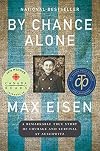
By Chance Alone: A Remarkable True Story of Courage and Survival at Auschwitz
by Max Eisen
On This Page
Description
This autobiography of Canadian Max Eisen details the rural Hungarian deportations to Auschwitz-Birkenau, back-breaking slave labour in Auschwitz I, the infamous 'death march' of January 1945, the painful aftermath of liberation, and a journey of physical and psychological healing.Tags
Recommendations























Member Reviews
I can't give this terrifying book anything less than a 5 star review. The story that Max Eisen tells of his early life as a young Hungarian Jew who spent over a year in Auschwitz is horrific and graphic, but very, very real. Mr. Eisen is a Canadian citizen now, and he lets us see, in graphic detail, his journey from Moldava, Czechoslovakia to Aushwitz-Birkenau, to camps in Melk and Ebieseee and post-war Marenbad, Prague and finally Canada where he finally arrives in 1949, will make your blood run cold. Young Max was only 15 when he was taken from his family home, with all the members of his family in the spring of 1944. Upon arrival in Auschwitz, after a horrendous journey of many days, Max is separated from his mother, two younger show more brothers and 9 month old baby sister Judit. He doesn't know that he will never see them again. His father, uncle and young Max were kept in another part of Auschwitz and used for slave labour in various work projects near the camp. Max's survival instinct is strong, and with the help of his father and uncle, he manages to keep on going, living in the horrendous conditions of Auschwitz. He finds himself alone after a few months when his father and uncle were also chosen for the gas chamber and the crematorium, but he still manages to go on. The writing in this book is simple and direct, but that makes this horrible story even more difficult to read. I was given the chance to read and review this book by the National Post Reading Society, and I am honoured that I was given this wonderful opportunity to read this heart-wrenching story. Max's incredibly difficult journey from his birthplace to Canada depicts the true strength of the human spirit. I didn't think I needed any reminders to fully understand the full extent of human depravity, but this book has enlightened me much further than I thought possible. I think everyone in the free world needs to read this book, and then we must make every effort to ensure that the absolute nightmare of the Holocaust can never occur again. show less
In May 1944 when Max Eisen was 15, he and his family (his parents, younger siblings, grandparents, uncle, and aunt) were transported in a cattle car from Moldava nad Bodvou, a small town on the Czechoslovakian-Hungarian border, to Auschwitz II-Birkenau. There were nearly forty train cars in this particular transport, and each of them was packed with a hundred people. For the three years prior to this, Max’s uncle and father had been forced to work (with no remuneration) in German labour battalions. Meanwhile, the women, elders, and children struggled to make do at home.
In August 1942, Max and those family members not doing forced labour had already been ordered, along with other Jewish families, to make an alarming three-day train show more journey—one whose destination was unclear. The deportees were eventually told they were being resettled on farms in Kamenets-Podolsky in western Ukraine. In fact, this is one of the places where the Einsatzgruppen—the Nazi death squads responsible for carrying out “the Holocaust by bullets”—executed Jews en masse. (Since the ongoing shooting was labour intensive and had proven “too traumatizing” to the executioners, an impersonal, more mechanized approach to the liquidation of “useless eaters” had to be devised. Hence the gas chambers and crematoria. Eisen actually provides a document in the supplemental material at the back of his book. It’s a letter to Nazi officials from Karl Prufer, the inventor of some crematoria furnaces used at Auschwitz, in which Prufer requests a bonus for his work—after all, it was done at home and in his free time.) As it turned out, the 1942 train journey did not end in Kamenets-Podolsky. The Hungarian government had second thoughts about sending the transport on to the Ukrainian killing fields. The Eisens and other Jewish families were returned home for the time being. That was perhaps the first time chance worked in Max’s favour.
As the title of his memoir indicates, Eisen believes that he survived by chance alone. In telling his story, he highlights the mysterious turns of events that allowed him, the only member of his immediate family, to survive the Holocaust. At times, he even uses the word “luck” to characterize his experiences. When Max arrived at Auschwitz II-Birkenau in the middle of a spring night in 1944, his mother, younger siblings, grandparents, and aunt were “selected”—for death. Max was directed to the right—to join the men’s column. For the first little while in Auschwitz I, he was in the same work unit and barracks as his father and Uncle Eugene, whom he regarded as his guardian angels. However, when his father saw that the guards had noticed the bond between the family members and were likely to engage in sadistic torment of the Eisens, he arranged for Eugene and himself to join a different work unit from Max’s. Eventually, Max’s father and uncle would be sent to the gas chambers. Before he died, Mr. Eisen was able to bestow the traditional Jewish blessing on his son. He also exhorted the boy, should he manage to survive, to tell what happened in this place.
Later, a guard’s bludgeoning Max on the head for a lapse in working would prove to be another stroke of “luck” for Max. The under-kapo on the work unit took pity on him. He told the boy how to staunch the profuse bleeding and subsequently arranged for him to be taken to the camp surgery. There Max was operated on by Dr. Tadeusz Orzeszko, an extraordinary figure about whom I’d like to know more. Dr. Orezeszko was a young surgeon, a political prisoner, and a member of the Polish resistance. He had feelers out, even in Auschwitz, and apparently assisted many in the camp. (At great risk to himself, he even performed an abortion on a Polish Jewish woman, as he knew that pregnant women were immediately marked for the gas chambers.)
Max’s meeting Dr. Orezeszko may be the most significant event in his life. Not only did the Polish doctor perform surgery on Max, he also intervened when the SS arrived three days post-surgery to transport Max to the gas chambers. Dr. Orezeszko ended up employing the boy as an operating room assistant. The young medical student/political prisoner who had been doing the job was about to be released, and he trained Max before leaving. Max was responsible for the disinfection and sterilization of surgical instruments and materials, as well as the sanitization of the premises between surgeries. He assisted in prepping patients for operations, was called upon to dispose of tissues and body parts, and sometimes even administered ether. His work in the operating room saved him. As a member of the medical team, he slept in the same quarters as the doctors and orderlies, and he had access to food.
In addition to information about his medical work at Auschwitz, Eisen tells about the heavy labour required of him in the work units. He also describes the October 7, 1944 rebellion of the Sonderkommandos, the Jewish inmates forced to carry out “the most gruesome and soul-destroying job” of all: disposing of the victims of the gas chambers. The memoir goes on to detail the protracted nightmare of the “death march” during the early months of 1945, when the Nazis knew they were losing the war and evacuated Auschwitz. The liberation of the camps, the years following the war which left him an orphan (including his time at a Jewish school in Marienbad), and the extreme challenges he faced in getting to Canada are also covered.
By Chance Alone recently won “Canada Reads”, the annual "battle of the books" competition organized by the Canadian Broadcasting Corporation. Well organized, lucidly written, and accompanied by five helpful maps and other useful supplementary material, the memoir is an extraordinary testament to courage and endurance and an important historical document. In writing it, Max Eisen was able to carry out the final request of his father: to tell the world what happened. show less
In August 1942, Max and those family members not doing forced labour had already been ordered, along with other Jewish families, to make an alarming three-day train show more journey—one whose destination was unclear. The deportees were eventually told they were being resettled on farms in Kamenets-Podolsky in western Ukraine. In fact, this is one of the places where the Einsatzgruppen—the Nazi death squads responsible for carrying out “the Holocaust by bullets”—executed Jews en masse. (Since the ongoing shooting was labour intensive and had proven “too traumatizing” to the executioners, an impersonal, more mechanized approach to the liquidation of “useless eaters” had to be devised. Hence the gas chambers and crematoria. Eisen actually provides a document in the supplemental material at the back of his book. It’s a letter to Nazi officials from Karl Prufer, the inventor of some crematoria furnaces used at Auschwitz, in which Prufer requests a bonus for his work—after all, it was done at home and in his free time.) As it turned out, the 1942 train journey did not end in Kamenets-Podolsky. The Hungarian government had second thoughts about sending the transport on to the Ukrainian killing fields. The Eisens and other Jewish families were returned home for the time being. That was perhaps the first time chance worked in Max’s favour.
As the title of his memoir indicates, Eisen believes that he survived by chance alone. In telling his story, he highlights the mysterious turns of events that allowed him, the only member of his immediate family, to survive the Holocaust. At times, he even uses the word “luck” to characterize his experiences. When Max arrived at Auschwitz II-Birkenau in the middle of a spring night in 1944, his mother, younger siblings, grandparents, and aunt were “selected”—for death. Max was directed to the right—to join the men’s column. For the first little while in Auschwitz I, he was in the same work unit and barracks as his father and Uncle Eugene, whom he regarded as his guardian angels. However, when his father saw that the guards had noticed the bond between the family members and were likely to engage in sadistic torment of the Eisens, he arranged for Eugene and himself to join a different work unit from Max’s. Eventually, Max’s father and uncle would be sent to the gas chambers. Before he died, Mr. Eisen was able to bestow the traditional Jewish blessing on his son. He also exhorted the boy, should he manage to survive, to tell what happened in this place.
Later, a guard’s bludgeoning Max on the head for a lapse in working would prove to be another stroke of “luck” for Max. The under-kapo on the work unit took pity on him. He told the boy how to staunch the profuse bleeding and subsequently arranged for him to be taken to the camp surgery. There Max was operated on by Dr. Tadeusz Orzeszko, an extraordinary figure about whom I’d like to know more. Dr. Orezeszko was a young surgeon, a political prisoner, and a member of the Polish resistance. He had feelers out, even in Auschwitz, and apparently assisted many in the camp. (At great risk to himself, he even performed an abortion on a Polish Jewish woman, as he knew that pregnant women were immediately marked for the gas chambers.)
Max’s meeting Dr. Orezeszko may be the most significant event in his life. Not only did the Polish doctor perform surgery on Max, he also intervened when the SS arrived three days post-surgery to transport Max to the gas chambers. Dr. Orezeszko ended up employing the boy as an operating room assistant. The young medical student/political prisoner who had been doing the job was about to be released, and he trained Max before leaving. Max was responsible for the disinfection and sterilization of surgical instruments and materials, as well as the sanitization of the premises between surgeries. He assisted in prepping patients for operations, was called upon to dispose of tissues and body parts, and sometimes even administered ether. His work in the operating room saved him. As a member of the medical team, he slept in the same quarters as the doctors and orderlies, and he had access to food.
In addition to information about his medical work at Auschwitz, Eisen tells about the heavy labour required of him in the work units. He also describes the October 7, 1944 rebellion of the Sonderkommandos, the Jewish inmates forced to carry out “the most gruesome and soul-destroying job” of all: disposing of the victims of the gas chambers. The memoir goes on to detail the protracted nightmare of the “death march” during the early months of 1945, when the Nazis knew they were losing the war and evacuated Auschwitz. The liberation of the camps, the years following the war which left him an orphan (including his time at a Jewish school in Marienbad), and the extreme challenges he faced in getting to Canada are also covered.
By Chance Alone recently won “Canada Reads”, the annual "battle of the books" competition organized by the Canadian Broadcasting Corporation. Well organized, lucidly written, and accompanied by five helpful maps and other useful supplementary material, the memoir is an extraordinary testament to courage and endurance and an important historical document. In writing it, Max Eisen was able to carry out the final request of his father: to tell the world what happened. show less
Max Eisen was 15 years old when he was sent to a Nazi death camp along with his extended family. The last thing his father asked him was, should he survive, to tell the story of what happened. This book is Max's promise fulfilled.
There have been many books written about the holocaust, including academic texts, fiction and memoirs. Each is a frightening reminder of the existence of evil. What is special about this book is that, as an adult, Mr. Eisen was able to maintain a youthful voice in telling his story. He was a child in the camp, and that voice and perspective comes through so well.
There have been many books written about the holocaust, including academic texts, fiction and memoirs. Each is a frightening reminder of the existence of evil. What is special about this book is that, as an adult, Mr. Eisen was able to maintain a youthful voice in telling his story. He was a child in the camp, and that voice and perspective comes through so well.
Max Eisen was a teenager in Hungary with three younger siblings when his Jewish family was ordered to pack up and leave in 1944. Apparently they were one of the last Jewish communities in Europe to be taken to the concentration camps. It turns out his mother, aunt, and siblings were all immediately sent to the gas chambers on arrival at Auschwitz-Birkenau. He, his father, and uncle all worked in labour camps for a while, and eventually, Max was the only one left. He managed to survive along with two cousins (one on each side of his family). Lucky for him, he ended up working in one of the surgery rooms at Auschwitz, which did help him survive. He was part of the “Death March” that came as the war was wrapping up and it wasn’t easy show more to figure out what to do with himself after or where to go.
This was very good. There are plenty of books on the Holocaust, but of course everyone had a slightly different experience and there are always new things to learn from all those experiences. Max’s promise to his father was that he’d tell people what happened there, and he also tours and talks about his experience (or he did – he was eighty-something when this book was written and/or published in 2016). He ended up in Canada, married, and had two sons. show less
This was very good. There are plenty of books on the Holocaust, but of course everyone had a slightly different experience and there are always new things to learn from all those experiences. Max’s promise to his father was that he’d tell people what happened there, and he also tours and talks about his experience (or he did – he was eighty-something when this book was written and/or published in 2016). He ended up in Canada, married, and had two sons. show less
This book is one of the 5 finalists for Canada Reads 2019. The theme for this annual book competition this year is "One book that moves us". And yes this is a book that has the power to move a person. Eisen's story of surviving the World War II Holocaust and what he experienced in Auschwitz and other camps is important testimony of the depths humans can sink to. Eisen has spoken about his experiences many times and by all accounts he is a dynamic speaker; however, he is not a great writer and I think this book would have been stronger if he had teamed up with someone who could add colour to his somewhat dry delivery.
Max Eisen was fifteen years old and living in a small town in Czechoslovakia when the Nazis decided to wipe out the Jews show more of that country in 1944. That was one of the chances that Max encountered that led to his survival. In other countries of Europe Jews were sent to the death camps much earlier and they just could not survive the starvation diets and hard work. All of Eisen's family, which included his parents, grandparents, aunt, uncle and three siblings, were sent to Auschwitz in the spring of 1944. At the train Max, his father and his uncle were sent one direction and the others were sent the other direction i.e. to the gas chambers. There's another piece of luck for Max. While Max was soon separated from his father and uncle that might have been another chance for him. His father knew that Max would have a better chance of surviving if he was not part of a family unit that drew the attention of the guards. On their last meeting his father told Max that if he survived he must tell the world what happened and Max carried out this last wish. Max was injured one day at work and taken to the surgery unit. The doctor, a Polish political prisoner, fixed him up and then selected Max as his surgical assistant. This was a job assignment that gave Max some protection from the SS guards and also access to more food. As a result, when the internees at Auschwitz were marched off to get them away from the nearby Russian troops, Max had some stores of energy that allowed him to survive where many others did not. Max ended up at Ebensee in Austria, a camp that was liberated by the American army in 1945. After some years and some more close calls Max arrived in Toronto where he lives to this day.
Despite the title of this book I don't think it was by "chance alone" that Max survived. He also had enormous grit and determination and he had a mission given to him by his father. Thank goodness he did survive to tell his story and remind all of us why we must stand up to extremists. show less
Max Eisen was fifteen years old and living in a small town in Czechoslovakia when the Nazis decided to wipe out the Jews show more of that country in 1944. That was one of the chances that Max encountered that led to his survival. In other countries of Europe Jews were sent to the death camps much earlier and they just could not survive the starvation diets and hard work. All of Eisen's family, which included his parents, grandparents, aunt, uncle and three siblings, were sent to Auschwitz in the spring of 1944. At the train Max, his father and his uncle were sent one direction and the others were sent the other direction i.e. to the gas chambers. There's another piece of luck for Max. While Max was soon separated from his father and uncle that might have been another chance for him. His father knew that Max would have a better chance of surviving if he was not part of a family unit that drew the attention of the guards. On their last meeting his father told Max that if he survived he must tell the world what happened and Max carried out this last wish. Max was injured one day at work and taken to the surgery unit. The doctor, a Polish political prisoner, fixed him up and then selected Max as his surgical assistant. This was a job assignment that gave Max some protection from the SS guards and also access to more food. As a result, when the internees at Auschwitz were marched off to get them away from the nearby Russian troops, Max had some stores of energy that allowed him to survive where many others did not. Max ended up at Ebensee in Austria, a camp that was liberated by the American army in 1945. After some years and some more close calls Max arrived in Toronto where he lives to this day.
Despite the title of this book I don't think it was by "chance alone" that Max survived. He also had enormous grit and determination and he had a mission given to him by his father. Thank goodness he did survive to tell his story and remind all of us why we must stand up to extremists. show less
In 1944, fifteen year old Max and his family were sent in cattle cars to Auschwitz-Birkenau. Most of his family were immediately selected to die, however, Max, by chance alone, survived. First assigned to hard labor, Max was able to secure work in the hospital as an assistant. As liberation neared, Max was sent on a death march, barely surviving.
This was a well written and engaging book. It is heartbreaking to think of a fifteen year old being separated from his family, yet through strength of will, and chance, Max survived. Overall, highly recommended.
This was a well written and engaging book. It is heartbreaking to think of a fifteen year old being separated from his family, yet through strength of will, and chance, Max survived. Overall, highly recommended.
An absolutely riveting account of the atrocities of World War II.
A highly recommended read.
A highly recommended read.
Members
- Recently Added By
Lists

Top Five Books of 2016
795 works; 228 members

Canada Reads Winners and Nominees
129 works; 9 members
Author Information
2 Works 188 Members
Awards and Honors
Common Knowledge
- Original publication date
- 2016
- People/Characters
- Tibor "Max" Eisen
- Important places
- Auschwitz concentration camp, Oświęcim, Lesser Poland, Poland
- Important events
- Holocaust; World War II
- Dedication
- To my beloved first family, who died in a fury of hate but prepared a map for me to travel y. They live on my heart forever.
To my dedicated and loving present family. Years ago, I could not have imagined I would liv... (show all)e to know them. They are my beloved wife, Ivy; my two sons, Edmund Irving and William Larry; my granddaughters Avery Tzipporah and Julie Leah; and all my great-grandchildren. They surround me with love, stability, and great joy.
To the numerous students who have attended my presentations. This book is a reminder to stand on guard against radical ideologies and never be bystanders. Their respect and accolades have been a great inspiration. - First words
- When I was born in Moldava nad Bodvou, Czechoslovakia, in 1929, my parents could not have foreseen the danger and destruction that would befall our family only a decade later.
- Last words
- (Click to show. Warning: May contain spoilers.)Forgive us for crucifying Thee a second time in their flesh. For, O Lord, we know not what we did.
Classifications
- Genres
- Biography & Memoir, Nonfiction, History
- DDC/MDS
- 940.5318 — History & geography History of Europe History of Europe 1918- World War II, 1939-1945 Social, political, economic history; Holocaust Holocaust
- LCC
- DS135 .C97 .E37 — History of Europe, Asia, Africa and Oceania Asia History of Asia Israel (Palestine). The Jews Jews outside of Palestine
- BISAC
Statistics
- Members
- 184
- Popularity
- 178,403
- Reviews
- 7
- Rating
- (4.28)
- Languages
- English
- Media
- Paper, Audiobook, Ebook
- ISBNs
- 10
- ASINs
- 3