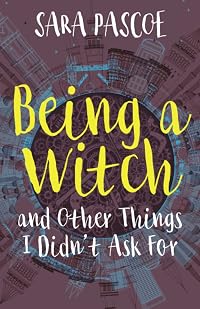
Being a Witch, and Other Things I Didn't Ask For (Historicalnovelsociety.Org/Reviews/Ratchet-The-Rel)
by Sara Pascoe
On This Page
Description
"When you're fourteen and life has been nothing but hurt and disappointment, Raya decides it's time to strike out on her own. She leaves the boring village and what she's determined will be her last foster placement, for the excitement of London. But it turns out she's a witch, with the annoying habit of time-travelling -- by accident. And a sarcastic witch's cat Oscar tags along for the ride. Why would she fling herself into the midst of the Essex Witch Trials in 1645 England? After being show more arrested by one of history's most notorious witch hunters, her social worker and witch mentor Bryony goes back to try to save them from the gallows. But returning to present day London remains out of reach when they find themselves in 1645 Istanbul/Constantinople. There, life is more amazing than she ever dreamed. Can she stay? And at what cost?"--Amazon.com. show lessTags
Recommendations





Member Reviews
I kept pausing to breathe with this one. Raya is prickly, scared, funny when she does not mean to be, and so painfully sixteen that I wanted to fish a jacket out of my own closet and drape it over her shoulders. She bolts from a foster home, gets sideswiped by a stupid near-crime involving a plastic gun and a boy who should have known better, and then the world tilts. There is Bryony, the social worker who is more than she first appears, and Oscar, a cat who very much has opinions. Those scenes are sharp and surreal in the same breath, the way a bad day can turn on a single knock at the door.
What I loved most is how the book lets real life stay messy while the magic arrives without apology. Raya slings plates and scrubs pans at the show more Cosmic Cafe. She learns how exhaustion tastes. She finds grace in broken muffins and in people who quietly hand you a sandwich when you do not know how to ask. Pavel wanders in like trouble wrapped in kindness. None of this feels like filler. It is the part of the story that makes the time slip actually matter. When the past lands, it is not a costume change, it is a thud.
The jump to the Essex witch panic hurts, as it should. The book does not leer at the spectacle. It watches the locked doors, the early light, and the way fear spreads faster than any rumor. Then Istanbul opens like a door you did not realize was yours to walk through, all steam and chatter and small cups of coffee. The bathhouse scene is weird and warm and embarrassing, and yes, the cat steals it. Later the city sharpens, and the stakes rise in a way that made my stomach drop, especially when Raya looks up and realizes power has a habit of displaying its trophies. I flinched. Of course she does too.
There is a quieter thread here that sneaked up on me. Raya worries she might be broken the way her mother was. She tries not to need anyone. She fails at that, a little, and it is beautiful. The book keeps offering tiny mercies: a clean towel, a place to sleep, someone who says your name like it is not a problem to solve. I kind of loved how often food stands in for love. It is not subtle. I did not want it to be.
If I have a quibble, it is only that one or two pivots feel quick. A conversation ends and the next door is already open. Still, the momentum suits Raya. She is a runner. The prose follows her feet.
Page to page, this is a smart, generous time-slip adventure that treats its heroine’s fear with respect and her courage without glamour. The ending left me grateful for the mess and for the light that keeps insisting anyway. Five stars, because I finished with that soft ache that means a story has found a home and is not leaving soon. show less
What I loved most is how the book lets real life stay messy while the magic arrives without apology. Raya slings plates and scrubs pans at the show more Cosmic Cafe. She learns how exhaustion tastes. She finds grace in broken muffins and in people who quietly hand you a sandwich when you do not know how to ask. Pavel wanders in like trouble wrapped in kindness. None of this feels like filler. It is the part of the story that makes the time slip actually matter. When the past lands, it is not a costume change, it is a thud.
The jump to the Essex witch panic hurts, as it should. The book does not leer at the spectacle. It watches the locked doors, the early light, and the way fear spreads faster than any rumor. Then Istanbul opens like a door you did not realize was yours to walk through, all steam and chatter and small cups of coffee. The bathhouse scene is weird and warm and embarrassing, and yes, the cat steals it. Later the city sharpens, and the stakes rise in a way that made my stomach drop, especially when Raya looks up and realizes power has a habit of displaying its trophies. I flinched. Of course she does too.
There is a quieter thread here that sneaked up on me. Raya worries she might be broken the way her mother was. She tries not to need anyone. She fails at that, a little, and it is beautiful. The book keeps offering tiny mercies: a clean towel, a place to sleep, someone who says your name like it is not a problem to solve. I kind of loved how often food stands in for love. It is not subtle. I did not want it to be.
If I have a quibble, it is only that one or two pivots feel quick. A conversation ends and the next door is already open. Still, the momentum suits Raya. She is a runner. The prose follows her feet.
Page to page, this is a smart, generous time-slip adventure that treats its heroine’s fear with respect and her courage without glamour. The ending left me grateful for the mess and for the light that keeps insisting anyway. Five stars, because I finished with that soft ache that means a story has found a home and is not leaving soon. show less
I did not expect a time travel story to punch me in the ribs like this. Raya is prickly and stubborn and a bit of a show off, which is to say she feels exactly like a real teenager who has had to grow up in foster care and is tired of adults making a mess of everything. When her strange new abilities start misfiring and she slips from modern England into 1645, the witch trial scenes hum with dread. Then the story swings to Istanbul in the same year, and the contrast is wild in the best way. The city is alive, curious, generous, and the book lets you taste the markets and the sea air without ever turning into a brochure. A talking cat named Oscar steals scenes with dry little asides, and I will not apologize for loving him.
What got me show more most was the ache under the adventure. Raya’s memories of her mum are salted through the action, and they keep catching on the way out. I liked how the book lets her be wrong and messy and kind in the same breath. One moment she is running from a disaster, the next she is choosing people, and it lands like growth that hurts a bit. I could quibble about a few quick turns, but I would rather not. I finished grateful, a little teary, and wanting to hand it to someone else. Five stars, for heart and heat and the way it made history feel close. show less
What got me show more most was the ache under the adventure. Raya’s memories of her mum are salted through the action, and they keep catching on the way out. I liked how the book lets her be wrong and messy and kind in the same breath. One moment she is running from a disaster, the next she is choosing people, and it lands like growth that hurts a bit. I could quibble about a few quick turns, but I would rather not. I finished grateful, a little teary, and wanting to hand it to someone else. Five stars, for heart and heat and the way it made history feel close. show less
Being a Witch is such a tender and stubborn book. It looks like a time travel adventure and it is that, but what it really cares about is what it costs a girl to keep moving through the world when the adults around her are fragile, distracted, magical, or all of the above. Raya is prickly and funny and desperate to stay in control, which of course is the one thing she does not get once she flings herself from foster care in present day England to the witch hunts in 1645. Watching a modern foster kid land in the middle of real witch paranoia is wild, because she has to hide what she can actually do at the exact moment people are being killed just for rumours. The book does not rush that dread. It lets you feel how dangerous it is.
What show more kept me was how often Raya thinks about her mum and that fear of inheriting her illness. Those memories really hurt. They are small domestic scenes, not big speeches, and they make sense of why she pushes people away. So when she finds people who are kind without asking for anything back Angie Bryony even that ridiculous cat Oscar it lands harder. Oscar is great by the way. Talking animals in fantasy can go wrong fast but here he is sharp and useful and he cuts through the sadness.
I loved the jump from grim English trials to seventeenth century Istanbul where life is brighter and faster and less cruel to women. That contrast feels intentional. England shows what fear does. Istanbul shows what curiosity does. The history touches feel researched without turning into a lesson.
If I am nudging anything it is that the London opening and the foster escape are so strong that the plot gear shift to repeated jumps can feel slightly crowded. I wanted a breath before the next crisis. Still the character work never drops and the writing keeps its warmth even when things get dark.
Five stars because it gave me an adventure and a girl I wanted to see healed and it did not talk down to me. show less
What show more kept me was how often Raya thinks about her mum and that fear of inheriting her illness. Those memories really hurt. They are small domestic scenes, not big speeches, and they make sense of why she pushes people away. So when she finds people who are kind without asking for anything back Angie Bryony even that ridiculous cat Oscar it lands harder. Oscar is great by the way. Talking animals in fantasy can go wrong fast but here he is sharp and useful and he cuts through the sadness.
I loved the jump from grim English trials to seventeenth century Istanbul where life is brighter and faster and less cruel to women. That contrast feels intentional. England shows what fear does. Istanbul shows what curiosity does. The history touches feel researched without turning into a lesson.
If I am nudging anything it is that the London opening and the foster escape are so strong that the plot gear shift to repeated jumps can feel slightly crowded. I wanted a breath before the next crisis. Still the character work never drops and the writing keeps its warmth even when things get dark.
Five stars because it gave me an adventure and a girl I wanted to see healed and it did not talk down to me. show less
This was such a strange, tender little mash-up of things I like – witchy coming-of-age, foster kid story, grim English history, and a talking cat with Opinions – and somehow it works.
I really loved Raya. She’s one of those prickly, defensive teens who’s learned that adults are unreliable at best and dangerous at worst, and the book actually lets her be angry and selfish and wrong without punishing her for it. The early chapters of her running away from foster care, watching Tony’s idiotic “surprise” explode in her face, and stumbling into the Cosmic Cafe felt incredibly grounded. The scenes with her grandad and the origin of her nickname are honestly more moving than a lot of “issue” novels I’ve read; I found myself show more unexpectedly choked up. And the way the book handles her mum’s schizophrenia – Raya’s fear of inheriting it, her half-resentful empathy – is careful and compassionate without sanding off the edges.
The magic unfolds slowly, and I liked that. Before anyone says “you’re a witch,” Raya’s already seeing colours and images attached to people, accidentally hearing a cat complain about its dinner, and constantly worrying she’s losing her mind. Once Bryony and Oscar come properly into the story, the tone shifts into full fantasy, but it never stops feeling like Raya’s story first, magic second.
The time-travel sections are where the book really lifts off. The Essex witch-trial chapters are genuinely unnerving – muddy, petty, fuelled by gossip and fear – and the inclusion of real girls like Rebecca West gives it a sharp emotional sting. Then Istanbul is this huge, sensory contrast: busy, diverse, intellectually alive, full of people who don’t automatically treat “witch” as a death sentence. I thought the book did a great job showing how those two settings push Raya to rethink who she is and what power means, without turning into a history lesson.
That said, I did sometimes feel like I was reading two or three books stitched together. The contemporary runaway plot, the witch-training, the Essex trial, Istanbul and its magical bureaucracy… it’s a lot, and the transitions can be a bit whiplash-y. The tone also skews younger than I expected; it reads more lower-YA/upper-MG, with short, punchy chapters and some pretty on-the-nose dialogue. None of that is bad, it just meant that occasionally I felt slightly old for it, especially when the big emotional beats were wrapped up a little too neatly for my taste.
Still, I had so much affection for Raya’s found family – Jake, Angie, Pavel, Ian and Emma, and of course Oscar being sarcastic in the corner – that I didn’t really mind the bumps. This is one of those books I can easily see twelve- or thirteen-year-old me clutching to bits, and adult me was pretty into it too. Not perfect, but funny, sad, clever and unexpectedly healing… which is more than enough for me. show less
I really loved Raya. She’s one of those prickly, defensive teens who’s learned that adults are unreliable at best and dangerous at worst, and the book actually lets her be angry and selfish and wrong without punishing her for it. The early chapters of her running away from foster care, watching Tony’s idiotic “surprise” explode in her face, and stumbling into the Cosmic Cafe felt incredibly grounded. The scenes with her grandad and the origin of her nickname are honestly more moving than a lot of “issue” novels I’ve read; I found myself show more unexpectedly choked up. And the way the book handles her mum’s schizophrenia – Raya’s fear of inheriting it, her half-resentful empathy – is careful and compassionate without sanding off the edges.
The magic unfolds slowly, and I liked that. Before anyone says “you’re a witch,” Raya’s already seeing colours and images attached to people, accidentally hearing a cat complain about its dinner, and constantly worrying she’s losing her mind. Once Bryony and Oscar come properly into the story, the tone shifts into full fantasy, but it never stops feeling like Raya’s story first, magic second.
The time-travel sections are where the book really lifts off. The Essex witch-trial chapters are genuinely unnerving – muddy, petty, fuelled by gossip and fear – and the inclusion of real girls like Rebecca West gives it a sharp emotional sting. Then Istanbul is this huge, sensory contrast: busy, diverse, intellectually alive, full of people who don’t automatically treat “witch” as a death sentence. I thought the book did a great job showing how those two settings push Raya to rethink who she is and what power means, without turning into a history lesson.
That said, I did sometimes feel like I was reading two or three books stitched together. The contemporary runaway plot, the witch-training, the Essex trial, Istanbul and its magical bureaucracy… it’s a lot, and the transitions can be a bit whiplash-y. The tone also skews younger than I expected; it reads more lower-YA/upper-MG, with short, punchy chapters and some pretty on-the-nose dialogue. None of that is bad, it just meant that occasionally I felt slightly old for it, especially when the big emotional beats were wrapped up a little too neatly for my taste.
Still, I had so much affection for Raya’s found family – Jake, Angie, Pavel, Ian and Emma, and of course Oscar being sarcastic in the corner – that I didn’t really mind the bumps. This is one of those books I can easily see twelve- or thirteen-year-old me clutching to bits, and adult me was pretty into it too. Not perfect, but funny, sad, clever and unexpectedly healing… which is more than enough for me. show less
Alright, confession time: I picked up Being a Witch thinking I was in for another fluffy YA romp with spells and witty one-liners. And sure, it’s funny—Raya’s sarcasm is basically armor—but it surprised me by also being sharp in places I didn’t expect.
I liked that Raya’s magic is messy and unreliable, kind of like her life. Enjoyed a lot of the themes around what it means to belong somewhere, or to someone, when you’ve spent most of your time feeling disposable. The time jump to witch trials England? Such a clever way to show how fear and power twist together, across centuries.
I felt that the bond between Raya and her cat Oscar ended up meaning more to me than I thought it would. Their banter was a bright thread through show more some darker stuff. Closed the last page hoping Raya might finally let herself be loved without looking for the exit. show less
I liked that Raya’s magic is messy and unreliable, kind of like her life. Enjoyed a lot of the themes around what it means to belong somewhere, or to someone, when you’ve spent most of your time feeling disposable. The time jump to witch trials England? Such a clever way to show how fear and power twist together, across centuries.
I felt that the bond between Raya and her cat Oscar ended up meaning more to me than I thought it would. Their banter was a bright thread through show more some darker stuff. Closed the last page hoping Raya might finally let herself be loved without looking for the exit. show less
Ah, to be young, angsty, and... a witch? the author took me on a whimsical journey in "Being a Witch, and Other Things I Didn’t Ask For". Our protagonist, Raya, with her cat Oscar, inadvertently becomes a time-traveling witch. It's as if puberty wasn't chaotic enough, now there are witch trials and time warps on the menu!
The story was a hearty blend of real-world struggles and magical whimsy. It tackled the emotional labyrinth of foster care, the universal quest for acceptance, and the magical escapades that are both thrilling and terrifying. Oh, and did I mention the talking cat? It's like Sabrina the Teenage Witch meets the harsh realities of life, with a side of historical drama.
Pascoe delves into some deep waters—exploring not show more just the fantastical but the emotional turmoil and societal norms that come with the foster care territory. And she does this with a blend of humor, heart, and a dash of magical realism that kept the pages turning (almost on their own).
It felt like gentle educational nudge wrapped in a captivating story, kind of like sneaking veggies into a cake. You’re learning, but you’re too engrossed in the narrative to notice.
The novel was a magical realism buffet with a side of emotional resonance. It was quirky, emotional, and it was a delightful read. Id definitely recommend, not just to young adults, but anyone with a heart for magic and a soft spot for heartfelt stories. show less
The story was a hearty blend of real-world struggles and magical whimsy. It tackled the emotional labyrinth of foster care, the universal quest for acceptance, and the magical escapades that are both thrilling and terrifying. Oh, and did I mention the talking cat? It's like Sabrina the Teenage Witch meets the harsh realities of life, with a side of historical drama.
Pascoe delves into some deep waters—exploring not show more just the fantastical but the emotional turmoil and societal norms that come with the foster care territory. And she does this with a blend of humor, heart, and a dash of magical realism that kept the pages turning (almost on their own).
It felt like gentle educational nudge wrapped in a captivating story, kind of like sneaking veggies into a cake. You’re learning, but you’re too engrossed in the narrative to notice.
The novel was a magical realism buffet with a side of emotional resonance. It was quirky, emotional, and it was a delightful read. Id definitely recommend, not just to young adults, but anyone with a heart for magic and a soft spot for heartfelt stories. show less
In the realm of young adult novels, where magic often serves as a metaphor for burgeoning adulthood, Sara Pascoe’s “Being A Witch” stands out with its heart-rendingly authentic portrayal of adolescence and the added complexity of foster care and mental health issues.
Pascoe introduces us to 14-year-old Raya Hollingsworth, a character as real as they come, navigating the turbulent waters of foster care. Raya’s story is one that resonates – a teen grappling with the fear of inheriting her mother's schizophrenia, a condition portrayed with sensitivity rather than sensationalism. Pascoe expertly weaves the stark realities of mental health into the fabric of a magical narrative, making the extraordinary elements – like talking to show more a cat named Oscar, who is more than just a pet – seem almost believable.
The book shines brightest in its depiction of Raya’s accidental time-travel escapade to the heart of the Essex witch trials of 1645. This is where Pascoe’s storytelling prowess is on full display, blending historical depth with the whimsicality of witchcraft. It’s not just the thrill of time-travel; it's the juxtaposition of Raya's modern sensibilities against the stark, often brutal backdrop of 17th-century England that hooks you.
However, it’s not all about escaping to the past. Pascoe addresses the raw and often ignored facets of foster care – the feelings of abandonment, the longing for a semblance of normalcy. These moments are where Raya’s character truly comes alive, offering a mirror to those who have walked similar paths.
The narrative, while enchanting, does sometimes meander, much like a teenager trying to find their way. This isn’t a flaw, though. It’s a reflection of Raya’s own journey – unsure, unsteady, but always moving forward. Pascoe’s writing, rich in sensory details, immerses you in each scene, whether it’s the musty smell of a 17th-century courtroom or the chaotic chatter of a modern-day foster home.
In summary, "Being A Witch" is a novel that doesn’t shy away from the harsher realities of life but embraces them, weaving them into a tapestry of magic and history. It’s a reminder that sometimes, the most extraordinary stories are the ones that feel the most real. For anyone who's ever felt a little out of place, a bit ‘other,’ this book is a reassuring pat on the back, a whisper that says, “You’re not alone.” Pascoe has crafted a world where being broken is not a sign of weakness, but a badge of survival and strength. show less
Pascoe introduces us to 14-year-old Raya Hollingsworth, a character as real as they come, navigating the turbulent waters of foster care. Raya’s story is one that resonates – a teen grappling with the fear of inheriting her mother's schizophrenia, a condition portrayed with sensitivity rather than sensationalism. Pascoe expertly weaves the stark realities of mental health into the fabric of a magical narrative, making the extraordinary elements – like talking to show more a cat named Oscar, who is more than just a pet – seem almost believable.
The book shines brightest in its depiction of Raya’s accidental time-travel escapade to the heart of the Essex witch trials of 1645. This is where Pascoe’s storytelling prowess is on full display, blending historical depth with the whimsicality of witchcraft. It’s not just the thrill of time-travel; it's the juxtaposition of Raya's modern sensibilities against the stark, often brutal backdrop of 17th-century England that hooks you.
However, it’s not all about escaping to the past. Pascoe addresses the raw and often ignored facets of foster care – the feelings of abandonment, the longing for a semblance of normalcy. These moments are where Raya’s character truly comes alive, offering a mirror to those who have walked similar paths.
The narrative, while enchanting, does sometimes meander, much like a teenager trying to find their way. This isn’t a flaw, though. It’s a reflection of Raya’s own journey – unsure, unsteady, but always moving forward. Pascoe’s writing, rich in sensory details, immerses you in each scene, whether it’s the musty smell of a 17th-century courtroom or the chaotic chatter of a modern-day foster home.
In summary, "Being A Witch" is a novel that doesn’t shy away from the harsher realities of life but embraces them, weaving them into a tapestry of magic and history. It’s a reminder that sometimes, the most extraordinary stories are the ones that feel the most real. For anyone who's ever felt a little out of place, a bit ‘other,’ this book is a reassuring pat on the back, a whisper that says, “You’re not alone.” Pascoe has crafted a world where being broken is not a sign of weakness, but a badge of survival and strength. show less
Members
- Recently Added By
Author Information

2+ Works 120 Members
Common Knowledge
- Original title
- Ratchet, the Reluctant Witch
Classifications
- Genres
- Tween, Fiction and Literature, Teen, Young Adult
- DDC/MDS
- 305.40973 — Society, government, & culture Social sciences, sociology & anthropology Social group - Age, Gender, Ethnicity Women Standard subdivisions History, geographic treatment, biography North America United States
- LCC
- PZ7.1 .P373 .B — Language and Literature Fiction and juvenile belles lettres Fiction and juvenile belles lettres Juvenile belles lettres
- BISAC
Statistics
- Members
- 95
- Popularity
- 338,951
- Reviews
- 35
- Rating
- (4.62)
- Languages
- English
- Media
- Paper, Audiobook, Ebook
- ISBNs
- 4
- ASINs
- 2