On This Page
Description
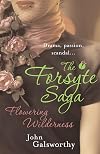
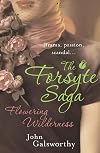
John Galsworthy devoted virtually his entire professional career to creating a fictional but entirely representative family of propertied Victorians, the Forsytes. Flowering Wilderness is the eighth novel in his Forsyte Chronicles, which has become established as one of the most popular and enduring works of twentieth century literature.Tags
Recommendations




















Member Reviews
Dinny Cherrell is still the focus of the eighth book in the Forsyte Chronicles. Dinny has turned down eligible suitors, waiting for the love of her life. In this book, she falls head over heels with the wrong man, Wilfred Desert. He's charming, a poet, moody, and with a past that comes back to haunt him. Dinny's family doesn't approve, but Dinny is determined.
I really enjoy Galsworthy's style of giving the reader a glimpse of the problems from a societal and moral view, without banging us over the head with answers that we may or may not agree with. He presents women as creatures who should have their own views and feelings, and not as possessions.
Loved this one.
I really enjoy Galsworthy's style of giving the reader a glimpse of the problems from a societal and moral view, without banging us over the head with answers that we may or may not agree with. He presents women as creatures who should have their own views and feelings, and not as possessions.
Loved this one.
This was just what I needed. Set in a short period in 1930, this centres on the Cherwll and specifically the daughter, Dinny. As seems to be customary with Galsworthy, there's a cast of characters that reappaer form earlier books. In this case Dinny meets Wilfred Desert, who we last saw of offering an affair with Fleur before heading off East when she declined. This time he's back with a story attached to him and a poem to set the world alight. Through the book, the story gradually comes to light and the way that Dinny, her family and society in general respond is the main body of the book on this occasion. There are a mixture of responses, and that makes it interesting. If the same were to happen now, the response would, I'm sure, be show more very different, it's interesting how culture shifts, isn't it?
In the first novels of this series, I had doubts about Galworthy's ability to write women as more than ciphers, but in Dinny he does her justice. She has a solidity that still feels real even though the times we both live in have changed dramatically. Just 1 more to go now. show less
In the first novels of this series, I had doubts about Galworthy's ability to write women as more than ciphers, but in Dinny he does her justice. She has a solidity that still feels real even though the times we both live in have changed dramatically. Just 1 more to go now. show less
This is the penultimate book in Galsworthy’s Forsyth Saga where Donny meets Wilfred Desert last seen pining over Fleur Forsyth Mont in The White Monkey. When Dinny and Wilfred meet, there is an instant connection, and both fall hard. However Wilfred is harboring a great shame which he reveals to Dinny in a poem. While out in the Middle East, he was forced at the point of death to convert to Islam, and instead of choosing death like any upright Englishman would, he chose to convert.
Dinny really doesn't care. She only cares for Wilfred, but her family, who are great colonialists, will care - a lot. There's a lot of strum and drang over this whole issue, especially when Wilfred includes the telltale poem in a book he is publishing. It's show more the best poem he's ever written, but when the press get hold of the story, it becomes a real scandal.
It's hard to believe that such things would have ever been taken seriously, but at a time when taking up the "White man's burden" was still taken seriously it begins to be understandable. Galsworthy was a Victorian and expressed Victorian values. But viewed from almost 100 years difference, one can see how the whole class of English society that was bred and educated to rule the colonies was doomed. show less
Dinny really doesn't care. She only cares for Wilfred, but her family, who are great colonialists, will care - a lot. There's a lot of strum and drang over this whole issue, especially when Wilfred includes the telltale poem in a book he is publishing. It's show more the best poem he's ever written, but when the press get hold of the story, it becomes a real scandal.
It's hard to believe that such things would have ever been taken seriously, but at a time when taking up the "White man's burden" was still taken seriously it begins to be understandable. Galsworthy was a Victorian and expressed Victorian values. But viewed from almost 100 years difference, one can see how the whole class of English society that was bred and educated to rule the colonies was doomed. show less
This is the second book in the final trilogy [End of the Chapter]. The story centres on Dinny Cherrell and her engagement to Wilfred Desert who was once Fleur's admirer. Demonstrating how the social order has changed, Dinny is a strong woman, self-assertive and determined, unlike the simpering Irene. She is one of my favourite characters of the entire saga.
This one finished with a cliffhanger of sorts making me want to start the remaining volume right away.
This one finished with a cliffhanger of sorts making me want to start the remaining volume right away.
Dinny's lost her heart
those sad eyes, that bitter mouth
so much angst to soothe.
those sad eyes, that bitter mouth
so much angst to soothe.
BG-4
Oct 10, 2020Catalan
Primera Edición. Noviembre 1979. Título original, Flowering Wilderness.
Traducción, Emilia Bertel.
Traducción, Emilia Bertel.
Jul 2, 2020Spanish
Members
- Recently Added By
Lists

Best family sagas
244 works; 34 members
Author Information

346+ Works 11,772 Members
At age 28, after a gentlemanly education at Harrow and Oxford, and a training at law, Galsworthy settled into simultaneous careers as a novelist and a playwright. The Silver Box, Galsworthy's first successful drama, was staged in 1906, the year he published the first volume of what was to become The Forsyte Saga. His one-word titles - Justice show more (1910), Strife (1909), Loyalties (1922)---suggest the nature of Galsworthy's artistic ambition: to generalize a social indictment, keeping faith with the objective methods of naturalism. In each, Galsworthy favors an austere irony and unresolvable situations, and balanced moral positions are displayed in the cabinetwork of "well-made" playwrighting. Reputed to have led to reforms in its time, his realism today seems contrived to produce aesthetic distance and a sense of resignation that is precisely what contemporary political dramatists strain hardest to avoid. Not surprisingly, critics have come away from revivals with the sense that (especially in his spare language) Galsworthy anticipates Harold Pinter rather than more socially engaged playwrights. Galsworthy wrote novels and plays alternately throughout his life. His masterwork, The Forsyte Saga, begun in 1906 and finished in 1928, and consisting of six separate novels and two linking interludes, is the most famous example of the sequence novel in English literature. It is a study of the property sense, the possessive spirit, in different individuals and generations of English middle-class society. He also completed a second trilogy dealing with the Forsyte family, called A Modern Comedy (1928). His last trilogy, a study of the Charwell family, is called End of the Chapter (1933). Galsworthy's later years brought him many honors, including the presidency of P.E.N. and honorary degrees from Oxford, Cambridge, and several other universities. After World War I, he was offered a knighthood, which he refused. He did, however, accept the Order of Merit in 1929, and in 1932 he was awarded the Nobel Prize. He was, however, too ill to attend the Nobel ceremony and died within two months of receiving the award. Although his posthumous reputation had waned, the centenary of his death, in 1967, brought a re-creation of The Forsyte Saga on British and American television in serial form. Interest in him skyrocketed, and the Forsyte novels again became bestsellers. With new popularity came fresh critical analysis. Pamela Hansford Johnson called The Forsyte Saga "a work of profound social insight and patchy psychological insight" (N.Y. Times). His critical writings include The Inn of Tranquility: Studies and Essays (1911) and Author and Critic. (Bowker Author Biography) show less
Some Editions
Series


Belongs to Publisher Series
Lanterne (L 90)
Work Relationships
Is contained in
Common Knowledge
- Canonical title
- Flowering Wilderness
- Original title
- Flowering Wilderness
- Original publication date
- 1932
- Dedication
- To Herman Ould
- First words
- In 1930, shortly after the appearance of the Budget, the eighth wonder of the world might have been observed in the neighbourhood of Victoria Station---three English people, of wholly different type, engaged in contemplating ... (show all)simultaneously a London statue.
- Last words
- (Click to show. Warning: May contain spoilers.)And with a faint smile she thought: "I wonder which is my lucky star!"
- Disambiguation notice
- Vol 25 Flowering Wilderness
Classifications
Statistics
- Members
- 219
- Popularity
- 149,412
- Reviews
- 7
- Rating
- (3.98)
- Languages
- 11 — English, Estonian, Finnish, French, German, Italian, Norwegian (Bokmål), Norwegian, Romanian, Spanish, Swedish
- Media
- Paper, Audiobook, Ebook
- ISBNs
- 27
- ASINs
- 22