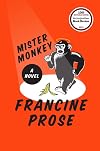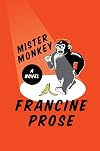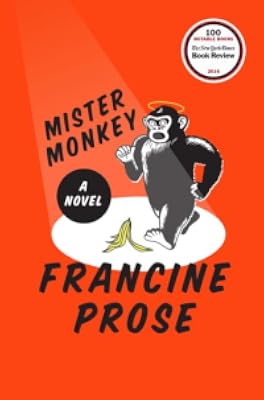
Mister Monkey
by Francine Prose
On This Page
Description
"The acclaimed New York Times bestselling author weaves an ingenious, darkly humorous, and brilliantly observant story that follows the exploits and intrigue of a constellation of characters affiliated with an off-off-off-off Broadway children's musical. Mister Monkey--a screwball children's musical about a playfully larcenous pet chimpanzee--is the kind of family favorite that survives far past its prime. Margot, who plays the chimp's lawyer, knows the production is dreadful and bemoans the show more failure of her acting career. She's settled into the drudgery of playing a humiliating part--until the day she receives a mysterious letter from an anonymous admirer. and later, in the middle of a performance, has a shocking encounter with Adam, the twelve-year-old who plays the title role. Francine Prose's effervescent comedy is told from the viewpoints of wildly unreliable, seemingly disparate characters whose lives become deeply connected as the madcap narrative unfolds. There is Adam, whose looming adolescence informs his interpretation of his role; Edward, a young audience member who is candidly unimpressed with the play; Ray, the author of the novel on which the musical is based, who witnesses one of the most awkward first dates in literature; and even the eponymous Mister Monkey, the Monkey God himself. With her trademark wit and verve, Prose delves into humanity's most profound mysteries: art, ambition, childhood, aging, and love. Startling and captivating, Mister Monkey is a breathtaking novel from a writer at the height of her craft"-- "From New York Times bestselling author and house treasure Francine Prose comes this ingenious, darkly humorous novel that follows the exploits and intrigue of a constellation of characters affiliated with an off-off-off-off Broadway children's theater production"-- show lessTags
Recommendations








Member Reviews
Artfully Connected Lives
In Francine Prose’s newest, a very fine dive into aspirant lives going mostly unfulfilled, Mr. Monkey is at once an unfulfilled children’s book turned into a perennially performed silly play and a nexus around which the various lives revealed spin and interlace, a literary device that works very well in her skilled hands. It shows both how lives touch each other, often unbeknownst to people, and serves as the propulsive agent of the novel. (For a terrific novel that also illustrates the interconnectedness of lives, see Simon Van Booy’s The Illusion of Separateness.)
Mr. Monkey is nearing the close of its run in an off-off Broadway venue. Adam, a ‘tween turning into an adolescent who has gone from kid to show more kid in the opening stages of sexual awaking, plays Mr. Monkey. This results in a number of behavioral changes, none of which prove good for the already threadbare play. It’s one of these changes that triggers the story, allowing Prose and readers to swing into the lives of one character after another.
The novel’s characters include the actors, audience members, acquaintances of the audience members, and later, the author of the novel. Even among the players there are quite distinctive differences. Margo is the professional actress, the Yale graduate, who never quite made it. Adam is the boy actor whose mother wants him to have a career in theater. Lakshmi is the young intern with dreams of bigger things that involve production of her own play. The widowed grandfather, who once had a successful career in the art world but who know feels lonely, even with his daughter’s family. Edward is the little boy in that family with his own set of problems revolving around school and popularity. Sonya is his teacher, new at the job and unsure of herself, in and out of school. Ray is the author of Mr. Monkey, the book that originally was supposed to express his feelings about what he saw in the Vietnam War, feelings that never saw the light of day. Mario, out on the perimeter of Mr. Monkey, the play, is a waiter who is something of an expert on the play’s performance history, starving for personal closeness. Eleanor, an ER nurse by day and actress by night and the most sympathetic character in the novel, finds fulfillment in both worlds for different reasons. And, finally, Roger, the director, the final installment in the novel, and at the end of his career, is something of a bookend to Margo.
Be assured that each of these named has a human and interesting story to tell, with some revelations for readers. Prose also uses Charles Darwin to good effect at various junctures. Chekhov hits the boards for a bow, too. Salinger gets a nod, but to much less effect. And while billed as a comedy, discard the thoughts of the madcap and focus on the human comedy, Balzac style. show less
In Francine Prose’s newest, a very fine dive into aspirant lives going mostly unfulfilled, Mr. Monkey is at once an unfulfilled children’s book turned into a perennially performed silly play and a nexus around which the various lives revealed spin and interlace, a literary device that works very well in her skilled hands. It shows both how lives touch each other, often unbeknownst to people, and serves as the propulsive agent of the novel. (For a terrific novel that also illustrates the interconnectedness of lives, see Simon Van Booy’s The Illusion of Separateness.)
Mr. Monkey is nearing the close of its run in an off-off Broadway venue. Adam, a ‘tween turning into an adolescent who has gone from kid to show more kid in the opening stages of sexual awaking, plays Mr. Monkey. This results in a number of behavioral changes, none of which prove good for the already threadbare play. It’s one of these changes that triggers the story, allowing Prose and readers to swing into the lives of one character after another.
The novel’s characters include the actors, audience members, acquaintances of the audience members, and later, the author of the novel. Even among the players there are quite distinctive differences. Margo is the professional actress, the Yale graduate, who never quite made it. Adam is the boy actor whose mother wants him to have a career in theater. Lakshmi is the young intern with dreams of bigger things that involve production of her own play. The widowed grandfather, who once had a successful career in the art world but who know feels lonely, even with his daughter’s family. Edward is the little boy in that family with his own set of problems revolving around school and popularity. Sonya is his teacher, new at the job and unsure of herself, in and out of school. Ray is the author of Mr. Monkey, the book that originally was supposed to express his feelings about what he saw in the Vietnam War, feelings that never saw the light of day. Mario, out on the perimeter of Mr. Monkey, the play, is a waiter who is something of an expert on the play’s performance history, starving for personal closeness. Eleanor, an ER nurse by day and actress by night and the most sympathetic character in the novel, finds fulfillment in both worlds for different reasons. And, finally, Roger, the director, the final installment in the novel, and at the end of his career, is something of a bookend to Margo.
Be assured that each of these named has a human and interesting story to tell, with some revelations for readers. Prose also uses Charles Darwin to good effect at various junctures. Chekhov hits the boards for a bow, too. Salinger gets a nod, but to much less effect. And while billed as a comedy, discard the thoughts of the madcap and focus on the human comedy, Balzac style. show less
Despite the title, Mister Monkey isn't about a monkey, but rather it centers on a not-very-good musical by that name, which is itself based on a children's book. Beginning with an actress with a role in a cheaply produced off-off-Broadway version of the play, Mister Monkey spirals out, following people whose connection to the play becomes more and more tenuous. Just when it seemed to be in danger of abandoning the musical altogether, Prose pulls the pieces together so that the separate stories all connect in meaningful ways.
There are a few things I reliably like when I read. One of them are short stories, especially inter-connected short stories. Another is when an author is talented enough and cares enough about the characters they've show more created, to write empathetically about all of them, even the most repulsive or mean-spirited creation. Mister Monkey has all of that, and being written by Francine Prose doesn't hurt its chances either. I found this book delightful. Prose's deep concern for her characters turned people who might have been laughable -- the desperate aging actress, the lonely and frumpy kindergarten teacher, the hormonal and unpleasant eleven year old -- into people I cared about. show less
A literary trope (that I enjoy, I am not using the term negatively) is a story arranged around both a play and the actors involved in the play ([Hag-Seed] is a recent excellent example), in this case, Prose casts a wider net, to include not only the actors and director of this doomed play about an orphaned chimpanzee, but a few in the audience, the writer of the original book that was turned into a children's musical, a kindergarten teacher whose student attended the play . . . ripples that move outward and cross each other . . . and you wonder where is Prose going with this? And just about then, she begins to pull the net in. The first half of the novel, since it keeps moving to new characters was extra work, but the second half I read show more in one afternoon (luckily I had the time) and was fully absorbed. Prose is acutely observant and her humour is the dark and complicated kind, where you laugh and groan simultaneously, the best and worst in people hopelessly intertwined. **** show less
"Madcap"? "Screwball"? "Effervescent comedy"? Umm, no. I wasn't sure I would take to this, as I have mixed feelings about Prose, but the glowing review by Cathleen Schine (whom I admire) in the NY Times made me give it a shot, and I'm glad I did. Humorous, yes, and comedic in the richest sense of laughing while you are saying "Oh nooooo!" in sympathy with the hapless character. Revolving through people involved, both centrally and peripherally, with a terrible, stupid, cheap musical production loathed even (or especially) by the writer of the book on which it was based, the chapters plunge us into their loves, losses, anxieties, hopes and miseries. They are by turns foolish, clever, depressed, angry, generous, wholehearted, defeated and show more victorious in ways large and small, and I rooted for every one of them. How do humans (and simians) deal with the monstrous theatrical production we are all caught up in? The cast of Mister Monkey gives us a shrewd look at the options. I just think Prose should have given the publishing house marketer in the book a far sharper kick in the butt, given what her real-life counterpart has done with this sharp, tough, poignant novel. show less
Francine Prose's “Mister Monkey” reads like a game of tag, one character carrying one chapter, then tapping another character on the shoulder to take over the story until tagging the next. One might be tempted to call this a collection of related short stories except that there really is one story here, even though, as with most novels, there are a number of subplots. In this case, the subplots are sequential. Add them up and you get the plot.
I know this sounds like a major league bore, yet somehow Prose pulls it off. Each of the 11 chapters proves absorbing, as does the novel as a whole.
A popular, if overrated, children's book called “Mister Monkey” has been adapted for a stage musical, now being presented off -Broadway. show more Tickets sell well, mostly on the reputation of the book, but a little boy in the audience in the opening chapter seems to speak for everyone, cast included, when he says loud enough for everyone in the theater to hear: "Grandpa, are you interested in this?"
Rather than turn this into comedy, which would have been too easy, Prose turns it into serious literature, making numerous references throughout her novel to the likes of Anton Chekhov, J.D. Salinger and Leo Tolstoy. The passages she mentions speak of failure, sacrifice, devotion and grace, themes that echo through her own story. The author of the children's book had meant it to atone for his experiences as a soldier in Vietnam, yet somehow through changes made by his publisher and then the theater adaptation, all that has been lost. Actors see their careers going nowhere. A grandfather's love for his grandson now seems the only thing giving his life purpose. A waiter who gets free tickets as tips actually loves seeing the play. The director secretly loves an actress, as does the boy playing the monkey and that waiter. A nurse who moonlights on stage plays the villain in the play but off-stage plays the hero.
Most of us can remember how much fun we once had playing tag. Francine Prose shows us how much fun tag can be even while sitting in our easy chair with a book in our hands. show less
I know this sounds like a major league bore, yet somehow Prose pulls it off. Each of the 11 chapters proves absorbing, as does the novel as a whole.
A popular, if overrated, children's book called “Mister Monkey” has been adapted for a stage musical, now being presented off -Broadway. show more Tickets sell well, mostly on the reputation of the book, but a little boy in the audience in the opening chapter seems to speak for everyone, cast included, when he says loud enough for everyone in the theater to hear: "Grandpa, are you interested in this?"
Rather than turn this into comedy, which would have been too easy, Prose turns it into serious literature, making numerous references throughout her novel to the likes of Anton Chekhov, J.D. Salinger and Leo Tolstoy. The passages she mentions speak of failure, sacrifice, devotion and grace, themes that echo through her own story. The author of the children's book had meant it to atone for his experiences as a soldier in Vietnam, yet somehow through changes made by his publisher and then the theater adaptation, all that has been lost. Actors see their careers going nowhere. A grandfather's love for his grandson now seems the only thing giving his life purpose. A waiter who gets free tickets as tips actually loves seeing the play. The director secretly loves an actress, as does the boy playing the monkey and that waiter. A nurse who moonlights on stage plays the villain in the play but off-stage plays the hero.
Most of us can remember how much fun we once had playing tag. Francine Prose shows us how much fun tag can be even while sitting in our easy chair with a book in our hands. show less
This book begins with two cast members and two audience members narrating a rather fraught performance of the children's musical Mister Monkey, and I thought we were headed for a rollicking mashup of Roshomon and Noises Off. However, when the second audience member handed the story off to his grandson's kindergarten teacher, the novel swerved toward Six Degrees of Separation territory (it's probably no accident that Six Degrees author John Guare blurbs the book), and the cast of narrators expanded to include voices who wanted to discourse on, inter alia, Charles Darwin, Anton Chekhov, and the Hindu-Moslem violence attendant on India's independence. The various voices and chance interactions between these characters as they come together show more are fascinating, as are their funny and wise musings on the human condition, especially as seen through the prism of the art of theater.
The book's flaws can be enumerated simply: some of her more abstruse references could use more elucidation (e.g., what the deuce is this Fat Lady deal she keeps bringing in?), for abstruse references are great when you get them, irksome when you don't, and the book's ending would probably be much more satisfying to a theist than it was to me. But if you read a better book than this one this year, you're a fortunate individual indeed. show less
The book's flaws can be enumerated simply: some of her more abstruse references could use more elucidation (e.g., what the deuce is this Fat Lady deal she keeps bringing in?), for abstruse references are great when you get them, irksome when you don't, and the book's ending would probably be much more satisfying to a theist than it was to me. But if you read a better book than this one this year, you're a fortunate individual indeed. show less
Artfully Connected Lives
In Francine Prose’s newest, a very fine dive into aspirant lives going mostly unfulfilled, Mr. Monkey is at once an unfulfilled children’s book turned into a perennially performed silly play and a nexus around which the various lives revealed spin and interlace, a literary device that works very well in her skilled hands. It shows both how lives touch each other, often unbeknownst to people, and serves as the propulsive agent of the novel. (For a terrific novel that also illustrates the interconnectedness of lives, see Simon Van Booy’s The Illusion of Separateness.)
Mr. Monkey is nearing the close of its run in an off-off Broadway venue. Adam, a ‘tween turning into an adolescent who has gone from kid to show more kid in the opening stages of sexual awaking, plays Mr. Monkey. This results in a number of behavioral changes, none of which prove good for the already threadbare play. It’s one of these changes that triggers the story, allowing Prose and readers to swing into the lives of one character after another.
The novel’s characters include the actors, audience members, acquaintances of the audience members, and later, the author of the novel. Even among the players there are quite distinctive differences. Margo is the professional actress, the Yale graduate, who never quite made it. Adam is the boy actor whose mother wants him to have a career in theater. Lakshmi is the young intern with dreams of bigger things that involve production of her own play. The widowed grandfather, who once had a successful career in the art world but who know feels lonely, even with his daughter’s family. Edward is the little boy in that family with his own set of problems revolving around school and popularity. Sonya is his teacher, new at the job and unsure of herself, in and out of school. Ray is the author of Mr. Monkey, the book that originally was supposed to express his feelings about what he saw in the Vietnam War, feelings that never saw the light of day. Mario, out on the perimeter of Mr. Monkey, the play, is a waiter who is something of an expert on the play’s performance history, starving for personal closeness. Eleanor, an ER nurse by day and actress by night and the most sympathetic character in the novel, finds fulfillment in both worlds for different reasons. And, finally, Roger, the director, the final installment in the novel, and at the end of his career, is something of a bookend to Margo.
Be assured that each of these named has a human and interesting story to tell, with some revelations for readers. Prose also uses Charles Darwin to good effect at various junctures. Chekhov hits the boards for a bow, too. Salinger gets a nod, but to much less effect. And while billed as a comedy, discard the thoughts of the madcap and focus on the human comedy, Balzac style. show less
In Francine Prose’s newest, a very fine dive into aspirant lives going mostly unfulfilled, Mr. Monkey is at once an unfulfilled children’s book turned into a perennially performed silly play and a nexus around which the various lives revealed spin and interlace, a literary device that works very well in her skilled hands. It shows both how lives touch each other, often unbeknownst to people, and serves as the propulsive agent of the novel. (For a terrific novel that also illustrates the interconnectedness of lives, see Simon Van Booy’s The Illusion of Separateness.)
Mr. Monkey is nearing the close of its run in an off-off Broadway venue. Adam, a ‘tween turning into an adolescent who has gone from kid to show more kid in the opening stages of sexual awaking, plays Mr. Monkey. This results in a number of behavioral changes, none of which prove good for the already threadbare play. It’s one of these changes that triggers the story, allowing Prose and readers to swing into the lives of one character after another.
The novel’s characters include the actors, audience members, acquaintances of the audience members, and later, the author of the novel. Even among the players there are quite distinctive differences. Margo is the professional actress, the Yale graduate, who never quite made it. Adam is the boy actor whose mother wants him to have a career in theater. Lakshmi is the young intern with dreams of bigger things that involve production of her own play. The widowed grandfather, who once had a successful career in the art world but who know feels lonely, even with his daughter’s family. Edward is the little boy in that family with his own set of problems revolving around school and popularity. Sonya is his teacher, new at the job and unsure of herself, in and out of school. Ray is the author of Mr. Monkey, the book that originally was supposed to express his feelings about what he saw in the Vietnam War, feelings that never saw the light of day. Mario, out on the perimeter of Mr. Monkey, the play, is a waiter who is something of an expert on the play’s performance history, starving for personal closeness. Eleanor, an ER nurse by day and actress by night and the most sympathetic character in the novel, finds fulfillment in both worlds for different reasons. And, finally, Roger, the director, the final installment in the novel, and at the end of his career, is something of a bookend to Margo.
Be assured that each of these named has a human and interesting story to tell, with some revelations for readers. Prose also uses Charles Darwin to good effect at various junctures. Chekhov hits the boards for a bow, too. Salinger gets a nod, but to much less effect. And while billed as a comedy, discard the thoughts of the madcap and focus on the human comedy, Balzac style. show less
Members
- Recently Added By
Lists

2017 Tournament of Books
18 works; 18 members
Author Information

64+ Works 12,986 Members
Francine Prose was born on April 1, 1947. She graduated from Radcliffe College in 1968. She received the PEN Translation Prize in 1988 and received a Guggenheim fellowship in 1991. Francine Prose novel The Glorious Ones, has been adapted into a musical with the same title by Lynn Ahrens and Stephen Flaherty. It ran at the Mitzi E. Newhouse Theater show more at Lincoln Center in New York City in the fall of 2007. Prose has served as president of PEN American Center, a New York City based literary society of writers, editors, and translators that works to advance literature in 2007 and 2008. Prose novel, Blue Angel, a satire about sexual harassment on college campuses, was a finalist for the National Book Award. One of her novels, Household Saints, was adapted for a movie by Nancy Savoca. In 2014 her title Lovers at the Chameleon Club - Paris 1932, made The New York Times Best Seller List. (Bowker Author Biography) show less
Awards and Honors
Awards
Common Knowledge
- Canonical title
- Mister Monkey
- Original title
- Mister Monkey
- Original publication date
- 2016
- Dedication
- For Emilia, Malena, and Jackson
- First words
- Once upon a time, not so long ago, a scientist (and loving mother) by the name of Mrs. Jimson said a tearful good-bye to her family in New York and went to study monkey in Africa. (Prelude
Who cares if it's children's theater? - Last words
- (Click to show. Warning: May contain spoilers.)Three are we. Three are thee. Have mercy.
(Click to show. Warning: May contain spoilers.)But just to be on the safe side, Mr. Jimson hired a lawyer named Portia McBailey…. (Prelude) - Blurbers
- Hunt, Samantha; Guare, John
- Original language
- English
Classifications
Statistics
- Members
- 302
- Popularity
- 106,184
- Reviews
- 22
- Rating
- (3.45)
- Languages
- English
- Media
- Paper, Audiobook, Ebook
- ISBNs
- 8
- ASINs
- 2