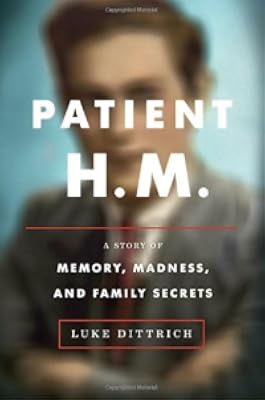
Patient H.M.: A Story of Memory, Madness, and Family Secrets
by Luke Dittrich
On This Page
Description
In the summer of 1953, a renowned Yale neurosurgeon named William Beecher Scoville performed a novel operation on a 27-year-old epileptic patient named Henry Molaison, drilling two silver-dollar sized holes in his forehead and suctioning out a few teaspoons of tissue from a mysterious region deep inside his brain. The operation helped control Molaison's intractable seizures, but it also did something else: It left Molaison amnesic for the rest of his life, with a short term memory of just show more thirty seconds. Patient H.M., as he came to be known, would emerge as the most important human research subject in history. Much of what we now know about how memory works is a direct result of the sixty years of near-constant experimentation carried out upon him until his death in 2008. Award-winning journalist Luke Dittrich brings readers from the gleaming laboratory in San Diego where Molaison's disembodied brain -- now the focus of intense scrutiny -- sits today; to the surgical suites of the 1940s and 50s, where doctors wielded the powers of gods; and into the examination rooms where generations of researchers performed endless experiments on a single, essential, oblivious man: H.M.. In the process, Dittrich excavates the lives of Dr. Scoville and his most famous patient, and spins their tales together in thrilling, kaleidoscopic fashion, uncovering troves of well-guarded secrets, and revealing how the bright future of modern neuroscience has dark roots in the forgotten history of psychosurgery, raising ethical questions that echo into the present day. show lessTags
Recommendations







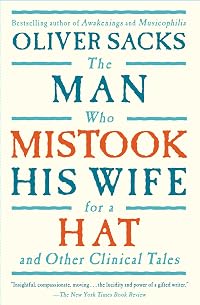
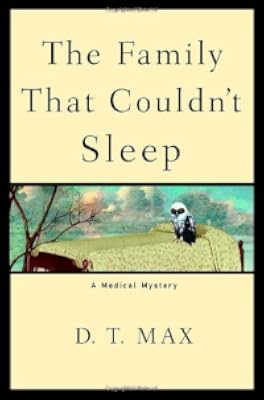


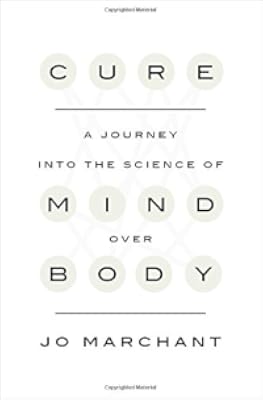

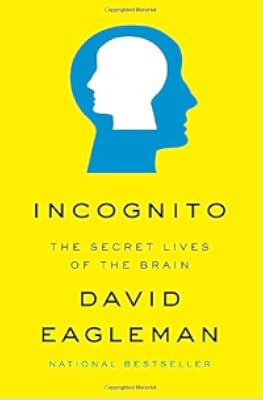













Member Reviews
This review originally appeared on my blog at www.gimmethatbook.com.
Many thanks to NetGalley for this ARC.
This book is more than a memoir; more than an expose of the lobotomy trade; more than a poignant tale of a man whose life was largely lived in the present moment. It’s an unsettling view of a medical procedure touted as something to make willful women “compliant” and violent men “placid”. The imagery of the procedure itself is even more eerie – the author describes the hippocampus as “being sucked up” by the vacuum used to perform the surgery. Implements such as a trephine drill, a scalpel, and forceps are used to obliterate parts of the brain responsible for making each of us human. Patients vomit or sing during show more the surgery, their brain sending out chaotic impulses. Afterwards, they are a shell of their former self, sometimes mute, dull, or forgetful.
Patient H.M. was the most intensively studied lobotomy “victim”, and his journey from epileptic to amnesiac is well chronicled here. Adding to the drama is that the grandfather of the author (Dr William Scofield) is the surgeon that operated on H.M.
There is backstabbing and intrigue within the medical community as well; one of H.M.’s fiercest protectors, neuroscientist Suzanne Corkin, may have destroyed much of her written notes on H.M., thereby casting a shadow over how much of her research was actually correct and reliable. It is mind boggling to learn about the amount of “experimentation” done on men and women, all in the name of advancing scientific knowledge. Consent at times was dubious, even after the Nuremberg Trials. The doctors thought they were doing the best for these patients, but as the author puts it, their hubris and audacity changed lives not always for the better.
Towards the end of the book, there is a section on H.M.’s actual thoughts on himself and his memory. He tries to put a positive spin on things, noting that always living in the present makes things interesting. I suppose you can’t miss what you never had; but I also was very deeply touched by the portrayal of this man who underwent a lobotomy because he was desperate to end his constant seizures. Was the quality of his life made better by suctioning out parts of his brain? That’s the gist of PATIENT H.M. – there are uncomfortable questions and sometimes dubious answers that make sense at times, but in actuality heinous, unspeakable deeds were committed against innocent people.
The author does a wonderful job of forcing the reader to consider these broken people as tragic creatures, unknowing fodder (sometimes referred to as “material”) for the surgeons who were all eager to try out this new and groundbreaking procedure.
Also broken are the main characters: the surgeon Scoville, the neuroscientist Corkin, and the brain researcher Jacopo Annese, who took possession of H.M.’s brain after the famous amnesiac died. After live streaming the dissection of the brain, there followed a volatile custody battle between Corkin and Annese over who was the “real” owner of the organ. Everyone wanted a piece of H.M. , either in life or death – and akin to Henrietta Lacks, he was never truly compensated for it.
I dare you to read this book and not be moved. PATIENT H.M. is educational, thrilling, and serves as a reminder of just how far medical science has come – and the depths it has gone to in order to reach this point. show less
Many thanks to NetGalley for this ARC.
This book is more than a memoir; more than an expose of the lobotomy trade; more than a poignant tale of a man whose life was largely lived in the present moment. It’s an unsettling view of a medical procedure touted as something to make willful women “compliant” and violent men “placid”. The imagery of the procedure itself is even more eerie – the author describes the hippocampus as “being sucked up” by the vacuum used to perform the surgery. Implements such as a trephine drill, a scalpel, and forceps are used to obliterate parts of the brain responsible for making each of us human. Patients vomit or sing during show more the surgery, their brain sending out chaotic impulses. Afterwards, they are a shell of their former self, sometimes mute, dull, or forgetful.
Patient H.M. was the most intensively studied lobotomy “victim”, and his journey from epileptic to amnesiac is well chronicled here. Adding to the drama is that the grandfather of the author (Dr William Scofield) is the surgeon that operated on H.M.
There is backstabbing and intrigue within the medical community as well; one of H.M.’s fiercest protectors, neuroscientist Suzanne Corkin, may have destroyed much of her written notes on H.M., thereby casting a shadow over how much of her research was actually correct and reliable. It is mind boggling to learn about the amount of “experimentation” done on men and women, all in the name of advancing scientific knowledge. Consent at times was dubious, even after the Nuremberg Trials. The doctors thought they were doing the best for these patients, but as the author puts it, their hubris and audacity changed lives not always for the better.
Towards the end of the book, there is a section on H.M.’s actual thoughts on himself and his memory. He tries to put a positive spin on things, noting that always living in the present makes things interesting. I suppose you can’t miss what you never had; but I also was very deeply touched by the portrayal of this man who underwent a lobotomy because he was desperate to end his constant seizures. Was the quality of his life made better by suctioning out parts of his brain? That’s the gist of PATIENT H.M. – there are uncomfortable questions and sometimes dubious answers that make sense at times, but in actuality heinous, unspeakable deeds were committed against innocent people.
The author does a wonderful job of forcing the reader to consider these broken people as tragic creatures, unknowing fodder (sometimes referred to as “material”) for the surgeons who were all eager to try out this new and groundbreaking procedure.
Also broken are the main characters: the surgeon Scoville, the neuroscientist Corkin, and the brain researcher Jacopo Annese, who took possession of H.M.’s brain after the famous amnesiac died. After live streaming the dissection of the brain, there followed a volatile custody battle between Corkin and Annese over who was the “real” owner of the organ. Everyone wanted a piece of H.M. , either in life or death – and akin to Henrietta Lacks, he was never truly compensated for it.
I dare you to read this book and not be moved. PATIENT H.M. is educational, thrilling, and serves as a reminder of just how far medical science has come – and the depths it has gone to in order to reach this point. show less
At the age of seven young Henry Molaison stepped into the street and collided with a bicyclist. Following the accident he began suffering from increasingly frequent and severe epileptic seizures, leading ultimately to an experimental brain surgery performed by neurosurgeon William Beecher Scoville. Unfortunately, the surgery was only partially successful with respect to his seizures and, tragically, the procedure left him unable to form any new memories for the remainder of his life. The author, journalist Luke Dittrich, just happens to be Scoville's grandson, and this is the story of the surprising number of ways his family intersects with that of the most famous patient in the history of neuroscience, as well as a primer on the show more history of the science itself.
This was an enlightening read, though it was far from a page-turner. The overall number of intersectionalities among the family, the patient, the neighborhood, and even President Lincoln, was pretty astonishing. Recommended for readers with an interest in science and medicine. show less
This was an enlightening read, though it was far from a page-turner. The overall number of intersectionalities among the family, the patient, the neighborhood, and even President Lincoln, was pretty astonishing. Recommended for readers with an interest in science and medicine. show less
Patient H.M.: A Story of Memory, Madness, and Family Secrets by Luke Dittrich is a very highly recommended account of his grandfather, Dr. William Beecher Scoville, an early brain surgeon, and his most famous patient, Henry Molaison. If you were mesmerized by The Immortal Life of Henrietta Lacks by Rebecca Skloot, you won't want to miss Patient H.M.: A Story of Memory, Madness, and Family Secrets by Luke Dittrich.
Investigative journalist Luke Dittrich covers not only the story of Henry Molaison, an epileptic man who is considered one of the most important neuroscience human research subjects; he also explores the history of neurosurgery and lobotomies, and his own family history. Along the way ethical questions are raised regarding the show more treatment of Henry, famously only known as Patient H.M. for years, and how proprietorial researchers are on sharing information.
Henry and his family agreed to brain surgery in order to stop the debilitating epileptic seizures he was having. While it did stop the seizures, it also causes short term amnesia. Henry could no longer remember any new information or form any new long term memories. After this he became Patient H.M., one of the most studied individuals over a span of decades, but also one whose identity was closely guarded.
Dittrich takes the facts of Patient H. M. and early neurosurgery and makes the story personal. His grandfather was a pioneer in the field and the one to perform the surgery on Henry, but Dittrich also tells of his mentally-ill grandmother, and a family secret. In Patient H.M. the author takes an extremely interesting piece of history and makes it even more compelling because of the personal connection Dittrich has to it, while describing the limbo Henry found himself in, with no ties to recent memories.
The writing is very good and this nonfiction account reads like a novel. I was immersed in Dittrick's family history, as well as the story of Henry himself and the history of neurosurgery. The legal fights over Henry's body and the ending was, well, stunning. You have to read this book which is sure to be in the top nonfiction of the year.
Disclosure: My advanced reading copy was courtesy of the publisher for review purposes.
http://shetreadssoftly.blogspot.com/2016/08/patient-hm.html
https://www.goodreads.com/review/show/1723726347 show less
Investigative journalist Luke Dittrich covers not only the story of Henry Molaison, an epileptic man who is considered one of the most important neuroscience human research subjects; he also explores the history of neurosurgery and lobotomies, and his own family history. Along the way ethical questions are raised regarding the show more treatment of Henry, famously only known as Patient H.M. for years, and how proprietorial researchers are on sharing information.
Henry and his family agreed to brain surgery in order to stop the debilitating epileptic seizures he was having. While it did stop the seizures, it also causes short term amnesia. Henry could no longer remember any new information or form any new long term memories. After this he became Patient H.M., one of the most studied individuals over a span of decades, but also one whose identity was closely guarded.
Dittrich takes the facts of Patient H. M. and early neurosurgery and makes the story personal. His grandfather was a pioneer in the field and the one to perform the surgery on Henry, but Dittrich also tells of his mentally-ill grandmother, and a family secret. In Patient H.M. the author takes an extremely interesting piece of history and makes it even more compelling because of the personal connection Dittrich has to it, while describing the limbo Henry found himself in, with no ties to recent memories.
The writing is very good and this nonfiction account reads like a novel. I was immersed in Dittrick's family history, as well as the story of Henry himself and the history of neurosurgery. The legal fights over Henry's body and the ending was, well, stunning. You have to read this book which is sure to be in the top nonfiction of the year.
Disclosure: My advanced reading copy was courtesy of the publisher for review purposes.
http://shetreadssoftly.blogspot.com/2016/08/patient-hm.html
https://www.goodreads.com/review/show/1723726347 show less
The appeal of this book reaches far beyond learning about patient H.M., though his story is indeed a fascinating centerpiece. The author's grandfather is the doctor who performed H.M.'s lobotomy, along with countless more lobotomies on patients who were not all willing participants in this experimental surgery.
This book is part memoir, as the author takes us into his own family history, with his grandmother's mental illness and his grandfather's myopic view of lobotomies as the treatment of choice for a wide variety of psychological and behavioral problems. We also learn about the politics of medical research, about the in-fighting and the proprietary treatment of a human as a research object. We see how loosely mental illness was show more defined in a time not so long ago, when women were expected to be compliant and subservient, and defiant children were locked away. And, of course, we learn about patient H.M., a man who lost the ability to retain any sort of memory after part of his brain was taken away.
Luke Dittrich does jump around a bit in the timeline, veering down paths with family memories in order to give us a clear understanding of the people and the time in history. I had no problem following his lead, though on occasion, particularly through the middle third of the book, it felt a little disjointed. Still, the information is well worth the effort to follow along.
The stories within this book bring with them the question of free will and freedom of choice. Should doctors and psychiatrists be allowed to surgically alter a mentally ill person, and who decides the parameters of those mental illnesses treated with such a permanent method? I personally was appalled by the freedom with which these doctors performed lobotomies, as well as the lack of oversight. Perhaps even more disturbing is the absence of regard for these patients as humans with rights. These people seemed to be nothing more than test subjects, and when a doctor screwed up and caused more damage to their brains, this was just a learning curve for the greater good.
I definitely recommend this book to anyone interested in the history of our medical and psychiatric health care system.
*I was provided with an advance ebook copy by the publisher, via NetGalley, in exchange for my honest review.* show less
This book is part memoir, as the author takes us into his own family history, with his grandmother's mental illness and his grandfather's myopic view of lobotomies as the treatment of choice for a wide variety of psychological and behavioral problems. We also learn about the politics of medical research, about the in-fighting and the proprietary treatment of a human as a research object. We see how loosely mental illness was show more defined in a time not so long ago, when women were expected to be compliant and subservient, and defiant children were locked away. And, of course, we learn about patient H.M., a man who lost the ability to retain any sort of memory after part of his brain was taken away.
Luke Dittrich does jump around a bit in the timeline, veering down paths with family memories in order to give us a clear understanding of the people and the time in history. I had no problem following his lead, though on occasion, particularly through the middle third of the book, it felt a little disjointed. Still, the information is well worth the effort to follow along.
The stories within this book bring with them the question of free will and freedom of choice. Should doctors and psychiatrists be allowed to surgically alter a mentally ill person, and who decides the parameters of those mental illnesses treated with such a permanent method? I personally was appalled by the freedom with which these doctors performed lobotomies, as well as the lack of oversight. Perhaps even more disturbing is the absence of regard for these patients as humans with rights. These people seemed to be nothing more than test subjects, and when a doctor screwed up and caused more damage to their brains, this was just a learning curve for the greater good.
I definitely recommend this book to anyone interested in the history of our medical and psychiatric health care system.
*I was provided with an advance ebook copy by the publisher, via NetGalley, in exchange for my honest review.* show less
Patient HM Drowning in details
This is not a book about Patient HM (Henry G. Molaison). It is a book about the history of brain surgery to cure epilepsy, lobotomies and the study of the brain. That, in itself, could make a good book but in this case, the author’s diligent research got in the way of telling the story. Just because the research was extensive, doesn’t mean the author had to use every detail he uncovered.
I was very intrigued from the start as the story focused on Henry as a child who had a terrible accident that later, may have caused him to have frequent seizures. Henry underwent brain surgery by Dr. William Scoville, the author’s grandfather. Dr. Scoville removed portions of Henry’s brain based on a hunch that he show more knew the areas that were causing Henry’s seisures. I wanted to get to know Henry and also Dr. Scoville’s wife who spent time in an asylum for her mental issues. I never got to know these people. I don’t feel I ever knew Henry even though the book was supposedly about him. I never understood his personality and even though it was told he had a very high IQ, we were not told how Henry appeared to the world. There were extensive interviews where the reader could view his responses but I never felt I knew what he was like.
At one point the author told part of the story of Dr. Scoville’s wife and I got the feeling he would at some point finish her story but frankly, I was so overwhelmed in all the details, the dates, the institutions, the people, the laboratories the universities, that at times I would skim many pages at a time, so I could have missed the continuing story of Mrs. Scoville. She was in an institution where Dr. Scoville often performed lobotomies and I wanted to know if he performed surgery on her.
Another let down was that I wanted to understand how all the research on Henry Molaison throughout his life lead to a better understanding of the brain and and memory function. I’m sure that information is buried in the book somewhere.
This could have been so much better. show less
This is not a book about Patient HM (Henry G. Molaison). It is a book about the history of brain surgery to cure epilepsy, lobotomies and the study of the brain. That, in itself, could make a good book but in this case, the author’s diligent research got in the way of telling the story. Just because the research was extensive, doesn’t mean the author had to use every detail he uncovered.
I was very intrigued from the start as the story focused on Henry as a child who had a terrible accident that later, may have caused him to have frequent seizures. Henry underwent brain surgery by Dr. William Scoville, the author’s grandfather. Dr. Scoville removed portions of Henry’s brain based on a hunch that he show more knew the areas that were causing Henry’s seisures. I wanted to get to know Henry and also Dr. Scoville’s wife who spent time in an asylum for her mental issues. I never got to know these people. I don’t feel I ever knew Henry even though the book was supposedly about him. I never understood his personality and even though it was told he had a very high IQ, we were not told how Henry appeared to the world. There were extensive interviews where the reader could view his responses but I never felt I knew what he was like.
At one point the author told part of the story of Dr. Scoville’s wife and I got the feeling he would at some point finish her story but frankly, I was so overwhelmed in all the details, the dates, the institutions, the people, the laboratories the universities, that at times I would skim many pages at a time, so I could have missed the continuing story of Mrs. Scoville. She was in an institution where Dr. Scoville often performed lobotomies and I wanted to know if he performed surgery on her.
Another let down was that I wanted to understand how all the research on Henry Molaison throughout his life lead to a better understanding of the brain and and memory function. I’m sure that information is buried in the book somewhere.
This could have been so much better. show less
The brain and how it functions can be fascinating. The author does a good job of presenting this in a readable, albeit technical way. He is the grandson of an early pioneer in the treatment of mental illness surgically through lobotomy. Yet, his grandfather's most famous patient, Henry Molaison or H.M., was actually not a psych patient, but an epileptic. He became a human case study for the brain's function after he post-operatively became a total amnesiac. Although much information and education in learning about the functions in the various areas of the brain, as well as amnesia, was learned from Henry, it was at such a terrible cost for him.
While I enjoyed the book, I did expect that it would be focused more on the patient for which show more it is named. Other than an introduction as to who H.M. was, more than the first half of the book deals with the history of the surgeon and the introduction of the lobotomy and other brain surgeries in treating mental illness. Personally, I found some of this is to be a bit dry and lacking in basic language that general readers could understand. The book picked up quite a bit for me in the second half as the author begins to focus more on Henry and his life story. It was both interesting and tragic.
I thank the publisher and Netgalley for the opportunity to read and review this title. show less
While I enjoyed the book, I did expect that it would be focused more on the patient for which show more it is named. Other than an introduction as to who H.M. was, more than the first half of the book deals with the history of the surgeon and the introduction of the lobotomy and other brain surgeries in treating mental illness. Personally, I found some of this is to be a bit dry and lacking in basic language that general readers could understand. The book picked up quite a bit for me in the second half as the author begins to focus more on Henry and his life story. It was both interesting and tragic.
I thank the publisher and Netgalley for the opportunity to read and review this title. show less
The term "scope creep" may as well have been invented for this book. The core concept is fascinating: Luke Dittrich, the grandson of Dr. William Scoville, the neurosurgeon who performed the temporal lobotomy on patient H.M., who inspired the movie Memento writes a book about all of that. The problem seems to be that Dittrich couldn't decide which book to write.
Therefore, he includes fascinating bits like the admission of his own grandmother -- Scoville's wife -- to the inpatient psychiatric facility were Scoville performed lobotomies. He departs into memoir at times. He explores the entire history of frontal lobotomy (at some length) and digresses into this history of psychiatry. These subjects come with no form of organization and many show more of them don't really reach a satisfying conclusion as they get discarded for something else. I found myself anxious to finish but disinterested in actually picking up the book. Frustratingly, Dittrich concludes the book with a brief synopsis of the ways that H.M.'s brain was anatomically different than expected -- a fascinating topic that he left basically untouched.
Also, usually an author's closeness to a subject makes it an ideal topic, but in this case I felt very uncomfortable with Dittrich's relationships to the scientists in this story. He is profoundly unhappy with his grandfather's work, calling his surgery on H.M. unforgivable and rash despite quoting experts who disagree. I think that there's a lot more nuance to performing a surgery on a patient with intractable epilepsy before the invention of modern antiepileptics. Similarly, Dittrich's mother's best friend, the psychiatrist who had scientific custody of H.M. in his later life, is painted as a territorial and vindictive villain.
The parts that are there, that are reflective and that are relevant are fascinating. So, three stars for content and concept. show less
Therefore, he includes fascinating bits like the admission of his own grandmother -- Scoville's wife -- to the inpatient psychiatric facility were Scoville performed lobotomies. He departs into memoir at times. He explores the entire history of frontal lobotomy (at some length) and digresses into this history of psychiatry. These subjects come with no form of organization and many show more of them don't really reach a satisfying conclusion as they get discarded for something else. I found myself anxious to finish but disinterested in actually picking up the book. Frustratingly, Dittrich concludes the book with a brief synopsis of the ways that H.M.'s brain was anatomically different than expected -- a fascinating topic that he left basically untouched.
Also, usually an author's closeness to a subject makes it an ideal topic, but in this case I felt very uncomfortable with Dittrich's relationships to the scientists in this story. He is profoundly unhappy with his grandfather's work, calling his surgery on H.M. unforgivable and rash despite quoting experts who disagree. I think that there's a lot more nuance to performing a surgery on a patient with intractable epilepsy before the invention of modern antiepileptics. Similarly, Dittrich's mother's best friend, the psychiatrist who had scientific custody of H.M. in his later life, is painted as a territorial and vindictive villain.
The parts that are there, that are reflective and that are relevant are fascinating. So, three stars for content and concept. show less
Members
- Recently Added By
Lists

Best Biographies
216 works; 24 members

Penguin Random House
458 works; 4 members

Psychology: Abuse, Grief, Self-Help
189 works; 1 member
Author Information

2+ Works 525 Members
Awards and Honors
Awards
Distinctions
Common Knowledge
- Original publication date
- 2016-08-09
- People/Characters
- Henry Molaison; William Scoville; Suzanne Corkin
- Epigraph
- Man is certainly no poorer as a experimental animal merely because he can talk.
Paul Bucy
Every day is alone in itself. Whatever enjoyment I've had, and whatever sorrow I've had.
Henry Molaison - Dedication
- For Bambam, Lola, Laska, and Anwyn
- First words
- The laboratory at night, the lights down low.
Classifications
- Genres
- Nonfiction, General Nonfiction, Science & Nature, Biography & Memoir, History
- DDC/MDS
- 616.85 — Applied science & technology Medicine & health Diseases, Allergies, Skin Conditions Nervous Disorders: Autism, Anorexia, OCD Miscellaneous
- LCC
- RC394 .A5 .D58 — Medicine Internal medicine Internal medicine Neurosciences. Biological psychiatry. Neuropsychiatry Neurology. Diseases of the nervous system
- BISAC
Statistics
- Members
- 524
- Popularity
- 57,381
- Reviews
- 28
- Rating
- (3.77)
- Languages
- English, Polish
- Media
- Paper, Audiobook, Ebook
- ISBNs
- 10
- ASINs
- 2