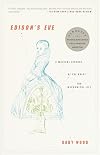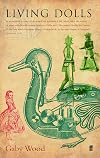
Edison's Eve: A Magical History of the Quest for Mechanical Life
by Gaby Wood
On This Page
Description
Living Dolls tells the story of humanity's age-old obsession with moving dolls and speaking robots, intelligent machines and bionic men - and it gives the history of ingenious inventors and their fantastical creations.Tags
Recommendations













Member Reviews
[Published as Living Dolls in the UK]
This is really five essays on incidents in the relationship between being human that are each entertaining in themselves but are not strung together with any over-arching narrative or meaningful theory. Vaucanson's mechanical shitting duck, Kempelen's fraudulent Turkish chess player, Edison's investment in doll manufacturing, Melies' experimental film-making and the adventures of the Doll family (small people) in the American entertainment industry provide interesting, well written but ultimately journalistic pieces with odd bits of 'cultural studies' obfuscation to make it look like a more important book. Marina Warner, it ain't. But the stories are good and not often told and Gaby Wood does have show more the ability to make the protagonists come to life. I hope she writes more such books without the unnecessary and admittedly small bits of theory - ot does the theory bit properly next time with a bit more sustained thought. show less
This is really five essays on incidents in the relationship between being human that are each entertaining in themselves but are not strung together with any over-arching narrative or meaningful theory. Vaucanson's mechanical shitting duck, Kempelen's fraudulent Turkish chess player, Edison's investment in doll manufacturing, Melies' experimental film-making and the adventures of the Doll family (small people) in the American entertainment industry provide interesting, well written but ultimately journalistic pieces with odd bits of 'cultural studies' obfuscation to make it look like a more important book. Marina Warner, it ain't. But the stories are good and not often told and Gaby Wood does have show more the ability to make the protagonists come to life. I hope she writes more such books without the unnecessary and admittedly small bits of theory - ot does the theory bit properly next time with a bit more sustained thought. show less
Interesting but uneven. Author Gaby Wood is a writer for the Observer and “attended” Cambridge; it’s not clear what she specializes in. She seems very good at historical research. The book divides into three parts, and their relationship isn’t all that clear.
The first section discusses mechanical “automatons” from the 18th and 19th centuries: Jaques de Vaucanson’s mechanical flute player and mechanical duck from the early 18th century, and Wolfgang von Kempelen’s Mechanical Turk chess player from the later part. The Mechanical Turk eventually became associated with Johann Nepomuk Maelzel, who inherited the machine after von Kempelen’s death and who took it on a number of international exhibitions. Wood has done a lot show more of investigation trying to track down the whereabouts and function of the devices. The flute player seems to have disappeared about 1810; there are tentative traces of the duck until 1879 when it was supposedly destroyed in a fire. The Turk was also destroyed in a fire, in Philadelphia in 1854. (A bellows arrangement allowed the Turk to say “échec” (check); witnesses claimed it kept uttering this as it burned). Wood segues from the Turk’s career to the mental state of chess players in general; this doesn’t work very well.
The next section is about the title topic, Thomas Edison and his real and imaginary dolls. In the 1890s, Edison briefly marketed a talking doll, which incorporated a small cylinder phonograph and could recite various short poems and songs. The doll was not a success; it was expensive and heavy. At about the same time, a French novelist, Villiers de l’Isle-Adam, published The Eve of the Future, in which Edison is fictionalized as a sort of magician, who at the request of a friend builds a life-size mechanical doll in the image of the man’s love interest. It should be noted that since the date of the novel was 1886 the anatomical details and functions of the doll aren’t described in any detail, but since it’s a French novel its lingerie is (it has “deliciously fine ladies stockings” … “perfumed gloves” … and “a lightweight and ravishing corset with bright red ribbons”). The doll is eventually lost in fire on board the ship taking it to England; fire seems to be the nemesis of automatons, even fictional ones. It’s not sure if Edison ever read de l’Isle-Adam’s book, but he did donate $25 toward a statue of the writer after his death.
The last parts of the book, although interesting, don’t relate to the first chapters very well. Wood discusses the film career of Georges Méliès. There is a slight connection; Méliès career was made possible by Edison’s invention of the Kinetoscope, and it was eventually ruined when Edison began enforcing his patents on movie-making (the problem was patent licensees were required to produce a certain amount of film every week and Méliès couldn’t afford that much production). Méliès was famous for surreal and science-fiction films, with stop-motion and various other special effects; the most famous is A Trip to the Moon from 1902. Many of Méliès actors and actresses were hired from the Follies Bergere, which explains the number of pulchritudinous young ladies and male acrobats in the films. Wood relates Méliès to her main theme of automatons by arguing that automatons appear to be human but aren’t and the things in Méliès films appear to happening but aren’t. A lot of his films were though lost but have recently been found and restored; they make for a fun evening on YouTube.
Wood then goes from Méliès films to the history of the Doll family. The Dolls (originally the Schnieders) , were a group of sibling midgets who spent years in the circus and who acted in a number of Hollywood films (Harry and Daisy Doll were the leads in Tom Browning’s Freaks, and Harry was one of the Lollipop Guild in The Wizard of Oz). Wood manages to track down the last Doll, Tiny (she was, of course, the tallest) in a house trailer in Sarasota, Florida (Wood doesn’t know Tiny’s still alive but just wants to visit the Doll’s last home). The Dolls are related only tenuously to Wood’s main theme; her claim is many people thought the Dolls weren’t real but some sort of mechanical doll, thus the book loops from automatons people thought were living to live midgets people thought were automatons.
When Wood is doing straight history, she’s very good and quite readable. She falls off when she starts to philosophize about reality versus illusion. With the rise of AI, there’s certainly plenty to think about there but Wood tends to sensationalize and doesn’t get very deep into the subject. A good editor might have helped here by keeping Wood on focus.
Pictures of the various automata, movie stills, and midgets. No notes, but a pretty extensive bibliography; I want to explore some of Wood’s sources more thoroughly. show less
The first section discusses mechanical “automatons” from the 18th and 19th centuries: Jaques de Vaucanson’s mechanical flute player and mechanical duck from the early 18th century, and Wolfgang von Kempelen’s Mechanical Turk chess player from the later part. The Mechanical Turk eventually became associated with Johann Nepomuk Maelzel, who inherited the machine after von Kempelen’s death and who took it on a number of international exhibitions. Wood has done a lot show more of investigation trying to track down the whereabouts and function of the devices. The flute player seems to have disappeared about 1810; there are tentative traces of the duck until 1879 when it was supposedly destroyed in a fire. The Turk was also destroyed in a fire, in Philadelphia in 1854. (A bellows arrangement allowed the Turk to say “échec” (check); witnesses claimed it kept uttering this as it burned). Wood segues from the Turk’s career to the mental state of chess players in general; this doesn’t work very well.
The next section is about the title topic, Thomas Edison and his real and imaginary dolls. In the 1890s, Edison briefly marketed a talking doll, which incorporated a small cylinder phonograph and could recite various short poems and songs. The doll was not a success; it was expensive and heavy. At about the same time, a French novelist, Villiers de l’Isle-Adam, published The Eve of the Future, in which Edison is fictionalized as a sort of magician, who at the request of a friend builds a life-size mechanical doll in the image of the man’s love interest. It should be noted that since the date of the novel was 1886 the anatomical details and functions of the doll aren’t described in any detail, but since it’s a French novel its lingerie is (it has “deliciously fine ladies stockings” … “perfumed gloves” … and “a lightweight and ravishing corset with bright red ribbons”). The doll is eventually lost in fire on board the ship taking it to England; fire seems to be the nemesis of automatons, even fictional ones. It’s not sure if Edison ever read de l’Isle-Adam’s book, but he did donate $25 toward a statue of the writer after his death.
The last parts of the book, although interesting, don’t relate to the first chapters very well. Wood discusses the film career of Georges Méliès. There is a slight connection; Méliès career was made possible by Edison’s invention of the Kinetoscope, and it was eventually ruined when Edison began enforcing his patents on movie-making (the problem was patent licensees were required to produce a certain amount of film every week and Méliès couldn’t afford that much production). Méliès was famous for surreal and science-fiction films, with stop-motion and various other special effects; the most famous is A Trip to the Moon from 1902. Many of Méliès actors and actresses were hired from the Follies Bergere, which explains the number of pulchritudinous young ladies and male acrobats in the films. Wood relates Méliès to her main theme of automatons by arguing that automatons appear to be human but aren’t and the things in Méliès films appear to happening but aren’t. A lot of his films were though lost but have recently been found and restored; they make for a fun evening on YouTube.
Wood then goes from Méliès films to the history of the Doll family. The Dolls (originally the Schnieders) , were a group of sibling midgets who spent years in the circus and who acted in a number of Hollywood films (Harry and Daisy Doll were the leads in Tom Browning’s Freaks, and Harry was one of the Lollipop Guild in The Wizard of Oz). Wood manages to track down the last Doll, Tiny (she was, of course, the tallest) in a house trailer in Sarasota, Florida (Wood doesn’t know Tiny’s still alive but just wants to visit the Doll’s last home). The Dolls are related only tenuously to Wood’s main theme; her claim is many people thought the Dolls weren’t real but some sort of mechanical doll, thus the book loops from automatons people thought were living to live midgets people thought were automatons.
When Wood is doing straight history, she’s very good and quite readable. She falls off when she starts to philosophize about reality versus illusion. With the rise of AI, there’s certainly plenty to think about there but Wood tends to sensationalize and doesn’t get very deep into the subject. A good editor might have helped here by keeping Wood on focus.
Pictures of the various automata, movie stills, and midgets. No notes, but a pretty extensive bibliography; I want to explore some of Wood’s sources more thoroughly. show less
I bought this book because I thought it would be "a magical history of the quest for mechanical life." I'm fascinated with automata, and I figured this book would be an overview of the history and perhaps some nice objective insight. Unfortunately, the actual history covered in the book is a bit lacking and a great deal of the book is spent on the author's conjecture. She seems convinced that a lot of automatons were created in an effort to make the perfect woman. I found that conclusion tenuous and it seemed to be reiterated far too often, making the subject of the narrative seem to be more feminism than automata. The author does, however, make some interesting points on the implications of artificial life.
In the end, I feel this book show more should sport a different title. Perhaps: "Edison's Eve: The Strange Psychology of the Quest for the Perfect Woman." show less
In the end, I feel this book show more should sport a different title. Perhaps: "Edison's Eve: The Strange Psychology of the Quest for the Perfect Woman." show less
This is a not too bad book that ended up annoying me a great deal. The author starts out discussing various famous automata of the 18th century, some of which were not fakes, and some of which, like the chess-playing Turk, were. She dwells on the discomfort people felt at these machines which appeared to present living beings, as well as on the technical developments behind them and the scientific fascination with life processes they were part of. She progresses into the equipment and tricks used by 19th century stage magicians, which leads her to Georges Méliès, who took over the stage equipment of the magician Robert-Houdin, before becoming one of the first of the great early film directors and producers. This doesn't seem too show more far-fetched, since Méliès' work is marked by the use of mechanical means to convey illusions--but then, having decided to leap into the world of film, she spends the last large section of the book covering the history of the Doll Family, a family of dwarf circus performers who had intermittent careers in Hollywood in the 1920s and 1930s. (Although any author who takes advantage of the opportunity to include the chant from the movie Freaks*, as Harry Earles, one of the Doll Family, played the lead in that film, probably deserves some slack.) Despite some effort on Woods' parts to try and connect the unease felt by many in relation to robots and automata to the unease many feel towards dwarfs and other physically abnormal humans, I finished that part of the book with the feeling that she was first of all a fan of the Doll Family, and wanted to get something about them in print somewhere but couldn't sell a book about them, and secondly that she was running out of material and needed to throw something in to appease her editor. This annoyed me, although the Doll Family deserve to have their history recounted somewhere by someone. As a piece of sleight of hand, this wasn't worthy of the stage magicians Woods writes about elsewhere in the book.
I wouldn't say "Don't waste your time with this one"; there are interesting things in the book, and Woods does present some ideas worth considering and some interesting bits of history. However, you, too, may find the book irritating for the same reasons I did. Then again, you may not.
*"Gooble, gobble! gooble, gobble! We accept you! We accept you! One of us! One of us!"
You knew that, right? show less
I wouldn't say "Don't waste your time with this one"; there are interesting things in the book, and Woods does present some ideas worth considering and some interesting bits of history. However, you, too, may find the book irritating for the same reasons I did. Then again, you may not.
*"Gooble, gobble! gooble, gobble! We accept you! We accept you! One of us! One of us!"
You knew that, right? show less
The book references the novel 'The Future Eve' (1886) by Auguste Villiers de l'Isle-Adam. A quote from Future Eve goes: "If our gods and our hopes are now all scientific, then is there any reason why our love should not be scientific as well?" This quote appears on the screen in the beginning of the cyberpunk anime film 'Ghost in the Shell: Innocence.'
This is a necessary book if you want to understand the connections between cyberpunk, gothic fiction, and the production of modern automata. This is where I first learned of the concept of 'the uncanny.'
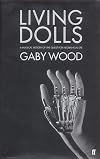
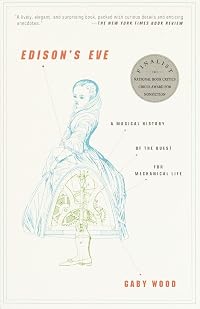
It is an awesome book simply because of how it connects all these various things. Also the book's cover with the mechanical hand all opened-up is very apt.
This is a necessary book if you want to understand the connections between cyberpunk, gothic fiction, and the production of modern automata. This is where I first learned of the concept of 'the uncanny.'
It is an awesome book simply because of how it connects all these various things. Also the book's cover with the mechanical hand all opened-up is very apt.
Beautifully descriptive and extensively researched. But, I was hoping more of the content would be about actual robots or androids or at least mechanical devices taking on human qualities, not mechanizing humans through early cinema technology or phonographs, or midgets that seemed like dolls.
This book was a delight to read, a puzzle just like some of the automatons it discusses.
Members
- Recently Added By
Lists

In Our Time books
4,934 works; 2 members
Author Information

3+ Works 356 Members
Gaby Wood attended Cambridge University and has been a regular contributor to The Guardian and the London Review of Books and is now living in London, where she is a staff writer for The Observer
Some Editions
Awards and Honors
Awards
Common Knowledge
- Original title
- Living Dolls : A magical history of the quest for mechanical life
- Alternate titles
- Edison's Eve : a magical history of the quest for mechanical life
- Disambiguation notice
- UK title: Living Dolls : a magical history of the quest for mechanical life.
US title: Edison's Eve : a magical history of the quest for mechanical life.
Classifications
- Genres
- Nonfiction, History, Technology, General Nonfiction, Science & Nature
- DDC/MDS
- 629.8 — Applied science & technology Engineering Transportation Vehicles Automata
- LCC
- TJ211 .W65 — Technology Mechanical engineering and machinery Mechanical engineering and machinery Mechanical devices and figures. Automata.
- BISAC
Statistics
- Members
- 311
- Popularity
- 102,663
- Reviews
- 7
- Rating
- (3.46)
- Languages
- English, French
- Media
- Paper
- ISBNs
- 5