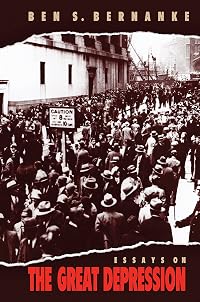
Essays on the Great Depression
by Ben S. Bernanke
On This Page
Description
Few periods in history compare to the Great Depression. Stock market crashes, bread lines, bank runs, and wild currency speculation were worldwide phenomena--all occurring with war looming in the background. This period has provided economists with a marvelous laboratory for studying the links between economic policies and institutions and economic performance. Here, Ben Bernanke has gathered together his essays on why the Great Depression was so devastating. This broad view shows us that show more while the Great Depression was an unparalleled disaster, some economies pulled up faster than others, and some made an opportunity out of it. By comparing and contrasting the economic strategies and statistics of the world's nations as they struggled to survive economically, the fundamental lessons of macroeconomics stand out in bold relief against a background of immense human suffering. The essays in this volume present a uniquely coherent view of the economic causes and worldwide propagation of the depression. show lessTags
Recommendations

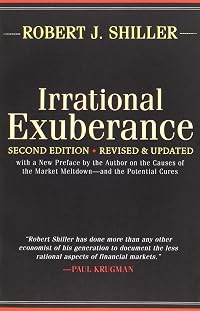

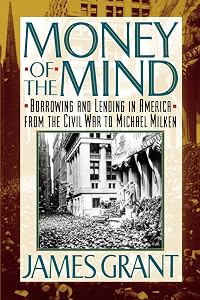
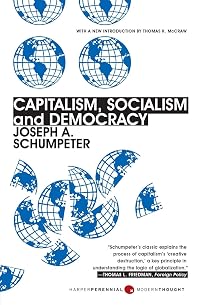
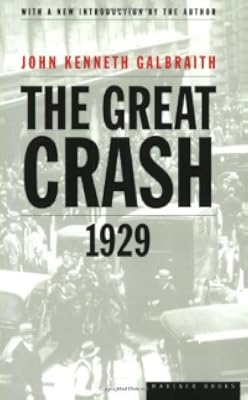

















Member Recommendations


Member Reviews
Ben Bernanke is, of course, the current chairman of the Federal Reserve Board and a key architect of the government response to the 2008-2009 financial crisis. Before that, however, he was a Princeton University economist and one of the foremost researchers into the causes of the Great Depression of the 1930s. His reputation as an expert on the Great Depression is based largely on these essays, which originally appeared in scholarly journals between 1983 and 1996. Not only do they sum up much of the consensus view on the causes of the Depression, they also help to put into perspective the Fed response to the recent crisis.
This is not a book for the average reader; these essays were written for other scholars, and a good working show more knowledge of macroeconomics is necessary to follow Bernanke's analysis and arguments. Its message, however, is very important. Serious mistakes in monetary policy, especially by the Federal Reserve, combined with the rigidities of the interwar exchange rate system based on gold, caused a cyclical downturn in 1929 to metastasize into the most serious and prolonged worldwide economic depression in modern history.
Here's how Bernanke himself summarizes the story in his final essay: "For a variety of reasons, including among others [the] desire of the Federal Reserve to curb the U.S. stock market boom, monetary policy in several major countries turned contractionary in the late 1920s – a contraction that was transmitted worldwide by the gold standard.... What was initially a mild deflationary process began to snowball when the banking and currency crises of 1931 instigated an international 'scramble for gold.' Sterilization of gold inflows by surplus countries, substitution of gold for foreign exchange reserves, and runs on commercial banks all led to increases in the gold backing of money and, consequently, to sharp, unintended declines in national money supplies.... Monetary contractions in turn were strongly associated with falling prices, output, and employment. Effective international cooperation could in principle have permitted a simultaneous monetary expansion despite gold-standard constraints, but disputes over reparations and war debts and the insularity and inexperience of the Federal Reserve, among other factors, prevented this outcome. As a result, individual countries were able to escape the deflationary vortex only by unilaterally abandoning the gold standard and reestablishing domestic monetary stability, a process that dragged on in a halting and uncoordinated manner until France and the other Gold Bloc countries finally left gold in 1936...." (pp. 276-277)
In other words, the Fed, fearing that the stock market boom of the late 1920s was turning into a dangerous bubble (like the housing market bubble in 2007-2008) took steps to deflate it by shrinking the US money supply. It worked, and the stock market crashed, casting the United States into recession. But because of the rigid rules of the gold standard (and the Fed's misunderstanding of the situation), this monetary contraction spread from the United States to other countries, which also fell into recession. Deflation set in: industrial production, employment, and prices began to spiral down. Gold flowed to the United States, which should have caused the money supply to expand and counter deflation, but the Fed mistakenly prevented that from happening (sterilization).
In fact, the Fed's policies shrunk the money supply even further, worsening the deflation problem at home and abroad. By 1931, banks in Europe and the United States began to fail at an alarming rate, but poor policy decisions and rigid adherence to the gold standard only continued the downward spiral. By early 1933, thousands of banks had failed, millions of people were unemployed (the US unemployment rate hit 25% that year), and billions in wealth had been destroyed. The United States' economic collapse was halted only when the new Roosevelt administration abandoned the gold standard in 1933 and began stabilizing the financial system, but recovery took years and the process wasn't completed until 1941.
There are elements of this story that are still unclear - why, for example, did production and employment remain so deeply depressed for years after the financial system had been stablized? But the lessons of the Great Contraction (as Milton Friedman and Anna Schwartz called it in 1963) are reasonably clear. When faced with a severe economic shock, the Fed's responsibility is to use monetary policy to prevent a bad situation from getting worse. That means, among other things, using open market operations to expand the money supply, to offset the contractionary effects of recession and prevent the collapse of the financial system. That is precisely what the Fed failed to do in 1929-1933, but what it did quite successfully in 2008-2011. And it's one of the principal reasons that we didn't plunge into a Second Great Depression. show less
This is not a book for the average reader; these essays were written for other scholars, and a good working show more knowledge of macroeconomics is necessary to follow Bernanke's analysis and arguments. Its message, however, is very important. Serious mistakes in monetary policy, especially by the Federal Reserve, combined with the rigidities of the interwar exchange rate system based on gold, caused a cyclical downturn in 1929 to metastasize into the most serious and prolonged worldwide economic depression in modern history.
Here's how Bernanke himself summarizes the story in his final essay: "For a variety of reasons, including among others [the] desire of the Federal Reserve to curb the U.S. stock market boom, monetary policy in several major countries turned contractionary in the late 1920s – a contraction that was transmitted worldwide by the gold standard.... What was initially a mild deflationary process began to snowball when the banking and currency crises of 1931 instigated an international 'scramble for gold.' Sterilization of gold inflows by surplus countries, substitution of gold for foreign exchange reserves, and runs on commercial banks all led to increases in the gold backing of money and, consequently, to sharp, unintended declines in national money supplies.... Monetary contractions in turn were strongly associated with falling prices, output, and employment. Effective international cooperation could in principle have permitted a simultaneous monetary expansion despite gold-standard constraints, but disputes over reparations and war debts and the insularity and inexperience of the Federal Reserve, among other factors, prevented this outcome. As a result, individual countries were able to escape the deflationary vortex only by unilaterally abandoning the gold standard and reestablishing domestic monetary stability, a process that dragged on in a halting and uncoordinated manner until France and the other Gold Bloc countries finally left gold in 1936...." (pp. 276-277)
In other words, the Fed, fearing that the stock market boom of the late 1920s was turning into a dangerous bubble (like the housing market bubble in 2007-2008) took steps to deflate it by shrinking the US money supply. It worked, and the stock market crashed, casting the United States into recession. But because of the rigid rules of the gold standard (and the Fed's misunderstanding of the situation), this monetary contraction spread from the United States to other countries, which also fell into recession. Deflation set in: industrial production, employment, and prices began to spiral down. Gold flowed to the United States, which should have caused the money supply to expand and counter deflation, but the Fed mistakenly prevented that from happening (sterilization).
In fact, the Fed's policies shrunk the money supply even further, worsening the deflation problem at home and abroad. By 1931, banks in Europe and the United States began to fail at an alarming rate, but poor policy decisions and rigid adherence to the gold standard only continued the downward spiral. By early 1933, thousands of banks had failed, millions of people were unemployed (the US unemployment rate hit 25% that year), and billions in wealth had been destroyed. The United States' economic collapse was halted only when the new Roosevelt administration abandoned the gold standard in 1933 and began stabilizing the financial system, but recovery took years and the process wasn't completed until 1941.
There are elements of this story that are still unclear - why, for example, did production and employment remain so deeply depressed for years after the financial system had been stablized? But the lessons of the Great Contraction (as Milton Friedman and Anna Schwartz called it in 1963) are reasonably clear. When faced with a severe economic shock, the Fed's responsibility is to use monetary policy to prevent a bad situation from getting worse. That means, among other things, using open market operations to expand the money supply, to offset the contractionary effects of recession and prevent the collapse of the financial system. That is precisely what the Fed failed to do in 1929-1933, but what it did quite successfully in 2008-2011. And it's one of the principal reasons that we didn't plunge into a Second Great Depression. show less
I’ve been slowly working my way through this book, but with the new year fast approaching I think it’s time I gave up. This one not so much because the material isn’t interesting, but because I am not up to the material.
(Full review at my blog)
(Full review at my blog)
경제,대공황
Ratings
Members
- Recently Added By
Author Information

27 Works 1,136 Members
Ben Shalom. Bernanke was born on December 13, 1953 in Augusta, Georgia and was raised in Dillon, South Carolina. He has a Bachelor of Arts degree and a Masters in Economics from Harvard University and a Ph.d in in Economics from Massachusetts Institute of Technology. Bernanke taught at Stanford Graduate School of Business and New York University. show more He was a professor of economics at Princeton University. He served as chairman of the Federal Reserve from 2006 to 2014. Time magazine named him "Person of the Year" in 2009. Since leaving public servce he has changed his political affiliation from Republican to a moderate Independent. He and his wife Anna have two children.In 2015, his larest book, "The Courage to Act: A Memoir of a Crisis and its Aftermath," became a New York Times bestseller. show less
Common Knowledge
- Canonical title
- Essays on the Great Depression
- Important events
- Great Depression
Classifications
Statistics
- Members
- 117
- Popularity
- 277,688
- Reviews
- 3
- Rating
- (3.42)
- Languages
- English
- Media
- Paper, Ebook
- ISBNs
- 7
- ASINs
- 1