On This Page
Description
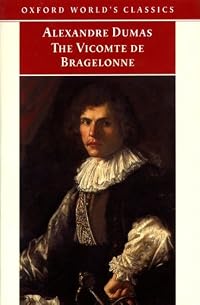
The Vicomte of Bragelonne: Ten Years Later is the final book in Dumas' d'Artagnon Romances trilogy. The book is in four parts, of which this is the fourth. According to French academic Jean-Yves Tadie, the real subject of the book is the beginning of King Louis XIV's rule..
Tags
Recommendations
























Member Recommendations

Member Reviews
Now that’s a saga. Not this book specifically, but the whole of the d’Artagnan novels (or romances as they are often styled). I can hardly organize my thoughts because the end affected me so much. I cried. Seriously. This is only the third book to ever make me cry (counting Of Mice and Men which really shouldn't...it makes everyone cry, doesn’t it?)
Spoilers.
I came to this section of the story with preconceived notions of what the story would be. Not from any one source, but from this novel’s reputation in general. I thought there would be a lot more about the twins, the switch and the repercussions of that switch. Strangely, it is all over and done with very quickly. Fouquet spoils everything by being an idiot and Aramis and show more Porthos have to literally run for their lives. Phillippe is put into yet another prison and is never heard of again. It was so strange. I kept expecting d’Artagnan to spring the guy or something, but no, he deposits him on the island, mask in place and that’s it. The rest of the story is about Fouquet’s downfall, Louis’s perfection of his power and what happens to the four as a result.
Their friendship is one to end all friendships. Porthos forgives Aramis for his duplicity. Athos wastes away with Raoul gone. Aramis schemes mightily to get them out of their predicament. d’Artagnan’s attempts to save them are thwarted by Louis’s counter-orders and secret spies. It’s painful to watch. Especially since I really wanted (and expected) them to retire into old age in one of Porthos’s estates, sipping Alsace wine and talking about the glory days. OMG I was not prepared for what an absolute downer the whole ending was. I had tears streaming down my face for all of the deaths. Especially Porthos’s since his was one of such sacrifice and his character was so much larger than life. At the very end I had the urge to go right back to The Three Musketeers and start all over again. show less
Spoilers.
I came to this section of the story with preconceived notions of what the story would be. Not from any one source, but from this novel’s reputation in general. I thought there would be a lot more about the twins, the switch and the repercussions of that switch. Strangely, it is all over and done with very quickly. Fouquet spoils everything by being an idiot and Aramis and show more Porthos have to literally run for their lives. Phillippe is put into yet another prison and is never heard of again. It was so strange. I kept expecting d’Artagnan to spring the guy or something, but no, he deposits him on the island, mask in place and that’s it. The rest of the story is about Fouquet’s downfall, Louis’s perfection of his power and what happens to the four as a result.
Their friendship is one to end all friendships. Porthos forgives Aramis for his duplicity. Athos wastes away with Raoul gone. Aramis schemes mightily to get them out of their predicament. d’Artagnan’s attempts to save them are thwarted by Louis’s counter-orders and secret spies. It’s painful to watch. Especially since I really wanted (and expected) them to retire into old age in one of Porthos’s estates, sipping Alsace wine and talking about the glory days. OMG I was not prepared for what an absolute downer the whole ending was. I had tears streaming down my face for all of the deaths. Especially Porthos’s since his was one of such sacrifice and his character was so much larger than life. At the very end I had the urge to go right back to The Three Musketeers and start all over again. show less
This is probably one of my favorite books. I’m writing this review to encompass the entire “Vicomte de Bragelonne” story which is three books and 260 some chapters. First I want to say if you are looking at reading this book because you like the movie or are reading it as a sequel to The Three Musketeers, do not read this book. The Man in the Iron mask is the last volume in a 3 volume story and if you read it I imagine you will be incredibly lost and will not enjoy it.
This book is an epic. It tells the final stories of the Musketeers, the new adventures of Athos’ son, and the beginnings of Louis XIV reign. All of these stories intertwine and all come together to form one complete narrative. This final volume brings the show more culmination of all that has come before. After about 1300 pages of building copious plot threads, this book concludes them all marvelously. It is so rich in emotion; there were times I was holding back tears, wanted to throw the book across the room because characters had made me so angry, and times when the heroes triumphs made me grin ear to ear. Dumas is the master. This book has suspense, romance, tragedy, betrayal, political intrigue, etc. Essentially everything that you want in a story.
If you’ve read Twenty Years After and are wondering whether you should continue, you must. You’ll be so glad you did. This is a true classic. Even though there is kind of some weird stuff in The Three Musketeers, reading the entirety of the D’artagnan series was probably the most memorable reading experience I’ve ever had. show less
This book is an epic. It tells the final stories of the Musketeers, the new adventures of Athos’ son, and the beginnings of Louis XIV reign. All of these stories intertwine and all come together to form one complete narrative. This final volume brings the show more culmination of all that has come before. After about 1300 pages of building copious plot threads, this book concludes them all marvelously. It is so rich in emotion; there were times I was holding back tears, wanted to throw the book across the room because characters had made me so angry, and times when the heroes triumphs made me grin ear to ear. Dumas is the master. This book has suspense, romance, tragedy, betrayal, political intrigue, etc. Essentially everything that you want in a story.
If you’ve read Twenty Years After and are wondering whether you should continue, you must. You’ll be so glad you did. This is a true classic. Even though there is kind of some weird stuff in The Three Musketeers, reading the entirety of the D’artagnan series was probably the most memorable reading experience I’ve ever had. show less
And with that I have turned the last page and yes, it ends on 5 stars. It was such a wonderful adventure. 2700 pages of wonderful characters, stories, plot developments, schemes, adventure, love, witty dialogues and just pure revel-in-the-moment page-turning imaginings. It was everything I wanted to read and more and it's sad to think this is the last book. It'll be hard I think to go back to the book 2 that I had skipped to read this.
Going back to what the editor wrote:
""Bragelonne", too long, too mixed, too ambiguous -- and with too much melancholy -- will never have, despite our intentions, the notoriety of the other two. Consequentially though, it prolongs them and completes them. "
I disagree with the beginning of this thought. The show more book was instead just right, perfectly adjusted and well plotted. And yes, it completes the series marvelously. What a wonderful feeling.
-----
SPOILERS BELOW
-----
If I were to have one complaint it would be about the final two chapters and for those who do not know how the story ends, feel free to stop reading here now.
The book was originally going to end when d'Artagnan is in the cemetery, however, the director of the magazine in which this book was published insisted that d'Artagnan be given a death "as much for us as for you". I disagree with that statement. The book had already ended beautifully with d'Artagnan contemplating death and ultimately saying that God would tell him when his time would be as he declared for the others. And that's what it should have been for d'Artagnan was always master of his fate. Instead the end was cheapened because Maquet (Dumas' writing partner) did what the director said. Our hearts had just experienced an ending and then we were brought right back into a story unwillingly just to be spit back out again a chapter later. It was bewildering and made his death comic. Not the end d'Artagnan deserved, despite what the director thought.
However, that is my only scrutiny. Otherwise, the book is a triumph for me. show less
Going back to what the editor wrote:
""Bragelonne", too long, too mixed, too ambiguous -- and with too much melancholy -- will never have, despite our intentions, the notoriety of the other two. Consequentially though, it prolongs them and completes them. "
I disagree with the beginning of this thought. The show more book was instead just right, perfectly adjusted and well plotted. And yes, it completes the series marvelously. What a wonderful feeling.
-----
SPOILERS BELOW
-----
If I were to have one complaint it would be about the final two chapters and for those who do not know how the story ends, feel free to stop reading here now.
The book was originally going to end when d'Artagnan is in the cemetery, however, the director of the magazine in which this book was published insisted that d'Artagnan be given a death "as much for us as for you". I disagree with that statement. The book had already ended beautifully with d'Artagnan contemplating death and ultimately saying that God would tell him when his time would be as he declared for the others. And that's what it should have been for d'Artagnan was always master of his fate. Instead the end was cheapened because Maquet (Dumas' writing partner) did what the director said. Our hearts had just experienced an ending and then we were brought right back into a story unwillingly just to be spit back out again a chapter later. It was bewildering and made his death comic. Not the end d'Artagnan deserved, despite what the director thought.
However, that is my only scrutiny. Otherwise, the book is a triumph for me. show less
I was reluctant to read this due to the ubiquity of the Musketeers and because for whatever reason i had assumed Dumas to be a high-brow difficult author. Boy was i wrong, this had such an easy almost pulpy tone to it, perhaps a tad hard to parse during some dialogue but overall very smooth and a nice style.
I was in, the first 20% was 5-stars even with some interruptions to worldbuild, but then after a climax it suddenly switches characters. Which it will continue to do throughout the novel as there isn't actually any main character. Its a terrible structure where the momentum drops at each switch and has to start to build up again. Still Dumas manages to make it work, and the awful structure does at least mean you never know what might show more happen next.
Dumas even gets some use out of Raoul, the most worthless of side characters, in his first major section at least.
So not 5-stars but still a solid 4... until we reach the conclusion, if i can use that term since its about 10 chapters long. One major characterthe King! goes through a complete personality switch for no reason and the rest is just turgid wrapping up and politic history lessons and absolutely none of it has anything to do with the actual title of the book.
An 80% of good to great with a soft squidgy mess at the end. Like driving a sports car into a swamp. show less
I was in, the first 20% was 5-stars even with some interruptions to worldbuild, but then after a climax it suddenly switches characters. Which it will continue to do throughout the novel as there isn't actually any main character. Its a terrible structure where the momentum drops at each switch and has to start to build up again. Still Dumas manages to make it work, and the awful structure does at least mean you never know what might show more happen next.
Dumas even gets some use out of Raoul, the most worthless of side characters, in his first major section at least.
So not 5-stars but still a solid 4... until we reach the conclusion, if i can use that term since its about 10 chapters long. One major character
An 80% of good to great with a soft squidgy mess at the end. Like driving a sports car into a swamp. show less
I enjoyed this book. There is a lot of laughable melodrama but also genuinely tender moments between the Musketeers, who present a refreshing view of masculinity where men show their emotions (I found little misogyny here). The pacing is a bit odd: the story rolls along steadily until the final quarter, where all of a sudden almost everyone--heroes, villains, horses, dogs--start dying. Recommended for all libraries.
A classic, with reason. Dumas's characterizations are excellent, his plots packed with political intrigue and daring-do, but this book more than others made it apparent that he was paid by the word. The first 14% could only be described as a fashion emergency! Even so, I pushed on. This book is interesting since two of the old musketeers error in such an incredible way, and then truly pay for their mistake--as do their friends. The end is a tragic one, for sure.
This is the third and final episode of the Musketeers story. At the start of the book the musketeers are still in their glory. D’Artagnan is the captain of the Musketeers and has the confidence of the king, Louis XIV. Aramis is a high-ranking churchman (and in fact is the head of a secret society within the church). Porthos is wealthy and still a strongman. Athos is a Count and has the only child, Raoul, whom he adores. Raoul is also beloved by the three other musketeers. Unfortunately, Raoul has had his heart broken and is desperately unhappy. His fiancé fell in love with the King and became his mistress.
The title character really plays a minor role in the story. He is the twin brother of Louis XIV but he has been hidden away by his show more parents so that the succession will not be in doubt. Aramis has learned of his existence as a prisoner in the Bastille and conceives a scheme to free him and substitute him for his brother. This would give Aramis control over the King of France and allow him to achieve his ultimate aim, the papacy. Aramis involves Porthos in the scheme but not the other two since he knows they would not go along with it.
The scheme fails and Aramis and Porthos must flee. They take refuge at Belle-Isle, an island off France near Nantes. The King orders D’Artagnan to capture them which puts D’Artagnan in quite a quandary. The King has foreseen that D’Artagnan will try to help his friends and prevents him being able to. D’Artagnan returns to the King to tender his resignation and while he is away from Belle-Isle the troops capture it. Aramis and Porthos try to get away in a small boat but in the ensuing fight Porthos is killed. Aramis does manage to escape to Spain.
Meanwhile, Athos and Raoul have parted because Raoul has joined the army to fight in Algeria. Athos knows Raoul intends to seek death and he declines physically and mentally waiting for word. When it comes and Raoul is confirmed dead Athos dies as well.
Four years later D’Artagnan (who did not end up resigning) goes to war for France against the Dutch. He is promised to be made a Marshal if his troops do well. At the moment he receives word that he has been made Marshal he is killed.
Thus of the four, only Aramis is left at the end of the book. According to the afterword to the book Dumas intended this to show the death of chivalry and honour. It makes for a very sad ending and I wonder how this was received by the public at the time it was published.
I had not read the middle book, Twenty Years After, and my recollection of the original Three Musketeers is quite dim so I’m not sure how this book compares to the others. My feeling though is that there was much more action and not so much politics and court intrigue. Maybe some day I’ll reread the first book and read the second to see how they compare. show less
The title character really plays a minor role in the story. He is the twin brother of Louis XIV but he has been hidden away by his show more parents so that the succession will not be in doubt. Aramis has learned of his existence as a prisoner in the Bastille and conceives a scheme to free him and substitute him for his brother. This would give Aramis control over the King of France and allow him to achieve his ultimate aim, the papacy. Aramis involves Porthos in the scheme but not the other two since he knows they would not go along with it.
The scheme fails and Aramis and Porthos must flee. They take refuge at Belle-Isle, an island off France near Nantes. The King orders D’Artagnan to capture them which puts D’Artagnan in quite a quandary. The King has foreseen that D’Artagnan will try to help his friends and prevents him being able to. D’Artagnan returns to the King to tender his resignation and while he is away from Belle-Isle the troops capture it. Aramis and Porthos try to get away in a small boat but in the ensuing fight Porthos is killed. Aramis does manage to escape to Spain.
Meanwhile, Athos and Raoul have parted because Raoul has joined the army to fight in Algeria. Athos knows Raoul intends to seek death and he declines physically and mentally waiting for word. When it comes and Raoul is confirmed dead Athos dies as well.
Four years later D’Artagnan (who did not end up resigning) goes to war for France against the Dutch. He is promised to be made a Marshal if his troops do well. At the moment he receives word that he has been made Marshal he is killed.
Thus of the four, only Aramis is left at the end of the book. According to the afterword to the book Dumas intended this to show the death of chivalry and honour. It makes for a very sad ending and I wonder how this was received by the public at the time it was published.
I had not read the middle book, Twenty Years After, and my recollection of the original Three Musketeers is quite dim so I’m not sure how this book compares to the others. My feeling though is that there was much more action and not so much politics and court intrigue. Maybe some day I’ll reread the first book and read the second to see how they compare. show less
Members
- Recently Added By
Lists

Unread books
1,063 works; 87 members

Read the book and saw the movie
1,170 works; 192 members

Historical Fiction
889 works; 91 members

Books That Made Me Cry
199 works; 104 members
Folio Society
831 works; 48 members

19th Century
190 works; 16 members

Books with Twins
175 works; 12 members

Books Read in 2017
4,249 works; 130 members

Revolutions
72 works; 5 members

Carole's List
445 works; 13 members

r/History Recommended Reading List
603 works; 12 members

Physical TBR List
68 works; 1 member
Author Information

1,609+ Works 98,567 Members
Some Editions
Series

Belongs to Publisher Series
Work Relationships
Is contained in
Is retold in
Has the adaptation
Is abridged in
Has as a student's study guide
Common Knowledge
- Canonical title
- The Man in the Iron Mask
- Original title
- Le Vicomte de Bragelonne
- Original publication date
- 1847-1850: "The Vicomte of Bragelonne: Ten Years Later" (serialised) of which Chapters 181–269 constitute "The Man in the Iron Mask" (serialised) (serialised | serialised)
- People/Characters
- D'Artagnan; Athos; Porthos; Aramis; Louis XIV, 1638-1715; Anne of Austria (show all 10); Philippe d'Orléans; Henriette of England; Nicolas Fouquet; Jean-Baptiste Colbert
- Related movies
- The Man in the Iron Mask (1998 | IMDb); The Man in the Iron Mask (1939 | IMDb); The Man in the Iron Mask (1977 | IMDb); The Fifth Musketeer (1979 | IMDb)
- First words
- Whilst every one at court was busily engaged upon his own affairs, a man mysteriously entered a house situated behind the Place de Grève.
- Last words
- (Click to show. Warning: May contain spoilers.)Of the four valiant men whose history we have related, there now no longer remained but one single body; God had resumed the souls.
- Original language
- French
Classifications
- Genres
- Fiction and Literature, General Fiction, Historical Fiction
- DDC/MDS
- 843.7 — Literature & rhetoric French Literature French fiction Constitutional monarchy 1815–48
- LCC
- PQ2227 .H6813 — Language and Literature French, Italian, Spanish and Portuguese literatures French literature Modern literature 19th century
- BISAC
Statistics
- Members
- 6,556
- Popularity
- 1,842
- Reviews
- 39
- Rating
- (3.80)
- Languages
- 11 — Chinese, Czech, Dutch, English, French, German, Greek, Italian, Portuguese, Spanish, Swedish
- Media
- Paper, Audiobook, Ebook
- ISBNs
- 274
- UPCs
- 1
- ASINs
- 128