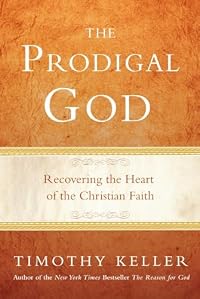
The Prodigal God: Recovering the Heart of the Christian Faith
by Timothy Keller
The Life Building Series
On This Page
Description
In this six-session audio Bible study, pastor and bestselling author Timothy Keller uses one of Jesus' best-loved parables - the Prodigal Son - to illustrate the depth of God's love and how his grace extends into some very unexpected places. Taking you beyond the traditional focus on the wayward younger son, Keller helps you glean insights from each of the characters in Jesus' parable: the irreligious younger son, the moralistic elder son, and the Father who lavishes his love on both. Inside show more this guide, you'll explore questions for group discussion and personal reflection, and exercises that will help you experience the truths of Jesus' parable in your own life. The gospel is neither religion nor irreligion, but something else entirely. Whether you're a devout believer or a skeptic, The Prodigal God will challenge you to see Christianity in a whole new way. This study will help you uncover, personalize, and apply life-changing insights from The Prodigal God Study Guide and book. In six captivating sessions, pastor and New York Times bestselling author Timothy Keller opens your eyes to the powerful message of Jesus' best-known - and least understood - parable. The Prodigal God is a revelation of the very heart of the gospel: God's radical love for sinners of every kind. Session include: 1. The Parable The People Around Jesus 2. The Two Lost Sons 3. The Elder Brother 4. The True Elder Brother 5. The Feast of the Father The Audio Bible Study series provides a unique learning experience. Instead of sitting down to watch a video teaching for Bible study, listen to the same quality Bible study content on the go! Whether you listen on your commute, while walking outside, or over a lunch break, you can access high-quality audio Bible studies wherever you are. show lessTags
Recommendations








Member Reviews
Ably walking the reader through the historical, cultural, and theological contexts of Jesus’ parable of the Lost Sons (or, more commonly, the Prodigal Son), Keller sheds new light of this cherished story and unlocks a depth of meaning that is often overlooked by contemporary teachers and scholars. Unpacking this rich parable, Keller calls his reader to redefine sin, lostness, hope, and salvation. Keller reminds the reader that at the heart of the gospel is a God who is lavish in grace – a must read! A
I understand that I am going completely against the grain in my less than enthusiastic review of The Prodigal God. In actuality, I join with the majority in extolling the book for its trenchant application of the parable of the Prodigal to the lost state of humanity as well as its depiction of the immeasurable grace of God in saving sinners but two dangerous weaknesses hold me back from recommending it with enthusiasm.
I found in The Prodigal God an unfortunate weakness in its presentation of man's sin problem. When comparing the plights of the two brothers Keller contrasts the younger son's prodigious sinful life with the self-righteous Pharisies who were equally lost. So far, this is fine. But when describing the condition of the show more Pharisies, Keller made it seem as if they actually did keep the law of God perfectly. Jesus debunked this faulty approach to the law and salvation through outward piety in his Sermon on the Mount which exposed the wickedness of the heart which causes every man to violate the law of God even in our thoughts. Keller failed to show this and, by implication, failed to show the depths of fallen man's condition before God.
What disturbed me most, however, was Keller's reinforcement of a dangerous false dichotomy that is so prevalent in society and even the evangelical world today. One may have religion or one may have Jesus. The Pharisies were deeply religious but lost in their religiosity; therefore religion is bad. Although in the last chapter Keller urges believers and seekers to belong to a church, he only stresses the need for community. Keller is right about that but he ignores the necessity of partaking in the "religious" activities - the means of grace - that are available only through the Church by Christ's appointment. These are not options but Christ's requirements of all believers. To be Christian requires us to be religious, but with our hearts engaged along with our tongues, hands, and feet. Keller misses this and subsequently encourages an antinomian approach to the Christian life which the Scriptures condemn.
Had it not been for these two detractions, I would have a much easier time in recommending The Prodigal God, for there remains within its 135 pages a very powerful message that is often overlooked in expostions of this great parable. show less
I found in The Prodigal God an unfortunate weakness in its presentation of man's sin problem. When comparing the plights of the two brothers Keller contrasts the younger son's prodigious sinful life with the self-righteous Pharisies who were equally lost. So far, this is fine. But when describing the condition of the show more Pharisies, Keller made it seem as if they actually did keep the law of God perfectly. Jesus debunked this faulty approach to the law and salvation through outward piety in his Sermon on the Mount which exposed the wickedness of the heart which causes every man to violate the law of God even in our thoughts. Keller failed to show this and, by implication, failed to show the depths of fallen man's condition before God.
What disturbed me most, however, was Keller's reinforcement of a dangerous false dichotomy that is so prevalent in society and even the evangelical world today. One may have religion or one may have Jesus. The Pharisies were deeply religious but lost in their religiosity; therefore religion is bad. Although in the last chapter Keller urges believers and seekers to belong to a church, he only stresses the need for community. Keller is right about that but he ignores the necessity of partaking in the "religious" activities - the means of grace - that are available only through the Church by Christ's appointment. These are not options but Christ's requirements of all believers. To be Christian requires us to be religious, but with our hearts engaged along with our tongues, hands, and feet. Keller misses this and subsequently encourages an antinomian approach to the Christian life which the Scriptures condemn.
Had it not been for these two detractions, I would have a much easier time in recommending The Prodigal God, for there remains within its 135 pages a very powerful message that is often overlooked in expostions of this great parable. show less
How is this only my first Tim Keller book? Lol. I feel like I should have read *something* of his before now.
The book early on quotes my favorite book (Lord of the Rings), and near the end includes a favorite quote by a favorite author (C. S. Lewis on friendship). So it was bookended, no pun intended, by my favorite things. Huzzah!
Quick read, one I finished in just two sittings, but SO potent. Man. I see so much of myself in the prodigal son’s older brother, it’s so not even funny. Will be interesting (but altogether good) to see how God works this out in my heart moving forward.
The book early on quotes my favorite book (Lord of the Rings), and near the end includes a favorite quote by a favorite author (C. S. Lewis on friendship). So it was bookended, no pun intended, by my favorite things. Huzzah!
Quick read, one I finished in just two sittings, but SO potent. Man. I see so much of myself in the prodigal son’s older brother, it’s so not even funny. Will be interesting (but altogether good) to see how God works this out in my heart moving forward.
"This short book is meant to lay out the essentials of the Christian message, the gospel." So begins Timothy Keller's new book The Prodigal God: Recovering the Heart of the Christian Faith. Keller targets both seekers who are unfamiliar with the gospel and longtime church members who may not feel the need for a primer on the gospel.
Keller's book, as the provocative title suggests, is built on one of Jesus' most famous stories: the parable of the prodigal son (Luke 15). Keller consents that "on the surface of it, the narrative is not all that gripping." But, he contends that "if the teaching of Jesus is likened to a lake, this famous Parable of the Prodigal Son would be one of the clearest spots where we can see all the way to the show more bottom." Keller has taught from this passage many times over the years, and says, "I have seen more people encouraged, enlightened, and helped by this passage, when I explained the true meaning of it, than by any other text."
The book is laid out in seven brief chapters which aim to uncover the extravagant (prodigal) grace of God, as revealed in this parable. Keller shows how the parable describes two kinds of "lost" people, not just one. Most people can identify the lostness of the "prodigal son," the younger brother in Jesus' story, who takes his inheritance early and squanders it on riotous living. But Keller shows that the "elder brother" in the parable is no less lost. Together, the two brothers are illustrations of two kinds of people in the world. "Jesus uses the younger and elder brothers to portray the two basic ways people try to find happiness and fulfillment: the way of moral conformity and the way of self-discovery." Both brothers are in the wrong, and when we see this, we discover a radical redefinition of what is wrong with us. "Nearly everyone defines sin as breaking a list of rules. Jesus, though, shows us that a man who has violated nothing on the list of moral misbehaviors may be every bit as spiritually lost as the most profligate, immoral person. Why? Because sin is not just breaking the rules, it is putting yourself in the place of God as Savior, Lord and Judge just as each son sought to displace the authority of the father in his own life." As these quotes hint, Keller's exposition of the two sons lays the groundwork for a penetrating analysis and critique of both moral relativists on the liberal left and religious moralists on the conservative right, showing that the latter are just as lost as the former. What both need is Jesus, whom Keller presents as "the true elder brother," the one who comes to our rescue at his own expense. Through his grace, we are given hope and invited to the great feast of the Father.
As with Keller's preaching, this book is intelligent and winsome, combining thoughtful reflection on both text and culture with searching heart application. Keller's book is effectively illustrated with a liberal use of stories and quotations from literature, movies, and the arts. Most imporantly, the book orients the reader's heart to the hope of the gospel of God's grace revealed in Christ.
One more note: for readers who may have felt intimidated by Keller's recent book The Reason for God, don't shrink away from The Prodigal God. It is probably only 1/3 of the length and much easier to read. I highly recommend it to unbelievers, seekers and established Christians. show less
Keller's book, as the provocative title suggests, is built on one of Jesus' most famous stories: the parable of the prodigal son (Luke 15). Keller consents that "on the surface of it, the narrative is not all that gripping." But, he contends that "if the teaching of Jesus is likened to a lake, this famous Parable of the Prodigal Son would be one of the clearest spots where we can see all the way to the show more bottom." Keller has taught from this passage many times over the years, and says, "I have seen more people encouraged, enlightened, and helped by this passage, when I explained the true meaning of it, than by any other text."
The book is laid out in seven brief chapters which aim to uncover the extravagant (prodigal) grace of God, as revealed in this parable. Keller shows how the parable describes two kinds of "lost" people, not just one. Most people can identify the lostness of the "prodigal son," the younger brother in Jesus' story, who takes his inheritance early and squanders it on riotous living. But Keller shows that the "elder brother" in the parable is no less lost. Together, the two brothers are illustrations of two kinds of people in the world. "Jesus uses the younger and elder brothers to portray the two basic ways people try to find happiness and fulfillment: the way of moral conformity and the way of self-discovery." Both brothers are in the wrong, and when we see this, we discover a radical redefinition of what is wrong with us. "Nearly everyone defines sin as breaking a list of rules. Jesus, though, shows us that a man who has violated nothing on the list of moral misbehaviors may be every bit as spiritually lost as the most profligate, immoral person. Why? Because sin is not just breaking the rules, it is putting yourself in the place of God as Savior, Lord and Judge just as each son sought to displace the authority of the father in his own life." As these quotes hint, Keller's exposition of the two sons lays the groundwork for a penetrating analysis and critique of both moral relativists on the liberal left and religious moralists on the conservative right, showing that the latter are just as lost as the former. What both need is Jesus, whom Keller presents as "the true elder brother," the one who comes to our rescue at his own expense. Through his grace, we are given hope and invited to the great feast of the Father.
As with Keller's preaching, this book is intelligent and winsome, combining thoughtful reflection on both text and culture with searching heart application. Keller's book is effectively illustrated with a liberal use of stories and quotations from literature, movies, and the arts. Most imporantly, the book orients the reader's heart to the hope of the gospel of God's grace revealed in Christ.
One more note: for readers who may have felt intimidated by Keller's recent book The Reason for God, don't shrink away from The Prodigal God. It is probably only 1/3 of the length and much easier to read. I highly recommend it to unbelievers, seekers and established Christians. show less
Anyone who equates Jesus and Christianity with intolerant moralist religion should check out this book and to see this powerful message told by Jesus. The church often misses the point of Jesus' parable about the "prodigal son". Just our name indicates we have blown it, because the parable is about two sons, both of whom are distance from their father. At the end of the parable, the prodigal son is reconciled with his father, and the older ("good", rule following, religious) son is not. The parable is aimed at the heart of religious folks. Jesus is neither for an irreligious nor moralistic religious outlook. Keller gets the parable right, and explores how this parable gets to the heart of Jesus' life and message: both sons (people who show more thumb their noses at God, and those who "follow" God for their own self interest) are lost but God pursues both with amazing love. Books by Kenneth Bailey go into more depth regarding the historical / cultural background of this parable (which make the parable's point even stronger), but Keller does a better job bringing the parable into modern times and challenging us to respond to Jesus' message. show less
The parable of the prodigal son is one of the most famous and familiar stories of the Bible - and one, according to Timothy Keller, we have often misunderstood. In his book, The Prodigal God, Keller walks us through the parable step by step, revealing it to be more than a simple lesson on forgiveness - it is nothing less than a representation of the gospel itself. He explains that the story is not just about the wayward son, but about both sons and their desperate need for grace. Neither loved their father for who he was, but for the inheritance he could give them...the inheritance one demanded, and one felt he deserved. The lesson Jesus taught that day was a shattering call to both sinners and the self-righteous to search their hearts show more and discover they are neither too far gone - nor too stubborn and proud - for God to welcome them home with open arms.
There have definitely been times in my life I would have identified with the wayward son....and times, I am sorry to say, that I was the proud son as well. How often I have wanted to live life on my own terms - either by throwing caution to the winds and trying to imitate the world in my quest to find pleasure; or by being the good little Christian girl who would receive good things because of what I had done...not because of what Jesus has done for me. The word "prodigal" is defined as recklessly extravagant - Keller teaches us that it is our heavenly Father, reckless in His love, extravagant with his grace, who is truly the prodigal of the story. How thankful I am for His extravagance! This book was a beautiful reminder of God's love for his broken people, no matter how broken we are. show less
There have definitely been times in my life I would have identified with the wayward son....and times, I am sorry to say, that I was the proud son as well. How often I have wanted to live life on my own terms - either by throwing caution to the winds and trying to imitate the world in my quest to find pleasure; or by being the good little Christian girl who would receive good things because of what I had done...not because of what Jesus has done for me. The word "prodigal" is defined as recklessly extravagant - Keller teaches us that it is our heavenly Father, reckless in His love, extravagant with his grace, who is truly the prodigal of the story. How thankful I am for His extravagance! This book was a beautiful reminder of God's love for his broken people, no matter how broken we are. show less
I guess I never really thought of the definition of the word prodigal before. I always assumed it meant “comes back” (the younger son lives a crazy life and then he comes back; therefore he is “prodigal”). So when I saw the word applied to God, I really was interested in its true definition. In the book, the reader learns that God is recklessly extravagant with us. He’s spent everything on us. He is truly a prodigal God. I found this concept to be achingly beautiful.
The book takes the story of the Prodigal Son (read it here) and flips it on its head. Most times, the focus of the parable is on the younger son who leaves home and lays waste to his life, only to return into the gracious, open arms of his father. This is a great show more and important lesson. But in this book, Keller focuses on the elder brother. The one who stayed, did everything right, but who is just as lost as his younger brother. Keller points out that for all his religiosity, the elder brother is no closer to his father than the younger son. In fact, he might be even more lost.
I know that I lean toward elder-brother tendencies. I’m not one to rebel and go and extravagantly live my life, not caring what God or my family think. I’m more likely to follow the rules and (usually subconsiously) think that I deserve something because I follow the rules. It’s “fair.” It’s the “right thing.” But Keller’s book points out that we need rescuing from both our crazy wrecklessness and our morality. We need to be forgiven for the things we’ve done wrong as well as the things we’ve done right with the wrong intentions. The church is full of elder brothers, which is why so many younger brothers bail on the church.
I encourage you to read this book. It opened my eyes and made me truly think about how I live and why I behave the way I do. I want to “do good things” because God is good and I love him. For no other reason beyond that.
Read my full review here: http://c2rcc.wordpress.com/2010/03/15/24-the-prodigal-god-by-timothy-keller/ show less
The book takes the story of the Prodigal Son (read it here) and flips it on its head. Most times, the focus of the parable is on the younger son who leaves home and lays waste to his life, only to return into the gracious, open arms of his father. This is a great show more and important lesson. But in this book, Keller focuses on the elder brother. The one who stayed, did everything right, but who is just as lost as his younger brother. Keller points out that for all his religiosity, the elder brother is no closer to his father than the younger son. In fact, he might be even more lost.
I know that I lean toward elder-brother tendencies. I’m not one to rebel and go and extravagantly live my life, not caring what God or my family think. I’m more likely to follow the rules and (usually subconsiously) think that I deserve something because I follow the rules. It’s “fair.” It’s the “right thing.” But Keller’s book points out that we need rescuing from both our crazy wrecklessness and our morality. We need to be forgiven for the things we’ve done wrong as well as the things we’ve done right with the wrong intentions. The church is full of elder brothers, which is why so many younger brothers bail on the church.
I encourage you to read this book. It opened my eyes and made me truly think about how I live and why I behave the way I do. I want to “do good things” because God is good and I love him. For no other reason beyond that.
Read my full review here: http://c2rcc.wordpress.com/2010/03/15/24-the-prodigal-god-by-timothy-keller/ show less
Members
- Recently Added By
Lists

Sycamore Baptist Church Book Study Reading List
156 works; 5 members
Author Information

377+ Works 43,495 Members
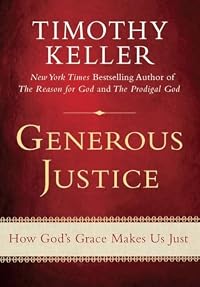
Timothy J. Keller was born in 1950. He received a B.A. from Bucknell University in 1972, a M.Div. from Gordon-Conwell Theological Seminary in 1975, and a D.Min. from Westminster Theological Seminary in 1981. He was ordained by the Presbyterian Church in America and served as a pastor in Virginia for nine years. He is founding pastor of Redeemer show more Presbyterian Church in New York City, New York. He has written several books including Grace Changes Everything, Generous Justice: How God's Grace Makes Us Just, and The Reason for God: Belief in an Age of Skepticism, which won awards from World Magazine and Christianity Today. His title, Preaching: Communicating Faith in a Skeptical Age, made the New York Times Best Seller List in 2015. Hidden Christmas: The Surprising Truth Behind the Birth of Christ was published in October 2016. (Bowker Author Biography) show less
Awards and Honors
Series

Common Knowledge
- Canonical title*
- Der verschwenderische Gott; Bedingungslos geliebt
- Original title
- Counterfeit gods : the empty promises of money, sex, and power, and the only hope that matters; The prodigal God; The prodigal God : recovering the heart of the Christian faith
- Alternate titles
- 山寨版的上帝 : 金錢, 性愛與權力的空洞承諾, 以及唯一至要的盼望; 一擲千金的上帝 : 尋回基督教信仰的核心; 尋回基督教信仰的核心; 揮霍的上帝 : 恢復基督教信仰的核心
- Original publication date
- 2008
- Dedication
- With Gratitude To
Edmund P. Clowney
and my other mentors - First words*
- Dieses Buch soll die wesentlichen Inhalte der christlichen Botschaft, des Evangeliums, darlegen.
Die meisten Auslegungen dieses Gleichnisses haben sich auf die Flucht und die Rückkehr des jüngeren Bruders konzentriert - des "verlorenen Sohnes". - Last words
- (Click to show. Warning: May contain spoilers.)Das alles trifft ein, denn der Herr hat es vorausgesagt (Jesaja 25,6-8).
(Click to show. Warning: May contain spoilers.)[Introduction] God's reckless grace is our greatest hope, a life-changing experience, and the subject of this book.
(Click to show. Warning: May contain spoilers.)The Sovereign LORD will wipe away the tears
from all faces;
he will remove the disgrace of his people
from all the earth.
The LORD has spoken. (Isaiah 25:6-8) - Original language*
- Amerikanisch
*Some information comes from Common Knowledge in other languages. Click "Edit" for more information.
Classifications
Statistics
- Members
- 4,094
- Popularity
- 3,747
- Reviews
- 50
- Rating
- (4.42)
- Languages
- 9 — Chinese, Danish, Dutch, English, French, German, Korean, Spanish, Portuguese (Portugal)
- Media
- Paper, Audiobook, Ebook
- ISBNs
- 34
- UPCs
- 2
- ASINs
- 22