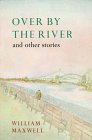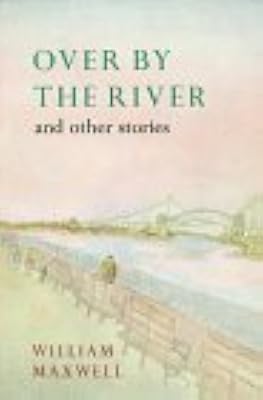
Over by the River and Other Stories (Nonpareil Book)
by William Maxwell
On This Page
Description
Twelve stories, representing thirty years of Maxwell's work, trace the lines of attraction between people and between people and places, in New York, the Midwest, and France, and the weakening of those lines.Tags
Recommendations



















Member Reviews
William Maxwell writes the most marvelous short stories. They are like little novels, everything there, nothing omitted, no feeling of incompleteness or hanging threads. You feel a sweet attachment to his characters and his settings, equally, and you know you are in the presence of a master artist, one who knows every color and how it should be used for maximum effect.
I completely appreciated every one of the stories in this collection, but The Thistles in Sweden, about a couple living in a brownstone in New York City, the neighbors, their lives, their cat, and their desire for a child was so wonderfully satisfying that I could not believe it was only a short story of some 30 pages.
There is also, The Gardens of Mont-Saint-Michel, a show more superb story about memory and change, in which an American family visit France. The father, who is excited to revisit the gardens of Mont-Saint-Michel, a town that he knew after the war and remembers as an ideal, finds time has changed everything and his lovely memory is destroyed. Maxwell is very good with pinpointing the feelings of nostalgia and the plight of the tourist.
I loved this quote about Reynold's eleven year old daughter, to which I suppose I could relate all too well. She closes Dante With a note of sadness in her voice, because no matter how vivid and all-consuming the book was, or how long, sooner or later she finished it, and was stranded once more in ordinaryness until she had started another.
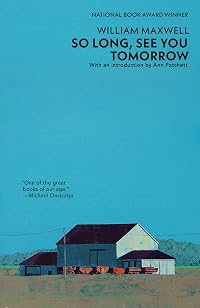
What Every Boy Should Know is a coming-of-age story of a pubescent boy. This is Maxwell’s forte, if he has one, because he knows what a boy is like at puberty better than almost anyone I know. This story made me revisit So Long See You Tomorrow, because it shared that flavor and mystique.
The Known world is not, of course, known. It probably never will be, because of those areas the mapmakers have very sensibly agreed to ignore, where the terrain is different for every traveler who crosses them. Or fails to cross them.
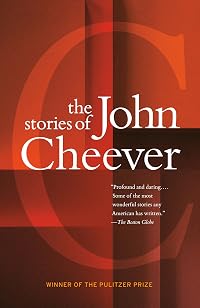
Maxwell was an editor for The New Yorker magazine from 1936 to 1975. He edited the stories of some of the best, including John Cheever, John O'Hara, J. D. Salinger, Shirley Hazzard, Vladimir Nabokov, and Eudora Welty. His own writing belongs in the category with these giants of literature. I'm guessing they all learned from him.
He and Welty were fast friends and there is a book of their letters, [b:What There Is to Say We Have Said: The Correspondence of Eudora Welty and William Maxwell|8698391|What There Is to Say We Have Said The Correspondence of Eudora Welty and William Maxwell|Suzanne Marrs|https://i.gr-assets.com/images/S/compressed.photo.goodreads.com/books/1348542949l/8698391._SY75_.jpg|13571089] that I am now very anxious to read. show less
I completely appreciated every one of the stories in this collection, but The Thistles in Sweden, about a couple living in a brownstone in New York City, the neighbors, their lives, their cat, and their desire for a child was so wonderfully satisfying that I could not believe it was only a short story of some 30 pages.
There is also, The Gardens of Mont-Saint-Michel, a show more superb story about memory and change, in which an American family visit France. The father, who is excited to revisit the gardens of Mont-Saint-Michel, a town that he knew after the war and remembers as an ideal, finds time has changed everything and his lovely memory is destroyed. Maxwell is very good with pinpointing the feelings of nostalgia and the plight of the tourist.
I loved this quote about Reynold's eleven year old daughter, to which I suppose I could relate all too well. She closes Dante With a note of sadness in her voice, because no matter how vivid and all-consuming the book was, or how long, sooner or later she finished it, and was stranded once more in ordinaryness until she had started another.
What Every Boy Should Know is a coming-of-age story of a pubescent boy. This is Maxwell’s forte, if he has one, because he knows what a boy is like at puberty better than almost anyone I know. This story made me revisit So Long See You Tomorrow, because it shared that flavor and mystique.
The Known world is not, of course, known. It probably never will be, because of those areas the mapmakers have very sensibly agreed to ignore, where the terrain is different for every traveler who crosses them. Or fails to cross them.
Maxwell was an editor for The New Yorker magazine from 1936 to 1975. He edited the stories of some of the best, including John Cheever, John O'Hara, J. D. Salinger, Shirley Hazzard, Vladimir Nabokov, and Eudora Welty. His own writing belongs in the category with these giants of literature. I'm guessing they all learned from him.
He and Welty were fast friends and there is a book of their letters, [b:What There Is to Say We Have Said: The Correspondence of Eudora Welty and William Maxwell|8698391|What There Is to Say We Have Said The Correspondence of Eudora Welty and William Maxwell|Suzanne Marrs|https://i.gr-assets.com/images/S/compressed.photo.goodreads.com/books/1348542949l/8698391._SY75_.jpg|13571089] that I am now very anxious to read. show less
46. Over by the River : And Other Stories by William Maxwell
published: 1977 (stories from 1941-1977)
format: 242-page first edition Knoff hardcover
acquired: from my neighbor in 2006
read: Jun 13 – Sep 4
time reading: 7 hr 43 min, 1.9 min/page
rating: 3
locations: New York City and vicinity, Lincoln, IL, France
about the author 1908-2000, born and raised in Illinois, fiction editor of The New Yorker magazine 1936–1975
I read this with a buddy on Litsy at a pace of one story a week. There are twelve. They are overall gentle on the surface, maybe too gentle, but then with layers and layers within. Once we started thinking about them and discussing them we found there was a lot more going on than we originally realized.
Maxwell was a fiction show more editor at The New Yorker from 1936 to 1975. These stories were originally published from 1941 to 1977, quite an interesting expanse of time. There is nothing here on the Civil Right era or the Vietnam War, and he touches on the World War II only obliquely (in a terrific story). They are mostly set in and around NY City, but also include two memorable ones on American tourists in France and several based on his fictionalized version if his birthplace, Lincoln, IL. Maxwell is most known for these stories based on his childhood in Lincoln, IL, and often touching on his life after the death of his own mother to the 1918 flu when he was ten. He left me with the impression of a nice guy looking back.
My tepid recommendation: I didn't love this even as there is nothing particularly bad about it. I've been looking at this book for 14 years, as it was part of a large collection of books my neighbor left me when was downsizing. He was no slouch reader. I liked this book, and his layers and human relationships, and I appreciated how he seemed to get better the closer he approached his real life, and the less dramatic the story lines became. Some of these stories got me excited. (And I really enjoyed the online discussion through Litsy.) It's hard to put my finger on it, but generally the stories somehow just didn't really grab me.
2020
https://www.librarything.com/topic/322920#7257195 show less
published: 1977 (stories from 1941-1977)
format: 242-page first edition Knoff hardcover
acquired: from my neighbor in 2006
read: Jun 13 – Sep 4
time reading: 7 hr 43 min, 1.9 min/page
rating: 3
locations: New York City and vicinity, Lincoln, IL, France
about the author 1908-2000, born and raised in Illinois, fiction editor of The New Yorker magazine 1936–1975
I read this with a buddy on Litsy at a pace of one story a week. There are twelve. They are overall gentle on the surface, maybe too gentle, but then with layers and layers within. Once we started thinking about them and discussing them we found there was a lot more going on than we originally realized.
Maxwell was a fiction show more editor at The New Yorker from 1936 to 1975. These stories were originally published from 1941 to 1977, quite an interesting expanse of time. There is nothing here on the Civil Right era or the Vietnam War, and he touches on the World War II only obliquely (in a terrific story). They are mostly set in and around NY City, but also include two memorable ones on American tourists in France and several based on his fictionalized version if his birthplace, Lincoln, IL. Maxwell is most known for these stories based on his childhood in Lincoln, IL, and often touching on his life after the death of his own mother to the 1918 flu when he was ten. He left me with the impression of a nice guy looking back.
My tepid recommendation: I didn't love this even as there is nothing particularly bad about it. I've been looking at this book for 14 years, as it was part of a large collection of books my neighbor left me when was downsizing. He was no slouch reader. I liked this book, and his layers and human relationships, and I appreciated how he seemed to get better the closer he approached his real life, and the less dramatic the story lines became. Some of these stories got me excited. (And I really enjoyed the online discussion through Litsy.) It's hard to put my finger on it, but generally the stories somehow just didn't really grab me.
2020
https://www.librarything.com/topic/322920#7257195 show less
Ratings
Members
- Recently Added By
Author Information

28+ Works 5,707 Members
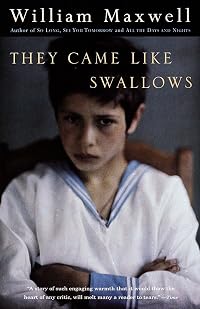
Born in Lincoln, Illinois in 1908, William Maxwell is one of America's more prominent writers. He is the recipient of numerous awards including the National Book Critics Circle Award (1994), and the American Book Award (1982) for his novel "So Long, See You Tomorrow." Maxwell's fiction has been described as nostalgic. Most of his work takes place show more in simpler, gentler times in the small towns of the American Midwest. Two of Maxwell's novels, "They Came Like Swallows" (1937) and "So Long, See You Tomorrow" (1980), deal with characters who lose relatives in the influenza epidemic of 1918. Maxwell's own mother died in the epidemic when he was ten years old. Maxwell published his first novel, "Bright Center of Heaven," in 1934. He moved to New York City in 1936 and was hired by the New Yorker. His years as an editor there, 1936 to 1976, coincided with what many believe are the magazine's finest. This was the era that saw the publication of the works of many accomplished writers, such as J. D. Salinger, Eudora Welty, John Updike, and Mary McCarthy in the New Yorker's pages. Maxwell has published six novels, several collections of short stories, a family history, and numerous book reviews. He served as president of the National Institute of Arts and letters from 1969 to 1972. William Maxwell has been married for over 50 years to the former Emily Noyes. They met at the New Yorker when she applied for a job. The couple has two daughters. (Bowker Author Biography) show less
Common Knowledge
- Original publication date
- 1977
Classifications
Statistics
- Members
- 56
- Popularity
- 546,744
- Reviews
- 2
- Rating
- (3.93)
- Languages
- English
- Media
- Paper
- ISBNs
- 2