
A Gathering of Days: A New England Girl's Journal, 1830-32
by Joan W. Blos
On This Page
Description
The journal of a 14-year-old girl, kept the last year she lived on the family farm, records daily events in her small New Hampshire town, her father's remarriage, and the death of her best friend.Tags
Recommendations












Member Reviews
Catherine’s 14th year, growing up on a New England farm, is certainly an eventful one. There’s the stranger in the woods, her widowed father’s unexpected romance, both comedy and tragedy, and then an unexpected opportunity.
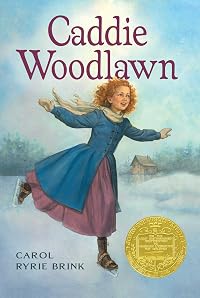
The author makes the unusual decision to spoil all of the events of the book in the preface (a letter to the diarist’s great-granddaughter), but the story retains its pathos for all that. Readers who enjoy historical books like Caddie Woodlawn and Rebecca of Sunny Brook Farm are the ideal audience here.
The author makes the unusual decision to spoil all of the events of the book in the preface (a letter to the diarist’s great-granddaughter), but the story retains its pathos for all that. Readers who enjoy historical books like Caddie Woodlawn and Rebecca of Sunny Brook Farm are the ideal audience here.
A very interesting slice-of-life look at New England in the 1830s. Even though it was written in the 1970s, it is pretty historically accurate (to my untutored mind at least) – dealing with distances, snow, and the isolation of a community in New Hampshire. The characters are believable, and the story is wonderfully understated. While there are major events in this book, they happen in and among normal and small events – just like real life. The book covers somewhat less than two years, and you are left wanting to know more about this girl’s life after the diary ends. (pannarrens)
The story of Catherine Hall, a young New Hampshire girl in the 1830s, is told through her diary entries. Catherine's mother died several years before the diary begins. Catherine and her younger sister, Matty, live with their father on his farm. Their closest neighbors, the Shipmans, are a source of support. Mrs. Shipman advises Catherine about housekeeping matters, and Mr. Shipman and the Shipman boys assist Catherine's father with his farming work after their own is done. Cassie Shipman is Catherine's best friend. They often do their chores together, and they walk to school together when it's in session.
Catherine's diary chronicles many changes in her life over an 18-month period. The school teacher stirs up controversy by reading from show more Boston abolitionist newspapers during class time. For Catherine, the question of slavery isn't abstract when she encounters a mysterious stranger, probably a runaway slave, who asks for her help. After several years as a widower, Catherine's father decides to remarry, and Catherine must adjust to a new stepmother, stepbrother, and a new position within the household. In their early teens, Catherine and her friends are on the brink of womanhood. Catherine faces the loss of two childhood companions, one to death, the other to the mills in Lowell, Massachusetts.
Catherine led a much different life than modern teenagers. Farm families like Catherine's had to work hard year-round to make sure they had adequate clothing, household goods, and food to last through the bitterly cold winters. She writes in her diary of visits from peddlers and weavers, of picking berries, of trips to Boston to sell farm products and to purchase supplies, and of community events like the opening of the roads after the winters snows and of maple sugaring in the spring. While Catherine's daily activities were very different from the modern teenager's, she faced many of the same issues, like adjusting to a blended family and dealing with the loss of friends. I can't think of a more enjoyable way to learn about daily life in a different century. Highly recommended. show less
Catherine's diary chronicles many changes in her life over an 18-month period. The school teacher stirs up controversy by reading from show more Boston abolitionist newspapers during class time. For Catherine, the question of slavery isn't abstract when she encounters a mysterious stranger, probably a runaway slave, who asks for her help. After several years as a widower, Catherine's father decides to remarry, and Catherine must adjust to a new stepmother, stepbrother, and a new position within the household. In their early teens, Catherine and her friends are on the brink of womanhood. Catherine faces the loss of two childhood companions, one to death, the other to the mills in Lowell, Massachusetts.
Catherine led a much different life than modern teenagers. Farm families like Catherine's had to work hard year-round to make sure they had adequate clothing, household goods, and food to last through the bitterly cold winters. She writes in her diary of visits from peddlers and weavers, of picking berries, of trips to Boston to sell farm products and to purchase supplies, and of community events like the opening of the roads after the winters snows and of maple sugaring in the spring. While Catherine's daily activities were very different from the modern teenager's, she faced many of the same issues, like adjusting to a blended family and dealing with the loss of friends. I can't think of a more enjoyable way to learn about daily life in a different century. Highly recommended. show less
One of my favorite books from childhood. I learned so much about this particular place and time, and I really identified with the main character, Catherine--a girl who had lived more than 150 years before me. Also, it's a good book to hand to your kids when they complain because, trust me, these pioneer kids had it harder. -Ms. Jennie
I, Catherine Cabot Hall, aged 13 years, 6 months, 29 days…do begin this book.
So begins the journal of a girl coming of age in nineteenth-century New Hampshire. Catherine records both the hardships of pioneer life and its many triumphs. Even as she struggles with her mother’s death and father’s eventual remarriage, Catherine’s indomitable spirit makes this saga an oftentimes uplifting and joyous one.
Quiet yet powerful, this Newbery Medal–winning book is sure to touch all who read it.
So begins the journal of a girl coming of age in nineteenth-century New Hampshire. Catherine records both the hardships of pioneer life and its many triumphs. Even as she struggles with her mother’s death and father’s eventual remarriage, Catherine’s indomitable spirit makes this saga an oftentimes uplifting and joyous one.
Quiet yet powerful, this Newbery Medal–winning book is sure to touch all who read it.
A short YA book about the life of Catherine Cabot Hall who lives on a New Hampshire farm in 1830. Written as Catherine’s diary over the course of a year, she writes of her daily life and as this is a YA book, the subject matter is fairly light, although she does touch briefly on the subject of slavery. During the year, her life goes through some big changes as her father brings home a second wife and her best friend gets ill and dies.
I am not sure whether this book would speak directly to today’s younger audience, as Catherine’s life is so very different from that of a modern reader, but the author definitely gives us a glimpse of how the social mores of the day, the religious teachings and family rules all played a very important show more role in shaping one’s life in the 1800’s.
For me personally, I found A Gathering of Days a little light and would have liked to delve more into some the issues that were mentioned in passing but, of course, I am not the target audience. Overall, this is an enjoyable sentimental story that comes across in a realistic manner. show less
I am not sure whether this book would speak directly to today’s younger audience, as Catherine’s life is so very different from that of a modern reader, but the author definitely gives us a glimpse of how the social mores of the day, the religious teachings and family rules all played a very important show more role in shaping one’s life in the 1800’s.
For me personally, I found A Gathering of Days a little light and would have liked to delve more into some the issues that were mentioned in passing but, of course, I am not the target audience. Overall, this is an enjoyable sentimental story that comes across in a realistic manner. show less
It is just what my weary spirit needed. This is a simple tale told from the perspective of 13 year old Catherine Hall, set in pioneer days of New Hampshire during the dates of 1830-1832. With a feel similar to the books of Laura Ingalls Wilder, this book has a lyrical rolling quality while depicting the joys and hardships of pioneer days.
It harkens back to a time when children respected teachers and parents, when everyone shared responsibility of maintaining components of survival and when what would now be considered simple pleasures, held so much meaning then.
Here is a snipet:
"Teacher Orpha sometimes permits the conduct of school out of doors. On these days we convene near the tree, the littlest ones gathering close to her, and some show more times, even, one of the babes will lay his head in her lap "Poor little thing," she'll say with a smile. Or maybe, "Pretty dreamer!"
Then does the droning of our voices rival that of the somnolent bees while off to one side, the more wakeful infants intone their little verses, and their abc's."
Recommended for a fall day when the air is crisp and the frost is on the pumpkin. show less
It harkens back to a time when children respected teachers and parents, when everyone shared responsibility of maintaining components of survival and when what would now be considered simple pleasures, held so much meaning then.
Here is a snipet:
"Teacher Orpha sometimes permits the conduct of school out of doors. On these days we convene near the tree, the littlest ones gathering close to her, and some show more times, even, one of the babes will lay his head in her lap "Poor little thing," she'll say with a smile. Or maybe, "Pretty dreamer!"
Then does the droning of our voices rival that of the somnolent bees while off to one side, the more wakeful infants intone their little verses, and their abc's."
Recommended for a fall day when the air is crisp and the frost is on the pumpkin. show less
Members
- Recently Added By
Lists

Best Newbery Medal Winners
94 works; 52 members

Favorite Childhood Books
1,646 works; 514 members

Sonlight Books
1,487 works; 25 members

Books about Frontier Life and Pioneers
55 works; 7 members

Newbery Medal Winners - By Year
105 works; 7 members

One-room schools -- children's/young adult fiction
52 works; 5 members

CCE 1000 Good Books List
1,033 works; 12 members
Classical Conversations Challenge A Exposition
10 works; 1 member

Books Read in 2021
5,361 works; 113 members

Beautiful Feet Books
304 works; 7 members

Books We Loved As Children
603 works; 252 members

Read For Your Life
157 works; 1 member
Author Information

Joan W. Blos was born in New York City on December 9, 1928. She received a bachelor's degree from Vassar College and a master's degree in psychology from the City University of New York. She wrote many children's books including In the City, People Read, Joe Finds a Way, and Just Think written with author Betty Miles. A Gathering of Days received show more the Newbery Medal and the National Book Award. She also taught at the University of Michigan and Bank Street College of Education. She died on October 12, 2017 at the age of 88. (Bowker Author Biography) show less
Some Editions
Awards and Honors
Awards
Work Relationships
Common Knowledge
- Original title
- A Gathering of Days: A New England Girl's Journal, 1830–32
- Alternate titles
- A Gathering of Days: A New England Girl's Journal, 1830–32: A Novel
- Original publication date
- 1979
- People/Characters
- Catherine Hall; Charles Hall; Mary Martha (Matty) Hall (Matty); Uncle Jack; Cassie Shipman; Aunt Lucy (show all 7); Mistress Higham
- Important places
- New Hampshire, USA
- Dedication
- Sarah's book
- First words
- To my namesake, Catherine:
I give you this book on your fourteenth birthday, as I turned fourteen the year of the journal; the year that was also my last on the farm tho' I did not know it then. - Quotations
- It was an apt choice ... for are we not, all of us, wand’rers and strangers; and do we not, all of us, travel in danger or voyage uncharted seas?
...now does the present re-pay the past and flow on towards the future.
This year, more than others, has been a lengthy gathering of days wherein we lived, we loved, were moved; learned how to accept. - Last words
- (Click to show. Warning: May contain spoilers.)You were very clever to have figured that out.
C.H.O. - Original language
- English
Classifications
- Genres
- Children's Books, Kids, Fiction and Literature
- DDC/MDS
- 813.54 — Literature & rhetoric American literature in English American fiction in English 1900-1999 1945-1999
- LCC
- PZ7 .B6237 .G — Language and Literature Fiction and juvenile belles lettres Fiction and juvenile belles lettres Juvenile belles lettres
- BISAC
Statistics
- Members
- 3,628
- Popularity
- 4,473
- Reviews
- 35
- Rating
- (3.52)
- Languages
- Chinese, English
- Media
- Paper, Audiobook, Ebook
- ISBNs
- 37
- ASINs
- 30