The Mortifications: A Novel
by Derek Palacio
On This Page
Description
In 1980, a rural Cuban family is torn apart during the Mariel Boat-lift. Uxbal Encarnación--father, husband, political insurgent--refuses to leave behind the revolutionary ideals and lush tomato farms of his sun-soaked homeland. His wife Soledad takes young Isabel and Ulises hostage and flees with them to America, leaving behind Uxbal for the promise of a better life. But instead of settling with fellow Cuban immigrants in Miami's familiar heat, Soledad pushes further north into the stark, show more wintry landscape of Hartford, Connecticut. There, in the long shadow of their estranged patriarch, now just a distant memory, the exiled mother and her children begin a process of growth and transformation. show lessTags
Recommendations

























Member Recommendations

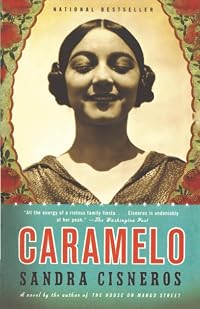
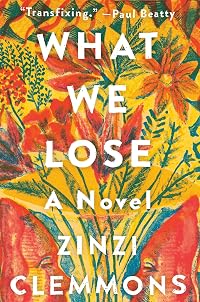
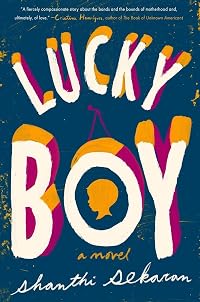
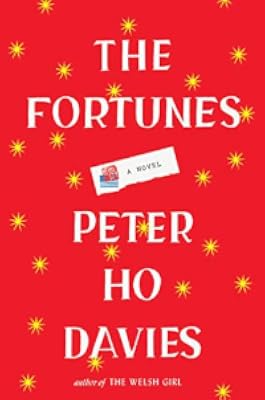
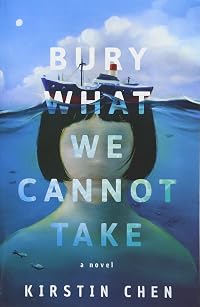
Limelite Families in both novels flee, then return to communist regimes, trying to find their identity and place in life.

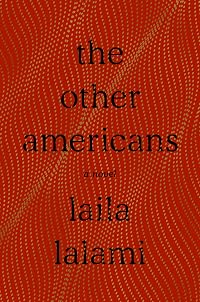
Limelite Exile identity fiction also. Set in Cuba and US rather than China and US. Both at cusp of revolutionary change hinging on communist rule and it's disruption to nuclear families. In both cases, absent fathers loom even though they largely remain off-stage. I consider each a symbolic fable about their respective countries' futures.
Member Reviews
It has been almost a week since I finished reading this book, so my review will not be as fresh as I might have liked. But the highest praise I can say about this book is that (especially for the first half) I was reminded of Marquez's One Hundred Years of Solitude and Allende's House of the Spirits. There are certainly differences between the works, but the tone and setting were very familiar.
Although both classic works heavily feature the patriarch of their family epics, Palacio's novel leaves most of the attention on his patriarch, Uxbal, for the last third of his novel. Palacio weaves most of his narrative around the matriarch, Soledad, and her children, Ulises and Isabel. Isabel shares some of the aloofness of Allende's Clara and show more Ulises shares some of Marquez's Aureliano Buendia's scholarly pursuits. Also, Palacio's novel inhabits its setting (in New England and Cuba) in much the same way that Marquez's and Allende's put Colombia and Chile at the forefront.
While sharing so many of these similarities with classic works of Latin American fiction, The Mortifications is clearly a contemporary and relevant work for multicultural North America. Both Ulises and Isabel exhibit the feeling of displacement common to many immigrants to the United States. However, their return to their native Cuba leaves them with a similar feeling of foreignness. Likewise, Soledad demonstrates the desire that many Latin American parents have to take their children out of difficult or poor situations in their home countries and the subsequent guilt and/or doubt that comes from that decision. Her relationship in Connecticut with a Dutch descendant farmer named Henri further illustrates both her own personal limbo between Cuba and Connecticut and her children's. The novel demonstrates how each character's attachments inadequately address their need for a home(land): academic pursuits, tobacco farming, joining a convent, finding a job,etc.
The language and structure of the novel was fluid and made the reading experience more enjoyable. The novel lacked much of the repetition of Marquez's epic and the explicit miracles of Allende's. The limited magical realism that was present here had more in common with Irving's A Prayer for Owen Meany than the Latin American authors. Palacio also makes connections with Greek literature and the idea of a return voyage (e.g. Ulises as a modern day Odysseus). Overall, I would rate this novel a solid 4 stars.
Thanks to PRH and Librarything for this ARC. show less
Although both classic works heavily feature the patriarch of their family epics, Palacio's novel leaves most of the attention on his patriarch, Uxbal, for the last third of his novel. Palacio weaves most of his narrative around the matriarch, Soledad, and her children, Ulises and Isabel. Isabel shares some of the aloofness of Allende's Clara and show more Ulises shares some of Marquez's Aureliano Buendia's scholarly pursuits. Also, Palacio's novel inhabits its setting (in New England and Cuba) in much the same way that Marquez's and Allende's put Colombia and Chile at the forefront.
While sharing so many of these similarities with classic works of Latin American fiction, The Mortifications is clearly a contemporary and relevant work for multicultural North America. Both Ulises and Isabel exhibit the feeling of displacement common to many immigrants to the United States. However, their return to their native Cuba leaves them with a similar feeling of foreignness. Likewise, Soledad demonstrates the desire that many Latin American parents have to take their children out of difficult or poor situations in their home countries and the subsequent guilt and/or doubt that comes from that decision. Her relationship in Connecticut with a Dutch descendant farmer named Henri further illustrates both her own personal limbo between Cuba and Connecticut and her children's. The novel demonstrates how each character's attachments inadequately address their need for a home(land): academic pursuits, tobacco farming, joining a convent, finding a job,etc.
The language and structure of the novel was fluid and made the reading experience more enjoyable. The novel lacked much of the repetition of Marquez's epic and the explicit miracles of Allende's. The limited magical realism that was present here had more in common with Irving's A Prayer for Owen Meany than the Latin American authors. Palacio also makes connections with Greek literature and the idea of a return voyage (e.g. Ulises as a modern day Odysseus). Overall, I would rate this novel a solid 4 stars.
Thanks to PRH and Librarything for this ARC. show less
 This review was written for LibraryThing Early Reviewers.
Cuba is a mystery to most Americans. But most people sympathize with the desire for a better existence even if it requires leaving half your life behind. In this case, a family is torn apart while everyone does their best to become the best they hope. Can parents even know their children’s’ dreams? While a daughter languishes away to a promise made far away, a son discovers his calling and a new father figure. Spread across the waters, parents can lose their vision and then no one is happy. I loved the ever changing allegiances and mourned the mistakes made trying to bring one family together again before the connections are forever lost. This was both an atlas to the land and mind.
An advanced reader’s copy of this book was show more provided for an honest review. show less
An advanced reader’s copy of this book was show more provided for an honest review. show less
This review was written for LibraryThing Early Reviewers.One of the reviewers mentioned Palacio's "flat writing style, as well as the closeness/distance he chose for his characters, felt so bland and uninteresting." I think one thing happening here is the characters seem to know a lot more about their realities than it would seem possible. They are aware of the exile psychology, the role of their stepfather in their lives, the politics of diaspora, the role of Catholicism in their lives, that seem preternaturally impossible for children but possible for adults. Other reviewers noted the hyperbolic self-awareness of these characters, and I wondered if it would be so problematic if they had been adults, recalling their stories from the future, with the apt amount of self-awareness and wisdom show more earned. One of my friends says that adult-like children are a trend in fiction. That said, when we were finally free of that exposition of childhood that takes up the first half of the book, once we get to Cuba (returning as we must through the epic lens of the main character of Ulises), it turns out that perhaps the son is both Ulysses and Telemachus in this reframing. The Oedipal take on the mother's sexuality is evocatively connected to Catholic guilt and nationalistic loyalty to Cuba--and it's so subtle that it may be missed by some readers. It's a solid novel, making clear the choice that must be made between living by principles and surviving as a matter of pragmatism. I loved the dialogue... I think dialogue is Palacio's strength. It's clipped, relentless, and drives the best writing in the book. show less
This review was written for LibraryThing Early Reviewers.The Mortifications was a captivating read, though not exactly uplifting. It was obvious to me that one of the main characters Isabel, or Izzi, a twin of Ulises Encarnacion, was performing her own mortifications throughout the novel. But what became apparent to me after I had finished reading, was that each of the characters had performed their own mortifications in their own fashion. The mother of Ulises and Izzi took them from Cuba, and their father Uxbal, by boat during the infamous Mariel Boatlift of 1980, to begin a new life in Connecticut. They struggled to survive, but Soledad was convinced that her children would have a better future in the United States than in Cuba.
The sad thing is that none of the characters can shake off show more their deep bond with their homeland or their father and ex-husband. With a number of twists and turns, they all end up back in Cuba. The Mortifications is a novel that touches on many deep topics such as nationality, identity, love, beauty, loyalty, and commitment.
Derek Palacio painted a picture that made me hungry to experience the homeland he writes of. show less
The sad thing is that none of the characters can shake off show more their deep bond with their homeland or their father and ex-husband. With a number of twists and turns, they all end up back in Cuba. The Mortifications is a novel that touches on many deep topics such as nationality, identity, love, beauty, loyalty, and commitment.
Derek Palacio painted a picture that made me hungry to experience the homeland he writes of. show less
This review was written for LibraryThing Early Reviewers."I know now that forgetting is a sin," the adult Ulises tells his twin sister, Isabel, some time after they have independently returned to Cuba where their father, Uxbal, has remained, waiting, since their mother, Soledad, took them as young children and fled to America during the Mariel boatlift.
Mortification has several meanings: profound humiliation; death of cells in tissue; religious penitence through self-inflicted pain. Derek Palacio touches them all in this family saga. In the last 30 years, Cuban Americans have written novels about the Cuban exile experience. While in these novels, a common theme is almost universal -- longing to return to a romanticized Cuba -- this is the first one I've read in which a family sundered by show more emigration, reunites years later in a very un-romantic Cuba, rife with poverty, lack of opportunity, and common comforts of the American lifestyle.
Palacio's novel is poetic, sweeping, devastating, and echoing Junot Diaz. He skillfully incorporates complex symbolism -- twin siblings, one rooted in the flesh and earthly desires, the other seeking spiritual purpose and finding it in caring for the dying. The parents obviously represent the two countries, Cuba and USA. No one, following all the upheaval life and choices bring, is a fully integrated person. They are parts that only become integrated when they reconstruct their family after returning to Buey Arriba, if only fleetingly.
But it is the constant play of forgetfulness, longing, waiting, and desire to create meaning in their lives that make this mystical novel unforgettable.
I won't be surprised if The Mortifications becomes a modern classic, destined to be the defining novel about the Cuban exile experience. It's already an important book that commands deep reading. Look for it to reach literary prize lists -- it should. show less
Mortification has several meanings: profound humiliation; death of cells in tissue; religious penitence through self-inflicted pain. Derek Palacio touches them all in this family saga. In the last 30 years, Cuban Americans have written novels about the Cuban exile experience. While in these novels, a common theme is almost universal -- longing to return to a romanticized Cuba -- this is the first one I've read in which a family sundered by show more emigration, reunites years later in a very un-romantic Cuba, rife with poverty, lack of opportunity, and common comforts of the American lifestyle.
Palacio's novel is poetic, sweeping, devastating, and echoing Junot Diaz. He skillfully incorporates complex symbolism -- twin siblings, one rooted in the flesh and earthly desires, the other seeking spiritual purpose and finding it in caring for the dying. The parents obviously represent the two countries, Cuba and USA. No one, following all the upheaval life and choices bring, is a fully integrated person. They are parts that only become integrated when they reconstruct their family after returning to Buey Arriba, if only fleetingly.
But it is the constant play of forgetfulness, longing, waiting, and desire to create meaning in their lives that make this mystical novel unforgettable.
I won't be surprised if The Mortifications becomes a modern classic, destined to be the defining novel about the Cuban exile experience. It's already an important book that commands deep reading. Look for it to reach literary prize lists -- it should. show less
This review was written for LibraryThing Early Reviewers.The Mortifications asks, answers, and asks again all the important questions about life, love, family, and fate. Why again? Because the answers change which is what you would expect when a story goes from Cuba to Connecticut by way of death threats and hostage-taking in three paragraphs. It begins with the fracturing of the Encarnación family, the father, Uxbal’s political activity inciting Soledad, the mother, to escape in the Maribel boat lift with the twins. There is a frightening scene where she threatens to kill her son Ulises if Uxbal does not let the their daughter Isabel come with her, and their subsequent flight to Connecticut, far away from the Cubans of Miami who might keep memories alive. So much, so fast tells you from show more the beginning that author Derek Palacio is not going to waste your time.
The first part of The Mortifications is called The Land and it tells the story of their immigration success. Soledad finds work, the children go to school and they grow and prosper. Soledad finds new love and Ulises finds Latin and agronomy and Isabel finds religious passion. But all is not right, Isabel’s religious fervor is rooted in a promise made to her father, a promise she cannot fulfill in America so she transfers her vow from her father to the church, taking a vow of silence and entering a novitiate. Ulises, employed by Henri Willems, the tobacco farmer who is his mother’s lover, excels and writes and writes and writes about tobacco, writings that Willems sends off to be published in trade journals and magazines. Even in staid and traditional Connecticut, Palacio weaves the magic of magical realism in Isabel’s mysticism and Ulises’ classicism and extraordinary growth.
All of a sudden, a letter comes from Uxbal, their father, after all these years. He read an article and wrote to Ulises and revived their memories of Cuba and of their father. This is a single chapter section, called The Sound, an interstices that shifts the narrative of their lives.
The usual American migration story focuses on the immigrant struggle to succeed and prosper in their new home. There’s not much about the longings of exile, how their lost home can be like a missing limb, an aching void, an itch that can’t be scratched. Palacio’s The Mortifications not only recognizes that aching emptiness, he sends the exiles home to scratch their itch.
Prompted by the letter, Isabel disappears. It’s obvious to everyone that she went to Cuba and when Soledad gets breast cancer, she sends Ulises to Cuba to look for her. This is the third section, The Sea. When the book begins in The Land, Ulises does not believe in fate. When The Sea begins, Ulises recognizes he was fated to return. Eventually, so are Soledad and Henri, all coming together with Isabel and Uxbal, not so much to answer questions, find resolution or solve anything at all, really, but to pose the eternal, unknowable questions of fate, family, love, knowing and unknowing and what does it really matter. In the end, the twins Ulises and Isabel struggle with the question of what people need to know of their lives, what must be told and what must not be told and find different answers.
The Mortifications is an excellent, engrossing and deeply moving novel. Palacio has an ability to write you deeply into a scene so you feel the wind, the heat, hear the sounds and smell the bouquet or the stench. There is a lot of stench, but you won’t care. You will sink into his book and not come up for air. I don’t recommend trying to read a chapter or two before bed because you will find yourself at 4 a.m. wondering where the night went.
The Mortifications will be released October 4th. I was provided an advance e-galley by the publisher through NetGalley.
http://tonstantweaderreviews.wordpress.com/2016/09/17/the-mortifications-by-dere... show less
The first part of The Mortifications is called The Land and it tells the story of their immigration success. Soledad finds work, the children go to school and they grow and prosper. Soledad finds new love and Ulises finds Latin and agronomy and Isabel finds religious passion. But all is not right, Isabel’s religious fervor is rooted in a promise made to her father, a promise she cannot fulfill in America so she transfers her vow from her father to the church, taking a vow of silence and entering a novitiate. Ulises, employed by Henri Willems, the tobacco farmer who is his mother’s lover, excels and writes and writes and writes about tobacco, writings that Willems sends off to be published in trade journals and magazines. Even in staid and traditional Connecticut, Palacio weaves the magic of magical realism in Isabel’s mysticism and Ulises’ classicism and extraordinary growth.
All of a sudden, a letter comes from Uxbal, their father, after all these years. He read an article and wrote to Ulises and revived their memories of Cuba and of their father. This is a single chapter section, called The Sound, an interstices that shifts the narrative of their lives.
The usual American migration story focuses on the immigrant struggle to succeed and prosper in their new home. There’s not much about the longings of exile, how their lost home can be like a missing limb, an aching void, an itch that can’t be scratched. Palacio’s The Mortifications not only recognizes that aching emptiness, he sends the exiles home to scratch their itch.
Prompted by the letter, Isabel disappears. It’s obvious to everyone that she went to Cuba and when Soledad gets breast cancer, she sends Ulises to Cuba to look for her. This is the third section, The Sea. When the book begins in The Land, Ulises does not believe in fate. When The Sea begins, Ulises recognizes he was fated to return. Eventually, so are Soledad and Henri, all coming together with Isabel and Uxbal, not so much to answer questions, find resolution or solve anything at all, really, but to pose the eternal, unknowable questions of fate, family, love, knowing and unknowing and what does it really matter. In the end, the twins Ulises and Isabel struggle with the question of what people need to know of their lives, what must be told and what must not be told and find different answers.
The Mortifications is an excellent, engrossing and deeply moving novel. Palacio has an ability to write you deeply into a scene so you feel the wind, the heat, hear the sounds and smell the bouquet or the stench. There is a lot of stench, but you won’t care. You will sink into his book and not come up for air. I don’t recommend trying to read a chapter or two before bed because you will find yourself at 4 a.m. wondering where the night went.
The Mortifications will be released October 4th. I was provided an advance e-galley by the publisher through NetGalley.
http://tonstantweaderreviews.wordpress.com/2016/09/17/the-mortifications-by-dere... show less
The Mortifications is the story of a Cuban family, split during the Mariel Boatlift, and reunited many years later back in the same village, same house they left from. The story follows the four members of the family, perhaps focusing more on Ulises, as he is the keeper of all their journeys and his own, as they move through life. Although they each take many decisions, the overall sensation Derek Palacio incites through his matter-of-fact prose is that none really have a choice. He develops this idea of freedom and contrast it with fate, fate which is family, history, past, and future. The Encarnacion family members seem free, yet strictly constrained due to their family ties, their past, their origins. The two siblings contrast each show more other with their familial alliances, their choices to remain connected or not, and their decisions to do as life demands or demand life to reshape the way they require.
At times, the Encarnacions and Soledad's lover, Willems, seem driven by their own, odd choices, while at others the overwhelming feeling is that none of them have a choice. While Isabel fluctuates between a puritan desire fulfill vows that tie her to the past and break from the past in extreme ways, Ulises allows family, fate, nature and life in general to tell him what his next move will be. In this way, the siblings represent, almost perfectly, free will (which is never truly free) and destiny (which is equated with family and the past, as much as the future). Isabel is free of family, yet tied strictly down by her religious fervor and her various vows, perhaps replacing the sense of self one has from being connected to people of one's origin to a sense of self based on beliefs she can imagine she has willingly chosen herself to follow. Ulises, seemingly with no free will of his own, can toil to nudge the demands of nature to extract what he wants, like any good farmer who is at the mercy of nature, yet able to drive it to give back what he wants. He has a similar relationship to the rest of the family, going where he is needed, seemingly with all decisions made for him by Soledad, Isabel, Willems, or Uxbal.
Regardless of how the siblings try to relate to their past and family, their actions reassert the idea that "family is fate and fate is family," that who we are is deeply shaped by familial past, and that even in denying this past, we confirm our familial origins, our early traumas, our forefathers.
Palacio's writing is evocative, arousing all the senses, with a refreshing focus on touch and smell. It is rare that a piece of writing can make me want to smoke a cigar (I never have and I hate the way they smell), but Palacio's writing manages to just that. The description of bodily functions and sexual acts are also refreshingly unflinching.
Recommended for those who like tomatoes, cigars, nuns, and scars.
Thanks to LibraryThing and the publisher for a free ARC in exchange of my honest review. I really enjoyed The Mortifications. show less
At times, the Encarnacions and Soledad's lover, Willems, seem driven by their own, odd choices, while at others the overwhelming feeling is that none of them have a choice. While Isabel fluctuates between a puritan desire fulfill vows that tie her to the past and break from the past in extreme ways, Ulises allows family, fate, nature and life in general to tell him what his next move will be. In this way, the siblings represent, almost perfectly, free will (which is never truly free) and destiny (which is equated with family and the past, as much as the future). Isabel is free of family, yet tied strictly down by her religious fervor and her various vows, perhaps replacing the sense of self one has from being connected to people of one's origin to a sense of self based on beliefs she can imagine she has willingly chosen herself to follow. Ulises, seemingly with no free will of his own, can toil to nudge the demands of nature to extract what he wants, like any good farmer who is at the mercy of nature, yet able to drive it to give back what he wants. He has a similar relationship to the rest of the family, going where he is needed, seemingly with all decisions made for him by Soledad, Isabel, Willems, or Uxbal.
Regardless of how the siblings try to relate to their past and family, their actions reassert the idea that "family is fate and fate is family," that who we are is deeply shaped by familial past, and that even in denying this past, we confirm our familial origins, our early traumas, our forefathers.
Palacio's writing is evocative, arousing all the senses, with a refreshing focus on touch and smell. It is rare that a piece of writing can make me want to smoke a cigar (I never have and I hate the way they smell), but Palacio's writing manages to just that. The description of bodily functions and sexual acts are also refreshingly unflinching.
Recommended for those who like tomatoes, cigars, nuns, and scars.
Thanks to LibraryThing and the publisher for a free ARC in exchange of my honest review. I really enjoyed The Mortifications. show less
This review was written for LibraryThing Early Reviewers.Members
- Recently Added By
Lists

Kirkus Starred Fiction Reviews of Books Published in 2016
63 works; 3 members
Author Information
2+ Works 201 Members
Awards and Honors
Distinctions
Classifications
Statistics
- Members
- 186
- Popularity
- 176,082
- Reviews
- 73
- Rating
- (3.34)
- Languages
- English
- Media
- Paper, Audiobook, Ebook
- ISBNs
- 5
- ASINs
- 1