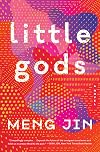
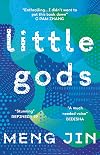
Little Gods
by Meng Jin
On This Page
Description
"On the night of June Fourth, a woman gives birth in a Beijing hospital alone. Thus begins the unraveling of Su Lan, a brilliant physicist who until this moment has successfully erased her past, fighting what she calls the mind's arrow of time. When Su Lan dies unexpectedly seventeen years later, it is her daughter Liya who inherits the silences and contradictions of her life. Liya, who grew up in America, takes her mother's ashes to China - to her, an unknown country. In a territory show more inhabited by the ghosts of the living and the dead, Liya's memories are joined by those of two others: Zhu Wen, the woman last to know Su Lan before she left China, and Yongzong, the father Liya has never known. In this way a portrait of Su Lan emerges: an ambitious scientist, an ambivalent mother, and a woman whose relationship to her own past shapes and ultimately unmakes Liya's own sense of displacement."--Provided by publisher. show lessTags
Recommendations


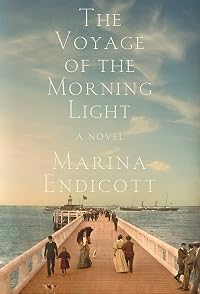
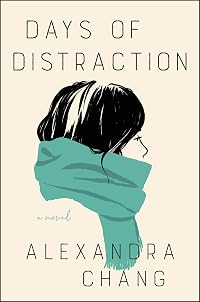
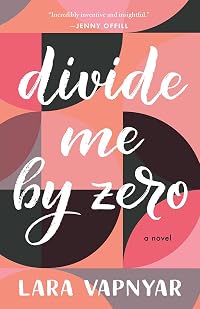

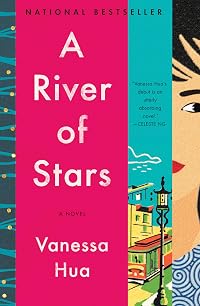

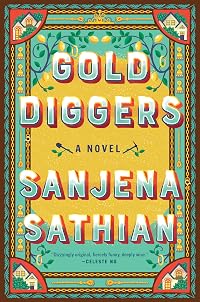
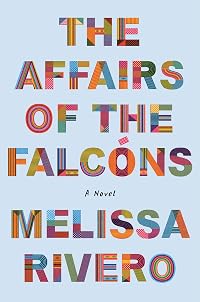

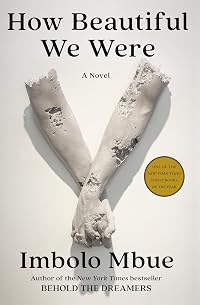
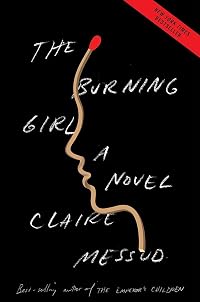



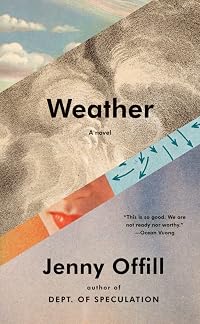
Member Recommendations
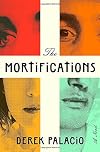
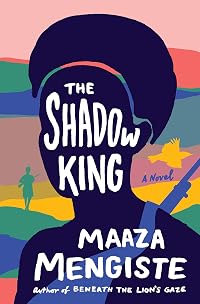
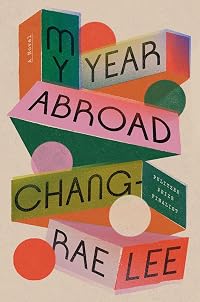
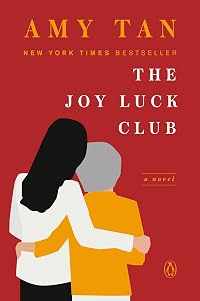
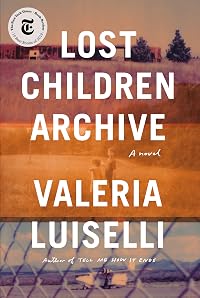
Limelite Exile identity fiction also. Set in Cuba and US rather than China and US. Both at cusp of revolutionary change hinging on communist rule and it's disruption to nuclear families. In both cases, absent fathers loom even though they largely remain off-stage. I consider each a symbolic fable about their respective countries' futures.
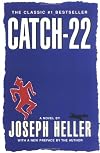
Limelite Literary satires of war
Member Reviews
This book took a while to settle into but the reward in the end was worth it. Su Lan is our protagonist in a sense, but her story is told by those who knew her: a close friend, her husband, and ultimately her daughter. A brilliant and enigmatic physicist, Su Lan is concerned with time as the fourth dimension of the universe, as it manifests beyond our limited human ability to experience it. Obsessed with the notion that time may move backwards, that we can erase the past, Su Lan immigrates from China to the U.S. with her small daughter a few years after the June Fourth protests and the Tiananmen Square Massacre. Su Lan's story unfolds through the eyes and experiences of our three narrators, most powerfully through that of her daughter show more who returns to Beijing after Su Lan's death in search of her father.
Meng Jin's writing is beautiful -- only occasionally overwrought -- and she deftly explores and illuminates the human need for a secure sense of place in both space and time, the human desire to feel confident about "where one comes from." This need plays out in geography but also in relation to parentage and history and culture, and it is in these dimensions that the novel's substance is most powerfully moving. Su Lan's motivation never quite solidifies for us but the motivations of our three narrators provide enough grounding for the novel's arc and meaning. We witness the tremendous impact of an event as momentous as the Tiananmen Square Massacre on the day-to-day lives of Chinese citizens, those for whom its larger political implications were of little interest. And we witness the ultimate conciliation with past and future, time and space, autonomy and dependency in Su Lan's daughter's final trip to her grandmother's village. This is not a perfect novel but it's a strong debut effort and a compelling introduction to an author worth watching.
I received this ARC from Early Reviewers. show less
Meng Jin's writing is beautiful -- only occasionally overwrought -- and she deftly explores and illuminates the human need for a secure sense of place in both space and time, the human desire to feel confident about "where one comes from." This need plays out in geography but also in relation to parentage and history and culture, and it is in these dimensions that the novel's substance is most powerfully moving. Su Lan's motivation never quite solidifies for us but the motivations of our three narrators provide enough grounding for the novel's arc and meaning. We witness the tremendous impact of an event as momentous as the Tiananmen Square Massacre on the day-to-day lives of Chinese citizens, those for whom its larger political implications were of little interest. And we witness the ultimate conciliation with past and future, time and space, autonomy and dependency in Su Lan's daughter's final trip to her grandmother's village. This is not a perfect novel but it's a strong debut effort and a compelling introduction to an author worth watching.
I received this ARC from Early Reviewers. show less
 This review was written for LibraryThing Early Reviewers.
Meng Jin's debut novel Little Gods is a fascinating multi-perspective narrative about a physicist named Su Lan, her efforts to define herself, and the lasting imact of her ambition on those closest to her.
One interesting aspect of the novel is that while so much of the narrative is about Su Lan and how she strives to be percieved, none of the perspectives used to tell the story are actually her own. This raises an important thematic question of how well someone can truly know another person – readers are only shown fragments and reflections of Su Lan and her life.
I'll admit, I didn't find most of the characters to be particularly likeable, but they are well-realized and believably complicated and contradictory individuals show more (ocassionally infuriatingly so). In general, while the novel is a slow read, the pacing did seem to drag significantly and lose its forward momentum at times. Still, parts of Little Gods are truly thought-provoking and compelling. show less
One interesting aspect of the novel is that while so much of the narrative is about Su Lan and how she strives to be percieved, none of the perspectives used to tell the story are actually her own. This raises an important thematic question of how well someone can truly know another person – readers are only shown fragments and reflections of Su Lan and her life.
I'll admit, I didn't find most of the characters to be particularly likeable, but they are well-realized and believably complicated and contradictory individuals show more (ocassionally infuriatingly so). In general, while the novel is a slow read, the pacing did seem to drag significantly and lose its forward momentum at times. Still, parts of Little Gods are truly thought-provoking and compelling. show less
This review was written for LibraryThing Early Reviewers.On the night of June 4, 1989 Su Lan gives birth to Liya in a Beijing hospital as tanks roll over protesting citizens. Where is her husband? Is he part of the carnage or the round-up afterward? They are both highly educated - she is a brilliant physicist, he is a doctor, and they've come to the city from Shanghai when Su Lan goes into labor and her husband disappears. This becomes the central but unasked and unanswered question in Liya's life, as she grows up with her damaged mother in America. When Liya is 18, her mother dies suddenly "for no visible reason at all" and she returns to China with her ashes to find answers. The only clue she has is an address for a dilapidated building inhabited by a sole old woman who has waited for Su show more Lan's return. Zhu Wen is able to fill in some blanks for Liya, but mostly the quest is her own. She is led on a circuitous route to find her father or his fate and redeem what she knew of her mother. From the book jacket: "An immigrant narrative told in negative, it explores the complicated bond between daughters and mothers in a story of migrations literal and emotional." The epigraph sets a nice tone too: "The past is never there waiting to be discovered, to be recognized exactly for what it is. The past is not for living in." John Berger, Ways of Seeing The writing is exquisite and the story unique and flawlessly crafted. show less
Little Gods is told from the perspective of three narrators: Liya, returning to China after her mother’s death to try and understand her past and their difficult relationship, Yongzong, the father Liya has never met, and Zhu Wen, a neighbor and witness to Su Lan and Yongzong’s marriage.
The story focuses on how Su Lan's efforts to escape her past impacts her relationship with her daughter, who feels displaced and undefined as an immigrant to America with little understanding of her culture and history because of Su Lan refusal to engage with the past. I enjoyed the story, despite two of the three narrators being somewhat unlikable, because the characters were flawed and relatable, and the story moved forward without becoming show more sentimental or dramatic. show less
The story focuses on how Su Lan's efforts to escape her past impacts her relationship with her daughter, who feels displaced and undefined as an immigrant to America with little understanding of her culture and history because of Su Lan refusal to engage with the past. I enjoyed the story, despite two of the three narrators being somewhat unlikable, because the characters were flawed and relatable, and the story moved forward without becoming show more sentimental or dramatic. show less
This review was written for LibraryThing Early Reviewers.4 1/2 stars. The author does a terrific job building up a picture of a brilliant physicist named Su Lan through the eyes of four narrators - a neighbor, a classmate, her husband and her daughter. Su Lan is only content in the abstract world of theoretical physics; real life leaves her frustrated, confused or enraged. Ironically, she also has a natural charisma, fed by her brilliance, that draws people to her, only to find themselves repelled by her cruelty or obliviousness. A cast of rotating narrators is the perfect way to tell the story of this complex woman; like the dark matter that intrigues her, Su Lan can’t be understood through direct observation, but rather by the effects she produces on others. Although Su Lan is a stormy show more person, the tone of this novel is measured and melancholic, never melodramatic, and it's sense of place made me feel as if I'd actually been to China. show less
This review was written for LibraryThing Early Reviewers.Review of ARC via LTER
What, exactly, are "little gods"? Meng Jin provides an ambitious definition, fittingly, for her ambitious novel. They are the youth of China who "hunger for revolution, any Great Revolution, whatever it stands for, so long as where you stand is behind its angry fist. Desperate to turn their own wishes and despairs into material that might reset the axes of the world."
The novel begins in a Beijing hospital where Zhu Wen, destined to become Sulan's only known friend, is a nurse in the maternity ward on June 4, 1989, the day of the Tiananmen Square massacre that did reset the axes of the Chinese world. Sulan is giving birth to her only child, a daughter, Liya, while around her, throughout the hospital, injured and show more dead pile up. Her husband, Yongzong, flees into the night, never to be seen again.
From that point on the book is filled only with longing for what the characters will never have, despair at their fates and betrayal of friends. Merging Sulan's theoretical physics -- really, fancies -- about marrying thermodynamics with time to explain a four-dimensional space, Meng looses a mental landscape that warps from one character to another as the pov changes, while remaining in a sort of overwrought fugue state that each suffers as they disconnect or semi-connect with reality. This is the most ambitious aspect of the novel -- Meng's attempt to make the reader "live" each character's attempts to change their "wishes and despair into material," or, put another way, to change their personal lives in order to find themselves in a reality to their liking.
Only nurse Zhu remains centered within the maelstrom of character and event, a stolid representation of Old China, its vast expanse of historical memory and tradition, complete with her belief in ancestral ghosts. Sulan represents the devastation intellectuals always suffer during societal upheavals. Her journey from impoverished village at the edge of starvation to near miraculous rise to the pinnacle of abstract thought produces no satisfying personal rewards for her. Instead, it destroys her ability to deal with the truth of a Newtonian existence. Intellectuals are alwsys the first targets of revolutionaries, even when those uprisings are the product of intellectuals in revolt. Her one victory in life is getting herself and her child to the USA.
Daughter Liya returns to China after the death of her mother, hoping to learn who her father is and what happened to him. Her Odyssey can be seen as a journey of filial duty and an attempt to reconcile her feelings for her mother with her longings to know the unknown story of her father. To establish a firm identity when living in two worlds. I found the relatively short time Meng spent with her young heroine to be the most rewarding of all the life stories she tells in the novel.
Yongzong, absented husband and mystery father, is a cipher throughout -- does he belong only to the present, or is he emblematic of the unknown future? His relationship with his boyhood friend Zhang Bo is enigmatic and shrouded in complexity. On the other hand, Bo who is all heart and tender understanding, is not cryptic at all. In fact, he can be viewed as the true husband and father in the novel, in spite of neither role ever being formalized. Yongzong, IMO, fails to achieve the monumental purpose Meng seems to have set for him. "In the universe, there exist objects that cannot be seen or have not been seen. . .that assure us of their existence simply by the way they affect the behavior of nearby lesser objects. . .it is the inevitable attraction and movement of that which surrounds a mass that secures its position among real things." For Liya, this security never results.
I am impressed by the virtuosity on display in this book, but I can't admit to feeling the satisfaction that comes at the end of a read when I know that I've read a successful novel. Does Little Gods succeed? For me, there are two major problems -- not flaws. The introduction of theoretical physics and its extension into fantastic speculation did not work for me. I failed to unravel why it was given its importance of place in the book, yet failed to produce a similar payoff. Secondly, the entire weight of the novel is sustained by emotional turmoil, fracture, suffering, and dissatisfaction. It is burdensome to this Western reader but may have the approval of a Chinese/Asian reader. In sum, "Little Gods" is a frightening picture of a segment of humanity, leaving this reader to draw one conclusion. The little gods must be crazy.
However, to my mind there is one flaw, in the end after closing the book, only two of the minor characters seemed real to me, nurse Zhu and Professor Zhang Bo. Everyone else remained emotional ephemera beyond any physical existence. Still this is a stunning attempt to merge science, emotion, ghosts, gods, and material existence into a panorama of China's emergence from communism to capitalism and its effects on lesser living humans. show less
What, exactly, are "little gods"? Meng Jin provides an ambitious definition, fittingly, for her ambitious novel. They are the youth of China who "hunger for revolution, any Great Revolution, whatever it stands for, so long as where you stand is behind its angry fist. Desperate to turn their own wishes and despairs into material that might reset the axes of the world."
The novel begins in a Beijing hospital where Zhu Wen, destined to become Sulan's only known friend, is a nurse in the maternity ward on June 4, 1989, the day of the Tiananmen Square massacre that did reset the axes of the Chinese world. Sulan is giving birth to her only child, a daughter, Liya, while around her, throughout the hospital, injured and show more dead pile up. Her husband, Yongzong, flees into the night, never to be seen again.
From that point on the book is filled only with longing for what the characters will never have, despair at their fates and betrayal of friends. Merging Sulan's theoretical physics -- really, fancies -- about marrying thermodynamics with time to explain a four-dimensional space, Meng looses a mental landscape that warps from one character to another as the pov changes, while remaining in a sort of overwrought fugue state that each suffers as they disconnect or semi-connect with reality. This is the most ambitious aspect of the novel -- Meng's attempt to make the reader "live" each character's attempts to change their "wishes and despair into material," or, put another way, to change their personal lives in order to find themselves in a reality to their liking.
Only nurse Zhu remains centered within the maelstrom of character and event, a stolid representation of Old China, its vast expanse of historical memory and tradition, complete with her belief in ancestral ghosts. Sulan represents the devastation intellectuals always suffer during societal upheavals. Her journey from impoverished village at the edge of starvation to near miraculous rise to the pinnacle of abstract thought produces no satisfying personal rewards for her. Instead, it destroys her ability to deal with the truth of a Newtonian existence. Intellectuals are alwsys the first targets of revolutionaries, even when those uprisings are the product of intellectuals in revolt. Her one victory in life is getting herself and her child to the USA.
Daughter Liya returns to China after the death of her mother, hoping to learn who her father is and what happened to him. Her Odyssey can be seen as a journey of filial duty and an attempt to reconcile her feelings for her mother with her longings to know the unknown story of her father. To establish a firm identity when living in two worlds. I found the relatively short time Meng spent with her young heroine to be the most rewarding of all the life stories she tells in the novel.
Yongzong, absented husband and mystery father, is a cipher throughout -- does he belong only to the present, or is he emblematic of the unknown future? His relationship with his boyhood friend Zhang Bo is enigmatic and shrouded in complexity. On the other hand, Bo who is all heart and tender understanding, is not cryptic at all. In fact, he can be viewed as the true husband and father in the novel, in spite of neither role ever being formalized. Yongzong, IMO, fails to achieve the monumental purpose Meng seems to have set for him. "In the universe, there exist objects that cannot be seen or have not been seen. . .that assure us of their existence simply by the way they affect the behavior of nearby lesser objects. . .it is the inevitable attraction and movement of that which surrounds a mass that secures its position among real things." For Liya, this security never results.
I am impressed by the virtuosity on display in this book, but I can't admit to feeling the satisfaction that comes at the end of a read when I know that I've read a successful novel. Does Little Gods succeed? For me, there are two major problems -- not flaws. The introduction of theoretical physics and its extension into fantastic speculation did not work for me. I failed to unravel why it was given its importance of place in the book, yet failed to produce a similar payoff. Secondly, the entire weight of the novel is sustained by emotional turmoil, fracture, suffering, and dissatisfaction. It is burdensome to this Western reader but may have the approval of a Chinese/Asian reader. In sum, "Little Gods" is a frightening picture of a segment of humanity, leaving this reader to draw one conclusion. The little gods must be crazy.
However, to my mind there is one flaw, in the end after closing the book, only two of the minor characters seemed real to me, nurse Zhu and Professor Zhang Bo. Everyone else remained emotional ephemera beyond any physical existence. Still this is a stunning attempt to merge science, emotion, ghosts, gods, and material existence into a panorama of China's emergence from communism to capitalism and its effects on lesser living humans. show less
This review was written for LibraryThing Early Reviewers.Intelligently written, complex novel exploring the realities of what experiences shape a person's life. Su Lan may be one of the most complex (there's that word again) characters I've run across lately. Born into extreme poverty, she rose to become a highly educated and intellectual physicist.
Told through the voices of 5 characters, they paint a fascinating portrait of what it was like to be living in china during the tianamen square massacre.
For me, one of the most prominent themes in this novel was her daughter's existential quest for the understanding of their relationship and chasing down the father she's never known.
I wasn't able to fully connect with the characters, but this is definitely an author to watch! thank you library show more thing for the advance copy show less
Told through the voices of 5 characters, they paint a fascinating portrait of what it was like to be living in china during the tianamen square massacre.
For me, one of the most prominent themes in this novel was her daughter's existential quest for the understanding of their relationship and chasing down the father she's never known.
I wasn't able to fully connect with the characters, but this is definitely an author to watch! thank you library show more thing for the advance copy show less
This review was written for LibraryThing Early Reviewers.Members
- Recently Added By
Author Information

3+ Works 431 Members
Awards and Honors
Common Knowledge
- Canonical title
- Little Gods
- Original title
- Little Gods: A Novel
- Original publication date
- 2020-01-14
- People/Characters
- Su Lan; Liya; Yongzong; Zhang Bo
- Important places
- Beijing, China; Shanghai, China
- Important events
- Tiananmen Square Protests and Massacre
- Epigraph
- The past is never there waiting to be discovered, to be recognized for exactly what it is. The past is not for living in ... --John Berger, Ways of Seeing
- Dedication
- For my family
- First words
- From above, the heart of the city is easy to see.
- Last words
- (Click to show. Warning: May contain spoilers.)At the next street she will meet herself, bearing strange consolation, around the next corner she will.
- Blurbers
- McCann, Colum; Apostol, Gina; Sayrafiezadeh, Said; Messud, Claire
- Original language
- English
Classifications
Statistics
- Members
- 364
- Popularity
- 86,442
- Reviews
- 28
- Rating
- (3.63)
- Languages
- English, Italian
- Media
- Paper, Audiobook, Ebook
- ISBNs
- 16
- ASINs
- 3