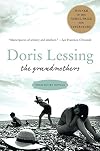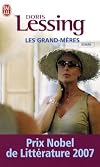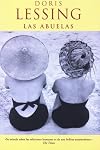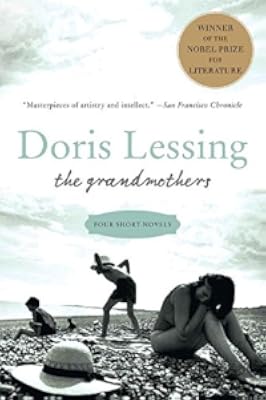
The Grandmothers: Four Short Novels
by Doris Lessing
On This Page
Description
In the title novel, two friends fall in love with each other's teenage sons, and these passions last for years, until the women end them, vowing a respectable old age. In Victoria and the Staveneys, a young woman gives birth to a child of mixed race and struggles with feelings of estrangement as her daughter gets drawn into a world of white privilege. The Reason for It traces the birth, faltering, and decline of an ancient culture, with enlightening modern resonances. A Love Child features a show more World War II soldier who believes he has fathered a love child during a fleeting wartime romance and cannot be convinced otherwise. show lessTags
Recommendations






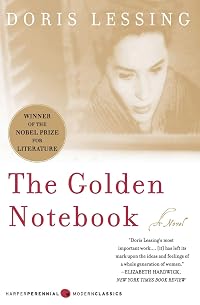





Member Reviews
We used to run book auctions and one day a man left a bid on a volume of Doris Lessing's autobiography. Before the auction started, he called to retract it. He'd found out something about her in the meantime and decided she was so awful he would never read the book.
I must say, the title story of this book does nothing to soften that impression. The characters are ghastly, the writing style matches. Somehow it does not reflect well upon the author.
This is the first Lessing I have tried and I suspect it will remain unfinished.
-----------------------
Later: I stand corrected. Every evening for weeks I went to bed, already irritated because I knew I was about to read a few more pages of this book and that it would irritate me. More.
Yet the show more fact is, I kept reading it. And even as it irritated me, I was reluctant to put it down. I don't pretend to understand why. show less
I must say, the title story of this book does nothing to soften that impression. The characters are ghastly, the writing style matches. Somehow it does not reflect well upon the author.
This is the first Lessing I have tried and I suspect it will remain unfinished.
-----------------------
Later: I stand corrected. Every evening for weeks I went to bed, already irritated because I knew I was about to read a few more pages of this book and that it would irritate me. More.
Yet the show more fact is, I kept reading it. And even as it irritated me, I was reluctant to put it down. I don't pretend to understand why. show less
Tre lunghi racconti sull'amore. Un amore che parte normale, quasi banale, e finisce in una sorta di perversione ancora più sconvolgente proprio perché ammantata di normalità.
Dei tre racconti quello più intenso è il terzo "Il figlio dell'amore", che è quasi un romanzo a se stante nel suo sviluppo, e che termina in maniera assolutamente agghiacciante.
Dei tre racconti quello più intenso è il terzo "Il figlio dell'amore", che è quasi un romanzo a se stante nel suo sviluppo, e che termina in maniera assolutamente agghiacciante.
We used to run book auctions and one day a man left a bid on a volume of Doris Lessing's autobiography. Before the auction started, he called to retract it. He'd found out something about her in the meantime and decided she was so awful he would never read the book.
I must say, the title story of this book does nothing to soften that impression. The characters are ghastly, the writing style matches. Somehow it does not reflect well upon the author.
This is the first Lessing I have tried and I suspect it will remain unfinished.
-----------------------
Later: I stand corrected. Every evening for weeks I went to bed, already irritated because I knew I was about to read a few more pages of this book and that it would irritate me. More.
Yet the show more fact is, I kept reading it. And even as it irritated me, I was reluctant to put it down. I don't pretend to understand why. show less
I must say, the title story of this book does nothing to soften that impression. The characters are ghastly, the writing style matches. Somehow it does not reflect well upon the author.
This is the first Lessing I have tried and I suspect it will remain unfinished.
-----------------------
Later: I stand corrected. Every evening for weeks I went to bed, already irritated because I knew I was about to read a few more pages of this book and that it would irritate me. More.
Yet the show more fact is, I kept reading it. And even as it irritated me, I was reluctant to put it down. I don't pretend to understand why. show less
We used to run book auctions and one day a man left a bid on a volume of Doris Lessing's autobiography. Before the auction started, he called to retract it. He'd found out something about her in the meantime and decided she was so awful he would never read the book.
I must say, the title story of this book does nothing to soften that impression. The characters are ghastly, the writing style matches. Somehow it does not reflect well upon the author.
This is the first Lessing I have tried and I suspect it will remain unfinished.
-----------------------
Later: I stand corrected. Every evening for weeks I went to bed, already irritated because I knew I was about to read a few more pages of this book and that it would irritate me. More.
Yet the show more fact is, I kept reading it. And even as it irritated me, I was reluctant to put it down. I don't pretend to understand why. show less
I must say, the title story of this book does nothing to soften that impression. The characters are ghastly, the writing style matches. Somehow it does not reflect well upon the author.
This is the first Lessing I have tried and I suspect it will remain unfinished.
-----------------------
Later: I stand corrected. Every evening for weeks I went to bed, already irritated because I knew I was about to read a few more pages of this book and that it would irritate me. More.
Yet the show more fact is, I kept reading it. And even as it irritated me, I was reluctant to put it down. I don't pretend to understand why. show less
I’m still trying to work out how long a piece of writing has to be if it’s called a novel. The Grandmothers is a set of four “short novels,” according to its cover. But how is that different from four novellas?
The first, and title, story is an intriguing family tale of just 53 pages. Two fathers. Two daughters. Two grandmothers. And two mothers who enter only peripherally into visits to a seaside restaurant. The waitress envies their perfect lives, which maybe aren’t as perfect as they seem, and the reader is drawn to view images of past innocence with almost reluctant curiosity. A startling, odd, sad tale, and a fascinating read.
The second story, of Victoria and the Staveneys, is an all-too-real description of a promising show more life turned around by circumstance, and a vivid depiction of the tolerance, love and affection that accompany expectations. I wanted more for Victoria, and in the end, I guess she got more than she was offered. In the end she wasn’t who anyone tried to make her, but maybe she wasn’t all she could have made herself either.
The Reason for it is the shortest tale of the four, an odd story of how quickly a culture falls apart. It reads innocently and tragically through the eyes of an elderly man, but it’s echoes of modern life can’t be entirely accidental.
And finally, A Love Child, at 117 pages, is an amazing depiction of wartime Britain and the life of a man who grows up between the wars. Introduced to communism, he finds poetry. Introduced to sickness, he finds love. Introduced to success, he keeps himself to himself and tries to analyze the reason others care for him. But through it all he misses the truth of how he should care for others. A sad story, but totally engrossing.
So now I still don’t know how long a novel has to be. But perhaps if you’re a writer of Doris Lessing’s caliber it really doesn’t matter. I’d certainly recommend the book, and I enjoyed the time spent meeting her characters. show less
The first, and title, story is an intriguing family tale of just 53 pages. Two fathers. Two daughters. Two grandmothers. And two mothers who enter only peripherally into visits to a seaside restaurant. The waitress envies their perfect lives, which maybe aren’t as perfect as they seem, and the reader is drawn to view images of past innocence with almost reluctant curiosity. A startling, odd, sad tale, and a fascinating read.
The second story, of Victoria and the Staveneys, is an all-too-real description of a promising show more life turned around by circumstance, and a vivid depiction of the tolerance, love and affection that accompany expectations. I wanted more for Victoria, and in the end, I guess she got more than she was offered. In the end she wasn’t who anyone tried to make her, but maybe she wasn’t all she could have made herself either.
The Reason for it is the shortest tale of the four, an odd story of how quickly a culture falls apart. It reads innocently and tragically through the eyes of an elderly man, but it’s echoes of modern life can’t be entirely accidental.
And finally, A Love Child, at 117 pages, is an amazing depiction of wartime Britain and the life of a man who grows up between the wars. Introduced to communism, he finds poetry. Introduced to sickness, he finds love. Introduced to success, he keeps himself to himself and tries to analyze the reason others care for him. But through it all he misses the truth of how he should care for others. A sad story, but totally engrossing.
So now I still don’t know how long a novel has to be. But perhaps if you’re a writer of Doris Lessing’s caliber it really doesn’t matter. I’d certainly recommend the book, and I enjoyed the time spent meeting her characters. show less
This book contains four novellas that show off Doris Lessing wide-ranging ideas and her facility with plot and language. Not as wonderful as some of her works, but very enjoyable.
This collection of four novellas is vintage Doris Lessing. Published in 2003, it encompasses many of her signature themes: the process of aging, class and race relationships, the bittersweet pain of love and passion, and a recognition that how a civilization cares for its environment reflects its health.
The title novella, "The Grandmothers" is a wry tale of two women who grow up as best friends, are young mothers together and have tangled relationships with each other's sons.
"Victoria and the Staveneys" examines the intertwined relationship of Victoria, growing up in council flats, orphaned and burdened with the care of her dying aunt, with a self-absorbed theatrical family that has a socialist bent.
In "The Reason for It," we have the show more chronicle of the decay of an ancient civilization, destroyed because its guardians could not recognize the results of their misjudgement.
The final novella, "A Love Child," has the most fully developed protagonist and plot. James, drafted into the British army at the onset of WWII, is sent off to India on a hellish ship transport. While the ship docks in Cape Town to refuel and resupply, he has a passionate fling with a young matron. The rest of the war and the rest of his life are delineated by his obsession and memories of those brief days.
Although the reviewers in The Guardian and The New York Times found the collection uneven -- I found it very satisfying and reflective of the varieties of Lessing's fictions. show less
The title novella, "The Grandmothers" is a wry tale of two women who grow up as best friends, are young mothers together and have tangled relationships with each other's sons.
"Victoria and the Staveneys" examines the intertwined relationship of Victoria, growing up in council flats, orphaned and burdened with the care of her dying aunt, with a self-absorbed theatrical family that has a socialist bent.
In "The Reason for It," we have the show more chronicle of the decay of an ancient civilization, destroyed because its guardians could not recognize the results of their misjudgement.
The final novella, "A Love Child," has the most fully developed protagonist and plot. James, drafted into the British army at the onset of WWII, is sent off to India on a hellish ship transport. While the ship docks in Cape Town to refuel and resupply, he has a passionate fling with a young matron. The rest of the war and the rest of his life are delineated by his obsession and memories of those brief days.
Although the reviewers in The Guardian and The New York Times found the collection uneven -- I found it very satisfying and reflective of the varieties of Lessing's fictions. show less
Members
- Recently Added By
Lists

Books featuring grandmothers
56 works; 12 members

le donne raccontano
116 works; 1 member
Author Information

262+ Works 37,113 Members
Doris Lessing was born in Kermanshah, Persia (later Iran) on October 22, 1919 and grew up in Rhodesia (the present-day Zimbabwe). During her two marriages, she submitted short fiction and poetry for publication. After moving to London in 1949, she published her first novel, The Grass Is Singing, in 1950. She is best known for her 1954 Somerset show more Maugham Award-winning experimental novel The Golden Notebook. Her other works include This Was the Old Chief's Country, the Children of Violence series, the Canopus in Argos - Archives series, and Alfred and Emily. She has received numerous awards for her work including the 2001 Prince of Asturias Prize in Literature, the David Cohen British Literature Prize, and the 2007 Nobel Prize for Literature. She died on November 17, 2013 at the age of 94. (Bowker Author Biography) show less
Some Editions
Awards and Honors
Distinctions
Series
Belongs to Publisher Series
Work Relationships
Common Knowledge
- Canonical title*
- Les grand-mères
- Original title
- The grandmothers
- Original publication date
- 2003
- People/Characters*
- Theresa; Tom Struthers; Roseanne Struthers (Roz); Liliane Western (Lil); Ian Western; Alice Struthers (show all 14); Shirley Western; Mary Llod Struthers; Hannah Western; Derek; Harold Struthers; Theo Western; Saul Butler; Molly Struthers
- Important places*
- Baie de Baxter's Teeth; La plage
- First words*
- De part et d'autre d'un petit promontoire surchargé de cafés et de restaurants s'étendait une mer folâtre mais modérée.
- Last words*
- (Click to show. Warning: May contain spoilers.)Tout lui était apparu très clairement.
- Original language*
- Anglais (Royaume-Uni) (Royaume-Uni)
*Some information comes from Common Knowledge in other languages. Click "Edit" for more information.
Classifications
Statistics
- Members
- 615
- Popularity
- 47,400
- Reviews
- 22
- Rating
- (3.52)
- Languages
- 12 — Dutch, English, Estonian, French, German, Greek, Italian, Norwegian (Bokmål), Portuguese, Spanish, Swedish, Turkish
- Media
- Paper, Ebook
- ISBNs
- 40
- ASINs
- 5