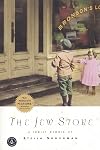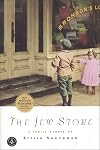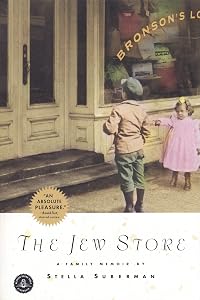
The Jew Store
by Stella Suberman
On This Page
Description
"For a real bargain, while you're making a living, you should make also a life." --Aaron Bronson In 1920, in small-town America, the ubiquitous dry goods store--suits and coats, shoes and hats, work clothes and school clothes, yard goods and notions--was usually owned by Jews and often referred to as "the Jew store." That's how Stella Suberman's father's store, Bronson's Low-Priced Store, in Concordia, Tennessee, was known locally. The Bronsons were the first Jews to ever live in that tiny show more town (1920 population: 5,318) of one main street, one bank, one drugstore, one picture show, one feed and seed, one hardware, one barber shop, one beauty parlor, one blacksmith, and many Christian churches. Aaron Bronson moved his family all the way from New York City to that remote corner of northwest Tennessee to prove himself a born salesman--and much more. Told by Aaron's youngest child, The Jew Store is that rare thing--an intimate family story that sheds new light on a piece of American history. Here is One Man's Family with a twist--a Jew, born into poverty in prerevolutionary Russia and orphaned from birth, finds his way to America, finds a trade, finds a wife, and sets out to find his fortune in a place where Jews are unwelcome. With a novelist's sense of scene, suspense, and above all, characterization, Stella Suberman turns the clock back to a time when rural America was more peaceful but no less prejudiced, when educated liberals were suspect, and when the Klan was threatening to outsiders. In that setting, she brings to life her remarkable father, a man whose own brand of success proves that intelligence, empathy, liberality, and decency can build a home anywhere. The Jew Store is a heartwarming--even inspiring--story. Stella Suberman was born in Union City, Tennessee, the setting for her memoir, The Jew Store, and spent her teens in Miami Beach, Florida. After twenty years in North Carolina, she returned to Florida in 1966 as the administrative director of the Lowe Art Museum of the University of Miami. Now retired, she lives in Boca Raton. SHE HAD SAID THE UNSAYABLE In my mother's mind the word Jew used all by itself, nakedly, as it were, was not a word but a curse. She believed it was used only by people who hated Jews. If it had its three letters--its "-ish"--on the end, ah, that made the difference. If I said that someone was a Jew, my mother would ask me, "So what is he? A no-goodnik? A gangster?" As I have understood it, my mother had come out on the porch at the very moment Miss Brookie had used the phrase "Jew store" on the telephone with Tom Dillon, before my father's meeting with Dillon. Miss Brookie used it as shorthand for the kind of business my father had in all my mother knew at that moment was that Miss Brookie had said the unsayable--had said "Jew store." -- Stella Suberman, from The Jew Store SHE HAD SAID THE UNSAYABLE In my mother's mind the word Jew used all by itself, nakedly, as it were, was not a word but a curse. She believed it was used only by people who hated Jews. If it had its three letters--its "-ish"--on the end, ah, that made the difference. If I said that someone was a Jew, my mother would ask me, "So what is he? A no-goodnik? A gangster?" As I have understood it, my mother had come out on the porch at the very moment Miss Brookie had used the phrase "Jew store" on the telephone with Tom Dillon, before my father's meeting with Dillon. Miss Brookie used it as shorthand for the kind of business my father had in mind . . . but all my mother knew at that moment was that Miss Brookie had said the unsayable--had said "Jew store." --Stella Suberman, from The Jew Store. show lessTags
Recommendations


























Member Reviews
Thoroughly enjoyed this book! About a Russian-Jewish family who moves to a small town in the Southern US in 1920 to start a store. The author has a charming way of writing and portraying personalities. I also especially loved how she talked rather candidly about many things, both good and bad, but generally refrained from assigning morality. She portrays openly the difficulties of blacks and Jews in their town, but allows you to see the prejudices in her own family as well. It was a story full of life - the good, the bad, the ugly, but all told with an air of hope and love underneath it all. A great read that will leave you a lot to think about!
This is not a book that I would ever have picked up on my own. In fact, I dreaded having to read it. At the risk of sounding racist (which I most assuredly am not), I was afraid of another sad book about the horrible trials that a minority group has to weather. Instead, I found a truly delightful memoir. Aaron Bronson (nee Avram Droskowitz) left Russia for America, married a nice Jewish girl in New York, then headed south to Nashville. Apparently, in 1920s America, the dry goods stores in small towns were usually owned by Jews and called "the Jew store." The family moves to a small Tennessee town (Suberman has changed the name of the town and its inhabitants) and opens "Bronson's Low-Priced Store."
I think what I liked best about the show more book was the combination of ups and downs experienced by the family. They were part of the community, and became an integral part of the town's life. Yes, there were challenges, and they aren't glossed over, but there is always the mindset that this is how things happened at that time and place. A very enjoyable read. show less
I think what I liked best about the show more book was the combination of ups and downs experienced by the family. They were part of the community, and became an integral part of the town's life. Yes, there were challenges, and they aren't glossed over, but there is always the mindset that this is how things happened at that time and place. A very enjoyable read. show less
Delightful
I grew up in a mid-sized, fairly sophisticated Southern town in the 50s and 60s, where there was a fair-sized Jewish community. And every bit as much antisemitism as Suberman's family faced. This is a wonderful window into the lives of the Southern Jews of the early 20th century, but probably not far off the mark for Jewish boomers, either.
Suberman's prose is note-perfect, and the story and people will grab you from the first page and won't let you go even on the last.
I grew up in a mid-sized, fairly sophisticated Southern town in the 50s and 60s, where there was a fair-sized Jewish community. And every bit as much antisemitism as Suberman's family faced. This is a wonderful window into the lives of the Southern Jews of the early 20th century, but probably not far off the mark for Jewish boomers, either.
Suberman's prose is note-perfect, and the story and people will grab you from the first page and won't let you go even on the last.
A memoir about a Jewish family pursuing the American Dream in the early twentieth century South. With a novelist’s sense of scene, suspense, and characterization, Stella Suberman turns the clock back to a time when educated liberals were suspect and the Klan was a major threat to outsiders. In that setting, she brings to life her remarkable father, a man whose own brand of success proves that intelligence, empathy, and decency can build a home anywhere.
Ms. Suberman writes a sweet, loving memoir of her Jewish Russian immigrant parents and her siblings. Her father, known as Aaron in the book, moves his family from everything and everyone they know and love in NYC to, in 1920, a very rural corner of Tennessee.
The conditions are difficult, discrimination and prejudice are especially directed to Jewish, Catholic and people of color. The Klu Klux Klan is alive and well, approving or disapproving what they choose.
Aaron, however, is a patient and intelligent business man and in just a short period of time his "Jew Store" aka Bronson's Low Priced Store is in business and providing dry goods to farm families in the area.
All is not well with his wife, Reba. She misses the closeness of extended show more family and doesn't understand the Southern way of life. She laments the fact that there is no Jewish temple for her son to make Bar Mitzvah.
In a light-hearted manner, the author reveals how her family worked through these obstacles with eventual understanding and grace. show less
The conditions are difficult, discrimination and prejudice are especially directed to Jewish, Catholic and people of color. The Klu Klux Klan is alive and well, approving or disapproving what they choose.
Aaron, however, is a patient and intelligent business man and in just a short period of time his "Jew Store" aka Bronson's Low Priced Store is in business and providing dry goods to farm families in the area.
All is not well with his wife, Reba. She misses the closeness of extended show more family and doesn't understand the Southern way of life. She laments the fact that there is no Jewish temple for her son to make Bar Mitzvah.
In a light-hearted manner, the author reveals how her family worked through these obstacles with eventual understanding and grace. show less
Stella Suberman’s relates the saga of her parents’ efforts to establish and run a discount store in the small Tennessee town of Concordia, much like many other Jewish families did in the years before the depression. For a time, it was fairly typical for small southern towns to have their own “Jew store.”
From Suberman’s story we learn what it’s like to live as the only Jewish family in the God-fearing Christian south, where the KKK still wields strong influence and the prejudice against Jews is obvious, overt and ubiquitous.
Many of the problems that surface are predictable. What happens when the author’s father, Mr. Bronson decides to offer a white person’s sales position to a capable black man? How does a Jewish family show more accomplish their son’s coming-of age Bar Mitzvah if there is no place to study the Torah? What do parents do when they want their children to marry within the faith but there are no other Jewish families for miles?
This is a fast and easy read, not particularly emotional or deep. But it does present a little known slice of Americana. show less
From Suberman’s story we learn what it’s like to live as the only Jewish family in the God-fearing Christian south, where the KKK still wields strong influence and the prejudice against Jews is obvious, overt and ubiquitous.
Many of the problems that surface are predictable. What happens when the author’s father, Mr. Bronson decides to offer a white person’s sales position to a capable black man? How does a Jewish family show more accomplish their son’s coming-of age Bar Mitzvah if there is no place to study the Torah? What do parents do when they want their children to marry within the faith but there are no other Jewish families for miles?
This is a fast and easy read, not particularly emotional or deep. But it does present a little known slice of Americana. show less
Stella Suberman’s relates the saga of her parents’ efforts to establish and run a discount store in the small Tennessee town of Concordia, much like many other Jewish families did in the years before the depression. For a time, it was fairly typical for small southern towns to have their own “Jew store.”
From Suberman’s story we learn what it’s like to live as the only Jewish family in the God-fearing Christian south, where the KKK still wields strong influence and the prejudice against Jews is obvious, overt and ubiquitous.
Many of the problems that surface are predictable. What happens when the author’s father, Mr. Bronson decides to offer a white person’s sales position to a capable black man? How does a Jewish family show more accomplish their son’s coming-of age Bar Mitzvah if there is no place to study the Torah? What do parents do when they want their children to marry within the faith but there are no other Jewish families for miles?
This is a fast and easy read, not particularly emotional or deep. But it does present a little known slice of Americana. show less
From Suberman’s story we learn what it’s like to live as the only Jewish family in the God-fearing Christian south, where the KKK still wields strong influence and the prejudice against Jews is obvious, overt and ubiquitous.
Many of the problems that surface are predictable. What happens when the author’s father, Mr. Bronson decides to offer a white person’s sales position to a capable black man? How does a Jewish family show more accomplish their son’s coming-of age Bar Mitzvah if there is no place to study the Torah? What do parents do when they want their children to marry within the faith but there are no other Jewish families for miles?
This is a fast and easy read, not particularly emotional or deep. But it does present a little known slice of Americana. show less
Members
- Recently Added By
Author Information

5 Works 528 Members
Common Knowledge
- Original publication date
- 1998
- Important places
- Tennessee, USA; American South
- Important events
- Great Depression
Classifications
Statistics
- Members
- 462
- Popularity
- 66,260
- Reviews
- 15
- Rating
- (3.68)
- Languages
- English
- Media
- Paper, Audiobook, Ebook
- ISBNs
- 6
- UPCs
- 1
- ASINs
- 4