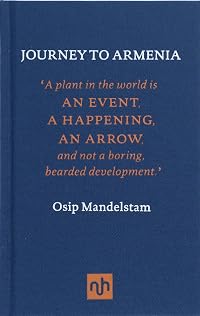
Journey to Armenia
by Osip Mandelstam
On This Page
Description
The last published work of a great poet who wrote a few lines attacking Stalin and was shortly thereafter exiled to Siberia where he died near Vladivostok six years later. An inimitable volume, Journey to Armenia is a travel book in name only. Osip Mandelstam visited Armenia in 1930, and during the eight months of his stay, he rediscovered his poetic voice and was inspired to write an experimental meditation on the country and its ancient culture. This edition also includes the companion show more piece, "Conversation About Dante," which Seamus Heaney called "Osip Mandelstam's astonishing fantasia on poetic creation." An incomparable apologia for poetic freedom and a challenge to the Bolshevik establishment, the essay was dictated by the poet to his wife, Nadezhda Mandelstam, in 1934 and 1935, during the last phase of his itinerant life. It has close ties to Journey to Armenia. show lessTags
Recommendations





















Member Reviews
The best poems are always prose, this book wants to make me say--the kind of deadpan, ludicrous epigram that Mandelstam could almost pull off. But no, he'd be more likely to say that the best words are the ones that never get a chance to congeal into these embarrassing remnant forms--instead, the ones that flicker caressingly across your set of predispositions that is you and change ones to zeroes and zeroes to ones; that burrow and coccoon and come out hardy and woody yet limber new appendages, extending your scope of movement. The overt theme is the journey, but this be no travelogue: not cod-ethnography but felt difference is what is on Mandelstam's mind, and the lionization of small peoples, and the reclamation of a show more (cod-)preclassical past of yoghurt gourds, camping on ridges tired from one day's ascent and tingling for another's, and, ummmmm, Ararat. The way sounds feel--the sounds of Armenian serving as the occasion for much synaesthetic speechmaking--and the bequest sounds bear for their utterers--a deeply sensuous linguistic relativity. This sensuousness above all--I grinned biggest of many grins when he said, as has long been my key piece of gallerygoing advice, move fast, stride on, make of the work a draught for drinking on your trek, not a fetish-object for deathly hours with a magnifying-glass over. (My second half of that, a byword only for me as opposed to for everybody, has been imagine that art in your mouth. Kapow!) Not growing moss, more profound and ursprunglich a cliche than we know perhaps (CF. BRUCE CHATWIN), but here embodied in the poet as gypsy thief as immortal, unrepentant wanderluster only for experiences that are not his own, that do not belong to the fields and collective farms he knows. "The Armenian that therefore I am." show less
In an insightful review of Bruce Chatwin's published letters, which appeared in "the Australian" a few years ago, Nicholas Rotwell mischievously compared the British writer to "a kind of internet search engine avant la lettre". He explained : " [Chatwin] was a [ literary ] omnivore and he had a connoisseur's over-fine eye; after all, he had been trained as a teenage prodigy in Sotheby's to spot unnoticed masterpieces. As a result, his taste for obscure books of world import was laser-sharp, and honed further by his youthful travels as a journalist, when he was exposed to a wide range of cultural patterns and perspectives".
Earlier, I already mentioned some of these "obscure" authors and books that Chatwin was pointing to and lauded in show more his letters and short stories. Isaac Babel's "Red Cavalry" for instance or Edmund Wilson with his “ Black Brown Red and Olive”. Gaylord Simpson’s “Attending Marvels”, Peter Mathiessen whose “Far Tortuga” should be preferred to his “Snow leopard”. Ib’n Khaldun’s Muquaddimah, the poems by David Ap Gwilym, Robert Byron's two sacred texts, Osip Mandelstam's "outstanding masterpiece" "Journey to Armenia" and even the Timurid Babur- Nama.
Chatwin is unselfishly generous in his praise of others for he sends us back to books which in quite a few cases outclass by far his own works. One forgets Patagonia after reading Oxiana. Who stops at the "Black Hills", when he can journey to Armenia ?
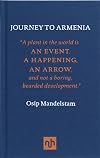
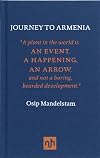
Still it is thanks to Bruce Chatwin, that I wish-listed and then purchased the slim blue, cloth - bounded volume of "Journey to Armenia" by Osip Mandelstam.
"The superb fresh wind would tear into one's lungs with a whistle. The velocity of the clouds kept increasing by the minute, and the incunabular surf would hasten to issue a fat, hand-printed Gutenberg Bible in half an hour under the gravely scowling sky."
Just after a few lines, I was absolutely enchanted by the magic that emanated from each page, each sentence, each word...
Osip Mandelstam's "Journey to Armenia" is unlike any travelbook you may have read. It is unique, it is delightfully captivating, it is poetry in prose.
It is the first and only travelbook I have read where the typical poetic qualities of emotion, imagery and parataxis are used to render the complex mix of excitement, the existential sadness and the simple joy that are conjured by the experiences and sights of an exotic journey
It is magic ! There is no other word...
"Yesterday I was reading Firdousi and it seemed to me that a bumblebee was sitting on the book sucking it."
"In Persian poetry ambassadorial winds blow out of China bearing gifts. It scoops up longivity with a silver ladle and endows whoever might desire it with a millenia by threes and fives. That is why the rulers of the Djemdjid dynasty are as long lived as parrots"
Osip Emilyevich Mandelstam born in 1891 in Warszaw, Poland, but lived in Russia during and after its revolution and the rise of the Soviet Union. With Anna Ahkmatova, he was one of the foremost members of the Acmeist school of poets.
The increased Stalinization, did not make Mandelstam's live any easier. On the contrary, the poet remained a cursed symbol of freedom and refused to adapt to the requierements of the totalitarian state. The frustration, the anger and the fear made Mandelstam lose his poetic voice. He stopped writing in 1926.
In 1930, Bukharin, a "friend in high places", managed to obtain permission for the Mandelstam couple for a nine month journey to Armenia .
Armenia, was for Mandelstam, what Georgia had been for Pushkin and the older generations. It was sacred ground. It was the true outpost of the Classical and Christian world. There was to be found the land of Colchis, of Argonautic fame as well as Mount Arrarat where Noah's Ark finally run aground.
It was in his awe for the spactacular vistas and his encounters with the "true" people that the poet recovered his voice...
"A childless old couple received us for the night into the bosom of their tent.
The old woman moved and worked with weepy, withdrawing, blessing motions as she prepared a smoky supper and some felt strips for bedding. 'Here, take the felt! Grab a blanket... Tell us something about Moscow'
Our hosts got ready for the bed. An oil wick lit up the tent, making it seem high as a railroad station. The wife took out a coarse army nightshirt and put it on her husband.
I felt as shy as if I were in a palace."
Mandelstam was several times arrested by Joseph Stalin's government during the repression and in '38, after a stringent poetic attack on the "Man of Steel", finally sentenced to a camp in Siberia. He died of exhaustion, in dreadful conditions at a transit camp near Vladivostok, december 27, 1938. He never even made it to the final destination.
"Sleep is easy in nomad camps. The body, exhausted by space, grows warm, stretches out, recalls the length of the road. The paths of the mountain ridges run like shivers along the spine. The velvet meadows burden and tickle the eyelids. Bedsores of the ravine hollow out the sides. Sleep immures you, walls you in. Last thought: have to ride around some ridge."
One can only hope that his inner eye saw the other side of the ridge before they closed forever... show less
Earlier, I already mentioned some of these "obscure" authors and books that Chatwin was pointing to and lauded in show more his letters and short stories. Isaac Babel's "Red Cavalry" for instance or Edmund Wilson with his “ Black Brown Red and Olive”. Gaylord Simpson’s “Attending Marvels”, Peter Mathiessen whose “Far Tortuga” should be preferred to his “Snow leopard”. Ib’n Khaldun’s Muquaddimah, the poems by David Ap Gwilym, Robert Byron's two sacred texts, Osip Mandelstam's "outstanding masterpiece" "Journey to Armenia" and even the Timurid Babur- Nama.
Chatwin is unselfishly generous in his praise of others for he sends us back to books which in quite a few cases outclass by far his own works. One forgets Patagonia after reading Oxiana. Who stops at the "Black Hills", when he can journey to Armenia ?
Still it is thanks to Bruce Chatwin, that I wish-listed and then purchased the slim blue, cloth - bounded volume of "Journey to Armenia" by Osip Mandelstam.
"The superb fresh wind would tear into one's lungs with a whistle. The velocity of the clouds kept increasing by the minute, and the incunabular surf would hasten to issue a fat, hand-printed Gutenberg Bible in half an hour under the gravely scowling sky."
Just after a few lines, I was absolutely enchanted by the magic that emanated from each page, each sentence, each word...
Osip Mandelstam's "Journey to Armenia" is unlike any travelbook you may have read. It is unique, it is delightfully captivating, it is poetry in prose.
It is the first and only travelbook I have read where the typical poetic qualities of emotion, imagery and parataxis are used to render the complex mix of excitement, the existential sadness and the simple joy that are conjured by the experiences and sights of an exotic journey
It is magic ! There is no other word...
"Yesterday I was reading Firdousi and it seemed to me that a bumblebee was sitting on the book sucking it."
"In Persian poetry ambassadorial winds blow out of China bearing gifts. It scoops up longivity with a silver ladle and endows whoever might desire it with a millenia by threes and fives. That is why the rulers of the Djemdjid dynasty are as long lived as parrots"
Osip Emilyevich Mandelstam born in 1891 in Warszaw, Poland, but lived in Russia during and after its revolution and the rise of the Soviet Union. With Anna Ahkmatova, he was one of the foremost members of the Acmeist school of poets.
The increased Stalinization, did not make Mandelstam's live any easier. On the contrary, the poet remained a cursed symbol of freedom and refused to adapt to the requierements of the totalitarian state. The frustration, the anger and the fear made Mandelstam lose his poetic voice. He stopped writing in 1926.
In 1930, Bukharin, a "friend in high places", managed to obtain permission for the Mandelstam couple for a nine month journey to Armenia .
Armenia, was for Mandelstam, what Georgia had been for Pushkin and the older generations. It was sacred ground. It was the true outpost of the Classical and Christian world. There was to be found the land of Colchis, of Argonautic fame as well as Mount Arrarat where Noah's Ark finally run aground.
It was in his awe for the spactacular vistas and his encounters with the "true" people that the poet recovered his voice...
"A childless old couple received us for the night into the bosom of their tent.
The old woman moved and worked with weepy, withdrawing, blessing motions as she prepared a smoky supper and some felt strips for bedding. 'Here, take the felt! Grab a blanket... Tell us something about Moscow'
Our hosts got ready for the bed. An oil wick lit up the tent, making it seem high as a railroad station. The wife took out a coarse army nightshirt and put it on her husband.
I felt as shy as if I were in a palace."
Mandelstam was several times arrested by Joseph Stalin's government during the repression and in '38, after a stringent poetic attack on the "Man of Steel", finally sentenced to a camp in Siberia. He died of exhaustion, in dreadful conditions at a transit camp near Vladivostok, december 27, 1938. He never even made it to the final destination.
"Sleep is easy in nomad camps. The body, exhausted by space, grows warm, stretches out, recalls the length of the road. The paths of the mountain ridges run like shivers along the spine. The velvet meadows burden and tickle the eyelids. Bedsores of the ravine hollow out the sides. Sleep immures you, walls you in. Last thought: have to ride around some ridge."
One can only hope that his inner eye saw the other side of the ridge before they closed forever... show less
Damn it, I just don’t like Mandelstam. I didn’t like his poetry and I don’t like this formless, masturbatory prose poem either. Osip goes to Armenia, but he’s no travel writer: he ruminates on French paintings, on the scientific method, on economics without saying much. His prose is ostentatious. The only parts I found slightly interesting were his musings on the Armenian and Caucasian languages — but even they are painfully amateur. The guy is a poet, sees beauty in everything, but his gaze is fixed primarily on his navel.
Interesting but requires a lot of context. I sort of enjoyed it more when reading as if I stumbled on a stranger's journal.
45. Journey to Armenia & Conversation about Dante by Osip Mandelstam
translation: from Russian 1977
published: 1933
format: 185-page Notting Hill 2011 hardcover
acquired: 2019
read: Aug 20-29
time reading: 6 hr 12 min, 2 min/page
rating: 4
locations: Armenia
about the author: Polish-born Jewish Soviet poet who grew up in St. Petersburg, and died in a gulag. 1891-1938
Three parts:
'Mandelstam and the Journey' by Henry Gifford, 1979
'Journey to Armenia' translated by Sidney Monas, 1977
'Conversation about Dante' translated by Clarence Brown & Robert Hughes, 1977
A tough and somewhat random book for me. I know very little about this Jewish Soviet poet and his strained and eventually fatal relationship to his state. These essays were written in 1933 when show more he was sort of politely exiled to Armenia. The main essay, ‘Journey‘, is about Armenia with much extra going on in the subtext. It includes a mixture of classical Greek and Christian references, and a criticism of Darwin in favor Jean-Baptiste Lamarck. It kind of all went right by me. A second essay on Dante was really fascinating about Dante and poetry and, I think, has some interesting embedded criticism of the then Soviet Union.
2020
https://www.librarything.com/topic/322920#7256751 show less
translation: from Russian 1977
published: 1933
format: 185-page Notting Hill 2011 hardcover
acquired: 2019
read: Aug 20-29
time reading: 6 hr 12 min, 2 min/page
rating: 4
locations: Armenia
about the author: Polish-born Jewish Soviet poet who grew up in St. Petersburg, and died in a gulag. 1891-1938
Three parts:
'Mandelstam and the Journey' by Henry Gifford, 1979
'Journey to Armenia' translated by Sidney Monas, 1977
'Conversation about Dante' translated by Clarence Brown & Robert Hughes, 1977
A tough and somewhat random book for me. I know very little about this Jewish Soviet poet and his strained and eventually fatal relationship to his state. These essays were written in 1933 when show more he was sort of politely exiled to Armenia. The main essay, ‘Journey‘, is about Armenia with much extra going on in the subtext. It includes a mixture of classical Greek and Christian references, and a criticism of Darwin in favor Jean-Baptiste Lamarck. It kind of all went right by me. A second essay on Dante was really fascinating about Dante and poetry and, I think, has some interesting embedded criticism of the then Soviet Union.
"If a physicist should conceive of the desire, after taking apart the nucleus of an atom, to put it back together again, he would be like the partisans of descriptive and explanatory poetry, for whom Dante represents, for all time, a plague and a threat."
2020
https://www.librarything.com/topic/322920#7256751 show less
Siamo in Armenia, siamo negli anni Trenta e filtriamo questa realtà attraverso la mente di Mandel'stam...
Non solo viaggio, un vero TRIP!
Non solo viaggio, un vero TRIP!
> Babelio : https://www.babelio.com/livres/Mandelstam-Voyage-en-Armenie/75919
> Poète mort en victime de la brutale répression stalinienne, en 1938, Ossip Mandelstam avait longuement séjourné en Arménie quelques années plus tôt, alors que des menaces d'arrestation, au motif d'activités contre-révolutionnaires, pesaient de plus en plus lourdement sur lui. Et de ces semaines de grand air et de respiration, il a ramené ce livre de forme très libre, bien plus proche du carnet de dessin d'un peintre que d'un récit de voyage traditionnel.
—Danieljean (Babelio)
> Une œuvre en prose, véritable ode à cette république soviétique méridionale que le poète découvre. Il séjourne comme journaliste dans cette région éloignée de show more Moscou pour échapper à une arrestation.
—BiblioMonde
> VOYAGE EN ARMÉNIE, par Ossip Mandelstam - Mercure de France, Langue d'origine : russe, Traduit par André du Boucher, 2005, 102 p., 11.5 euros - ISBN : 2715225954. — Une œuvre en prose, véritable ode à cette république soviétique méridionale que le poète découvre. Il séjourne comme journaliste dans cette région éloignée de Moscou pour échapper à une arrestation.
« Rien n’est plus instructif ni plus joyeux que de se plonger dans la société de personnes d’une race totalement autre que l’on respecte, pour laquelle on a de la sympathie, dont on est fier de l’extérieur. La plénitude de vie des Arméniens, leur grossière tendresse, leur bienfaisante ardeur au travail, leur inexplicable répulsion pour toute métaphysique et leur merveilleuse familiarité avec le monde des choses réelles – tout cela me disait : tu ne rêves pas, n’aies pas peur de ton temps, ne fais pas le malin. N’était-ce pas parce que je me trouvais au milieu d’un peuple réputé pour son activité débordante et qui néanmoins vivait non pas en fonction des horloges des gares ou des institutions, mais d’après un cadran solaire comme j’en ai vu dans les ruines de Zvartnotz en forme de roue ou de rose astronomique, inscrit dans la pierre ? » Ossip Mandelstam.
—BiblioMonde show less
> Poète mort en victime de la brutale répression stalinienne, en 1938, Ossip Mandelstam avait longuement séjourné en Arménie quelques années plus tôt, alors que des menaces d'arrestation, au motif d'activités contre-révolutionnaires, pesaient de plus en plus lourdement sur lui. Et de ces semaines de grand air et de respiration, il a ramené ce livre de forme très libre, bien plus proche du carnet de dessin d'un peintre que d'un récit de voyage traditionnel.
—Danieljean (Babelio)
> Une œuvre en prose, véritable ode à cette république soviétique méridionale que le poète découvre. Il séjourne comme journaliste dans cette région éloignée de show more Moscou pour échapper à une arrestation.
—BiblioMonde
> VOYAGE EN ARMÉNIE, par Ossip Mandelstam - Mercure de France, Langue d'origine : russe, Traduit par André du Boucher, 2005, 102 p., 11.5 euros - ISBN : 2715225954. — Une œuvre en prose, véritable ode à cette république soviétique méridionale que le poète découvre. Il séjourne comme journaliste dans cette région éloignée de Moscou pour échapper à une arrestation.
« Rien n’est plus instructif ni plus joyeux que de se plonger dans la société de personnes d’une race totalement autre que l’on respecte, pour laquelle on a de la sympathie, dont on est fier de l’extérieur. La plénitude de vie des Arméniens, leur grossière tendresse, leur bienfaisante ardeur au travail, leur inexplicable répulsion pour toute métaphysique et leur merveilleuse familiarité avec le monde des choses réelles – tout cela me disait : tu ne rêves pas, n’aies pas peur de ton temps, ne fais pas le malin. N’était-ce pas parce que je me trouvais au milieu d’un peuple réputé pour son activité débordante et qui néanmoins vivait non pas en fonction des horloges des gares ou des institutions, mais d’après un cadran solaire comme j’en ai vu dans les ruines de Zvartnotz en forme de roue ou de rose astronomique, inscrit dans la pierre ? » Ossip Mandelstam.
—BiblioMonde show less
Dec 10, 2018 (Edited)French
Members
- Recently Added By
Lists

Caucasus
122 works; 2 members
Author Information

218+ Works 2,341 Members
Osip Mandelstam was born in Warsaw, Poland and grew up in St.Petersburg, Russia Mandelstam was taught by tutors and governesses at his home. He attended the prestigious Tenishev School from 1900 to 1907 and traveled then to Paris from 1907 to 1908 and Germany from 1908 to 1910, where he studied Old French literature at the University of show more Heidelberg. In 1911 till 1917, he studied philosophy at St. Petersburg University but did not graduate. Mandelstam was a member of the 'Poets Guild' from 1911 and had close personal ties with Anna Akhmatova and Nikolai Gumilev. His first poems appeared in 1910 in the journal Apollon. In 1918 he worked briefly for Anatoly Lunacharskii's Education Ministry in Moskow. In the 1920s Mandelstam supported himself by writing children's books and translating works by Upton Sinclair, Jules Romains, Charles de Coster and others. He did not compose poems from 1925 to 1930 but turned to prose. In 1930 he made a trip to Armenia to escape his influential enemies. Mandelstam's Journey to Armenia (1933) became his last major work published during his life time. Mandelstam was arrested the first time in 1934 for an epigram he had written on Joseph Stalin. In the transit camp, Mandelstam was already so weak that he couldn't stand. He died in the Gulag Archipelago in Vtoraia rechka, near Vladivostok, on December 27, 1938.His body was taken to a common grave. International fame came to Mandelstam in the 1970s, when his works were published in the West and in the Soviet Union. (Bowker Author Biography) show less
Some Editions
Awards and Honors
Distinctions
Notable Lists
Series
Belongs to Publisher Series
Bibliothek Suhrkamp (801)
Work Relationships
Is contained in
Common Knowledge
- Original title
- Путешествие в Армению
- Original publication date
- 1933
- People/Characters
- Osip Mandelstam
- Important places
- Armenia
Classifications
- Genre
- Fiction and Literature
- DDC/MDS
- 891.743 — Literature & rhetoric Literatures of other languages East Indo-European and Celtic literatures Russian and East Slavic languages Russian essays 1800–1917
- LCC
- PG3476 .M355 .Z46513 — Language and Literature Slavic languages and literatures. Baltic languages. Albanian language Slavic. Baltic. Albanian Russian literature Individual authors and works 1917-1960
- BISAC
Statistics
- Members
- 146
- Popularity
- 224,815
- Reviews
- 7
- Rating
- (3.77)
- Languages
- 8 — Dutch, English, French, German, Italian, Norwegian (Bokmål), Slovenian, Swedish
- Media
- Paper, Ebook
- ISBNs
- 13
- ASINs
- 4