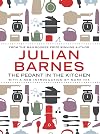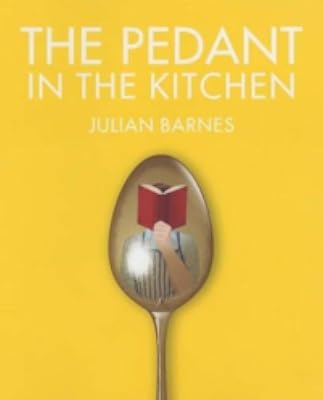
The Pedant in the Kitchen
by Julian Barnes
On This Page
Description
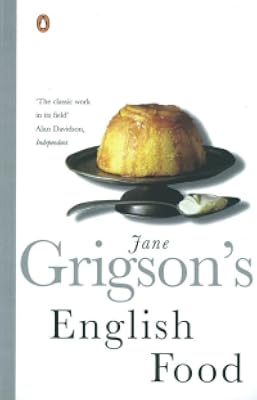
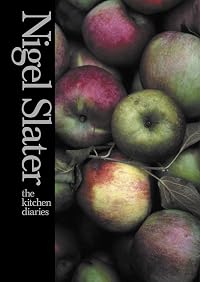
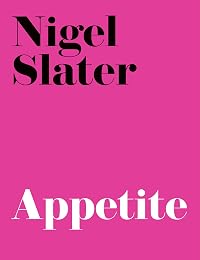
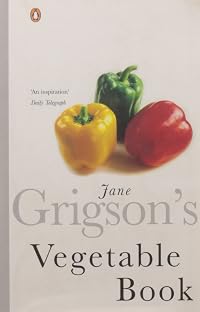
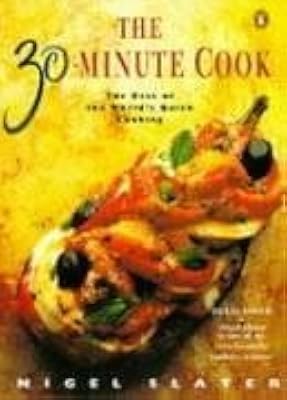
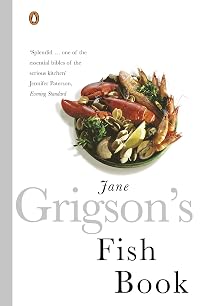
This work is an elegant account of Julian Barnes' search for gastronomic precision. It is a quest that leaves him seduced by Jane Grigson, infuriated by Nigel slater and reassured by Mrs Beeton's Victorian virtues. For anyone who has ever been defeated by a cookbook.Tags
Recommendations

















Member Reviews
I would have missed this short but lively tome about the 'eccentricities' of cookbooks had it not been by the acclaimed Julian Barnes (Flaubert's Parrot)! The 'pedant' part comes from his ongoing argument with the inexactitude of cookbooks. I have the same problem! (BTW, there is one wonderful chapter removed from his dismissive doctrine, concerning that 'hodge-podge' drawer we all have in our kitchens: his contained 22 choptsticks, four bottle stoppers, a stolen airline fork, and an almond.) Herein, is my contribution to any potential sequel: I have before me this delicious-sounding recipe, Chicken & Potatoes with Mustard Vinaigrette. It says it takes 20 minutes, so by my standard, we are looking at an hour! It also makes six servings, show more so for me, that's about three! So now, I am fired up! But wait? It requires Kosher Salt! WTF is that? I already possess iodized AND non-iodized salt (and I have yet to know the difference), so now I need salt blessed by a rabbi? Why can't I use salt? Also, it requires one large garlic clove. How am I supposed to know about the size differential of garlic cloves? I am expected to know that? Oh, it is supposed to be 'minced;' I know that word: it describes the tiny steps Mick Jagger takes when he belts out "Satisfaction!" There can be no other meaning! Capers? Drained? What in God's name are those? (In Shakespeare's time, a 'caper' was a sort of joke.) And, finally, this kills me: the recipe asks for watercress, and it [?] must be 'stemmed.' What is watercress? And what is 'stemmed?' And, to make this recipe totally incomprehensibe, it wants me "to fold in" the mysterious stemmed watercress BEFORE serving! Fold in? Like paper folds? Like Ben Folds Five? I give up! No chicken for me, but rather a round mound of ground beef carefully grilled and put [folded?] into a mustard-laden 89-cent bun! I get it Julian Barnes! Let me into your club! show less
"Cooking is the transformation of uncertainty (the recipe) into certainty (the dish) via fuss".
Yes, Julian Barnes is a cook after my own heart. Like him, I first tentatively approached cooking as an adult, and have leaned heavily on having the cookbook handy when preparing a meal. Like him, my reach has often exceeded my grasp, with unfortunate results.
This short book is a collection of articles by Barnes where he recounts his misadventures in the kitchen, and renders plaudits and brickbats to the cookery writers he has tried to follow. There are plenty of laughs, and even more rueful smiles as one recognises oneself in his efforts.
Yes, Julian Barnes is a cook after my own heart. Like him, I first tentatively approached cooking as an adult, and have leaned heavily on having the cookbook handy when preparing a meal. Like him, my reach has often exceeded my grasp, with unfortunate results.
This short book is a collection of articles by Barnes where he recounts his misadventures in the kitchen, and renders plaudits and brickbats to the cookery writers he has tried to follow. There are plenty of laughs, and even more rueful smiles as one recognises oneself in his efforts.
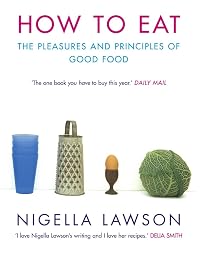
I wouldn't like to be in a kitchen with the author who comes across as more than a pedant - irritating, demanding, irritable and a perfectionist are words that come to mind. However, I enjoyed the book and, in particular, the stimulating illustrations by Joe Berger, juxtaposing books and food. They make the book. I liked the theme too - how should the classic cook books be interpreted: Beeton, David, Grigson, Pomiane, etc?. Be a bit flexible in interpreting what they say seems to be the best policy. The whole is an original perspective on cooking and the classic cook books.
Zipped through this in a day. A fun kitchen memoir - Barnes describes himself as a pedant for wanting absolute clarity in his recipes, but I think he pointlessly overdoes this a bit, I guess to give the book some identity. Good for the David/Grigson/Slater brigade, and one or two good tips on further reading. Insubstantial, but not unsatisfying.
Barnes is not a natural cook, rather he is a follower of the recipe, an acolyte of the great cookery writers, but most of all a pendant.
In this delightful little book he takes several subjects and writes a short essay on each. He writes about dinner parties, the exact dimensions of a medium onion, the frustrations of some cook books and the delights of others.
There is some great advice in here too. When doing a dinner party, do as they do in France, and buy one of two of the courses. Don't ever make the River Cafe chocolate nemesis, dried pasta is as good as fresh and that the most useful gadget for a home kitchen is a sign saying; This is not a Restaurant.
I am starting to like Barnes as a writer more, Not a word is wasted, nor is show more there a morsel out of place. show less
In this delightful little book he takes several subjects and writes a short essay on each. He writes about dinner parties, the exact dimensions of a medium onion, the frustrations of some cook books and the delights of others.
There is some great advice in here too. When doing a dinner party, do as they do in France, and buy one of two of the courses. Don't ever make the River Cafe chocolate nemesis, dried pasta is as good as fresh and that the most useful gadget for a home kitchen is a sign saying; This is not a Restaurant.
I am starting to like Barnes as a writer more, Not a word is wasted, nor is show more there a morsel out of place. show less
A sprightly, amusing piece of fine writing from Mr. Barnes in which we learn of successful and failed recipes from a gamut of cookbook authors, Mrs. Beeton to Nigel Slater with fond nods to Edouard de Pomiane, Elizabeth David, Jane Grigson, Richard Olney, Marcella Hazan, etc. It spurred me into whipping up a successful Craig Claiborne "Chicken With Almonds" from the NYT Cookbook (1961). The book mentions his favorite recipes and foodstuffs (don't forget the root vegetables) as well as odd bits such a kitchen drawer clutter and dinner party size (6 and never more than 8). He closes with a quotation from Joseph Conrad who wrote an introduction to his wife Jessie's cookbook: "Of all the books produced since the remote ages by human talents show more and industry those only that treat of cooking are, from a moral point of view, above suspicion. The intention of every other piece of prose may be discussed and even mistrsted, but the purpose of a cookery book is one and unmistakable. Its object can conceivably be no other than to increase the happiness of mankind." show less
This is what good food writing is all about - funny and witty without being snide; writing about food and the joys (and disappointments) of making it and sharing it; writing that makes you want to wander into the kitchen and try to whip something up yourself.
Barnes self-depreciating humour is fun to read - he doesn't take himself too seriously but you still get the impression that he takes his lack of culinary perfection a little too hard.
Barnes self-depreciating humour is fun to read - he doesn't take himself too seriously but you still get the impression that he takes his lack of culinary perfection a little too hard.
Members
- Recently Added By
Author Information

89+ Works 43,196 Members
Julian Barnes was born in Leicester, England, on January 19, 1946. He received a degree in modern languages from Magdalen College, Oxford University in 1968. He has held jobs as a lexicographer for the Oxford English Dictionary, a reviewer and literary editor for the New Statesmen and the New Review, and a television critic. He has written show more numerous works of fiction including Arthur and George, Pulse: Stories, The Noise of Time, and England, England. He received the Somerset Maugham Award in 1980 for Metroland, the Geoffrey Faber Memorial Prize in 1985 and a Prix Medicis in 1986 for Flaubert's Parrot, and the Man Booker Prize in 2011 for The Sense of an Ending. He also writes non-fiction works including Letters from London, The Pedant in the Kitchen, and Nothing to Be Frightened Of. He received the Shakespeare Prize by the FVS Foundation in 1993, the Austrian State Prize for European Literature in 2004, and the David Cohen Prize for Literature in 2011. He writes detective novels under the pseudonym Dan Kavanaugh. His works under this name include Duffy, Fiddle City, Putting the Boot In, and Going to the Dogs. (Bowker Author Biography) show less
Series
Belongs to Publisher Series
Common Knowledge
- Canonical title*
- Un homme dans sa cuisine
- Original title
- The Pedant in the Kitchen
- Original publication date
- 2003
- Dedication
- to She For Whom
- First words
- I am a late-onset cook.
- Quotations
- Cooking is the transformation of uncertainty (the recipe) into certainty (the dish) via fuss [p. 94].
Why should a word in a recipe be less important than a word in a novel? One can lead to physical indigestion, the other to mental [p. 7]. - Last words
- (Click to show. Warning: May contain spoilers.)I have an idle feast to prepare.
*Some information comes from Common Knowledge in other languages. Click "Edit" for more information.
Classifications
Statistics
- Members
- 515
- Popularity
- 58,502
- Reviews
- 23
- Rating
- (3.67)
- Languages
- 9 — Dutch, English, French, German, Greek, Italian, Serbian, Spanish, Turkish
- Media
- Paper, Audiobook, Ebook
- ISBNs
- 25
- ASINs
- 7