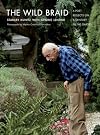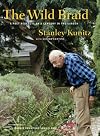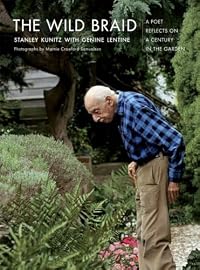
The Wild Braid: A Poet Reflects on a Century in the Garden
by Stanley Kunitz
On This Page
Description
In his one hundreth year, award-winning poet Stanley Kunitz explores the life cycle, the creative process, and his own life.Tags
Recommendations





Member Reviews
This is a unique collection of scintillating poems intertwined with conversations. The poems alone are worth the price of the book. The addition of the conversations is what makes this collection so special. With gardening as the starting point the reflections touch on many topics including personal history, poetry, the creative process, and the cycle of life. The garden was, for Stanley Kunitz, a source of solace and renewal as he dealt with personal health issues and the death of his wife in the spring of 2004.
For Kunitz "a garden holds infinite possibilities. What sense of its nature, or its kingdom, is it going to convey? It represents a selection, not only of whatever individual plants we consider to be beautiful, but also a show more synthesis that creates a new kind of beauty, that of a complex and multiple world. What you plant in your garden reflects your own sensibility, your concept of beauty, your sense of form. Every true garden is an imaginative construct, after all."
It is similar for poetry in that the creative process yields via the imagination a work of art, a poem, a thing of beauty. Yet for Kunitz " a poem seems to have no maker at all. Poems gather their own momentum and you feel they're moving on their own. You are part of the world in which they are born and come to maturity, but they have an identity beyond the person to whom they are confiding because the poem doesn't really belong to anyone, it belongs to a great tradition. The great tradition includes what I think of as the essential spirit of the poem which belongs to centuries, not to any single moment in time." This is finally a collection of beautiful poetry, deep thoughts, and moving moments of conversation filled with meaning. show less
For Kunitz "a garden holds infinite possibilities. What sense of its nature, or its kingdom, is it going to convey? It represents a selection, not only of whatever individual plants we consider to be beautiful, but also a show more synthesis that creates a new kind of beauty, that of a complex and multiple world. What you plant in your garden reflects your own sensibility, your concept of beauty, your sense of form. Every true garden is an imaginative construct, after all."
It is similar for poetry in that the creative process yields via the imagination a work of art, a poem, a thing of beauty. Yet for Kunitz " a poem seems to have no maker at all. Poems gather their own momentum and you feel they're moving on their own. You are part of the world in which they are born and come to maturity, but they have an identity beyond the person to whom they are confiding because the poem doesn't really belong to anyone, it belongs to a great tradition. The great tradition includes what I think of as the essential spirit of the poem which belongs to centuries, not to any single moment in time." This is finally a collection of beautiful poetry, deep thoughts, and moving moments of conversation filled with meaning. show less
Kunitz in old age is a force of nature, a conduit for purity of language. The only (minor) jarring note in here is a bit of dialogue toward the end where the interviewer comes too much to the fore. The meditations on gardening, on process, on dying and living and love are nearly as lovely as the poetry. Highly recommended.
The Wild Braid: A Poet Reflects on a Century in the Garden – Stanley Kunitz with Genine Lentine
Photographs by Marnie Crawford Samuelson
5 stars
Before his death at 101 in 2006, Stanley Kunitz engaged in a series of conversations about gardening, poetry, the creative process, and life. This is a beautiful book of related essays, poetry, and photographs of the great poet in his garden. Every word in this book feels like a distillation of great wisdom. Each sentence is very easy to understand, and yet I have to keep thinking about them. I especially appreciated the last section in which Kunitz talks specifically about approaching death as I have a dear friend who is currently suffering a slow death by cancer. These are the last lines of show more his poem, The Round:
I can scarcely wait till tomorrow
When a new life begins for me
As it does each day,
As it does each day. show less
Photographs by Marnie Crawford Samuelson
5 stars
Before his death at 101 in 2006, Stanley Kunitz engaged in a series of conversations about gardening, poetry, the creative process, and life. This is a beautiful book of related essays, poetry, and photographs of the great poet in his garden. Every word in this book feels like a distillation of great wisdom. Each sentence is very easy to understand, and yet I have to keep thinking about them. I especially appreciated the last section in which Kunitz talks specifically about approaching death as I have a dear friend who is currently suffering a slow death by cancer. These are the last lines of show more his poem, The Round:
I can scarcely wait till tomorrow
When a new life begins for me
As it does each day,
As it does each day. show less
I think that I could pick this up every year. Engaging story of the poet, his craft, his garden, and his poems.
Eloquent and lovely. Mr.Kunitz speaks to our souls.highly recommended ..
Coming soon
Ratings
Members
- Recently Added By
Author Information

34+ Works 1,227 Members
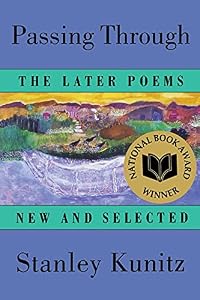
Stanley Kunitz was born in July 1905 in Worcester, Massachusetts. He graduated summa cum laude in 1926 from Harvard Collegeand earned a master's degree in English from Harvard the following year. After Harvard, he went to work as a reporter for the Worcester Telegram and as an editor for the H.W. Wilson Company where he was co-editor for Twentieth show more Century Authors and other reference books. After W.W. II he began a teaching career at several known colleges such as: Bennington College, New York State Teachers College in Potsdam, New York and New School of Social Research, Universty of Washington. His poems started to appear in Poetry, Commonweal, and The New Republic. Some of his most popular collections of poems are - Intellectual Things, Passport to the War, and Passing Through: The Later Poems. His most recent honors include the Harvard Centennial Medal (1992), the National Medal of Arts (1993), and an "In Celebration of Writers" award from Poets & Writers (1999). He continued to write and publish as later as 2005. He died in May 2006. (Bowker Author Biography) Stanley Kunitz was born in Worcester, Massachusetts, in 1905. He was a graduate of Harvard University, where he was awarded the Garrison Medal for Poetry, and received a BA in 1926 and an MA in 1927. He then moved to New York, taking a job with the H. W. Wilson company as an editor of the Wilson Library Bulletin; he also began at this time the work of collaboration with Howard Haycraft on four biographical dictionaries of English and American authors. His first book of poems, Intellectual Things in 1930 was barely recognized, and Kunitz did not publish his second book, Passport to War, for another fourteen years. World War II interrupted his career as editor, and when he was released from the army he joined the faculty of Bennington College, the first of several academic jobs. He has taught at Columbia, Rutgers, Princeton and other colleges and universities and translated the work of recent Russian poets. Kunitz became the 10th poet laureate of the United States in the fall of 2000, at the age of 95. Kunitz published his first book of poetry in 1930 and has since produced nine more. He won the Pulitzer Prize for poetry in 1959 as well as the Bollingen Prize, a Ford Foundation grant, a Guggenheim Foundation fellowship, Harvard's Centennial Medal, the Levinson Prize, the Harriet Monroe Poetry Award, a senior fellowship from the National Endowment for the Arts, the National Medal of the Arts, the National Book Award, and the Shelley Memorial Award. He served for two years as Consultant in Poetry to the Library of Congress, was designated State Poet of New York, and is a Chancellor Emeritus of The Academy of American Poets. A founder of the Fine Arts Work Center in Provincetown, Massachusetts, and Poets House in New York City, he taught for many years in the graduate writing program at Columbia University. He died in Manhattan on May 14, 2006 at the age of 100. (Bowker Author Biography) show less
Awards and Honors
Common Knowledge
- Epigraph
- At my touch the wild
braid of creation
trembles.
--"The Snakes of September"
I associate the garden with the whole experience of being alive, and so, there is nothing in the range of human experience that is separate from what the garden can signify in its eagerness and its insistence, and in its driv... (show all)ing energy to live - to grow, to bear fruit.
The universe is a continuous web. Touch it at any point and the whole web quivers. - First words
- I can scarcely wait till tomorrow
when a new life begins for me,
as it does each day,
as it does each day.
--"The Round" - Quotations
- I've been grounded all my life to believe in the mystery of existence itself. Can there be any possibility of completely understanding who we are and why we're here or where we are going?
These are questions that can... (show all) never be answered completely so you have to keep on asking, and in some strange way every poem that you write impinges on that mystery.
When you look back on a lifetime and think of what has been given to the world by your presence, your fugitive presence, inevitably you think of your art, whatever it may be, as the gift you have made to the world in acknowledgment of the gift you have been given, which is the life itself. And I think the world tends to forget that this is the ultimate significance of the body of work each artist produces. That work is not an expression of the desire for praise or recognition, or prizes, but the deepest manifestation of your gratitude for the gift of life. - Last words
- (Click to show. Warning: May contain spoilers.)I can scarcely wait till tomorrow
when a new life begins for me,
as it does each day,
as it does each day.
--"The Round" - Publisher's editor
- Marasia, Andrew; Bartley, Lucinda; Carlson, Sue; Druskin, Julia; Palmquist, Nancy
Classifications
- Genres
- Home & Garden, Poetry, Fiction and Literature, Biography & Memoir, Literature Studies and Criticism
- DDC/MDS
- 811.52 — Literature & rhetoric American literature in English American poetry 20th Century 1900-1945
- LCC
- PS3521 .U7 .Z478 — Language and Literature American literature American literature Individual authors 1900-1960
- BISAC
Statistics
- Members
- 206
- Popularity
- 158,132
- Reviews
- 6
- Rating
- (4.50)
- Languages
- English
- Media
- Paper
- ISBNs
- 3
- ASINs
- 2