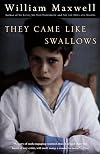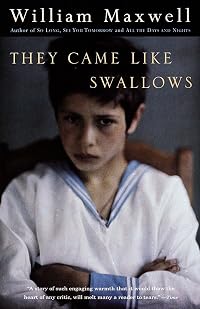
They Came Like Swallows
by William Maxwell
On This Page
Description
To eight-year old Bunny Morison, his mother is an angelic comforter in whose absence nothing is real or alive. To his older brother, Robert, his mother is someone he must protect, especially since the deadly, influenza epidemic of 1918 is ravaging their small Midwestern town. To James Morison, his wife, Elizabeth, is the center of a life that would disintegrate all too suddenly were she to disappear.Through the eyes of these characters, William Maxwell creates a show more sensitive portrait of an American family and of the complex woman who is its emotional pillar. Beautifully observed, deftly rendering the civilities and constraints of a vanished era, They Came Like Swallows measures the subterranean currents of love and need that run through all our lives. The result confirms Maxwell's reputation as one of the finest writers we have.
. show less
Tags
Recommendations






















Member Recommendations
Member Reviews
Maxwell è uno scrittore, giornalista, editor famosissimo in USA, molto meno in Europa. In questo libro, in parte di fantasia, in parte probabilmente autobiografico nel personaggio di Bunny, racconta la vita della famiglia Morison subito prima e subito dopo la morte della madre a causa dell'epidemia di spagnola del 1918. Nella prima parte si segue il pensiero di Bunny, figlio di 8 anni, nella seconda parla il primogenito Robert, nella terza il padre James. Il punto di vista delle donne viene riportato sempre dagli uomini. La prosa è ottima, il contenuto straziante. Non che ci siano descrizioni strappalacrime o truculente, forse sarò io che sento particolarmente certi temi, ma fin dall'inizio l'atmosfera è tendente al cupo. Gli show more uomini, piccoli e grandi che siano, si trovano completamente incapaci di far fronte alle proprie sensazioni e insicurezze, e deve essere sempre una figura femminile (inizialmente la stessa madre, poi interviene la zia Irene, sorella di lei) a tirare le fila dei rapporti, a dare speranza, a notare la luce nel buio. Intorno, una sfilza di parenti che a volte fanno male con i loro comportamenti egoistici, ma non è che i protagonisti si salvino. Bunny forse è quello più scusabile per la giovane età, ancora molto bambino e tremendamente insicuro; Robert ha avuto un incidente e risente della menomazione conseguente; il padre è un uomo molto vecchio stile e si nota, leggendo oggi, una sorta di educazione leggermente oppressiva che solo la madre con il suo amore riesce a rendere gestibile, e anche la sua incapacità a relazionarsi coi figli, al punto da desiderare di affidarli a qualcun altro pur di togliersi il peso. Pur comprendendo che l'angoscia derivante dal libro è fin troppo vera, e che il ritratto è estremamente realistico e sincero, la tematica non mi ha appassionato poi molto. Forse è una sorta di difesa per non dover rivivere le angosce personali, forse è una mia sorta di repulsione per il verismo, ma non mi ha poi tanto preso. Diciamo che il concetto in fondo è vero e potente: la donna, un po' per essere stata per anni costretta nel ruolo di "angelo del focolare", un po' forse per questione di intuito femminile, in certi compiti riesce meglio, lo dico per esperienza diretta. Ma presentata dal punto di vista maschile, perde un po' la sua forza. Significativo che la zia, per salvare cognato e nipote, decida di non accettare la proposta del suo ex marito di riprovare a ricucire un rapporto. Magari è solo una scusa, ma insomma: la donna come unica salvatrice della famiglia e costretta alla rinuncia. Forse, da donna, avrei preferito un maggiore richiamo alla speranza non legato unicamente alla figura femminile, perché il mondo lo si salva in due, donne e uomini, e la responsabilità deve essere di entrambi, e se non si sa dialogare coi figli ci si sforza di imparare. Detto questo, il quadro è descritto con maestria invidiabile. show less
They Came Like Swallows follows a family during the 1918 flu epidemic in Illinois. As in many families, the mother is the heart and center. Maxwell tells the story of her family's relationship to her in a linear succession of time, first from the perspective of her younger son, Bunny, 8 years old, then the older son, Robert, 15 years old, and finally the father, her husband, James.
With writing that is gentle and sensitive -- Maxwell's style -- we get to know how each uniquely loves and uniquely needs her. The title comes from these lines from a W.B. Yeats poem:
The story fits so well that I now wonder if he took those lines and built his novel upon it.
Currently living through the pandemic of 2020 (hoping I can continue to live through it), I was keenly aware of similarities, like how school and churches were closed, and how travel was a source of high risk for infection. I closed the book with an even deeper sadness for the tragedy that is Covid-19, and an overwhelming sense of how it also has surely taken away hearts and compass-points of so very many ordinary families. show less
With writing that is gentle and sensitive -- Maxwell's style -- we get to know how each uniquely loves and uniquely needs her. The title comes from these lines from a W.B. Yeats poem:
show more
They came like swallows and like swallows went,
And yet a woman's powerful character
Could keep a swallow to its first intent;
And half a dozen in formation there,
That seemed
to whirl upon a compass-point,
Found certainty upon the dreaming air...
The story fits so well that I now wonder if he took those lines and built his novel upon it.
Currently living through the pandemic of 2020 (hoping I can continue to live through it), I was keenly aware of similarities, like how school and churches were closed, and how travel was a source of high risk for infection. I closed the book with an even deeper sadness for the tragedy that is Covid-19, and an overwhelming sense of how it also has surely taken away hearts and compass-points of so very many ordinary families. show less
A poignant semi-autobiographical story set during the 1918 flu pandemic, They Came Like Swallows traverses the deliberate change in living as the first world war reaches an end and the H1N1 virus spreads. Through the story of the Morison family, the casualties of the pandemic don't rely on dying people denoted solely by numbers but the personal aftermath they leave. Much more to two siblings who come face to face with the threat and eventual ambush of mortality. What makes this utterly unfortunate is how they don't get along at all. And some pinch of sibling envy and selfishness keep them far apart. Although the pandemic itself persists to be secondary with the complicated family dynamic hampered by gender roles and their complications show more at the centre, the response of the people is glaringly similar to current responses with the COVID19 pandemic. Indeed, a minor character disagrees with the closure of religious establishments because no way is the virus going to spread in an hour eucharistic celebration. And why will God let people die in his house? Another passing thought to consider is the skewed understanding of children about the pandemic. One kid slightly celebrates the school closures. Yet, They Came Like Swallows is essentially a novel about grief; the struggle to hold it together. The ultimate realisation that the beloved wouldn't come home again, comb their hair again nor even rest their hand on your shoulders again. A loss of innocence happens in parallel as well. And Maxwell writes in pulses of striking imagery and emotional bleakness. Every paragraph is saturated with delicate melancholy and bittersweet sentiments. The departed is perceived through others without really having a voice in the novel; a tearful set of memories in-transit that ceaselessly ripples across the absence they leave.
I am only rating this a tad lower than I should because it's too depressing for the current circumstances. To read a story about the pandemic while experiencing it in real-time is tacit masochism it seems. show less
I am only rating this a tad lower than I should because it's too depressing for the current circumstances. To read a story about the pandemic while experiencing it in real-time is tacit masochism it seems. show less
An achingly beautiful portrait of a family in the midst of the 1918-19 pandemic. The characters are tenderly (but not sentimentally) drawn; the actions are small yet evocative; the prose is understated, but not in a self-conscious "see what I'm not saying" kind of way. Damn! This one took me by surprise. Thought I might like it; wondered if it was a little slim to carry much of a punch; figured it may be a worthy, if forgettable, selection in my pandemic-reading program...but damn! Didn't imagine five stars. Bring on more Maxwell!
The magic of William Maxwell is his ability to get inside his characters and expose them to you, heart, soul, flesh and blood. This story opens on the Morison family as seen through the eyes of its youngest member, Bunny. A timid eight year old, Bunny is very attached to and dependent upon his mother.
In the second section, Maxwell switches point of view to Bunny’s older brother, Robert. A pre-teen who has lost his leg in an accident, and goes to great lengths to be normal, active and self-sufficient. Robert loves his mother, as Bunny does, but holds her, and his Aunt Irene, at an arm’s length, to protect his perceived manhood.
In the final section, we hear from the father, James. Also dependent upon his wife, the center of not only show more his universe, but the person who knows how to run the house and guide the children.
What we get is a full and complete picture of this family and of the mother they adore. The Spanish flu epidemic is in full swing, and as one family member after another succumbs to it, we know this is about to be a story of loss, desperation, and sorrow, but also about love and connection and the unbreakable nature of family.
This story is largely autobiographical, which makes it all the more poignant. There was nothing sentimental about it, and yet it wrenched at the heart and caused me to fight back tears. In its short 174 pages, it exposes the depths of feeling in a host of characters as they navigate their ordinary lives.
He knew only that there was frozen ground under his feet, and that the trees he saw were real and he could by moving out of his path touch them. The snow dropping out of the sky did not turn when he turned or make any concession to his needs, but only to his existence. The snow fell on his shoulders and on the brim of his hat and it stayed there and melted. He was real. That was all he knew.
The losses in this book are very personal, but Maxwell knows, and conveys to us in his beautiful prose, that whatever we feel is never exclusively our own.
And he saw that his life was like all other lives. It had the same function. And it differed from them only in shape–as one salt-cellar is different from another. Or one knife-blade. What happened to him had happened before. And it would happen again, more than once.
This tale is soft and sharp, it is sad and joyful, and it is filled with the stuff that makes us human and helps us to understand others, as we seek to understand ourselves. William Maxwell is an under-rated writer; his name should be listed with the greats–he never disappoints me. show less
In the second section, Maxwell switches point of view to Bunny’s older brother, Robert. A pre-teen who has lost his leg in an accident, and goes to great lengths to be normal, active and self-sufficient. Robert loves his mother, as Bunny does, but holds her, and his Aunt Irene, at an arm’s length, to protect his perceived manhood.
In the final section, we hear from the father, James. Also dependent upon his wife, the center of not only show more his universe, but the person who knows how to run the house and guide the children.
What we get is a full and complete picture of this family and of the mother they adore. The Spanish flu epidemic is in full swing, and as one family member after another succumbs to it, we know this is about to be a story of loss, desperation, and sorrow, but also about love and connection and the unbreakable nature of family.
This story is largely autobiographical, which makes it all the more poignant. There was nothing sentimental about it, and yet it wrenched at the heart and caused me to fight back tears. In its short 174 pages, it exposes the depths of feeling in a host of characters as they navigate their ordinary lives.
He knew only that there was frozen ground under his feet, and that the trees he saw were real and he could by moving out of his path touch them. The snow dropping out of the sky did not turn when he turned or make any concession to his needs, but only to his existence. The snow fell on his shoulders and on the brim of his hat and it stayed there and melted. He was real. That was all he knew.
The losses in this book are very personal, but Maxwell knows, and conveys to us in his beautiful prose, that whatever we feel is never exclusively our own.
And he saw that his life was like all other lives. It had the same function. And it differed from them only in shape–as one salt-cellar is different from another. Or one knife-blade. What happened to him had happened before. And it would happen again, more than once.
This tale is soft and sharp, it is sad and joyful, and it is filled with the stuff that makes us human and helps us to understand others, as we seek to understand ourselves. William Maxwell is an under-rated writer; his name should be listed with the greats–he never disappoints me. show less
They Came like Swallows proved to be another beautiful novella for #NovellaNovember which has been so brilliantly hosted by Poppypeacockpens. This was my first William Maxwell book, of which I have heard only good things, and have been anxious to discover for myself. I bought this and So Long See You Tomorrow, a few months ago – lovely editions from Vintage, but there was something about the title of this one that made me read it first.
Over the course of #NovellaNovember I think a lot of bloggers and readers have been sitting back and trying to pin down what it is about a novella that can make it so powerful. There is of course an economy of language which I think suggests that every word is considered, there is an intensity of show more feeling which perhaps some longer novels lack.
I wonder whether I could say too much about They Came like Swallows – I think there is an inevitability to certain events that the reader expects from the very first page, in a sense I don’t think there are any surprises or shocks. If you happen to be reading this novella currently however, perhaps you better not read any further than this until you are finished.
Illinois 1918 and Elizabeth Morison is an ordinary middle class wife and mother – a wife and mother like so many others, but of course, like every other wife and mother she is the centre of her family’s life. How could life ever possibly go on without her in it? Bunny, Elizabeth’s eight year old son, adores his mother; she is the sun in his small universe.
“He got down from his chair at once. But while he stood waiting before her and while she considered him with eyes that were perplexed and brown, the weight grew. The weight grew and became like a stone. He had to lift it each time that he took a breath.
‘whose angel child are you?’
By those words and by the wholly unexpected kiss that accompanied them he was made sound and strong. His eyes met hers safely. With wings beating above him and a great masculine noise of trumpets and drums he returned to his breakfast.”
Bunny’s older brother, thirteen year old Robert, feels protective of his mother. Robert has an artificial leg – the result of an accident, his ‘affliction’ which the boy is always trying to make the world forget exists. He plays sport and bicycles with the other rough boys who sometimes tease Bunny. James Morison’s world is anchored by his wife – without whom a future existence would be unimaginable.
“Satin and lace and brown velvet and the faint odor of violets. That was all which was left to him of his love.”
As the novella begins, the news of the end of hostilities in Europe is being celebrated – but the Spanish Flu is already sweeping the world, bringing fear and bereavement to communities just like that of the Morison’s. Elizabeth’s sister Irene is a frequent visitor and big favourite with the children and during dinner Bunny is desperate to tell his mother about what happened to Arthur Cook at school – but just doesn’t get chance.
Maxwell’s portrait of a loving family is both warmly engaging and deeply moving. Maxwell puts us right into the heart of this family – we feel their relationships to one another. Maxwell is particularly good at portraying childhood – understanding the everyday anxieties of children, the small battles of siblings over toy boats or precious soldier figures. This child world is wholly convincing; the view of one brother for the other, the bafflements and unspoken worries of a boy so wanting to impress his father. Elizabeth is expecting her third child, an idea which comes as a slight shock to Robert and Bunny, as they watch their mother calmly hemming nappies.
When Bunny falls ill with flu, Elizabeth is ordered to keep out of his room, Robert feels it his duty to keep an eye on his mother. He is unimpressed when his mother suddenly curtails his freedom so he isn’t running all around town potentially taking Bunny’s flu germs with him. A punishment well deserved Robert feels for not having done his job properly, his small secret fear, he watches his mother anxiously.
They came like Swallows is a gorgeously nuanced little novella, there is a heartrending tension in the story of this family, told in three sections, through the loving eyes of Bunny, Robert and finally James. The reader knows I think – as I said before – what we are moving towards. Finally we must watch these people trying to make sense of a world, which just doesn’t feel the same anymore. In the first two sections of the novella, James is a shadowy, reserved figure, seen through the eyes of the young sons with whom he has a distant relationship. In the final section we see James as himself – in the aftermath of the great and terrible change fate has brought to his life.
“It was a shock to step across the threshold of the library and find everything unchanged. The chairs, the white bookcases, the rugs and curtains – even his pipe cleaners on the mantel behind the clock. He had left them there before he went away. He crossed the room and heard his own footsteps echoing. And knew that, now that he lived alone, he would go on hearing them as long as he lived.”
I loved this novella, its rather haunting quality will stay in my mind I think for a long time, and it proved to be a superb start to my Maxwell reading. show less
Over the course of #NovellaNovember I think a lot of bloggers and readers have been sitting back and trying to pin down what it is about a novella that can make it so powerful. There is of course an economy of language which I think suggests that every word is considered, there is an intensity of show more feeling which perhaps some longer novels lack.
I wonder whether I could say too much about They Came like Swallows – I think there is an inevitability to certain events that the reader expects from the very first page, in a sense I don’t think there are any surprises or shocks. If you happen to be reading this novella currently however, perhaps you better not read any further than this until you are finished.
Illinois 1918 and Elizabeth Morison is an ordinary middle class wife and mother – a wife and mother like so many others, but of course, like every other wife and mother she is the centre of her family’s life. How could life ever possibly go on without her in it? Bunny, Elizabeth’s eight year old son, adores his mother; she is the sun in his small universe.
“He got down from his chair at once. But while he stood waiting before her and while she considered him with eyes that were perplexed and brown, the weight grew. The weight grew and became like a stone. He had to lift it each time that he took a breath.
‘whose angel child are you?’
By those words and by the wholly unexpected kiss that accompanied them he was made sound and strong. His eyes met hers safely. With wings beating above him and a great masculine noise of trumpets and drums he returned to his breakfast.”
Bunny’s older brother, thirteen year old Robert, feels protective of his mother. Robert has an artificial leg – the result of an accident, his ‘affliction’ which the boy is always trying to make the world forget exists. He plays sport and bicycles with the other rough boys who sometimes tease Bunny. James Morison’s world is anchored by his wife – without whom a future existence would be unimaginable.
“Satin and lace and brown velvet and the faint odor of violets. That was all which was left to him of his love.”
As the novella begins, the news of the end of hostilities in Europe is being celebrated – but the Spanish Flu is already sweeping the world, bringing fear and bereavement to communities just like that of the Morison’s. Elizabeth’s sister Irene is a frequent visitor and big favourite with the children and during dinner Bunny is desperate to tell his mother about what happened to Arthur Cook at school – but just doesn’t get chance.
Maxwell’s portrait of a loving family is both warmly engaging and deeply moving. Maxwell puts us right into the heart of this family – we feel their relationships to one another. Maxwell is particularly good at portraying childhood – understanding the everyday anxieties of children, the small battles of siblings over toy boats or precious soldier figures. This child world is wholly convincing; the view of one brother for the other, the bafflements and unspoken worries of a boy so wanting to impress his father. Elizabeth is expecting her third child, an idea which comes as a slight shock to Robert and Bunny, as they watch their mother calmly hemming nappies.
When Bunny falls ill with flu, Elizabeth is ordered to keep out of his room, Robert feels it his duty to keep an eye on his mother. He is unimpressed when his mother suddenly curtails his freedom so he isn’t running all around town potentially taking Bunny’s flu germs with him. A punishment well deserved Robert feels for not having done his job properly, his small secret fear, he watches his mother anxiously.
They came like Swallows is a gorgeously nuanced little novella, there is a heartrending tension in the story of this family, told in three sections, through the loving eyes of Bunny, Robert and finally James. The reader knows I think – as I said before – what we are moving towards. Finally we must watch these people trying to make sense of a world, which just doesn’t feel the same anymore. In the first two sections of the novella, James is a shadowy, reserved figure, seen through the eyes of the young sons with whom he has a distant relationship. In the final section we see James as himself – in the aftermath of the great and terrible change fate has brought to his life.
“It was a shock to step across the threshold of the library and find everything unchanged. The chairs, the white bookcases, the rugs and curtains – even his pipe cleaners on the mantel behind the clock. He had left them there before he went away. He crossed the room and heard his own footsteps echoing. And knew that, now that he lived alone, he would go on hearing them as long as he lived.”
I loved this novella, its rather haunting quality will stay in my mind I think for a long time, and it proved to be a superb start to my Maxwell reading. show less
This autobiographical novella about a family during the 1918 Influenza is narrated by three characters, two of whom made me misty. I was wow-ed by how each passage revealed so much subtext. I must read more by Maxwell.
Members
- Recently Added By
Lists

Five star books
1,755 works; 107 members

Books Read in 2017
4,249 works; 129 members

Llibres que he llegit el 2009
35 works; 1 member

Books Set in Illinois
19 works; 7 members

Books Read in 2013
1,630 works; 51 members

Deathreads
78 works; 2 members

Canon de la narrativa universal del s. XX (cicutadry)
499 works; 3 members

Top Five Books of 2024
795 works; 264 members

Books Read in 2025
4,091 works; 97 members
Top Five Books of 2025
954 works; 303 members
Author Information

28+ Works 5,707 Members
Born in Lincoln, Illinois in 1908, William Maxwell is one of America's more prominent writers. He is the recipient of numerous awards including the National Book Critics Circle Award (1994), and the American Book Award (1982) for his novel "So Long, See You Tomorrow." Maxwell's fiction has been described as nostalgic. Most of his work takes place show more in simpler, gentler times in the small towns of the American Midwest. Two of Maxwell's novels, "They Came Like Swallows" (1937) and "So Long, See You Tomorrow" (1980), deal with characters who lose relatives in the influenza epidemic of 1918. Maxwell's own mother died in the epidemic when he was ten years old. Maxwell published his first novel, "Bright Center of Heaven," in 1934. He moved to New York City in 1936 and was hired by the New Yorker. His years as an editor there, 1936 to 1976, coincided with what many believe are the magazine's finest. This was the era that saw the publication of the works of many accomplished writers, such as J. D. Salinger, Eudora Welty, John Updike, and Mary McCarthy in the New Yorker's pages. Maxwell has published six novels, several collections of short stories, a family history, and numerous book reviews. He served as president of the National Institute of Arts and letters from 1969 to 1972. William Maxwell has been married for over 50 years to the former Emily Noyes. They met at the New Yorker when she applied for a job. The couple has two daughters. (Bowker Author Biography) show less
Some Editions
Awards and Honors
Notable Lists
Series
Belongs to Publisher Series
Harvill (277)
Work Relationships
Is contained in
Common Knowledge
- Canonical title
- They Came Like Swallows
- Original title
- They Came Like Swallows
- Original publication date
- 1937
- People/Characters
- Bunny Morison; James Morison; Elizabeth Morison
- Important events
- Influenza pandemic (1918)
- First words
- Bunny did not waken all at once.
- Last words
- (Click to show. Warning: May contain spoilers.)And with wonder clinging to him (for it had been a revelation: neither he nor anyone else had known that his life was going to be like this) he moved away from the coffin.
- Blurbers
- Pritchett, V. S.
Classifications
Statistics
- Members
- 685
- Popularity
- 41,785
- Reviews
- 30
- Rating
- (4.05)
- Languages
- 7 — Catalan, Dutch, English, French, German, Italian, Spanish
- Media
- Paper, Audiobook, Ebook
- ISBNs
- 22
- ASINs
- 11