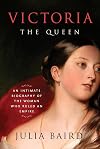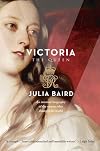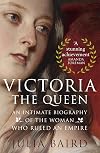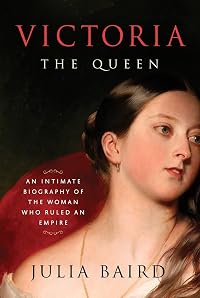
Victoria: The Queen
by Julia Baird
On This Page
Description
A magnificent biography of Queen Victoria by International New York Times columnist Julia Baird. Drawing on previously unpublished papers, 'Victoria: The Queen' is a stunning new portrait of the real woman behind the myth--a story of love and heartbreak, of devotion and grief, of strength and resilience. When Victoria was born, in 1819, the world was a very different place. Revolution would begin to threaten many of Europe's monarchies in the coming decades. In Britain, a generation of show more royals had indulged their whims at the public's expense, and republican sentiment was growing. The Industrial Revolution was transforming the landscape, and the British Empire was commanding ever larger parts of the globe. Born into a world where woman were often powerless, during a century roiling with change, Victoria went on to rule the most powerful country on earth with a decisive hand. Fifth in line to the throne at the time of her birth, Victoria was an ordinary woman thrust into an extraordinary role. As a girl, she defied her mother's meddling and an adviser's bullying, forging an iron will of her own. As a teenage queen, she eagerly grasped the crown and relished the freedom it brought her. At twenty , she fell passionately in love with Prince Albert of Saxe-Coburg and Gotha, eventually giving birth to nine children. She loved sex and delighted in power. She was outspoken with her ministers, overstepping boundaries and asserting her opinions. After the death of her adored Albert, she began a controversial, intimate relationship with her servant John Brown. She survived eight assassination attempts over the course of her lifetime. And as science, technology, and democracy were dramatically reshaping the world, Victoria was a symbol of steadfastness and security--queen of a quarter of the world's population at the height of the British Empire's reach. Drawing on sources that include fresh revelations about Victoria's relationship with John Brown, Julia Baird brings vividly to life the fascinating story of a woman who struggled with so many of the things we do today: balancing work and family, raising children, navigating marital strife, losing parents, combating anxiety and self-doubt, finding an identity, searching for meaning. This sweeping, page-turning biography gives us the real woman behind the myth: a bold, glamorous, unbreakable queen--a Victoria for our times, a Victoria who endured.--Jacket. show lessTags
Recommendations
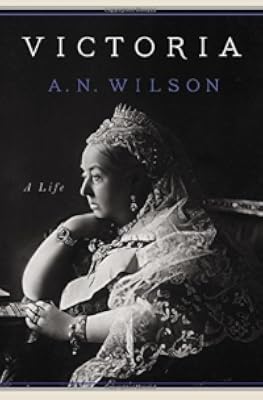









Member Recommendations


Member Reviews
Queen Victoria gave her name to an age, but I'd not really considered her life as a whole until this biography. Spanning almost the entire nineteenth century (Victoria was born in 1819 and passed away in 1901), Victoria's life provides an interesting prism through which to gain insight into Europe from the end of the Napoleonic war to beginning of World War I. Indeed, Victoria's many children and family relationships played a role in creating the circumstances which led to the first world war. Victoria as a person was also intriguing - a woman both of her time and one who challenged it as well, as only a woman ruling during a patriarchal age can. This is an excellent biography for those hoping to understand Victoria and her era better.
Victoria was eighteen years when she ascended the throne of England at a time when women were considered property of their husbands and their sole purpose was to bare children. Raised by a loving, but ambitious mother, Victoria was a head strong child who learned how to get her way early in life. When she became queen, she relished the freedom she had and delayed marrying for as long as possible, but when she first met Prince Albert from Germany (a marriage arranged by her uncle, Leopold) she was smitten and fell madly in love. Albert also loved her deeply but was ambitious in his own right and of the belief that women were not able to govern. The marriage was a constant struggle between power yet remained deeply loving.
Victoria gave show more birth to nine children at a time when childbirth was often dangerous. She was not particularly loving to them when they were infants, but Albert was a hands on and loving father. As they grew older, she became very involved in their upbringing and always wanted the best for each of them.
This book is thick and heavy with almost a fourth dedicated to the notes of research. The author was able to actually research in the royal archives which provides much intimate, interesting, and personal stories of the Queen who was a voluminous writer.
The death of Albert put her into mourning which lasted the rest of her life; however, her relationship with a Scottish servant, John Brown, meant a great deal to her and it was often assumed that they were more than friends. Her relationship with the Indian man, Abdul Karim known as the Munshi, was a great source of concern by her family so many of those records were destroyed.
Victoria's relationship with the Prime Ministers of England varied in relationship with how much they were able to charm her. Disraeli was the master; Gladstone, on the other hand, was hostile and she in return did everything to keep him from power.
This story is as readable as a novel, filled with interesting stories, and so well researched. The history of England through most of the 19th century and the Industrial Revolution can be seen in this wonderful book. Highly recommend. show less
Victoria gave show more birth to nine children at a time when childbirth was often dangerous. She was not particularly loving to them when they were infants, but Albert was a hands on and loving father. As they grew older, she became very involved in their upbringing and always wanted the best for each of them.
This book is thick and heavy with almost a fourth dedicated to the notes of research. The author was able to actually research in the royal archives which provides much intimate, interesting, and personal stories of the Queen who was a voluminous writer.
The death of Albert put her into mourning which lasted the rest of her life; however, her relationship with a Scottish servant, John Brown, meant a great deal to her and it was often assumed that they were more than friends. Her relationship with the Indian man, Abdul Karim known as the Munshi, was a great source of concern by her family so many of those records were destroyed.
Victoria's relationship with the Prime Ministers of England varied in relationship with how much they were able to charm her. Disraeli was the master; Gladstone, on the other hand, was hostile and she in return did everything to keep him from power.
This story is as readable as a novel, filled with interesting stories, and so well researched. The history of England through most of the 19th century and the Industrial Revolution can be seen in this wonderful book. Highly recommend. show less
This biography of Queen Victoria is hefty, but given the length of her rule, it feels just right. The book covers her tightly-supervised childhood, her ascension to the throne at age 18, her marriage to Albert, births of 9 children, and more personal details far too numerous to mention. It also delves into her relationships with her various prime ministers, some more successful than others, starting with Lord Melbourne, and featuring Robert Peel, Benjamin Disraeli and William Gladstone. After her husband died at age 42, she developed close relationships with two men, John Brown and Abdul Karim, much to the concern of her family. Beyond the factual account of her life, I learned a couple other things that were interesting. First, I was show more surprised that she had such an active role in government policy, pushing forth various programs, or in some cases, various prime ministers. Also, and more troubling, this appears to be a woman that suffered her entire life from depression and general neediness. This, of course, came to the fore after the births of her children (Post-partum depression) and the early death of her husband. Given the era in which she lived, none of this was diagnosed, nor was it treated. So I found that much of her life seemed far more unproductive than if she was a mentally healthy individual. In addition, her neediness for a strong authoritative male figure in her life caused her to form perhaps unwise close relationships with Brown and Karim. The author does cite the accomplishments of her reign, and there were many, but I left the book feeling that for a long period of time England had a compromised sovereign.
In any case, this book was well-researched and certainly well written. As long as it was, I never felt that I had hit a dull passage. This was a fascinating account of a fascinating, if troubled, individual, who happened to reign, for a time, a quarter of the world's population. show less
In any case, this book was well-researched and certainly well written. As long as it was, I never felt that I had hit a dull passage. This was a fascinating account of a fascinating, if troubled, individual, who happened to reign, for a time, a quarter of the world's population. show less
Frankly, I picked this up after seeing two years of the T.V. series about her life. Of course, the series strayed significantly from her real life, which is unfortunate. Victoria, about whom I really knew nothing of substance, was a remarkable person/British monarch. Despite not being the nearly perfect, albeit tempestuous, person depicted in the television series, she was amazing in so many other ways. Possibly we have no stomach for heroines with noticeable and sometimes unsightly warts, but the real Victoria did not need excessive burnishing to make her story noteworthy, compelling, and attractive. She had many faults, but we gain nothing, and actually lose a true appreciation for all that she did, by erasing them from history. I now show more must find some other bios of Victoria to get some different perspectives on one of the most renowned British heads of state, male or female. show less
A balanced biography, blending the personal and public sides of Queen Victoria in an insightful and interesting way. Particularly useful, the book’s front matter helped its reader by including Victoria’s Family Tree, illustrated maps of the changing European landscape during Victoria’s reign, plus a cast of characters (of which there are many). The introduction by the author sets up the bio’s theme perfectly, disclosing that some parts of Victoria’s diaries, parts destroyed (burned and thought gone) when edited in 1943 by Victoria’s youngest daughter, Beatrice, had been--unbeknownst to the 86 years-old Beatrice— photographed and secreted away in the Royal Archives. By whom, still remains unknown. Other editors, Arthur show more Benson and Lord Esher, likewise, practiced a form of “historical censorship” while culling Queen Victoria’s correspondence. Putting aside those intriguing details, what makes this such a praiseworthy book is its skillful presentation of Victoria’s private life, from cradle to grave, and how her public reign of the United Kingdom merges with 19th Century history.
After viewing three seasons of Victoria of Masterpiece Theater on PBS, I felt I wanted to know more. This well-researched account examines Victoria’s relationships, with her mother, her beloved prince/ husband, Albert, her feelings about motherhood and her children, while she was also dealing with the affairs of state, plus her -- sometimes prickly-- relationships with her prime ministers. Also explored, her over-powering grief after Albert’s death and Victoria’s late-in-life friendship with John Brown, revealing her burial wishes along with a few prior unknowns. Julia Baird, whose background is journalism, adroitly summarizes historical events and places them within the context of Queen Victoria’s life. It’s a piece of craftsmanship that helps boost the book’s pacing. So, even though I’ve admittedly only read one biography on Queen Victoria, this is the one I’m glad I decided on. I highly recommend. show less
After viewing three seasons of Victoria of Masterpiece Theater on PBS, I felt I wanted to know more. This well-researched account examines Victoria’s relationships, with her mother, her beloved prince/ husband, Albert, her feelings about motherhood and her children, while she was also dealing with the affairs of state, plus her -- sometimes prickly-- relationships with her prime ministers. Also explored, her over-powering grief after Albert’s death and Victoria’s late-in-life friendship with John Brown, revealing her burial wishes along with a few prior unknowns. Julia Baird, whose background is journalism, adroitly summarizes historical events and places them within the context of Queen Victoria’s life. It’s a piece of craftsmanship that helps boost the book’s pacing. So, even though I’ve admittedly only read one biography on Queen Victoria, this is the one I’m glad I decided on. I highly recommend. show less
This was truly one of the best historical biographies that I've ever had the pleasure of reading. Baird's thoroughly researched bio provides excellent details and insight into an extraordinary woman and her family, friends, and kingdom. It also gave me a deep appreciation for the brilliance of Prince Albert (a compassionate visionary).
I still haven't quite made my mind up about Victoria, while she was an incredible leader, it was shocking and horrifying to read of the millions of deaths caused by the reach of the British Empire.
I'm also still coming to terms with the fact that she was so very against the women's rights movement (this baffles me) she ruled an empire at eighteen years old and had to 'prove' herself on a daily basis to show more the men she was ruling, constantly battling with Prime Ministers and even with Albert.
It was enlightening to read about the living conditions for rich and poor, the women's rights movement, various wars, Victoria's children who were scattered throughout royal houses in Europe, Lord Melbourne, Disraeli, Gladstone, other British leaders and much more.
Something else I don't know, was the fact that most of Victoria's journals and papers were 'edited' by her daughter, Beatrice. It's one of the greatest acts of censorship of all time. Although Baird's biography was amazing, it does leave a lot of questions - especially Victoria's relationship with John Brown, due to the destruction of journals and the fact that major parts were re-written we will probably never know.
I learned a lot in an enjoyable way. If you're interested in learning about the Victorian era, I highly recommend this ❤️ show less
I still haven't quite made my mind up about Victoria, while she was an incredible leader, it was shocking and horrifying to read of the millions of deaths caused by the reach of the British Empire.
I'm also still coming to terms with the fact that she was so very against the women's rights movement (this baffles me) she ruled an empire at eighteen years old and had to 'prove' herself on a daily basis to show more the men she was ruling, constantly battling with Prime Ministers and even with Albert.
It was enlightening to read about the living conditions for rich and poor, the women's rights movement, various wars, Victoria's children who were scattered throughout royal houses in Europe, Lord Melbourne, Disraeli, Gladstone, other British leaders and much more.
Something else I don't know, was the fact that most of Victoria's journals and papers were 'edited' by her daughter, Beatrice. It's one of the greatest acts of censorship of all time. Although Baird's biography was amazing, it does leave a lot of questions - especially Victoria's relationship with John Brown, due to the destruction of journals and the fact that major parts were re-written we will probably never know.
I learned a lot in an enjoyable way. If you're interested in learning about the Victorian era, I highly recommend this ❤️ show less
Originally posted on Tales to Tide You Over
From the forward, I half expected this biography of Queen Victoria to be as heavily biased toward a feminist portrayal as Victoria’s youngest daughter’s “cleansing” of Victoria’s diaries had attempted to portray Queen Victoria as a traditional female. Instead, this is a complex, nuanced book based largely on contemporary accounts including those few of Victoria’s own diaries that still existed outside of the censored ones.
I have a distinct bias when reading history in that I’m fascinated by the people and their impact much more than accounts of grand events or listings of dates. Julia Baird offers just this approach to history, noting not only the personalities of the times, but show more how personal exchanges changed the course of history.
An early example is when a socially motivated, active advocate for her people and for the single state fell in love with Albert, her to be Prince Consort, and transformed her nature into a more traditional female role even to the point of convincing herself she lacked the very abilities she’d fought her mother and John Conroy to claim. This is only one of the complexities found within these pages, which reveal a woman thrust into a position of power but surrounded by people confident she lacked the intelligence to do it justice.
Victoria could be manipulated, especially in her years with Prince Consort Albert, but she was more active in manipulating events to her preference than many were aware. Had she been more successful, there might have been a revolt, but at the same time, her public persona of gentle mother along with her diminished appearance, made her subjects love her.
She’s a woman out of time and served as an inspiration to her female subjects who felt constrained by the beliefs about their abilities that were founded on a concept of male superiority. As part of her contradictions, though, she saw herself as an anomaly and thought efforts to gain rights for women foolhardy. She actively opposed measures to that effect when interacting with Parliament.
Victoria is only one of the personalities that came to life in this portrayal. Albert appears in his full strengths and weaknesses. From a feminist perspective, he is a villain for all he did to advance his interests by crushing Victoria’s sense of her own competence. At the same time, he didn’t act maliciously but rather out of a belief in what was right, something he infused his marriage with, setting Victoria in the awkward position of being both submissive as a wife and superior as his queen.
The same is true for the various prime ministers Victoria dealt with over the course of her long reign. Some were able to learn the mix of deference, flattery, and sheer kindness that would win over Victoria’s support while others suffered because they appeared to condescend, something that set her back up and made sure she would never agree with that prime minister no matter what.
Other members of government both underestimated her and suffered from working behind her back, even though this being a constitutional monarchy she shouldn’t have had as much direct influence as she did.
Victoria was around for so long that she held to many outdated positions in her later years, but at the same time, her reign saw the end of slavery, improved working conditions, increased voting rights, and a recognition of the needs of the people beyond those in the nobility. This proved a welcome change after the previous kings had shown an extravagant court while people starved in the streets. Victoria actively went among her people and seemed to have an almost preternatural understanding of their will and needs.
She did suffer from poor advisors at times, though. The accounts she got of the wars carried out both with and without her support during her reign is a prime example. She saw them as honorable attempts to secure an imperial Britain, but failed to see how poorly they’d been carried out. The reports sent to her spoke only of the glory with none of the consequences, things she learned about when visiting wounded soldiers or supporting Florence Nightingale’s efforts to improve the conditions of soldiers at war, especially after the disastrous efforts in Turkey. While the British Army succeeded in its aims, the costs in human lives, as much from disease spreading in poor conditions as actual conflicts, was overwhelming.
I’m getting lost in the detail, so I’ll stop here, but this gives some sense of the fascinating and evocative presentation of events and the deeply complex nature of Queen Victoria, who struggled her whole life with the contradictions between her role as ruler and her traditional position as a woman. Had it been as simple as being thrust into a role unsuited to her nature, she would have abdicated in favor of her popular son and heir. Instead, she did not trust his ability to rule and would not leave her people in less suitable hands until she had no other choice.
I thoroughly enjoyed this dive into the heart of the Victorian Era, and from my extensive notes, I found much to discover that may prove useful later. Even before finishing, I had already recommended this biography to several people, and I can wholeheartedly recommend it as a complex and multi-layered account of the Victorian Era full of fascinating historical details that, rather than following a strict chronology, preferred to note consequences in context rather than time.
P.S. I received this book from the publisher through NetGalley in return for an honest review. show less
From the forward, I half expected this biography of Queen Victoria to be as heavily biased toward a feminist portrayal as Victoria’s youngest daughter’s “cleansing” of Victoria’s diaries had attempted to portray Queen Victoria as a traditional female. Instead, this is a complex, nuanced book based largely on contemporary accounts including those few of Victoria’s own diaries that still existed outside of the censored ones.
I have a distinct bias when reading history in that I’m fascinated by the people and their impact much more than accounts of grand events or listings of dates. Julia Baird offers just this approach to history, noting not only the personalities of the times, but show more how personal exchanges changed the course of history.
An early example is when a socially motivated, active advocate for her people and for the single state fell in love with Albert, her to be Prince Consort, and transformed her nature into a more traditional female role even to the point of convincing herself she lacked the very abilities she’d fought her mother and John Conroy to claim. This is only one of the complexities found within these pages, which reveal a woman thrust into a position of power but surrounded by people confident she lacked the intelligence to do it justice.
Victoria could be manipulated, especially in her years with Prince Consort Albert, but she was more active in manipulating events to her preference than many were aware. Had she been more successful, there might have been a revolt, but at the same time, her public persona of gentle mother along with her diminished appearance, made her subjects love her.
She’s a woman out of time and served as an inspiration to her female subjects who felt constrained by the beliefs about their abilities that were founded on a concept of male superiority. As part of her contradictions, though, she saw herself as an anomaly and thought efforts to gain rights for women foolhardy. She actively opposed measures to that effect when interacting with Parliament.
Victoria is only one of the personalities that came to life in this portrayal. Albert appears in his full strengths and weaknesses. From a feminist perspective, he is a villain for all he did to advance his interests by crushing Victoria’s sense of her own competence. At the same time, he didn’t act maliciously but rather out of a belief in what was right, something he infused his marriage with, setting Victoria in the awkward position of being both submissive as a wife and superior as his queen.
The same is true for the various prime ministers Victoria dealt with over the course of her long reign. Some were able to learn the mix of deference, flattery, and sheer kindness that would win over Victoria’s support while others suffered because they appeared to condescend, something that set her back up and made sure she would never agree with that prime minister no matter what.
Other members of government both underestimated her and suffered from working behind her back, even though this being a constitutional monarchy she shouldn’t have had as much direct influence as she did.
Victoria was around for so long that she held to many outdated positions in her later years, but at the same time, her reign saw the end of slavery, improved working conditions, increased voting rights, and a recognition of the needs of the people beyond those in the nobility. This proved a welcome change after the previous kings had shown an extravagant court while people starved in the streets. Victoria actively went among her people and seemed to have an almost preternatural understanding of their will and needs.
She did suffer from poor advisors at times, though. The accounts she got of the wars carried out both with and without her support during her reign is a prime example. She saw them as honorable attempts to secure an imperial Britain, but failed to see how poorly they’d been carried out. The reports sent to her spoke only of the glory with none of the consequences, things she learned about when visiting wounded soldiers or supporting Florence Nightingale’s efforts to improve the conditions of soldiers at war, especially after the disastrous efforts in Turkey. While the British Army succeeded in its aims, the costs in human lives, as much from disease spreading in poor conditions as actual conflicts, was overwhelming.
I’m getting lost in the detail, so I’ll stop here, but this gives some sense of the fascinating and evocative presentation of events and the deeply complex nature of Queen Victoria, who struggled her whole life with the contradictions between her role as ruler and her traditional position as a woman. Had it been as simple as being thrust into a role unsuited to her nature, she would have abdicated in favor of her popular son and heir. Instead, she did not trust his ability to rule and would not leave her people in less suitable hands until she had no other choice.
I thoroughly enjoyed this dive into the heart of the Victorian Era, and from my extensive notes, I found much to discover that may prove useful later. Even before finishing, I had already recommended this biography to several people, and I can wholeheartedly recommend it as a complex and multi-layered account of the Victorian Era full of fascinating historical details that, rather than following a strict chronology, preferred to note consequences in context rather than time.
P.S. I received this book from the publisher through NetGalley in return for an honest review. show less
Members
- Recently Added By
Published Reviews
ThingScore 75
added by private library
Lists

History: England, Ireland, Scotland, Wales
94 works; 2 members
Author Information

3 Works 1,394 Members
Awards and Honors
Awards
Common Knowledge
- Canonical title
- Victoria: The Queen
- Alternate titles
- Victoria: The Woman Who Made the Modern World
- People/Characters
- Victoria, Queen of the United Kingdom; Albert, Prince Consort; King Leopold I of Belgium; Prince Edward, Duke of Kent and Strathearn; Victoria of Saxe-Coburg-Saalfeld, Duchess of Kent; Baroness Lezhen (show all 18); William IV, King of the United Kingdom; Victoria, German Empress and Queen of Prussia; Edward VII, King of the United Kingdom; Alfred, Duke of Saxe-Coburg and Gotha; Alice, Grand Duchess of Hesse and by Rhine; Helena, Princess Christian of Schleswig-Holstein; Princess Louise, Duchess of Argyll; Prince Arthur, Duke of Connaught and Strathearn; Prince Leopold, Duke of Albany; Princess Beatrice of Great Britain; Alexandra of Denmark, Queen Consort of the United Kingdom; Wilhelm II, German Kaiser and King of Prussia
- Important places
- Buckingham Palace, London, England, UK; Balmoral Castle, Aberdeenshire, Scotland, UK; Kensington Palace, London, England, UK; Windsor Castle, Windsor, Berkshire, England, UK; Osborne House, Isle of Wight, UK
- Important events
- Victorian Era
- Epigraph
- [Queen Victoria did not] belong to any conceivable category of monarchs or of women, she bore no resemblance to an aristocratic English lady, she bore no resemblance to a wealthy middle-class Englishwoman, nor to any typical ... (show all)Princess of a German court. . . . She reigned longer than the other three Queens put together. Never in her life could she be confused with anyone else, nor will she be in history. Such expressions as "people like Queen Victoria," or "that sort of woman" could not be used about her. . . . For over sixty years she was simply without prefix or suffix "The Queen."
- Arthur Ponsonby
We are all on the look-out for signs of illness in the Queen; but . . . the vein of iron that runs thro' her most extraordinary character enables her to bear up to the last minute, like nobody else.
- Lady L... (show all)yttelton - Dedication
- For Poppy and Sam, my magical children
- First words
- (Introduction) She was ready.
Queen Victoria was born, roaring, at 4:15 A.M., in the hour before dawn on May 24, 1819. - Last words
- (Click to show. Warning: May contain spoilers.)The answer is simple: Victoria endured.
- Blurbers
- Schiff, Stacy; Foreman, Amanda; Meacham, Jon; Thomas, Evan
- Original language
- English
Classifications
- Genres
- Biography & Memoir, History, General Nonfiction, Nonfiction
- DDC/MDS
- 941.081092 — History & geography History of Europe British Isles Historical periods of British Isles 1837- Period of Victoria and House of Windsor Victoria 1837-1901
- LCC
- DA554 .B18 — History of Europe, Asia, Africa and Oceania Great Britain History of Great Britain England History By period Modern, 1485- Victorian era, 1837-1901
- BISAC
Statistics
- Members
- 949
- Popularity
- 27,998
- Reviews
- 31
- Rating
- (4.11)
- Languages
- 6 — Danish, Dutch, English, German, Portuguese (Portugal), Swedish
- Media
- Paper, Audiobook, Ebook
- ISBNs
- 25
- ASINs
- 5