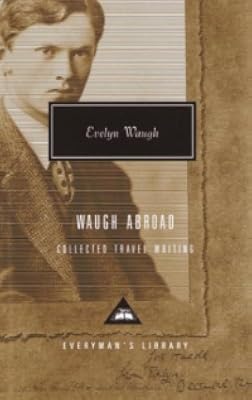
Waugh Abroad: The Collected Travel Writing
by Evelyn Waugh 
On This Page
Description
(Book Jacket Status: Jacketed) Thirty years’ worth of Evelyn Waugh’s inimitable travel writings have been gathered together for the first time in one volume. Waugh’s accounts of his travels–spanning the years from 1929 to 1958–describe journeys through the West Indies, Mexico, South America, the Holy Land, and Africa. And just as his travels informed his fiction, his novelist’s sensibility is apparent in each of these pieces. Waugh pioneered the genre of modern travel writing in show more which the comic predicament of the traveler is as central as the world he encounters. He wrote with as sharp an eye for folly as for foliage, and a delight in the absurd, not least where his own comfort and dignity are concerned. From his fresh take on the well-traveled and hence already “fully labeled” Mediterranean region in Labels, to a close-up view of Haile Selassie’s coronation in Remote People, from a comically miserable stint in British Guiana. show lessTags
Recommendations





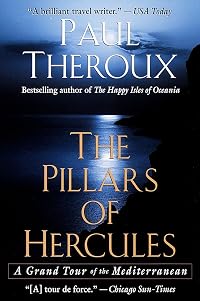
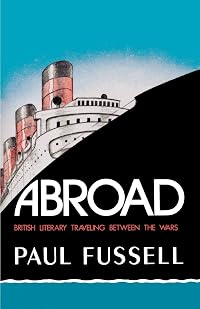
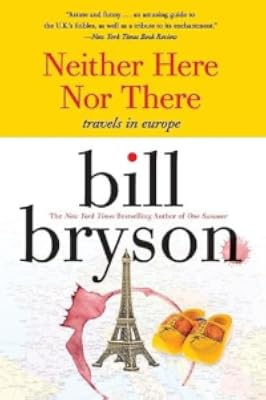
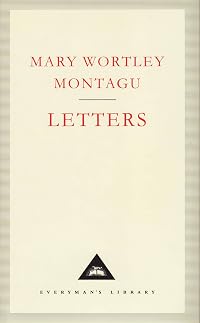



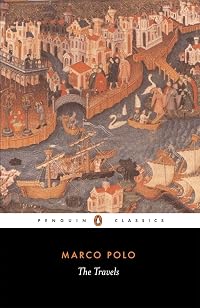
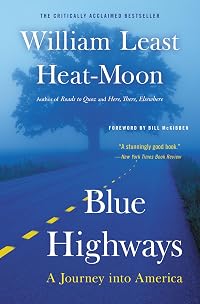
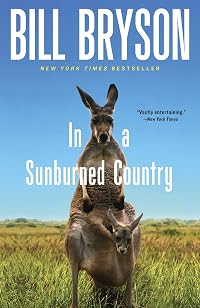
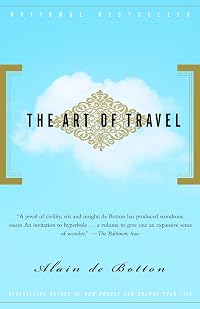








Member Recommendations

Member Reviews
Apparently Waugh did not allow any of his travel books to be reprinted during his lifetime, which I think was prudent. Writing is of course a livelihood, not merely artistic and creative expression, but Waugh’s travel writing was pretty exclusively in the former category with little of the latter. The material in Remote People and Waugh in Abyssinia was collected in a journalistic capacity and retains interest because of the historic events being covered, although Waugh’s obvious sympathy with the Italian cause in Ethiopia is disconcerting. I enjoyed Ninety-Two Days mostly because Waugh was visiting a country, Guyana, still not regarded as a tourist destination and exploring the interior, a landscape unfamiliar even to most show more Guyanese. The most egregious sell-out is Robbery under Law, written under contract to the Pearson family whose oil assets had been confiscated by the Mexican government. Graham Greene’s visit to Mexico around the same time produced The Power and the Glory, one of his greatest novels. Waugh’s PR effort is a painful contrast. Written in 1938, Robbery under Law is full of predictions about the world geopolitical future which are very wide of the mark, to put it charitably. But just when I was ready to throw this doorstop of a book (1064 pages) across the room some characteristic Waughian turn of phrase or original insight kept me going. Probably When the Going Was Good, a book of excerpts from four of these works he created after WW II, contains most of the best material. Waugh Abroad is for Waugh completists. show less
Interesting largely for the reflection on current affairs. Waugh visits Africa and parts of the Middle east before WWII and describes the European powers picking the local leaders most likely to be helpful to them--decisions that we are still dealing with the effects of. He is very critical of the Mexican government of the 30s, though his greatest ire is raised by their persecution the Catholic church. He is also obviously not a supporter of the United Nations actions creating Israel.
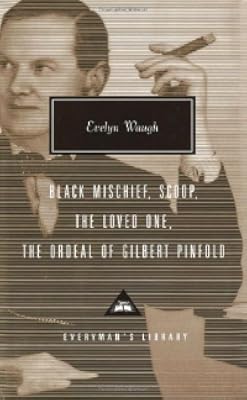
Labels, Remote People, Ninety-Two Days, Waugh in Abyssinia, Robbery Under Law, The Holy Places, A Tourist in Africa. Waugh in Abyssinia gave rise to _Black Mischief_
Ratings
Members
- Recently Added By
Lists

Best of Travel Narratives
142 works; 28 members
Author Information

134+ Works 56,853 Members
Born in Hampstead and educated at Oxford University, Evelyn Waugh came from a literary family. His elder brother, Alec was a novelist, and his father, Arthur Waugh, was the influential head of a large publishing house. Even in his school days, Waugh showed sings of the profound belief in Catholicism and brilliant wit that were to mark his later show more years. Waugh began publishing his novels in the late 1920's. He joined the Royal Marines at the beginning of World War II and was one of the first to volunteer for commando service. In 1944 he survived a plane crash in Yugoslavia and, while hiding in a cave, corrected the proofs of one of his novels. Waugh's early novels, Decline and Fall (1927), Vile Bodies (1930), and A Handful of Dust (1934), established him as one of the funniest and most brilliant satirists the British had seen in years. He was particularly skillful at poking fun at the scramble for prominence among the upper classes and the struggle between the generations. He lived for a while in Hollywood, about which he wrote The Loved One (1948), a scathing attack on the United States's overly sentimental funeral practices. His greatest works, however, are Brideshead Revisited (1945), which has been made into a highly popular television miniseries, and the trilogy Sword of Honor (1965), composed of Men at Arms (1952), Officers and Gentlemen (1955), and The End of the Battle (1961). (Bowker Author Biography) show less
Evelyn Waugh has a Legacy Library. Legacy libraries are the personal libraries of famous readers, entered by LibraryThing members from the Legacy Libraries group.
All Editions
Series
Belongs to Publisher Series
Work Relationships
Contains
Common Knowledge
- Canonical title
- Waugh Abroad: The Collected Travel Writing
- Original publication date
- 2003
- Original language
- English
Classifications
- Genres
- Travel, Fiction and Literature
- DDC/MDS
- 828.91203 — Literature & rhetoric English & Old English literatures English miscellaneous writings English miscellaneous writings 1900- English miscellaneous writings 1900-1999 English miscellaneous writings 1900-1945 Diaries,journals, notebooks, reminiscences
- LCC
- PR6045 .A97 .A6 — Language and Literature English English Literature 1900-1960
- BISAC
Statistics
- Members
- 154
- Popularity
- 213,544
- Reviews
- 3
- Rating
- (3.75)
- Languages
- English
- Media
- Paper
- ISBNs
- 2
- ASINs
- 1