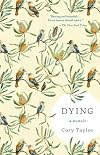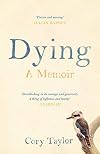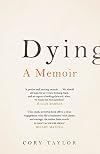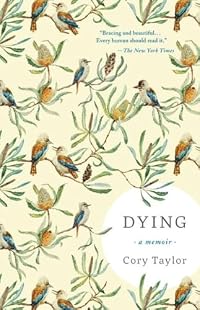
Dying: A Memoir
by Cory Taylor
On This Page
Description
At the age of sixty, Cory Taylor is dying of melanoma-related brain cancer. Her illness is no longer treatable: she now weighs less than her neighbor's retriever. As her body weakens, she describes the experience--the vulnerability and strength, the courage and humility, the anger and acceptance--of knowing she will soon die. Written in the space of a few weeks, in a tremendous creative surge, this powerful and beautiful memoir is a clear-eyed account of what dying teaches: Taylor describes show more the tangle of her feelings, remembers the lives and deaths of her parents, and examines why she would like to be able to choose the circumstances of her death. Taylor's last words offer a vocabulary for readers to speak about the most difficult thing any of us will face. And while Dying: A Memoir is a deeply affecting meditation on death, it is also a funny and wise tribute to life. --amazon.com. show lessTags
Recommendations











Member Reviews
“I was as under-prepared as anyone could be. It was as if I had stumbled out of a land of make-believe into the realm of the real. That is why I started writing this book. Things are not as they should be. For so many of us, death has become the unmentionable thing, a monstrous silence.But this is no help to the dying, who are probably lonelier now than they’ve ever been. At least that’s how it feels to me.”
“while my body is careering towards catastrophe, my mind is elsewhere, concentrated on this other, vital task, which is to tell you something meaningful before I go.”
Before her death in July 2016 from metastatic melanoma, Australian writer Cory Taylor penned a beautiful, calm, uncluttered memoir. In it, she contemplated show more dying— what the end holds, of course, but also the miracle and richness of being in the world. Years before her mother was to succumb to dementia, she had spoken to Cory about “the voluntary euthanasia movement” which advocates for a person’s right to determine the time of his or her own death—before debilitation and/or loss of cognitive function make such deliberations impossible. Unfortunately, Taylor admits, she hadn’t much listened to her mother, who was still a vital and active woman at the time. Some years later, Taylor would see this admirable woman gravely ill, barely recognizable—in fact, “clinging onto a bathroom basin with all of her meagre strength” while a young nurse wiped her bottom. “The look in my mother’s eyes as she turned and saw me watching,” Taylor writes, “reminded me of an animal in unspeakable torment.” Little wonder, then, that with her own demise imminent, she ordered a euthanasia drug from China which could summon death to do its work more quickly. She had qualms about using the drug (the effect such a death would have on her family was just too painful to contemplate), and, in fact, did not end up doing so, but it at least provided her with some measure of control.
Taylor marvels at her having made it into her sixties—it’s even more remarkable, really, when one considers that her diagnosis of stage-four melanoma came just before her fiftieth birthday. Melanoma is perhaps the swiftest of malignant cancers. Taylor was an outlier, for sure. She feelingly observes what is often stated: life is tremendously fragile. Any one of us can be taken suddenly and with apparent randomness—at any moment. All of us experience any number of close calls.
The palliative-care services Taylor received interestingly included a volunteer biographer whose job was to listen and record key events and memories of the terminally ill patient. The recollections were to be collated and presented to the bereaved family after their beloved’s death. Taylor was tended to by the wise and extraordinary Susan Addison, who had lost a teenaged son to brain cancer years before and who had herself published a memoir on the subject. Sadly, Addison died suddenly in the midst of the project. About Addison’s unexpected death Taylor reflects: “I was sorry we hadn’t recorded her life story instead of mine during our meetings. I was sorry she hadn’t had the same chance I’ve had, to say a long goodbye to those she loved, or to prepare them for life without her, to the extent that that is possible. […] A slow death, like mine, has that one advantage. You have a lot of time to talk, to tell people how you feel, to try to make sense of the whole thing, of the life that is coming to a close, both for yourself and for those who remain.”
Taylor’s memoir is infused with love and concern for her grown sons and her Japanese artist husband, Shin. She acknowledges the great gift of Shin, who she says has nurtured and cared for her devotedly and whose steadiness and good humour have ensured her sanity. Her own life-affirming union leads her to reflect on the hardships of her mother, who lost her great love, a part-Chinese pilot whom the family frowned upon, when he was shot down in his plane during World War II. She married Gordon Taylor, Cory’s father, instead. To a significant extent, his inner demons would hold his family—particularly his wife—in their depressive grip for years.
A great deal of the second half of this short book is dedicated to the author’s parents and their unhappy marriage, which ultimately ended in divorce. Taylor’s difficult father was a restless man, a pilot who had also flown in the war. He was plagued by mental illness, which mostly manifested itself in extended black moods (and often lengthy retreats to his bed) punctuated by angry outbursts. The family was dragged to any number of locations—Indonesia, Fiji, and Kenya, among them—as Gordon frequently changed jobs. There were, apparently, endless opportunities for pilots after the war as the aviation industry was “taking off” so to speak, but disenchantment tended to descend quickly on Gordon, and the family would be uprooted yet again. Taylor herself was largely untroubled by the constant moves. It was all she knew, she said. Finally, however, her mother had simply had enough, and initiated divorce proceedings—something highly unusual in that day and age. University-educated, she supported her family with her work as a high-school teacher.
Taylor laments that her relationship with her older brother and sister was characterized by the fractures and distance that had plagued her mother’s family. Taylor’s grandmother, Ril, had been a restless, unhappy woman who chafed against life on a large farm in the outback. The author feels she inherited something of Ril’s (and Gordon’s) restlessness and desire for adventure—though, it would appear, less of the darkness and distress. For Cory, travel was not the compulsion it had been for Gordon (who was attempting to placate his demons with it) but an opportunity to take in the richness and variety the world offered.
Though Susan Addison sadly did not see Taylor’s biography to completion, its subject managed to create her own final gift of writing to her family and to the larger world of readers. Written by a vital, observant woman, the book tells us something meaningful indeed—just as its author intended.
Memorable Quotations
“Writing, even if most of the time you are only doing it in your head, shapes the world, and makes it bearable.”
“as the British psychotherapist and essayist Adam Phillips says, we are all haunted by the life not lived, by the belief that we’ve missed out on something different and better. […] The problem with reverie is that you always assume you know how the unlived life turns out. And it is always a better version of the the life you’ve actually lived […]more significant and purposeful […]impossibly free of setbacks and mishaps.”
“It’s often said that life is short. But life is also simultaneous, all of our experience existing in time together in the flesh. For what are we, if not a body taking a mind for a walk, just to see what’s there? And, in the end, where do we get if not back to a beginning we’ve never really left behind? Time present and time past/Are both perhaps present in time future/And time future contained in time past. It is all, according to T.S. Eliot, the same thing. I am a girl and I am a dying woman. My body is my journey, the truest record of all I have done and seen, the site of all my joys and heartbreaks, of all my misapprehensions and blinding. If I feel the need to relive the journey it is all there written in runes on my body. Even my cells remember it, all that sunshine I bathed in as a child, too much as it turned out.In my beginning is my end.” show less
“while my body is careering towards catastrophe, my mind is elsewhere, concentrated on this other, vital task, which is to tell you something meaningful before I go.”
Before her death in July 2016 from metastatic melanoma, Australian writer Cory Taylor penned a beautiful, calm, uncluttered memoir. In it, she contemplated show more dying— what the end holds, of course, but also the miracle and richness of being in the world. Years before her mother was to succumb to dementia, she had spoken to Cory about “the voluntary euthanasia movement” which advocates for a person’s right to determine the time of his or her own death—before debilitation and/or loss of cognitive function make such deliberations impossible. Unfortunately, Taylor admits, she hadn’t much listened to her mother, who was still a vital and active woman at the time. Some years later, Taylor would see this admirable woman gravely ill, barely recognizable—in fact, “clinging onto a bathroom basin with all of her meagre strength” while a young nurse wiped her bottom. “The look in my mother’s eyes as she turned and saw me watching,” Taylor writes, “reminded me of an animal in unspeakable torment.” Little wonder, then, that with her own demise imminent, she ordered a euthanasia drug from China which could summon death to do its work more quickly. She had qualms about using the drug (the effect such a death would have on her family was just too painful to contemplate), and, in fact, did not end up doing so, but it at least provided her with some measure of control.
Taylor marvels at her having made it into her sixties—it’s even more remarkable, really, when one considers that her diagnosis of stage-four melanoma came just before her fiftieth birthday. Melanoma is perhaps the swiftest of malignant cancers. Taylor was an outlier, for sure. She feelingly observes what is often stated: life is tremendously fragile. Any one of us can be taken suddenly and with apparent randomness—at any moment. All of us experience any number of close calls.
The palliative-care services Taylor received interestingly included a volunteer biographer whose job was to listen and record key events and memories of the terminally ill patient. The recollections were to be collated and presented to the bereaved family after their beloved’s death. Taylor was tended to by the wise and extraordinary Susan Addison, who had lost a teenaged son to brain cancer years before and who had herself published a memoir on the subject. Sadly, Addison died suddenly in the midst of the project. About Addison’s unexpected death Taylor reflects: “I was sorry we hadn’t recorded her life story instead of mine during our meetings. I was sorry she hadn’t had the same chance I’ve had, to say a long goodbye to those she loved, or to prepare them for life without her, to the extent that that is possible. […] A slow death, like mine, has that one advantage. You have a lot of time to talk, to tell people how you feel, to try to make sense of the whole thing, of the life that is coming to a close, both for yourself and for those who remain.”
Taylor’s memoir is infused with love and concern for her grown sons and her Japanese artist husband, Shin. She acknowledges the great gift of Shin, who she says has nurtured and cared for her devotedly and whose steadiness and good humour have ensured her sanity. Her own life-affirming union leads her to reflect on the hardships of her mother, who lost her great love, a part-Chinese pilot whom the family frowned upon, when he was shot down in his plane during World War II. She married Gordon Taylor, Cory’s father, instead. To a significant extent, his inner demons would hold his family—particularly his wife—in their depressive grip for years.
A great deal of the second half of this short book is dedicated to the author’s parents and their unhappy marriage, which ultimately ended in divorce. Taylor’s difficult father was a restless man, a pilot who had also flown in the war. He was plagued by mental illness, which mostly manifested itself in extended black moods (and often lengthy retreats to his bed) punctuated by angry outbursts. The family was dragged to any number of locations—Indonesia, Fiji, and Kenya, among them—as Gordon frequently changed jobs. There were, apparently, endless opportunities for pilots after the war as the aviation industry was “taking off” so to speak, but disenchantment tended to descend quickly on Gordon, and the family would be uprooted yet again. Taylor herself was largely untroubled by the constant moves. It was all she knew, she said. Finally, however, her mother had simply had enough, and initiated divorce proceedings—something highly unusual in that day and age. University-educated, she supported her family with her work as a high-school teacher.
Taylor laments that her relationship with her older brother and sister was characterized by the fractures and distance that had plagued her mother’s family. Taylor’s grandmother, Ril, had been a restless, unhappy woman who chafed against life on a large farm in the outback. The author feels she inherited something of Ril’s (and Gordon’s) restlessness and desire for adventure—though, it would appear, less of the darkness and distress. For Cory, travel was not the compulsion it had been for Gordon (who was attempting to placate his demons with it) but an opportunity to take in the richness and variety the world offered.
Though Susan Addison sadly did not see Taylor’s biography to completion, its subject managed to create her own final gift of writing to her family and to the larger world of readers. Written by a vital, observant woman, the book tells us something meaningful indeed—just as its author intended.
Memorable Quotations
“Writing, even if most of the time you are only doing it in your head, shapes the world, and makes it bearable.”
“as the British psychotherapist and essayist Adam Phillips says, we are all haunted by the life not lived, by the belief that we’ve missed out on something different and better. […] The problem with reverie is that you always assume you know how the unlived life turns out. And it is always a better version of the the life you’ve actually lived […]more significant and purposeful […]impossibly free of setbacks and mishaps.”
“It’s often said that life is short. But life is also simultaneous, all of our experience existing in time together in the flesh. For what are we, if not a body taking a mind for a walk, just to see what’s there? And, in the end, where do we get if not back to a beginning we’ve never really left behind? Time present and time past/Are both perhaps present in time future/And time future contained in time past. It is all, according to T.S. Eliot, the same thing. I am a girl and I am a dying woman. My body is my journey, the truest record of all I have done and seen, the site of all my joys and heartbreaks, of all my misapprehensions and blinding. If I feel the need to relive the journey it is all there written in runes on my body. Even my cells remember it, all that sunshine I bathed in as a child, too much as it turned out.In my beginning is my end.” show less
In "Dying," Cory Taylor expresses her thoughts and feelings about her impending death from melanoma. She was diagnosed in 2005, just before she turned fifty, and the disease progressed slowly for almost a decade. However, after the cancer spread and all treatment options were exhausted, she realized that the end was near. She wrote this book to take stock of the past and weigh her limited options going forward. In an intimate and candid passage, Taylor raises the possibility of committing suicide using a euthanasia drug that she obtained online from China. She confides, "I contemplate my bleak future with as much courage as I can muster." It is too bad, she believes, that instead of talking openly about end-of-life issues, some believe show more that "the stark facts of mortality can be banished from our consciousness altogether." It is as if "death has become the unmentionable thing, a monstrous silence."
This book is more than just a contemplation of death. Taylor shares memories of her generally happy childhood and the satisfaction she derived from her career as a poet, screenwriter, and novelist. All was not placid during her formative years, however. Her parents had a contentious relationship, mostly because Cory's father was a self-centered and restless man who moved his wife and children around to such far-flung places as Fiji and Nairobi. The author was particularly close to her mother who, in her later years, disappeared into the fog of dementia. On a more joyful note, Taylor derived great pleasure from her marriage to Shin and loved being the mother of two wonderful sons, Nat and Dan. She enjoyed travel and was particularly fond of Japan, which she visited many times with Shin during their thirty-one year marriage.
In fluid, lyrical, and moving prose, Taylor decries the shortsightedness of those who miss the big picture. They waste countless hours worrying fruitlessly; engage in petty disputes; wallow in guilt over mistakes that cannot be undone; and nurse long-standing grudges against friends and relatives. Living well is an art that few master. "Dying" is a graceful and enlightening reminder that we should appreciate what we have, since "we are just a millimeter away from death, all of the time, if only we knew it." show less
This book is more than just a contemplation of death. Taylor shares memories of her generally happy childhood and the satisfaction she derived from her career as a poet, screenwriter, and novelist. All was not placid during her formative years, however. Her parents had a contentious relationship, mostly because Cory's father was a self-centered and restless man who moved his wife and children around to such far-flung places as Fiji and Nairobi. The author was particularly close to her mother who, in her later years, disappeared into the fog of dementia. On a more joyful note, Taylor derived great pleasure from her marriage to Shin and loved being the mother of two wonderful sons, Nat and Dan. She enjoyed travel and was particularly fond of Japan, which she visited many times with Shin during their thirty-one year marriage.
In fluid, lyrical, and moving prose, Taylor decries the shortsightedness of those who miss the big picture. They waste countless hours worrying fruitlessly; engage in petty disputes; wallow in guilt over mistakes that cannot be undone; and nurse long-standing grudges against friends and relatives. Living well is an art that few master. "Dying" is a graceful and enlightening reminder that we should appreciate what we have, since "we are just a millimeter away from death, all of the time, if only we knew it." show less
First, I do love a physically beautiful book, and this is one of those, so kudos to TinHouse Books and cover designer Diane Chonette for the gorgeous, dust jacketless design. Second, I am profoundly sad, having finished this, that Cory Taylor died. Dying: A Memoir is perhaps the most clear-eyed, unsentimental, thoughtful book about death that I've read, which is all the more remarkable given that Taylor was well down the path to the grave when she wrote it. She examines her situation, family history, and life and death in general in a spirit of curious inquiry, and takes us down a path both familiar and strange. I appreciate that she made the effort to describe the view from her vantage point during her final year.
I got tipped off to this from a New Yorker article that was taken from the book and I was interested because my best friend is a pediatric hospice doctor. How do you do that job every day??! Taylor writes frankly about her terminal illness and her longing to meet death on her own terms (which is not legal in her home country of Australia). She had the right drugs in her possession (internet order from China) but wasn't sure she had the courage to go through with it because of what it would do to those left behind. More than anything she wanted to be able to talk about the topic which she found was off limits in many circles for many reasons. She confronted the topic head on and also did some reckoning and reconciling in her own life, show more examining the break-up of her parents' marriage, her estranged relationship with her father and walking her mother through her own difficult death. No stone is unturned, but by the end, there is a sense of peace and acceptance and wonder at the events and people who shaped her. Once section divulges questions she has been asked -- no bucket list. Instead she has the ringing endorsement of loving what she's doing.
"It is my bliss, this thing called writing....writing, even if most of the time you are only doing it in your head, shapes the world, and makes it bearable." (30) It's a beautiful book and legacy of Taylor's talent and bravery. show less
"It is my bliss, this thing called writing....writing, even if most of the time you are only doing it in your head, shapes the world, and makes it bearable." (30) It's a beautiful book and legacy of Taylor's talent and bravery. show less
https://msarki.tumblr.com/post/154283753723/dying-a-memoir-by-cory-taylor
The accident of birth is just that. And so is everything that happens afterwards, or so it seems to me…
Cory Taylor died at age sixty in July of 2016, but not before finishing this important book that details her life beginning to end. The fact that new treatments and medicines now extend our dying to degrees unmanageable by some and put to good use by others serves the writer well. Cory Taylor deftly, and honestly, presents the history of herself as a child growing up, opening and expanding to the world around her, and then on to her contracting and retreat from it, resorting to living her final days contained within two small rooms.
…I have heard it said that show more modern dying means dying more, dying over longer periods, enduring more uncertainty, subjecting ourselves and our families to more disappointments and despair. As we are enabled to live longer, we are also condemned to die longer…
Early in her life, consciousness, and its opposite state of unconsciousness, made an indelible impression on her. From that moment on it was what Cory Taylor believed in, resisting all attempts by others to persuade her otherwise. Subjected as we all are to compounding religions and their accompanying faiths in eternal life she would, for a lifetime, remain indifferent.
…For what are we, if not a body taking a mind for a walk, just to see what’s there?
Learning and the sensual life, her love for words and her mother, two sons and a good husband, would sustain her. All would play an important role in her dying, and terrifying, finality. But Cory Taylor, in the face of it all, gracefully and gratefully composes a work bereft of pity, sentimentality, and remorse. Hers is a love story, pure and simple. And a complete joy to read.
The moments that stand out for me are the ones when I felt most alive. show less
The accident of birth is just that. And so is everything that happens afterwards, or so it seems to me…
Cory Taylor died at age sixty in July of 2016, but not before finishing this important book that details her life beginning to end. The fact that new treatments and medicines now extend our dying to degrees unmanageable by some and put to good use by others serves the writer well. Cory Taylor deftly, and honestly, presents the history of herself as a child growing up, opening and expanding to the world around her, and then on to her contracting and retreat from it, resorting to living her final days contained within two small rooms.
…I have heard it said that show more modern dying means dying more, dying over longer periods, enduring more uncertainty, subjecting ourselves and our families to more disappointments and despair. As we are enabled to live longer, we are also condemned to die longer…
Early in her life, consciousness, and its opposite state of unconsciousness, made an indelible impression on her. From that moment on it was what Cory Taylor believed in, resisting all attempts by others to persuade her otherwise. Subjected as we all are to compounding religions and their accompanying faiths in eternal life she would, for a lifetime, remain indifferent.
…For what are we, if not a body taking a mind for a walk, just to see what’s there?
Learning and the sensual life, her love for words and her mother, two sons and a good husband, would sustain her. All would play an important role in her dying, and terrifying, finality. But Cory Taylor, in the face of it all, gracefully and gratefully composes a work bereft of pity, sentimentality, and remorse. Hers is a love story, pure and simple. And a complete joy to read.
The moments that stand out for me are the ones when I felt most alive. show less
This concise memoir by an author dying of cancer explores the topic of death fearlessly, but it doesn't come off as morbid or sentimental.
"As we are enabled to live longer we are also condemned to die longer," Cory Taylor writes. She discusses the topic of aid in dying in a practical way. Taylor isn't religious, and I appreciated her perspective.
Taylor isn't afraid to discuss her terminal cancer diagnosis and her impending demise with a clear eye, but she also takes time to reflect on her fascinating childhood. Overall, the book is not depressing as one might think, and is a good read for those looking for a different take on death.
"As we are enabled to live longer we are also condemned to die longer," Cory Taylor writes. She discusses the topic of aid in dying in a practical way. Taylor isn't religious, and I appreciated her perspective.
Taylor isn't afraid to discuss her terminal cancer diagnosis and her impending demise with a clear eye, but she also takes time to reflect on her fascinating childhood. Overall, the book is not depressing as one might think, and is a good read for those looking for a different take on death.
Cory Taylor was born in 1955, and she died of cancer in 2016. Sixty-one seems awfully young to die, especially from my vantage point of fifty-two, and Taylor certainly thought it was premature. She had books she still hoped to write, children she wanted to see established in their adult lives, … plans. And yet, she considers her approaching death with grace and gratitude, refusing, much as Christopher Hitchens did in his death memoir, “Mortality,” to snatch up at the last minute religious beliefs she had found implausible while in good health or indulge in complaints about “unfairness.” She dreads the growing suffering and incapacity she knows is approaching, but her love for her husband and sons and her concern for their show more feelings outweighs her fear and keeps her from using the packet of poison she ordered during her investigation into suicide. Comparing her own death to that of a friend's son, who died at nineteen, Taylor says “the fact that I was dying now was sad, but not tragic. I had lived a full life.”
Much of this “memoir” is about Taylor's parents, whose unhappy marriage left lasting marks on their children, and whose miserable deaths play strongly in her considerations of her own priorities, both in living and in dying. Taylor was close to her mother, and watching this beloved parent die horribly of dementia encouraged her to investigate assisted suicide and then less abrupt methods of dying with the greatest possible measure of dignity and comfort. About her mother's death Taylor writes,
With my own mom currently dying of lung cancer and dementia, this naturally caught my attention. Her view, that the cancer is preferable, matches my own suspicions as I've watched my mother's long decline into increasingly helpless silence from Progressive Nonfluent Aphasia, a form of FTD, and now her rapidly increasing weakness and pain with the cancer. The slow, dehumanizing darkness of dementia or the suffocating pain of the cancer. Of course, my “opinion” on the matter is irrelevant, as well as ill-informed, but I figure that Taylor, at least, had solid insight in that matter and I'm going to take her judgment as a small measure of comfort.
Lest my comments make this sound unremittingly dark, I should say again that Taylor really is not morbid, and her love for her husband, children, and other family, and her gratitude for the life she has lived shine through her book. Her admiration for her mother is a constant, and one of my favorite images in the book, which is filled with memorable images, is from an evening in Taylor's childhood, when she and her mother were taking a trip around the main island of Fiji, visiting beaches. She says,
I love that joyous, free dance at the edge of the void, fearless but tempered by love and kindness. That really stood out for me in this. Taylor has no moral or religious qualms about suicide, but she is deterred by the thought of what that act might do to the people she cares for.
As I'm sure most people do, I think about the narrative shape I imagine for my life, and in connection to this I was rather taken by a service that Taylor tells about her palliative care service providing. Her agency sent out volunteer “biographers,” who visited patients and recorded their stories, to eventually provide bound copies to the families. Taylor's biographer died unexpectedly, but, of course, her memoir accomplishes something of the same purpose, and the process, as well as the thought of the finished product, are therapeutic. A novelist and screenwriter, Taylor explains
A brave, lovely book. show less
Much of this “memoir” is about Taylor's parents, whose unhappy marriage left lasting marks on their children, and whose miserable deaths play strongly in her considerations of her own priorities, both in living and in dying. Taylor was close to her mother, and watching this beloved parent die horribly of dementia encouraged her to investigate assisted suicide and then less abrupt methods of dying with the greatest possible measure of dignity and comfort. About her mother's death Taylor writes,
"She was in a nursing home when she died, a place of such unremitting despair it was a test of my willpower just to walk through the front door. The last time I saw her, I stood helplessly by while she had her arse wiped clean by a young Japanese nurse. My mother was clinging on to a bathroom basin with all of her meagre strength, while the nurse applied a fresh nappy to her withered behind. The look in my mother's eyes as she turned and saw me watching reminded me of an animal in unspeakable torment. At that moment I wished for death to take her quickly, to stop the torture that had become her daily life. But still it went on, for a dozen more months, her body persisting while her mind had long since vacated the premises. I could not think of anything more cruel and unnecessary. I knew I had cancer by then, and a part of me was grateful. At least I would be spared a death like my mother's, I reasoned. That was something to celebrate."
With my own mom currently dying of lung cancer and dementia, this naturally caught my attention. Her view, that the cancer is preferable, matches my own suspicions as I've watched my mother's long decline into increasingly helpless silence from Progressive Nonfluent Aphasia, a form of FTD, and now her rapidly increasing weakness and pain with the cancer. The slow, dehumanizing darkness of dementia or the suffocating pain of the cancer. Of course, my “opinion” on the matter is irrelevant, as well as ill-informed, but I figure that Taylor, at least, had solid insight in that matter and I'm going to take her judgment as a small measure of comfort.
Lest my comments make this sound unremittingly dark, I should say again that Taylor really is not morbid, and her love for her husband, children, and other family, and her gratitude for the life she has lived shine through her book. Her admiration for her mother is a constant, and one of my favorite images in the book, which is filled with memorable images, is from an evening in Taylor's childhood, when she and her mother were taking a trip around the main island of Fiji, visiting beaches. She says,
”My mother took me out for a reef walk, to the very edge, where the reef drops away and the water changes from turquoise green to blue-black. The surf out there was pounding, the wind was blustery, and I wanted us to turn around and go home. But my mother stood firm, a wild grin on her face, her hair whipping around her head, her arms outstretched.
“Just look where we are!” she shouted, spinning around to take in the sweep of the beach behind us. I realized then how far we had walked, how tiny we must look from the land, two dots against the horizon. And I felt a surge of love for my mother, as if at that moment I might lose her to a rogue wave or a shallow swimming shark, for I knew they were out there cruising in the black water, just metres away.
“The sun's going down,” I said.
“Time to go.”
And so we made our way in, the tide rising around our feet and the sky turning mauve then orange then molten yellow.”
I love that joyous, free dance at the edge of the void, fearless but tempered by love and kindness. That really stood out for me in this. Taylor has no moral or religious qualms about suicide, but she is deterred by the thought of what that act might do to the people she cares for.
As I'm sure most people do, I think about the narrative shape I imagine for my life, and in connection to this I was rather taken by a service that Taylor tells about her palliative care service providing. Her agency sent out volunteer “biographers,” who visited patients and recorded their stories, to eventually provide bound copies to the families. Taylor's biographer died unexpectedly, but, of course, her memoir accomplishes something of the same purpose, and the process, as well as the thought of the finished product, are therapeutic. A novelist and screenwriter, Taylor explains
”In fiction you can sometimes be looser and less tidy, but for much of the time you are choosing what to exclude from your fictional world in order to make it hold the line against chaos. And that is what I'm doing now, in this, my final book: I am making a shape for my death, so that I, and others, can see it clearly. And I am making dying bearable for myself.
I don't know where I would be if I couldn't do this strange work. It has saved my life many times over the years, and it continues to do so now. For while my body is careering towards catastrophe, my mind is elsewhere, concentrated on this other, vital task, which is to tell you something meaningful before I go..”
A brave, lovely book. show less
Members
- Recently Added By
Lists

Books recommended by Barack Obama
295 works; 28 members

Barack Obama's Favorite Books of 2017
12 works; 1 member
Author Information

7+ Works 416 Members
Awards and Honors
Awards
Common Knowledge
- Original publication date
- 2016
- Dedication
- To Shin
- First words
- About two years ago I bought a euthanasia drug online from China.
- Blurbers
- Julian Barnes; Margaret Drabble
Classifications
Statistics
- Members
- 270
- Popularity
- 119,065
- Reviews
- 17
- Rating
- (3.86)
- Languages
- Dutch, English, German, Spanish
- Media
- Paper, Audiobook, Ebook
- ISBNs
- 16
- ASINs
- 5