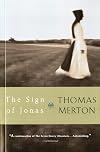
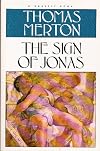
The Sign of Jonas
by Thomas Merton
On This Page
Description
Begun five years after he entered the Abbey of Our Lady of Gethsemani, The Sign of Jonas is an extraordinary view of Merton's life in a Trappist monastery, and it serves also as a spiritual log recording the deep meaning and increasing sureness he felt in his vocation: the growth of a mind that finds in its contracted physical world new intellectual and spiritual dimensions.Tags
Recommendations








































Member Reviews
The books of Thomas Merton were important influences on me in my 20s, and I would not be the man I am today without having come into contact with his work. LibraryThing tells me I still own 34 books by him, and that is after getting rid of several over the years. The Sign of Jonas, excerpts from his journals published as a follow-up to the commercial success of The Seven Storey Mountain, is one of the few from which I still read sections from time to time. The epilogue, titled “Fire Watch, July 4, 1952”, stands up as one of the strongest pieces he ever wrote. This book, along with Mountain and the later work Conjectures of a Guilty Bystander, basically form an autobiographical trilogy which traces the evolution of Merton's thought show more through his life. I love all three, but Jonas is the best of them. show less
While I generally look to Merton because of his wisdom and the gift of prophecy that he has in reflection that is hard to find in many, that is not really the intent of this book. What we have here could be written by any monastic. It is essentially the diary of the events in a monastery and the struggle that takes place in giving a life towards God, yet still living selfishly. I would definitely recommend this for those that are interested on the day to day happenings of a monastery and the ascetic lifestyle. I would not, however, recommend this to regular fans of Merton's musings, as they are not in the same style. Overall, I'm glad I read this, but this will not be one I come back to in the same manner.
Begun five years after he entered the Abbey of Our Lady of Gethsemani, The Sign of Jonas is an extraordinary view of Merton’s life in a Trappist monastery, and it serves also as a spiritual log recording the deep meaning and increasing sureness he felt in his vocation: the growth of a mind that finds in its contracted physical world new intellectual and spiritual dimensions.
I liked this book much better than the Seven Story Mountain. I suppose it's autobiographical in that it's what happened to Merton, but it's much more of a meditation on his life with the Christian God. There's a lot about the monastic life and contemplative prayer. It's also very well written, almost poetical. I'm not longer a Merton fan, but when I was, this was my favorite.
Begun five years after he entered the Abbey of Our Lady of Gethsemani, The Sign of Jonas is an extraordinary view of Merton’s life in a Trappist monastery, and it serves also as a spiritual log recording the deep meaning and increasing sureness he felt in his vocation: the growth of a mind that finds in its contracted physical world new intellectual and spiritual dimensions. - from the publisher
Captivating
Begun five years after he entered the Abbey of Our Lady of Gethsemani, The Sign of Jonas is an extraordinary view of Merton’s life in a Trappist monastery, and it serves also as a spiritual log recording the deep meaning and increasing sureness he felt in his vocation: the growth of a mind that finds in its contracted physical world new intellectual and spiritual dimensions.
Members
- Recently Added By
Lists

Books featuring monks and/or nuns
166 works; 33 members
Author Information

397+ Works 38,287 Members
Born in France, Thomas Merton was the son of an American artist and poet and her New Zealander husband, a painter. Merton lost both parents before he had finished high school, and his younger brother was killed in World War II. Something of the ephemeral character of human endeavor marked all his works, deepening the pathos of his writings and show more drawing him close to Eastern, especially Buddhist, forms of monasticism. After an initial education in the United States, France, and England, he completed his undergraduate degree at Columbia University. His parents, nominally friends, had given him little religious guidance, and in 1938, he converted to Roman Catholicism. The following year he received an M.A. from Columbia University and in 1941, he entered Gethsemani Abbey in Kentucky, where he remained until a short time before his death. His working life was spent as a Trappist monk. At Gethsemani, he wrote his famous autobiography, "The Seven Storey Mountain" (1948); there he labored and prayed through the days and years of a constant regimen that began with daily prayer at 2:00 a.m. As his contemplative life developed, he still maintained contact with the outside world, his many books and articles increasing steadily as the years went by. Reading them, it is hard to think of him as only a "guilty bystander," to use the title of one of his many collections of essays. He was vehement in his opposition to the Vietnam War, to the nuclear arms race, to racial oppression. Having received permission to leave his monastery, he went on a journey to confer with mystics of the Hindu and Buddhist traditions. He was accidentally electrocuted in a hotel in Bangkok, Thailand, on December 10, 1968. (Bowker Author Biography) show less
Awards and Honors
Distinctions
Series
Belongs to Publisher Series
Image Books (D31)
Common Knowledge
- Original title
- The Sign of Jonas
Classifications
- Genres
- Religion & Spirituality, Nonfiction, Biography & Memoir
- DDC/MDS
- 271.125 — Religion History of Christianity Religious congregations and orders in church history Benedictines Cistercians Trappists
- LCC
- BX4705 .M542 .A32 — Philosophy, Psychology and Religion Christian Denominations Christian Denominations Catholic Church Biography and portraits Individual
- BISAC
Statistics
- Members
- 806
- Popularity
- 34,520
- Reviews
- 13
- Rating
- (4.17)
- Languages
- 8 — Czech, English, German, Italian, Polish, Croatian, Spanish, Swedish
- Media
- Paper, Audiobook, Ebook
- ISBNs
- 14
- ASINs
- 22