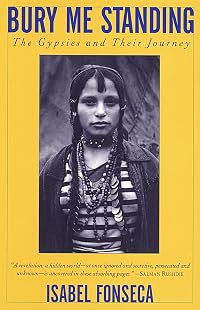
Bury Me Standing: The Gypsies and Their Journey
by Isabel Fonseca
On This Page
Description
After the revolutions of 1989, the author lived and traveled with the Gypsies of Bulgaria, Poland, the Czech Republic and Slovakia, the former Yugoslavia, Romainia, and Albania -- listening to their stories and recording their attempts to become something more than despised outsiders. In this book, alongside unforgettable portraits of individuals -- the poet, the politician, the child prostitute- - are vivid insights into the wit, language, wisdom, and taboos of the Roma. The author also show more traces their long-ago exodus out of India and their history of relentless persecution: enslaved by the princes of medieval Romania; massacred by the Nazis in what the Roma call "the Devouring"; forcibly assimilated by the communist regime; and, most recently, evicted from their settlements by nationalistic mobs in the new "democracies" of the East, and under violent attack in the Western countries to which many have fled. show lessTags
Recommendations



















Member Recommendations

by anonymous user


Member Reviews
Like is such a frivolous word for a history of the dispossessed. It was well written, and heart rending and fascinating. It made me ashamed. I did not like it, but I'm glad I read it.
Between 1991 and 1995, Isabel Fonseca visited East Central Europe many times and lived among families in the various gypsy communities of Romania, Albania, Poland, Bulgaria and neighboring countries. Fonseca is an anthropologist so she had a professional interest in exploring more deeply the history, customs and culture, the present conditions, and the future prospects of this group of people who are perhaps the least understood in the world today. Employing the usual rigorous methods of research during the process, however, does not reduce her subjects to mere objects of scholarship and observation, as her experience transforms her into a witness and a voice. She records stories, plenty of them, of various gypsy - or Roma- groups show more across these countries, seeking families and individuals who were willing to talk with her, to afford her a glimpse of their daily lives. She meets the poet, the politician, the academic, the self-proclaimed King, the child prostitute, among others and through vivid portrayals of these individuals we understand a little more about the immense challenges the gyspies face in every conceivable aspect of modern life.
The general outlines of the story of the Romas is well-known. Since their exodus from India 10 centuries ago, they have had a long and bitter history of persecution: enslaved by the nobility of medieval Romania, massacred by the Nazis, forcibly assimilated by the communist regimes, evicted by Eastern Europe nationalist mobs, and recently, increasingly rejected by Western European countries as well. It is striking to realise that the last four stages all occurred within the last century. It is not an exaggeration to say that the gypsies have remained the scapegoat that they've always been, it seemed, in history. The only difference between them and others who also stood as scapegoats, is that their story is untold because they are invisible (e.g. except as being objects of the Nazi experiments, their experience during the Holocaust is undocumented).
The gypsies evoke a strange mix of feelings and attitudes in general -- they are at once fabled, feared, romanticised, reviled and spurned. Shamefully for humankind, despite the so-called human progress claimed to have been achieved, being the Other remains a stigma. It does not help that the Romas are fiercely independent, highly traditionalistic, tightly-knit, prefering their nomadic way of life and keeping to ancient customs, stubbornly refusing to be straightjacketed by any modern system. Fonseca doesn't skirt around the uncomfortable issues, she mentions the conceptions and the prejudices that the non-gypsy has about the gypsies and clarifies with her experience but does not judge. She confirms, for example, that gypsies lie. They lie a lot -- not to each other, but to the gadje (non-gypsy), but this is not, for them, something of malice --- it is a telling of a story with embellishments, of crafting a story that the listener wants to hear, of inventing a story because he/she does NOT want the gadje to know as to know is tantamount to exposing their (the gypsies') true self. It is a means of defense, the survival of the group. Contrary to common perception of gypsies being free spirits and with no sense of order or moral compunction, their daily life is in fact strictly governed by a set of age-old customs and taboos that reinforce as well their highly developed community spirit: the gypsies live for the group, individuality is not recognized.
Fonseca paints the gypsies' rich life of traditions, family values, community well-being amidst wretched poverty, squalid conditions, and most worrying of all, the increasing hate crimes being committed against them in various parts of Europe. She mentions appalling events in Central and Eastern Europe, reminiscent of the medieval ages, shocking to the extreme such as burning people, razing villages. Western Europe, on the other hand, is driving back the many Romas who have crossed to their frontiers with the expansion of the EU zone -- but to drive back where, as nobody wants them.
There are some encouraging signs though and Fonseca concludes her fascinating account with mention of the extraordinary efforts being done by a small group of Roma intellectuals who fought for international recognition of the Romas, and whose movement continues to keep the awareness of the Romas, their gaping needs and means to address them, within the sights of EU policymakers specially in the context of the immigration issue.
Enlightening in many respects, this is also a narrative of a skilled story-teller. Highly recommended. show less
The general outlines of the story of the Romas is well-known. Since their exodus from India 10 centuries ago, they have had a long and bitter history of persecution: enslaved by the nobility of medieval Romania, massacred by the Nazis, forcibly assimilated by the communist regimes, evicted by Eastern Europe nationalist mobs, and recently, increasingly rejected by Western European countries as well. It is striking to realise that the last four stages all occurred within the last century. It is not an exaggeration to say that the gypsies have remained the scapegoat that they've always been, it seemed, in history. The only difference between them and others who also stood as scapegoats, is that their story is untold because they are invisible (e.g. except as being objects of the Nazi experiments, their experience during the Holocaust is undocumented).
The gypsies evoke a strange mix of feelings and attitudes in general -- they are at once fabled, feared, romanticised, reviled and spurned. Shamefully for humankind, despite the so-called human progress claimed to have been achieved, being the Other remains a stigma. It does not help that the Romas are fiercely independent, highly traditionalistic, tightly-knit, prefering their nomadic way of life and keeping to ancient customs, stubbornly refusing to be straightjacketed by any modern system. Fonseca doesn't skirt around the uncomfortable issues, she mentions the conceptions and the prejudices that the non-gypsy has about the gypsies and clarifies with her experience but does not judge. She confirms, for example, that gypsies lie. They lie a lot -- not to each other, but to the gadje (non-gypsy), but this is not, for them, something of malice --- it is a telling of a story with embellishments, of crafting a story that the listener wants to hear, of inventing a story because he/she does NOT want the gadje to know as to know is tantamount to exposing their (the gypsies') true self. It is a means of defense, the survival of the group. Contrary to common perception of gypsies being free spirits and with no sense of order or moral compunction, their daily life is in fact strictly governed by a set of age-old customs and taboos that reinforce as well their highly developed community spirit: the gypsies live for the group, individuality is not recognized.
Fonseca paints the gypsies' rich life of traditions, family values, community well-being amidst wretched poverty, squalid conditions, and most worrying of all, the increasing hate crimes being committed against them in various parts of Europe. She mentions appalling events in Central and Eastern Europe, reminiscent of the medieval ages, shocking to the extreme such as burning people, razing villages. Western Europe, on the other hand, is driving back the many Romas who have crossed to their frontiers with the expansion of the EU zone -- but to drive back where, as nobody wants them.
There are some encouraging signs though and Fonseca concludes her fascinating account with mention of the extraordinary efforts being done by a small group of Roma intellectuals who fought for international recognition of the Romas, and whose movement continues to keep the awareness of the Romas, their gaping needs and means to address them, within the sights of EU policymakers specially in the context of the immigration issue.
Enlightening in many respects, this is also a narrative of a skilled story-teller. Highly recommended. show less
Vaclav Havel correctly says that how his country (and our world of communities) deal with people like the Rom was a litmus test for democracy. As so-called democracies take the place of tyrannical regimes ancient hatreds and jealousies erupt: how can they be managed? Fonescu's beautiful book takes an even handed look at the problem without trying to romanticize the Rom and without pulling punches. The violence in Europe, but especially in Romania has so little purchase in the popular mind, racism finds ways to justify itself even among people who consider themselves non-racist.
Ask yourself honestly: What do you know about gypsies? In my case, the answer was “Not a whole lot, really”. In a time when many parts of eastern Europe are adapting racist laws against this people, when actual pogroms and lynching are happening continuously without the perpetrators getting punished for it, it seemed high time to read this book, collecting dust on my shelf for over ten years now.
Fonseca, an American jewess, lived with gypsies in various countries for four years while writing this book, and it gives good basic insight to a culture and a people who remain kind of hidden in our midst. The gypsies have no promised land, no myths of a glorious past. They are unique as a people in that their nation is not a place (or even show more the dream of a place), but formed around moving, travelling on the fringes – even now when the vast majority are resident. Most gypsies live in poverty and oppression, but they are also fiercely resisting assimilation, having strict rules for how to interact with gadjo – non Gypsies.
I knew about the prejudice, hate and fear towards gypsies (indeed, I’ve often noted how even liberal and conscious people around me have occasionally made remarks about gypsies that they would never ever direct at jews or arabs or gay or any other minority), but a lot of what this book describes was still news to me. I was shocked to read about how the hundreds of thousands of gypsies killed in the Holocaust were disregarded for a long time. Only 1982 was the systematic killing of gypsies recognized as genocide, and they weren’t represented in the US Holocaust Memorial Council until 1986!
At the same time, it was difficult to read that some of the most common prejudices against gypsises – that they are stealing, and heaping junk around their homes – do have some truth to them. Both are part of traditional gypsy strategies to keep a distance towards gadjo.
Fonseca’s account is very personal and subjective, which is both good and bad. There are many memorable and moving characters here, among the many families she meets. But sometimes Fonseca’s view becomes slightly exotic and down the nose in a way that makes me wish for a more distant approach. Still, this is a book that makes me feel a little wiser. show less
Fonseca, an American jewess, lived with gypsies in various countries for four years while writing this book, and it gives good basic insight to a culture and a people who remain kind of hidden in our midst. The gypsies have no promised land, no myths of a glorious past. They are unique as a people in that their nation is not a place (or even show more the dream of a place), but formed around moving, travelling on the fringes – even now when the vast majority are resident. Most gypsies live in poverty and oppression, but they are also fiercely resisting assimilation, having strict rules for how to interact with gadjo – non Gypsies.
I knew about the prejudice, hate and fear towards gypsies (indeed, I’ve often noted how even liberal and conscious people around me have occasionally made remarks about gypsies that they would never ever direct at jews or arabs or gay or any other minority), but a lot of what this book describes was still news to me. I was shocked to read about how the hundreds of thousands of gypsies killed in the Holocaust were disregarded for a long time. Only 1982 was the systematic killing of gypsies recognized as genocide, and they weren’t represented in the US Holocaust Memorial Council until 1986!
At the same time, it was difficult to read that some of the most common prejudices against gypsises – that they are stealing, and heaping junk around their homes – do have some truth to them. Both are part of traditional gypsy strategies to keep a distance towards gadjo.
Fonseca’s account is very personal and subjective, which is both good and bad. There are many memorable and moving characters here, among the many families she meets. But sometimes Fonseca’s view becomes slightly exotic and down the nose in a way that makes me wish for a more distant approach. Still, this is a book that makes me feel a little wiser. show less
Interesting, well written; vivid and compassionate without sentimentality; Fonseca does not patronise or romanticise the subjects. Made me challenge myself as perhaps prejudiced and that is always useful. Also made me want to know more, on the history and on the ethnography of the various groupings.
Isabel Fonseca spent several years among the Gypsies in Central and Eastern Europe, observing their way of life and listening to their stories about themselves. It reads like anthropological field work notes, yet apparently Fonseca didn't study anthropology. Wide and thorough reading about Gypsy history and culture combined with several years of personal observation goes a long way in making up any deficiencies in professional training. Fonseca identifies the origins of the Gypsies in India based on her study of the literature on this subject. Linguistic scholars in the 18th century surmised that the Gypsies had originated in India based on the similarity of the Romani language to the Indic languages. Since the publication of Fonseca's show more book, DNA studies have bolstered this theory of Indian origins
I learned a number of new things about Gypsies and their history from Fonseca's book. I didn't know that Gypsies had been slaves in Romania for centuries. I didn't know the extent to which the Gypsies suffered during the Holocaust. The Nazis began imprisoning them in German concentration camps in 1934. The promise of more interesting facts is what kept me reading this book. It was a more difficult read than I expected. The book seems randomly organized, and there isn't a narrative connection between chapters. It's still a worthwhile read, and its extensive bibliography makes it a useful resource for students. show less
I learned a number of new things about Gypsies and their history from Fonseca's book. I didn't know that Gypsies had been slaves in Romania for centuries. I didn't know the extent to which the Gypsies suffered during the Holocaust. The Nazis began imprisoning them in German concentration camps in 1934. The promise of more interesting facts is what kept me reading this book. It was a more difficult read than I expected. The book seems randomly organized, and there isn't a narrative connection between chapters. It's still a worthwhile read, and its extensive bibliography makes it a useful resource for students. show less
Even after finishing this book, I’m not entirely sure why it is titled Bury Me Standing. I don’t recall a mention of this phrase in the book, nor about funerals. Maybe it was something I skipped over or misread? (If you know what the title refers to, please let me know.)
Isabel Fonseca (otherwise known as Martin Amis’ wife) opens this journey into the lives of Gypsies with the story of Papusza, who was the most famous Romany poet, but whose death in 1987 went unnoticed. Already this beginning prepares the reader for a slightly different kind of non-fiction book. It’s not exactly scholarly, not entirely anthropological, neither is it really a travelogue. Perhaps it is best described as an exploration, a journey for both the writer show more and the reader into a culture that is often misunderstood, sometimes scorned and hated.
Fonseca spends a summer with Gypsies, a family called the Dukas, in Albania, where she observes daily life and their many superstitions and oddities (at least they are oddities to us). As a gadje (foreigner), Fonseca wasn’t allowed to wash herself. The boria (brides/daughters-in-law) have the task of scrubbing and washing her down (!). The boria do almost all the hard work at home – building fires, handwashing clothes (this in the 1990s). And there are some other horrifying things to learn, such as a woman who tells Fonseca that she has had 28 abortions, which she performed herself.
In Romania, she confronts a harsher topic – ethnic conflict. Romanians destroy Gypsy homes, trying to force them out of the towns and villages, sometimes even killing or maiming Gypsies. A villager, probably echoing most of the other villagers, calls them “vermin”.
Bury Me Standing is an interesting look into a people that is stereotyped, persecuted and barely understood (their origins can be traced to India but their history is still kind of foggy). But it is a rather depressing read. At the end of it all, one can’t help wondering: Will their lives ever improve? Do they hope for improvement in the first place? Or will they continue living in these rather shoddy houses, their children barely educated, still considered outcasts? show less
Isabel Fonseca (otherwise known as Martin Amis’ wife) opens this journey into the lives of Gypsies with the story of Papusza, who was the most famous Romany poet, but whose death in 1987 went unnoticed. Already this beginning prepares the reader for a slightly different kind of non-fiction book. It’s not exactly scholarly, not entirely anthropological, neither is it really a travelogue. Perhaps it is best described as an exploration, a journey for both the writer show more and the reader into a culture that is often misunderstood, sometimes scorned and hated.
Fonseca spends a summer with Gypsies, a family called the Dukas, in Albania, where she observes daily life and their many superstitions and oddities (at least they are oddities to us). As a gadje (foreigner), Fonseca wasn’t allowed to wash herself. The boria (brides/daughters-in-law) have the task of scrubbing and washing her down (!). The boria do almost all the hard work at home – building fires, handwashing clothes (this in the 1990s). And there are some other horrifying things to learn, such as a woman who tells Fonseca that she has had 28 abortions, which she performed herself.
In Romania, she confronts a harsher topic – ethnic conflict. Romanians destroy Gypsy homes, trying to force them out of the towns and villages, sometimes even killing or maiming Gypsies. A villager, probably echoing most of the other villagers, calls them “vermin”.
Bury Me Standing is an interesting look into a people that is stereotyped, persecuted and barely understood (their origins can be traced to India but their history is still kind of foggy). But it is a rather depressing read. At the end of it all, one can’t help wondering: Will their lives ever improve? Do they hope for improvement in the first place? Or will they continue living in these rather shoddy houses, their children barely educated, still considered outcasts? show less
Members
- Recently Added By
Lists

Books Read in 2016
4,666 works; 197 members
Author Information

2 Works 1,642 Members
Some Editions
Awards and Honors
Distinctions
Series
Belongs to Publisher Series
Common Knowledge
- Original publication date
- 1995
- Important places
- Romania; Bulgaria; Poland; Auschwitz concentration camp, Oświęcim, Lesser Poland, Poland; Germany; India (show all 7); Albania
- Important events
- Holocaust; Porajmos, Romani genocide
- Dedication
- To my brother Bruno
1958-1994 - First words
- Her real name was Bronislawa Wajs, but she is known by her Gypsy name, Papusza: "Doll".
- Last words
- (Click to show. Warning: May contain spoilers.)They were also the only hope for millions of Roma who had never heard of them, the ones who live in the Black Towns, the toxic slums and townships across Eastern Europe with no names, or with names like Take-It-Or-Leave-It, Like-It-Or-Not, No-Man's-Land, Cambodia, and Bangladesh.
- Blurbers
- Kapuscinski, Ryszard
Classifications
- Genres
- Anthropology, General Nonfiction, Nonfiction, History
- DDC/MDS
- 909.0491497 — History & geography History World history History with respect to ethnic and national groups Other Other Indo-Europeans people South Indians Romani (Gypsies)
- LCC
- DX115 .F66 — History of Europe, Asia, Africa and Oceania History of the Romani people History of Romanies
- BISAC
Statistics
- Members
- 1,506
- Popularity
- 15,288
- Reviews
- 31
- Rating
- (3.91)
- Languages
- 10 — Danish, Dutch, English, French, German, Italian, Norwegian (Bokmål), Portuguese, Spanish, Swedish
- Media
- Paper, Ebook
- ISBNs
- 22
- ASINs
- 11