On This Page
Description
June Bellamy had gone for a walk in a park -- and came back with memories missing. She didn't know that, but her partner could tell; she'd told his answering machine about strangers in the park.Now June and Paul are on the run from insidious super-humans who, they fear, can edit their memories and track them down no matter where or how well they hide. They are desperate. But not nearly so desperate as their pursuers.Tags
Recommendations


















Member Reviews
This concluding volume of the LIfehouse Trilogy turned out to be my favorite installment. I enjoyed the three separate storylines and how they converged at the end. Robinson's typically bad puns abound throughout and the characters are a bit too clever to be realistic but, all in all, it's a fun story with enough development of, and connection to, the earlier volumes, (something that was severely lacking in 'Time Pressure' until the last 25% of that book), to make for a decent wrap-up to the trilogy.
Speaking of which... this 'trilogy' is only loosely connected in that each book follows its own set of characters and events. In fact, this third installment is more of a prequel than sequel - but it's all sort of the same thing allowing for show more the time-travel conceit that Robinson posits. show less
Speaking of which... this 'trilogy' is only loosely connected in that each book follows its own set of characters and events. In fact, this third installment is more of a prequel than sequel - but it's all sort of the same thing allowing for show more the time-travel conceit that Robinson posits. show less
The final (so far) novel in Robinson's future history series, where human memory can be uploaded, and a group mind (though without losing one's individuality) has formed. This group mind decided that every human should be granted immortality (good idea), so back in time are despatched "lifehouses" in which human, post-death memory and personality are recorded and stored for a future revival. So far so good.
This carefully laid plan goes awry. In Canada, a wandering grifter stumbles across evidence that lifehouses exist, and before her memory can be erased, she and her boyfriend flee with this knowledge. The two lifehouse guardians pursue, but along the way the two absconders ally with two science fiction fen, who together push the show more situation to the point of public disclosure. This would result in a time paradox, and bring the whole project crashing down.
The tense standoff is resolved by the visit of the female grifters deceased mother, returned briefly from the future to the present, who reveals the true benign purpose of the lifehouse project. From here it is a happy ending. The two couples (grifter and SF) settle down and live happily ever after—or at least until they are revived.
The story is told in Robinson's usual rich style: lots of emotional dialogue, insights into human nature, and relationships. In this novel the author makes a clear and sometimes humorous nod to the science fiction community, and an equally clear vote of approval to Canada over the USA. The adventure is told well, twists and turns, a perilous closeness to failure, capped with last minute success. The minor characters are each drawn well, though, perhaps a tad cliched. An amusing story, with a message or two, and an optimistic outcome. Great!
I have re-read several times, maybe once more? show less
This carefully laid plan goes awry. In Canada, a wandering grifter stumbles across evidence that lifehouses exist, and before her memory can be erased, she and her boyfriend flee with this knowledge. The two lifehouse guardians pursue, but along the way the two absconders ally with two science fiction fen, who together push the show more situation to the point of public disclosure. This would result in a time paradox, and bring the whole project crashing down.
The tense standoff is resolved by the visit of the female grifters deceased mother, returned briefly from the future to the present, who reveals the true benign purpose of the lifehouse project. From here it is a happy ending. The two couples (grifter and SF) settle down and live happily ever after—or at least until they are revived.
The story is told in Robinson's usual rich style: lots of emotional dialogue, insights into human nature, and relationships. In this novel the author makes a clear and sometimes humorous nod to the science fiction community, and an equally clear vote of approval to Canada over the USA. The adventure is told well, twists and turns, a perilous closeness to failure, capped with last minute success. The minor characters are each drawn well, though, perhaps a tad cliched. An amusing story, with a message or two, and an optimistic outcome. Great!
I have re-read several times, maybe once more? show less
Very enjoyable and Andrew Neiderman's best series, this one certainly did feel VCA-inspired, though I wish the fifth book (Darkest Hour) had gone longer story-wise as it didn't explain why Grandfather Cutler became a rapist.
I love all of Spider Robinson's writing and I am glad he chose Canada to make his home. This book is set in Vancouver and tells the story of June Bellamy who returns from a walk in the park with memories missing. She and her partner are on the run because it appears the missing memories are the result of some strange people (or are they people?)
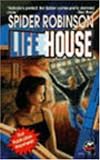
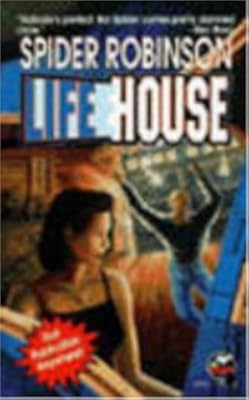
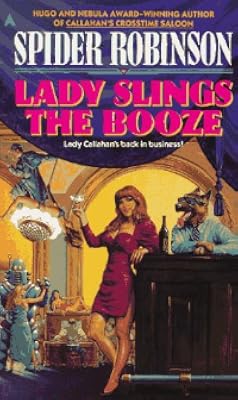
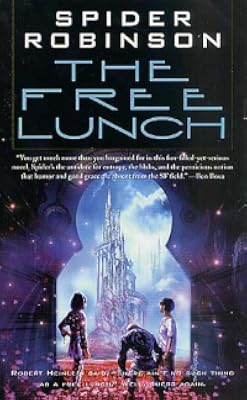
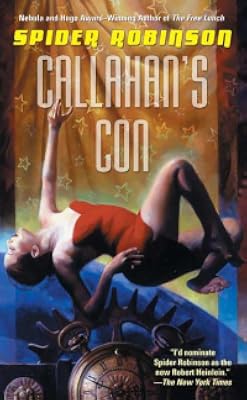
Despite sporting one of the worst covers I've ever seen, I think this is one of Robinson's best books.
Will date terribly but is still readable. It's focused on fannishness and science fiction and retains the dreadful puns that seem to be a trademark of Robinson's books. Fun.
Members
- Recently Added By
Author Information

111+ Works 18,245 Members
Science fiction author Spider Robinson was born in the Bronx, New York on November 24, 1948. He received a Bachelor of Arts in English from the State University of New York. He began writing professionally in 1972 and has won numerous awards including three Hugos, one Nebula, and the John W. Campbell Award for Best New Writer. He is best known for show more his Callahan stories and for the Stardance Sequence, which he co-wrote with his wife Jeanne Robinson. He was selected by the Heinlein Prize Trust to write Variable Star, a novel based on a 1955 outline created by Robert A. Heinlein. He also worked as a book reviewer for Galaxy, Analog, and New Destinies magazines and his opinion column Future Tense has appeared in The Globe and Mail since 1996. In 2001, he released Belaboring the Obvious, a CD featuring original music. He currently lives in Bowen Island, Brisith Columbia, Canada with his wife. (Bowker Author Biography) show less
Some Editions
Awards and Honors
Awards
Series

Work Relationships
Is contained in
Common Knowledge
- Original publication date
- 1997-04
Classifications
Statistics
- Members
- 339
- Popularity
- 93,920
- Reviews
- 7
- Rating
- (3.65)
- Languages
- English
- Media
- Paper, Ebook
- ISBNs
- 3
- ASINs
- 4