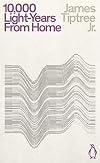
Ten Thousand Light-Years from Home
by James Jr. Tiptree
On This Page
Description
James Tiptree Jr, the pen name of Alice Bradley Sheldon, is widely considered to be one of the most influential American genre writers ever, and a pioneer of feminist science fiction. 10,000 Light Years from Home, her brilliant debut collection, displays all her trademark humour, intensity and originality, with dark dystopian thrills, fast-paced intergalactic satire and hardboiled tales of alien invasion. A startling and unforgettable depiction of humanity's experience among the stars, the show more collection includes some of Tiptree's most powerful stories- 'And I Awoke and Found Me Here on the Cold Hill's Side', 'The Man Who Walked Home' and 'Beam Us Home'. show lessTags
Recommendations


















Member Reviews
I read this collection of short stories fifty years ago, when I was eighteen. I knew then that it was exceptional. Re-reading it for the first time, fifty years later, I can see that it still is.
Not all of the stories are perfect.
Two of them THE PEACEFULNESS OF VIVYAN and MOTHER IN THE SKY WITH DIAMONDS, didn't work for me at all.
Many of them are funny, with humour that ranges from slapstick to satirical. I'LL BE WAITING FOR YOU WHEN THE SWIMMING POOL IS EMPTY stuck with me. It still makes me smile and its sharp-toothed satire has become more relevant rather than less.
But the stories that kept this book alive in my memory are the ones that made me think about what it means to be alien or to be human or to be male or female or show more neither. Science Fiction is the only mind-expanding drug I've ever needed. I believe that absorbing these stories when I was in my teens and early twenties shaped how I thought about the world.
Four of the fifteen stories in this collection are ones that opened my mind and stayed with me.
The most powerful (and the grimmest) are the stories that start and end this collection: AND I AWOKE AND FOUND ME HERE ON THE COLD HILL'S SIDE about aliens and sex and the ability of human culture to survive contact with the truly different; BEAM US HOME about the hopes of a young man trapped in a bad place. The other two stories are lighter in tone: MAMA COME HOME and HELP. They both feature a CIA Psyops team (although I didn't know what Psyops was when I first read this. Now, with Cambridge Analytica running a psyops campaign to get Brexit through, I'm more familiar with it than I'd like to be.) their both humourous, clever and uplifting. One is a First Contact story with a twist around gender politics and one is about the damage done by colonisation and religion.
I recommend this collection to anyone looking for Science Fiction stories that will make them think, laugh and cry.
Below, I've reviewed each story in the order they appear in the collection.
AND I AWOKE AND FOUND ME HERE ON THE COLD HILL'S SIDE
It must be fifty years since I read this story for the first time. I found it exciting and shocking and irresistibly different - rather like the reaction of the humans in the story to the aliens. The core idea, that our exogamous nature might doom us if aliens arrived, pushing us into the same decline that the Polynesians experienced, etched itself into my memory.
This time around I knew what was coming so I was able to appreciate the well-crafted brutal honesty of the storytelling.
THE SNOWS ARE MELTED, THE SNOWS ARE GONE
This is a bleak story from start to finish. It's a sparsely told post-apocalyptic story.. All action and observation. No interior monologues. Emotions and motivations are left to be guessed at. An empty world. An armless girl who is, nevertheless, hunting. No infodumps. No explanations even. It's a story that's as unforgiving as the world the girl is trying to survive in. It says to the reader: "This is what's happening. Work out for yourself what it means."
And yet... it gets under your skin. The grim practicality. The sweat and toil powered by a small pellet of hope. The determination to overcome limitations. All surrounded by an echoing, lifeless emptiness.
THE PEACEFULNESS OF VIVYAN
I gave up on this halfway through. I couldn't connect with the mystery or the main character.
MAMA COME HOME
This was clever and fun. It was a First Contact story with an ingenious twist that I relished: the casual disembowelling of male dominance by the arrival of beautiful human-looking female aliens who are over eight feet tall and think human males a cute playthings.
It was startling to see a CIA expert in Fake News in a story published in 1973, especially when the story was written by a former CIA agent.
I loved the ingenuity of the ending, It was smart, unexpected, just about plausible and showed that the pen (or at least the video) can be mightier than the sword.
HELP
We're back with the CIA unit from MAMA COME HOME, this time with a different set of aliens and a different analogue showing the catastrophic effect of colonisation on the people being colonised. This is quite subversive stuff. It's entertaining and easy to read but, beneath the surface, it's a muscular attack on the cost of colonialism and a reminder that we not only fail to learn from history but we whitewash it out of existence.
PAINWISE
This was very strange. A sort of thought experiment but about the nature and effect of sensation. Our hero has been altered to feel no pain. He's used to sample worlds on a long-range, long-term mission. He is often damaged and rebuilt but never feels the pain associated with it. He loses the will to live. Wants to return home. Then encounters pleasure-seeking empathic aliens who love his lack of pain and take him away in a spaceship version of a hippy bus. It could have been heaven but this is a Tiptree story so of course that didn't last. Our hero was brought down to earth in a painful way.
FAITHFUL TO THEE, TERRA, IN OUR FASHION
A boisterous, riotously imaginative story about a world where all the planets of the galaxy come together to compete in races. Most of the story feels like a backstage tour of an exotic circus given by a pressured-but-loving-it ringmaster who leads the troubleshooters who wrangle the acts and keep them honest. It's fast, colourful and fun. Under all of that is a more serious idea about the nature of identity and the preservation of a culture under threat. I liked that this idea was revealed as the solution to a tense problem rather than waved as a banner.
THE MAN DOORS SAID HELLO TO
This was whimsical. So whimsical that I have no idea what the point of it was.
THE MAN WHO WALKED HOME
This was a Science Fiction story that I admired but didn't enjoy. It is driven by a clever, science-based 'What if?' question about an experiment that goes wrong and causes global devastation. It's well-written. It turns complicated physics into a first-hand experience. It has a human tragedy at its heart. BUT it spans centuries - too long for it to feel real to me. It left my emotions untouched.
FOREVER TO A HUDSON BAY BLANKET
This was a playful time travel paradox story with a little lighthearted romance thrown in. Much is made of the niceness of the young Canadian man who is the star of this story and, despite the lightheartedness and the romance, it is ultimately his undoing. This is one of the most original meet-cute setups I've ever seen. It has a mix of innocence and lust and zest for life that I'd normally associate with 1940s RomComs.
I'LL BE WAITING FOR YOU WHEN THE SWIMMING POOL IS EMPTY
When I read this fifty years ago, it made me laugh. This time, it only made me smile. Nevertheless, it had stuck in my memory all that time. It's a satirical piece that imagines a privileged young man on his Wanderjahr landing on a blades-and-bows world in the middle of a battle and politely but firmly trying to 'improve' things... while respecting the local culture, of course. It's an object lesson in why the Federation in Star Trek imposed the Prime Directive. The phrase hadn't been coined when this was written but it shouts "Check Your Privilege".
I still have no idea what the title means.
I'M TOO BIG BUT I LOVE TO PLAY
This story thinks BIG about aliens. It imagines an alien so different from us that it initially sees life on planets as tiny pockets of dense anti-entropic energy and becomes fascinated by how they work. This almost non-corporeal being floats a solitary path between stars, amusing itself by playing games of Maxwell's Demon with energy fields. That description was fun in a Hard Science Fiction Thought Experiment way. But Tiptree took it further than that. Much further. Firstly by letting the alien become obsessed with (but not initially good at) copying humans and taking their place. This quickly gets messy both for the alien and for the humans it is playing with. Secondly, by adding an italicised top and tale to the story that I didn't understand the significance of until right at the end when a memorable city was named. THEN, I saw that while I'd been focusing on our impact on the alien, the real story was about the alien's impact on us. It was a stunning idea.
BIRTH OF A SALESMAN
This frenetic story was like watching the Marx Brothers organising a testing and shipping department: chaotic, exotic, filled with action but only funny if slapstick makes you laugh. I'd admired the creativity and the relentless application of Murphy's law but I thought it went on for too long.
MOTHER IN THE SKY WITH DIAMONDS
Nope. This didn't work for me. I felt like it was written in code and I wasn't sure that cracking the code was going to be worth the effort so I skipped it.
BEAM US HOME
This is another one that I remember from fifty years ago. It made me cry then. It still does. I won't spoil the story by talking about the plot except to say that it's about a young man in a bad place who is hugging to himself the unvocalised hope of his generation - that someone would come and take him away from the insane brutality of his world and let him live in somewhere clean and rational where everyone tries to do the right thing - like in Star Trek.
Reading this fifty years ago it felt like a hopeful prayer. I added a mental amen and wondered why everyone didn't see the world this way. Reading it now, it feels soaked in sadness. I also read the final scene differently. Back then I thought 'salvation'. Now, I think 'delusion'. The story hasn't changed but my belief in hopeful prayer as anything other than a necessary emotional relief is long gone. show less
Not all of the stories are perfect.
Two of them THE PEACEFULNESS OF VIVYAN and MOTHER IN THE SKY WITH DIAMONDS, didn't work for me at all.
Many of them are funny, with humour that ranges from slapstick to satirical. I'LL BE WAITING FOR YOU WHEN THE SWIMMING POOL IS EMPTY stuck with me. It still makes me smile and its sharp-toothed satire has become more relevant rather than less.
But the stories that kept this book alive in my memory are the ones that made me think about what it means to be alien or to be human or to be male or female or show more neither. Science Fiction is the only mind-expanding drug I've ever needed. I believe that absorbing these stories when I was in my teens and early twenties shaped how I thought about the world.
Four of the fifteen stories in this collection are ones that opened my mind and stayed with me.
The most powerful (and the grimmest) are the stories that start and end this collection: AND I AWOKE AND FOUND ME HERE ON THE COLD HILL'S SIDE about aliens and sex and the ability of human culture to survive contact with the truly different; BEAM US HOME about the hopes of a young man trapped in a bad place. The other two stories are lighter in tone: MAMA COME HOME and HELP. They both feature a CIA Psyops team (although I didn't know what Psyops was when I first read this. Now, with Cambridge Analytica running a psyops campaign to get Brexit through, I'm more familiar with it than I'd like to be.) their both humourous, clever and uplifting. One is a First Contact story with a twist around gender politics and one is about the damage done by colonisation and religion.
I recommend this collection to anyone looking for Science Fiction stories that will make them think, laugh and cry.
Below, I've reviewed each story in the order they appear in the collection.
AND I AWOKE AND FOUND ME HERE ON THE COLD HILL'S SIDE
It must be fifty years since I read this story for the first time. I found it exciting and shocking and irresistibly different - rather like the reaction of the humans in the story to the aliens. The core idea, that our exogamous nature might doom us if aliens arrived, pushing us into the same decline that the Polynesians experienced, etched itself into my memory.
This time around I knew what was coming so I was able to appreciate the well-crafted brutal honesty of the storytelling.
THE SNOWS ARE MELTED, THE SNOWS ARE GONE
This is a bleak story from start to finish. It's a sparsely told post-apocalyptic story.. All action and observation. No interior monologues. Emotions and motivations are left to be guessed at. An empty world. An armless girl who is, nevertheless, hunting. No infodumps. No explanations even. It's a story that's as unforgiving as the world the girl is trying to survive in. It says to the reader: "This is what's happening. Work out for yourself what it means."
And yet... it gets under your skin. The grim practicality. The sweat and toil powered by a small pellet of hope. The determination to overcome limitations. All surrounded by an echoing, lifeless emptiness.
THE PEACEFULNESS OF VIVYAN
I gave up on this halfway through. I couldn't connect with the mystery or the main character.
MAMA COME HOME
This was clever and fun. It was a First Contact story with an ingenious twist that I relished: the casual disembowelling of male dominance by the arrival of beautiful human-looking female aliens who are over eight feet tall and think human males a cute playthings.
It was startling to see a CIA expert in Fake News in a story published in 1973, especially when the story was written by a former CIA agent.
I loved the ingenuity of the ending, It was smart, unexpected, just about plausible and showed that the pen (or at least the video) can be mightier than the sword.
HELP
We're back with the CIA unit from MAMA COME HOME, this time with a different set of aliens and a different analogue showing the catastrophic effect of colonisation on the people being colonised. This is quite subversive stuff. It's entertaining and easy to read but, beneath the surface, it's a muscular attack on the cost of colonialism and a reminder that we not only fail to learn from history but we whitewash it out of existence.
PAINWISE
This was very strange. A sort of thought experiment but about the nature and effect of sensation. Our hero has been altered to feel no pain. He's used to sample worlds on a long-range, long-term mission. He is often damaged and rebuilt but never feels the pain associated with it. He loses the will to live. Wants to return home. Then encounters pleasure-seeking empathic aliens who love his lack of pain and take him away in a spaceship version of a hippy bus. It could have been heaven but this is a Tiptree story so of course that didn't last. Our hero was brought down to earth in a painful way.
FAITHFUL TO THEE, TERRA, IN OUR FASHION
A boisterous, riotously imaginative story about a world where all the planets of the galaxy come together to compete in races. Most of the story feels like a backstage tour of an exotic circus given by a pressured-but-loving-it ringmaster who leads the troubleshooters who wrangle the acts and keep them honest. It's fast, colourful and fun. Under all of that is a more serious idea about the nature of identity and the preservation of a culture under threat. I liked that this idea was revealed as the solution to a tense problem rather than waved as a banner.
THE MAN DOORS SAID HELLO TO
This was whimsical. So whimsical that I have no idea what the point of it was.
THE MAN WHO WALKED HOME
This was a Science Fiction story that I admired but didn't enjoy. It is driven by a clever, science-based 'What if?' question about an experiment that goes wrong and causes global devastation. It's well-written. It turns complicated physics into a first-hand experience. It has a human tragedy at its heart. BUT it spans centuries - too long for it to feel real to me. It left my emotions untouched.
FOREVER TO A HUDSON BAY BLANKET
This was a playful time travel paradox story with a little lighthearted romance thrown in. Much is made of the niceness of the young Canadian man who is the star of this story and, despite the lightheartedness and the romance, it is ultimately his undoing. This is one of the most original meet-cute setups I've ever seen. It has a mix of innocence and lust and zest for life that I'd normally associate with 1940s RomComs.
I'LL BE WAITING FOR YOU WHEN THE SWIMMING POOL IS EMPTY
When I read this fifty years ago, it made me laugh. This time, it only made me smile. Nevertheless, it had stuck in my memory all that time. It's a satirical piece that imagines a privileged young man on his Wanderjahr landing on a blades-and-bows world in the middle of a battle and politely but firmly trying to 'improve' things... while respecting the local culture, of course. It's an object lesson in why the Federation in Star Trek imposed the Prime Directive. The phrase hadn't been coined when this was written but it shouts "Check Your Privilege".
I still have no idea what the title means.
I'M TOO BIG BUT I LOVE TO PLAY
This story thinks BIG about aliens. It imagines an alien so different from us that it initially sees life on planets as tiny pockets of dense anti-entropic energy and becomes fascinated by how they work. This almost non-corporeal being floats a solitary path between stars, amusing itself by playing games of Maxwell's Demon with energy fields. That description was fun in a Hard Science Fiction Thought Experiment way. But Tiptree took it further than that. Much further. Firstly by letting the alien become obsessed with (but not initially good at) copying humans and taking their place. This quickly gets messy both for the alien and for the humans it is playing with. Secondly, by adding an italicised top and tale to the story that I didn't understand the significance of until right at the end when a memorable city was named. THEN, I saw that while I'd been focusing on our impact on the alien, the real story was about the alien's impact on us. It was a stunning idea.
BIRTH OF A SALESMAN
This frenetic story was like watching the Marx Brothers organising a testing and shipping department: chaotic, exotic, filled with action but only funny if slapstick makes you laugh. I'd admired the creativity and the relentless application of Murphy's law but I thought it went on for too long.
MOTHER IN THE SKY WITH DIAMONDS
Nope. This didn't work for me. I felt like it was written in code and I wasn't sure that cracking the code was going to be worth the effort so I skipped it.
BEAM US HOME
This is another one that I remember from fifty years ago. It made me cry then. It still does. I won't spoil the story by talking about the plot except to say that it's about a young man in a bad place who is hugging to himself the unvocalised hope of his generation - that someone would come and take him away from the insane brutality of his world and let him live in somewhere clean and rational where everyone tries to do the right thing - like in Star Trek.
Reading this fifty years ago it felt like a hopeful prayer. I added a mental amen and wondered why everyone didn't see the world this way. Reading it now, it feels soaked in sadness. I also read the final scene differently. Back then I thought 'salvation'. Now, I think 'delusion'. The story hasn't changed but my belief in hopeful prayer as anything other than a necessary emotional relief is long gone. show less
Like so much of the science fiction from this era (the 1960s and ’70s) Ten Thousand Light-Years From Home is a diverse and imaginative collection of stories. If there is a theme tying all fifteen together, perhaps it’s simply that there’s nothing special, nothing unusual, about planet Earth—it’s the entire Universe that’s nuts.
‘Tiptree’ (Alice Bradley Sheldon) had hit the ground running, selling her first few short stories almost before the ink was dry, and from the ones here I can see why magazine editors snapped them up. The writing itself is terrific: razor-sharp, it rattles along, often funny, comic-book fast but absolutely sure-footed, not a word out of place. The ideas aren’t bad either, and here are just a show more few:
• Sex with aliens as like an addictive drug, and humans as the helpless sex-junkies of the Galaxy: ‘…some Sirians had come in. That was my first look at Sirians in the flesh, if that’s the word. God knows I’d memorised every news shot, but I wasn’t prepared. That tallness, that cruel thinness. That appalling alien arrogance. Ivory-blue, these were. Two males in immaculate metallic gear. Then I saw there was a female with them. An ivory-indigo exquisite with a permanent faint smile on those bone-hard lips…’
• There are two stories in which we humans are more like seventeenth-century South-Sea Islanders, peering out to sea, uncomprehending, as a four-master looms into view on the horizon—except that, here, it’s a starship of course. First to arrive are traders after ore on the Moon (or are they really after something more ominous?) The second ship, a few years later, turns out to be full of missionaries instead, bringing to Earth their dotty alien religion.
• There’s a satire about the nature of civilisation: ‘progress’ is fine (particularly, for instance, if it stops people dropping babies down wells to appease their gods); but, beyond that, what is it all for?
• There are several stories about the pull of home, about being stranded or lost and trying to find your way back. For example, out at the centre of a kilometer-wide crater in what was formerly Idaho, on the exact same spot and at precisely the same time each year, something—a ‘monster’—appears for a few moments. Superstitions grow up around it, and elaborate rituals; people travel hundreds of miles to see it and make offerings. As the centuries go by though, and with the arrival of a more scientific outlook, there’s a slow dawning of understanding as to who this ‘monster’ is and what is happening to him. Just brilliant.
Alice Sheldon led a fairly extraordinary life herself, and among her many and varied accomplishments was a doctorate in experimental psychology. My guess is that, with this in her background and with her SF-author’s hat on too, she spent more than a little time ruminating on the word ‘alienation’. It’s another theme here: a sense of wrongness, of not belonging, of never feeling quite at home in this world—and the wish that a giant hand (or spaceship more like) will come down out of the sky some day and yank you out of all this…or beam you up. But that’s just a childish fantasy, wishful thinking. This feeling of wrongness is everywhere: no matter where you go in this Alice-in-Wonderland Universe, you always feel ten thousand light-years from home. show less
‘Tiptree’ (Alice Bradley Sheldon) had hit the ground running, selling her first few short stories almost before the ink was dry, and from the ones here I can see why magazine editors snapped them up. The writing itself is terrific: razor-sharp, it rattles along, often funny, comic-book fast but absolutely sure-footed, not a word out of place. The ideas aren’t bad either, and here are just a show more few:
• Sex with aliens as like an addictive drug, and humans as the helpless sex-junkies of the Galaxy: ‘…some Sirians had come in. That was my first look at Sirians in the flesh, if that’s the word. God knows I’d memorised every news shot, but I wasn’t prepared. That tallness, that cruel thinness. That appalling alien arrogance. Ivory-blue, these were. Two males in immaculate metallic gear. Then I saw there was a female with them. An ivory-indigo exquisite with a permanent faint smile on those bone-hard lips…’
• There are two stories in which we humans are more like seventeenth-century South-Sea Islanders, peering out to sea, uncomprehending, as a four-master looms into view on the horizon—except that, here, it’s a starship of course. First to arrive are traders after ore on the Moon (or are they really after something more ominous?) The second ship, a few years later, turns out to be full of missionaries instead, bringing to Earth their dotty alien religion.
• There’s a satire about the nature of civilisation: ‘progress’ is fine (particularly, for instance, if it stops people dropping babies down wells to appease their gods); but, beyond that, what is it all for?
• There are several stories about the pull of home, about being stranded or lost and trying to find your way back. For example, out at the centre of a kilometer-wide crater in what was formerly Idaho, on the exact same spot and at precisely the same time each year, something—a ‘monster’—appears for a few moments. Superstitions grow up around it, and elaborate rituals; people travel hundreds of miles to see it and make offerings. As the centuries go by though, and with the arrival of a more scientific outlook, there’s a slow dawning of understanding as to who this ‘monster’ is and what is happening to him. Just brilliant.
Alice Sheldon led a fairly extraordinary life herself, and among her many and varied accomplishments was a doctorate in experimental psychology. My guess is that, with this in her background and with her SF-author’s hat on too, she spent more than a little time ruminating on the word ‘alienation’. It’s another theme here: a sense of wrongness, of not belonging, of never feeling quite at home in this world—and the wish that a giant hand (or spaceship more like) will come down out of the sky some day and yank you out of all this…or beam you up. But that’s just a childish fantasy, wishful thinking. This feeling of wrongness is everywhere: no matter where you go in this Alice-in-Wonderland Universe, you always feel ten thousand light-years from home. show less
2/5
This was the first collection from James Tiptree Jr (real name Alice Sheldon), which mostly consist of her early works from the late 1960's through 1972. Sheldon is a character in SF that I've grown really interested in, who I think led an interesting life. Something about her called out to me, so I've slowly collected her published works, and decided to start with the first collection.
And boy, can you really tell that this is a first collection. Sheldon shoots for the stars in a lot of these stories, but most of the time ends up falling in the mud. She takes a lot of chances with structure and form, mostly to the detriment of the themes she tires to convey. Most of these stories are at least somewhat experimental, in a bad way, and show more it leaves them feeling more confused than mysterious.
My favorite stories were the opener, And I Awoke and Found Me Here on the Cold Hill's Side, which details a drunkard/sex addict explaining his crippling fascination with the many species of alien, and The Man Who Walked Home, which is a time travel story that has a vaguely dying earth feel. I really do enjoy her story titles, which actively make me want to read the story itself, a compliment that I never thought I would end up having. Unfortunately, even these stories are only slightly above average for me, and the rest of the collection is weighed down by stories that are wither boring, or so hopelessly confused that are a struggle to read. In fact, I struggled to complete the collection, and I found myself drifting off during the last two stories.
Now, despite all of this, there are moments where you can see Sheldon coming into her own a little bit, moments that make me still eager to explore her later works. There are a few stories, like The Snows Are Melted, the Snows Are Gone, where here prose really shins through, creating atmosphere and a great reading experience. She shows that she can write tenderly while still exploring dark subject matter. I wish there were more of these moments in the collection, but hopefully I can be vindicated in the future.
Unless you are already a diehard fan of her work, I don't think there's anything here for you. A mostly forgettable debut. show less
This was the first collection from James Tiptree Jr (real name Alice Sheldon), which mostly consist of her early works from the late 1960's through 1972. Sheldon is a character in SF that I've grown really interested in, who I think led an interesting life. Something about her called out to me, so I've slowly collected her published works, and decided to start with the first collection.
And boy, can you really tell that this is a first collection. Sheldon shoots for the stars in a lot of these stories, but most of the time ends up falling in the mud. She takes a lot of chances with structure and form, mostly to the detriment of the themes she tires to convey. Most of these stories are at least somewhat experimental, in a bad way, and show more it leaves them feeling more confused than mysterious.
My favorite stories were the opener, And I Awoke and Found Me Here on the Cold Hill's Side, which details a drunkard/sex addict explaining his crippling fascination with the many species of alien, and The Man Who Walked Home, which is a time travel story that has a vaguely dying earth feel. I really do enjoy her story titles, which actively make me want to read the story itself, a compliment that I never thought I would end up having. Unfortunately, even these stories are only slightly above average for me, and the rest of the collection is weighed down by stories that are wither boring, or so hopelessly confused that are a struggle to read. In fact, I struggled to complete the collection, and I found myself drifting off during the last two stories.
Now, despite all of this, there are moments where you can see Sheldon coming into her own a little bit, moments that make me still eager to explore her later works. There are a few stories, like The Snows Are Melted, the Snows Are Gone, where here prose really shins through, creating atmosphere and a great reading experience. She shows that she can write tenderly while still exploring dark subject matter. I wish there were more of these moments in the collection, but hopefully I can be vindicated in the future.
Unless you are already a diehard fan of her work, I don't think there's anything here for you. A mostly forgettable debut. show less
Like most collections a lot of very good stories, and a few mediocre ones. One story alone justifies buying the entire book 'And I Awoke and Found Me Here on the Cold Hill's Side'; one of the very rare completely original looks at alien-human contact.
This was Tiptree's first published anthology, a collection of her early SF stories; it's a shame that I'd previously read a collection of her outstanding later work, because these suffer by comparison. Tiptree's work is known for its sharp, sometimes blistering takes on power structures, especially sexual, chauvinistic, or military-industrial, but these stories here just hint at that with wisps of playfulness (ie, "I'll Be Waiting For You When the Swimming Pool is Empty"), or pathos ("Forever to a Hudson Bay Blanket"), or tragic consequences ("The Peacefulness of Vivyan"). Worse, the pacing and editing of most of these are so typical of late-'60s/early-'70s SF mags that there's not much to set these above any workaday stories by some show more anonymous writers (apologies to Harrison, Pohl, and whoever else was editor of the day). These are fine taken for what they are, but these stories just do not stand proud above the heap. It's clear that Tiptree really honed her craft through the 1970s, but I'm a bit let down by the more humble beginnings. Go for a later collection instead, such as "Out of the Everywhere." show less
Some great stories, some good. Her writing style kept the stories captivating most of the time, even when the writing is super dense, e.g., with terms that are never defined. She's an obvious talent.
It's important to read these stories slowly because even a couple sentences here or there can contain so much information. But moving through the density of these stories is what was (usually) satisfying. You feel like you're gradually being propelled into a different world as you work through the prose.
It's important to read these stories slowly because even a couple sentences here or there can contain so much information. But moving through the density of these stories is what was (usually) satisfying. You feel like you're gradually being propelled into a different world as you work through the prose.
http://nwhyte.livejournal.com/1582841.html
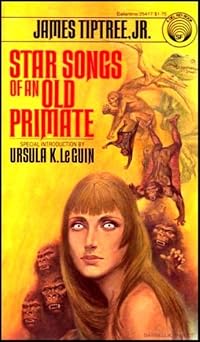
This one really did blow me away. Just a couple of weeks ago I read the Analog 6 anthology from 1968, a rather staid collection of stories in the classic sf mode. Most (though not quite all) of this 1973 collection are tremendous, many of them somewhat subversive - particularly on gender issues, this at a time when the author was still believed to be a man (and is referred to in the masculine in Harry Harrison's introduction. The one that particularly lingers with me is "The Man Who Walked Home", which I had forgotten was by Tiptree - the one about the time traveller who appears on the spot of his own demise once a year. There's also a rather atypical time travel romance, "Forever to a Hudson show more Bay Blanket", and the Hugo-winning "Painwise" which I didn't remember having read before. A really excellent anthology - I think I prefer it to the later Star Songs of an Old Primate which I also enjoyed a couple of years back. show less
This one really did blow me away. Just a couple of weeks ago I read the Analog 6 anthology from 1968, a rather staid collection of stories in the classic sf mode. Most (though not quite all) of this 1973 collection are tremendous, many of them somewhat subversive - particularly on gender issues, this at a time when the author was still believed to be a man (and is referred to in the masculine in Harry Harrison's introduction. The one that particularly lingers with me is "The Man Who Walked Home", which I had forgotten was by Tiptree - the one about the time traveller who appears on the spot of his own demise once a year. There's also a rather atypical time travel romance, "Forever to a Hudson show more Bay Blanket", and the Hugo-winning "Painwise" which I didn't remember having read before. A really excellent anthology - I think I prefer it to the later Star Songs of an Old Primate which I also enjoyed a couple of years back. show less
Members
- Recently Added By
Lists

Books With Numbers in the Title
308 works; 13 members

Reading LIst
648 works; 1 member
Author Information

122+ Works 6,898 Members
James Tiptree, Jr., was the pseudonym that Alice Bradley Sheldon began to use for her writing in 1967. Born in Chicago, she grew up in Africa and India, worked for the CIA, and earned a Ph.D. in psychology. In 1987, when Tiptree and her husband became gravely ill, she killed him and herself
Some Editions
Awards and Honors
Distinctions
The Guardian Book of the Day (2020-07-27)
Series
Belongs to Publisher Series
Work Relationships
Contains
Common Knowledge
- Canonical title
- Ten Thousand Light-Years from Home
- Original title
- Ten Thousand Light-Years from Home
- Alternate titles
- 10,000 Light-Years from Home
- Original publication date
- 1973-07
Classifications
Statistics
- Members
- 676
- Popularity
- 42,298
- Reviews
- 11
- Rating
- (3.94)
- Languages
- 5 — Dutch, English, German, Japanese, Spanish
- Media
- Paper, Ebook
- ISBNs
- 14
- ASINs
- 12