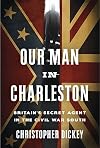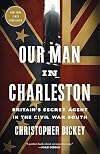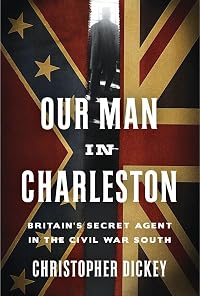
Our Man in Charleston: Britain's Secret Agent in the Civil War South
by Christopher Dickey 
On This Page
Description
"Between the Confederacy and recognition by Great Britain stood one unlikely Englishman who hated the slave trade. His actions helped determine the fate of a nation. When Robert Bunch arrived in Charleston to take up the post of British consul in 1853, he was young and full of ambition, but even he couldn't have imagined the incredible role he would play in the history-making events to unfold. In an age when diplomats often were spies, Bunch's job included sending intelligence back to the show more British government in London. Yet as the United States threatened to erupt into Civil War, Bunch found himself plunged into a double life, settling into an amiable routine with his slavery-loving neighbors on the one hand, while working furiously to thwart their plans to achieve a new Confederacy. As secession and war approached, the Southern states found themselves in an impossible position. They knew that recognition from Great Britain would be essential to the survival of the Confederacy, and also that such recognition was likely to be withheld if the South reopened the Atlantic slave trade. But as Bunch meticulously noted from his perch in Charleston, secession's red-hot epicenter, that trade was growing. And as Southern leaders continued to dissemble publicly about their intentions, Bunch sent dispatch after secret dispatch back to the Foreign Office warning of the truth--that economic survival would force the South to import slaves from Africa in massive numbers. When the gears of war finally began to turn, and Bunch was pressed into service on an actual spy mission to make contact with the Confederate government, he found himself in the middle of a fight between the Union and Britain that threatened, in the boast of Secretary of State William Seward, to 'wrap the world in flames.' In this masterfully told story, Christopher Dickey introduces Consul Bunch as a key figure in the pitched battle between those who wished to reopen the floodgates of bondage and misery, and those who wished to dam the tide forever. Featuring a remarkable cast of diplomats, journalists, senators, and spies, Our Man in Charleston captures the intricate, intense relationship between great powers on the brink of war"-- "The little-known story of a British diplomat who serves as a spy in South Carolina at the dawn of the Civil War, posing as a friend to slave-owning aristocrats when he was actually telling Britain not to support the Confederacy"-- show lessTags
Recommendations


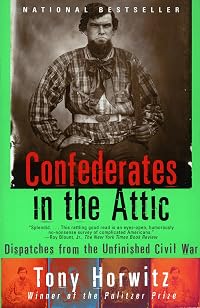

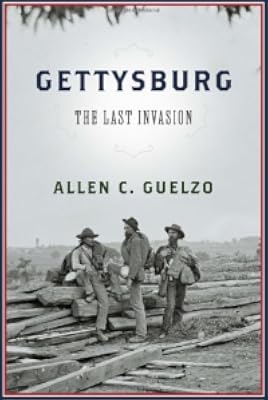
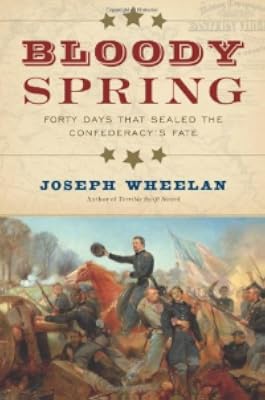
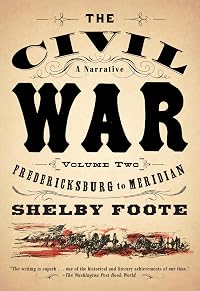
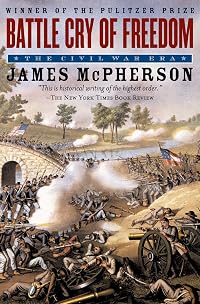
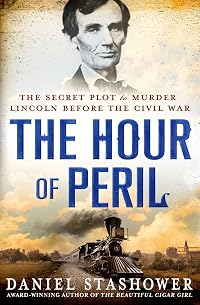

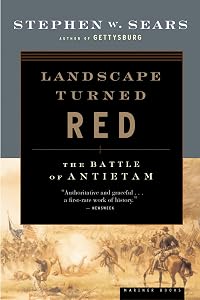


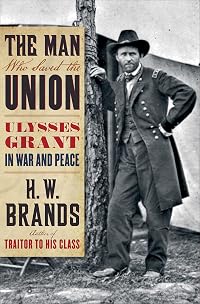





Member Recommendations
lilithcat Despite the fact that they cover vastly different historical eras and events, both are fascinating accounts of how diplomacy is conducted.
Member Reviews
In 1853, Robert Bunch became Britain's consul in Charleston, South Carolina. Bunch himself was fervently anti-slavery, and Britain opposed the resumption of the African slave trade. The consul, though, had to walk a fine line. He needed to work for Britain's interests in protecting their black seamen, and, as secession and war loomed, keep his country abreast of the situation. To do that, he presented an image that led Charlestonians to believe that he was sympathetic to their cause.
Nothing could have been further from the truth.
The confederate states very much wanted Britain on their side, and believed that Britain's interest in importing southern cotton for their textile mills would achieve that. But that was not Britain's only show more concern. Bunch made sure that his government knew that the Confederacy, despite a clause in its constitution, was most likely to resume the importation of slaves from Africa. As a result, Britain would not become an ally.
This is a very interesting account of the run-up to the American Civil War, but also a good look at what diplomacy was like at this particular time. Dickey's extensive research included access to Bunch's official and private correspondence. Very much recommended. show less
Nothing could have been further from the truth.
The confederate states very much wanted Britain on their side, and believed that Britain's interest in importing southern cotton for their textile mills would achieve that. But that was not Britain's only show more concern. Bunch made sure that his government knew that the Confederacy, despite a clause in its constitution, was most likely to resume the importation of slaves from Africa. As a result, Britain would not become an ally.
This is a very interesting account of the run-up to the American Civil War, but also a good look at what diplomacy was like at this particular time. Dickey's extensive research included access to Bunch's official and private correspondence. Very much recommended. show less
 This review was written for LibraryThing Early Reviewers.
I've read more than a bit about the American Civil War, but had never really thought about the question of international recognition of the Confederacy and how that would have changed everything. Christopher Dickey's Our Man in Charleston was a great bridge of that gap with his story of Robert Bunch, the British consul in Charleston, South Carolina, in the decade before and during the start of the Civil War.
Britain had done away with slavery and the slave trade early in the 19th century, and had pushed to have the trade outlawed internationally (with a few exceptions in the Caribbean islands) - including in the American South. This had the effect of raising the price for slaves needed to work the cotton fields - the major import from show more America to Britain at the time, and a major economic engine for Britain's manufacturing. But the economic model was unsustainable without importing more slaves from Africa to the South, and re-establishment of the slave trade in places like Charleston was a major driver for the breakdown of the Union that led to secession and the war. And yet, the South was (wrongly) convinced that Britain's need for cotton would drive them to recognize and support the Confederacy, and help them win the war.
Robert Bunch was uniquely positioned as the King's representative in Charleston to report on all this. He was ambitious, so often went well beyond his responsibilities in reporting and acting for the Foreign Office in watching out for British interests. He was a hard-core opponent of slavery, and especially the slave trade, yet had to pretend to ambivalence and neutrality to allow him to work with the wealthy whites of South Carolina. He was in danger from the violence of the time, where a lynch mob could tar and feather him - or hang him - at a moment's notice just on suspicion of abolitionist sympathies. And he left us a legacy of just how naively and badly the South miscalculated the British (and to some extent, the French) position.
Dickey tells the story well. He makes these people come alive, and makes the forces and ideas that drove the times real, instead of academic discussion. And he doesn't pull any punches about the real causes of the war or the horrors of the slave trade. Recommendation? Read it! show less
Britain had done away with slavery and the slave trade early in the 19th century, and had pushed to have the trade outlawed internationally (with a few exceptions in the Caribbean islands) - including in the American South. This had the effect of raising the price for slaves needed to work the cotton fields - the major import from show more America to Britain at the time, and a major economic engine for Britain's manufacturing. But the economic model was unsustainable without importing more slaves from Africa to the South, and re-establishment of the slave trade in places like Charleston was a major driver for the breakdown of the Union that led to secession and the war. And yet, the South was (wrongly) convinced that Britain's need for cotton would drive them to recognize and support the Confederacy, and help them win the war.
Robert Bunch was uniquely positioned as the King's representative in Charleston to report on all this. He was ambitious, so often went well beyond his responsibilities in reporting and acting for the Foreign Office in watching out for British interests. He was a hard-core opponent of slavery, and especially the slave trade, yet had to pretend to ambivalence and neutrality to allow him to work with the wealthy whites of South Carolina. He was in danger from the violence of the time, where a lynch mob could tar and feather him - or hang him - at a moment's notice just on suspicion of abolitionist sympathies. And he left us a legacy of just how naively and badly the South miscalculated the British (and to some extent, the French) position.
Dickey tells the story well. He makes these people come alive, and makes the forces and ideas that drove the times real, instead of academic discussion. And he doesn't pull any punches about the real causes of the war or the horrors of the slave trade. Recommendation? Read it! show less
This review was written for LibraryThing Early Reviewers.I’m not sure that this book will rate as highly with fiction readers as it does with me and other lovers of anything related to the American Civil War. For one thing, it’s title is disingenuous as the subject of the book, Robert Bunch, lived and worked quite openly as Her Majesty’s royal consul in Charleston, South Carolina for the decade leading up to that state’s secession from the union. He didn’t wear a tuxedo or play baccarat while drinking vodka martinis (shaken, not stirred), and he did not, or at least the book doesn’t tell of, frequently bed beautiful enemy agents. If he did anything in secret it was to assiduously hide from his hosts how passionately he detested slavery and anyone who actively defended that show more ‘peculiar institution’ that lay at the heart of the South’s agrarian economy. If he was to accomplish anything in his position he had to keep a smile on his face and convince everyone with any influence that he was, if not in agreement with their views, at least not opposed to them.
What he did do was perform his job diligently, keeping his government apprised of all that was happening in Charleston, the hotbed of the secessionist movement, and defending the rights of British subjects, including black ones, who had fallen afoul of South Carolina laws. One such law, the first Negro Seaman Act (1822), ordered county sheriffs to arrest and detain all black seamen, regardless of nationality, until their ships were ready to leave harbor. The ships’ captains would then be charged the cost of incarceration. In the event that a ship’s captain could not or would not pay the required amount, he could be fined and imprisoned while the black sailors aboard his vessel would be “deemed and taken as absolute slaves, and sold.”
Once the war broke out his job became vastly more complicated. How does one interact with a state that believes it is independent of the country that you have diplomatic relations with when that government denies that the schism has taken place yet at the same time is blockading the port of what it claims to be one of its own cities? Bunch’s greatest coup was a plan of hers that essentially tricked both sides of the conflict into agreeing to the provisions of a multinational treaty that neither side had signed.
I particularly enjoyed this book because it provided a solid understanding of Great Britain’s role in the American Civil War and its negotiations with both sides. It also provided a semi-neutral ringside view of life in Charleston during the days leading up to the war.
Dickey’s book also included a special treat in a story that I had not previously heard. My family is currently watching the PBS series ‘Victoria’ and have become fascinated with the character of Prince Albert. It turns out that one of the royal consort’s final official acts was to save the Union. When the American ship San Jacinto stopped the British steamer Trent at sea and seized two Confederate diplomates. This so enraged the English government that they prepared an ultimatum so harsh and inflexible that, had it been sent, the result would almost certainly have been war between the United States and England, thereby all but guaranteeing a successful conclusion to the South’s secession. Fortunately, the crown had the authority to review any such diplomatic correspondence and Albert, with his strong appreciation of human rights, realized that the result of such a letter would almost certainly be ‘the continuation of slavery for generations to come’ and ordered that the language be softened, allowing President Lincoln to claim that the San Vincente’s captain acted independently. This Lincoln did and war was averted. When Albert reviewed the letter, he was suffering from the first symptoms of the cholera that would claim his life a few days later.
Bottom line: I really enjoyed this book. It provided a lot of valuable background information that increased my understanding of the times and the people who lived them. Quotations are cited from an advanced reading copy and may not be the same as appears in the final published edition. The review was based on an advanced reading copy obtained at no cost from the publisher in exchange for an unbiased review. While this does take any ‘not worth what I paid for it’ statements out of my review, it otherwise has no impact on the content of my review.
FYI: On a 5-point scale I assign stars based on my assessment of what the book needs in the way of improvements:
*5 Stars – Nothing at all. If it ain’t broke, don’t fix it.
*4 Stars – It could stand for a few tweaks here and there but it’s pretty good as it is.
*3 Stars – A solid C grade. Some serious rewriting would be needed in order for this book to be considered great or memorable.
*2 Stars – This book needs a lot of work. A good start would be to change the plot, the character development, the writing style and the ending.
*1 Star - The only thing that would improve this book is a good bonfire. show less
What he did do was perform his job diligently, keeping his government apprised of all that was happening in Charleston, the hotbed of the secessionist movement, and defending the rights of British subjects, including black ones, who had fallen afoul of South Carolina laws. One such law, the first Negro Seaman Act (1822), ordered county sheriffs to arrest and detain all black seamen, regardless of nationality, until their ships were ready to leave harbor. The ships’ captains would then be charged the cost of incarceration. In the event that a ship’s captain could not or would not pay the required amount, he could be fined and imprisoned while the black sailors aboard his vessel would be “deemed and taken as absolute slaves, and sold.”
Once the war broke out his job became vastly more complicated. How does one interact with a state that believes it is independent of the country that you have diplomatic relations with when that government denies that the schism has taken place yet at the same time is blockading the port of what it claims to be one of its own cities? Bunch’s greatest coup was a plan of hers that essentially tricked both sides of the conflict into agreeing to the provisions of a multinational treaty that neither side had signed.
I particularly enjoyed this book because it provided a solid understanding of Great Britain’s role in the American Civil War and its negotiations with both sides. It also provided a semi-neutral ringside view of life in Charleston during the days leading up to the war.
Dickey’s book also included a special treat in a story that I had not previously heard. My family is currently watching the PBS series ‘Victoria’ and have become fascinated with the character of Prince Albert. It turns out that one of the royal consort’s final official acts was to save the Union. When the American ship San Jacinto stopped the British steamer Trent at sea and seized two Confederate diplomates. This so enraged the English government that they prepared an ultimatum so harsh and inflexible that, had it been sent, the result would almost certainly have been war between the United States and England, thereby all but guaranteeing a successful conclusion to the South’s secession. Fortunately, the crown had the authority to review any such diplomatic correspondence and Albert, with his strong appreciation of human rights, realized that the result of such a letter would almost certainly be ‘the continuation of slavery for generations to come’ and ordered that the language be softened, allowing President Lincoln to claim that the San Vincente’s captain acted independently. This Lincoln did and war was averted. When Albert reviewed the letter, he was suffering from the first symptoms of the cholera that would claim his life a few days later.
Bottom line: I really enjoyed this book. It provided a lot of valuable background information that increased my understanding of the times and the people who lived them. Quotations are cited from an advanced reading copy and may not be the same as appears in the final published edition. The review was based on an advanced reading copy obtained at no cost from the publisher in exchange for an unbiased review. While this does take any ‘not worth what I paid for it’ statements out of my review, it otherwise has no impact on the content of my review.
FYI: On a 5-point scale I assign stars based on my assessment of what the book needs in the way of improvements:
*5 Stars – Nothing at all. If it ain’t broke, don’t fix it.
*4 Stars – It could stand for a few tweaks here and there but it’s pretty good as it is.
*3 Stars – A solid C grade. Some serious rewriting would be needed in order for this book to be considered great or memorable.
*2 Stars – This book needs a lot of work. A good start would be to change the plot, the character development, the writing style and the ending.
*1 Star - The only thing that would improve this book is a good bonfire. show less
This review was written for LibraryThing Early Reviewers.It is a mark of how rare it is to encounter a book on the American Civil War that offers an entirely fresh perspective, adds measurably to our understanding of critical aspects of the conflict, and yet is extremely well written, that I found myself championing its merits well before I had actually finished it. Such a volume is Our Man in Charleston: Britain’s Secret Agent in the Civil War South, by Christopher Dickey – published in the final sesquicentennial year of the rebellion that left such a deep scar on the nation that it still resonates in the contemporary political landscape – which I had the privilege to obtain in the form of an uncorrected proof as part of an early reviewer’s program. The official publication date is show more scheduled for July 21, 2015.
I have had mixed luck with books obtained through the early reviewer program; more than one I forced my way through out of obligation rather than enjoyment or intellectual enrichment. Our Man in Charleston was a thoroughly delightful exception to what has been trending towards a somewhat dreary rule, and it could not have arrived at a better time. While I have spent a lifetime reading and studying about the Civil War, I have devoted the sesquicentennial years to a deeper appreciation that has included battlefield tours and even a weekend seminar with noted historian Ed Bearss in his ninetieth year, who giddily ran ahead of me and a devoted group of the less physically fit on rocky outcrops at Antietam and windy overlooks at Gettysburg, all the while steadily lecturing us in his inimitable stentorian voice. I am fresh from walking at the commencement ceremony for my Masters in History from APUS, obtained partially by fulfilling the final program requirement of an internship that in my case entailed spearheading a project with a local museum for digitizing a lost trove of Civil War diaries, memoirs and correspondence – which also earned me the Academic Scholar Student of the Year Award from the School of Arts and Humanities. On the way home, I spent time at Fredericksburg, Chancellorsville, the Wilderness and Spotsylvania Courthouse. In other words, I am invested in the larger topic at hand, one that according to some sources has been the subject of more than 70,000 books, with new ones published all the time; that may in fact be a low reckoning. So, as they say on the block, I don’t impress easy. This book thoroughly impresses me.
Dickey, a journalist rather than a trained historian who has an impressive resume that includes works both of fiction and non-fiction, managed to target an extremely unique character and perspective and put these to pen admirably, drawing the reader into the narrative in the first few pages and never letting him or her go until the tale is complete. Our Man in Charleston is literally Robert Bunch, a relatively minor character who has until now essentially been lost to history, the British consul stationed in Charleston, South Carolina through much of the final decade of the antebellum years, who remained at his post until 1863. The view is decidedly a British one, which is both unfamiliar and highly informative for students of the era who in general do not look to the war from the vantage point of foreign soil. Bunch finds himself a witness – and sometimes more – to key events that include the explosive Democratic convention held in Charleston which resulted in the terminal fracture of the party that was to ensure Lincoln’s eventual win, the lead up to secession in the very nucleus of its inception, the bombardment of Fort Sumter in Charleston harbor that inaugurated the war, and a host of other events of great significance as the rebellion and the Confederacy took shape. As a journalist, author Dickey must have deliciously imagined what it must have been like to have been an eyewitness to history taking shape in this way; as a writer of a solid book of history that contains a thick sheaf of citations, rather than imagination Dickey relied upon outstanding resources in the paper trail that Bunch left behind. The author admirably sets Bunch’s perspective into the broader context of war, diplomacy, politics and much more, and it is clear that he is no novice to the wider arena in which these events occurred.
The first third of the book is focused upon something that seems at first to have nothing to do with the later secession of South Carolina, which is some years away when Bunch arrives in Charleston in 1853 with instructions from his government to use all diplomatic means to urge a change in policy that up to that time had seen black British seaman seized and held by the authorities when ships with such crews flying the Union Jack were in port. Under the “Negro Seaman Act,” first enacted in Charleston in 1822, which inspired similar acts elsewhere in the south, free black British sailors – primarily of West Indian heritage – were seen as a kind of contagion that could potentially inspire slave uprisings: “Liberated blacks were seen as carriers of an insurrectionary plague that must be quarantined.” [p12] The law provided for this “quarantine” by mandating that such seaman be incarcerated as long as the ship was in port and holding the captain liable for the expenses this entailed; a refusal to cover such costs could result in penalties that included seizing and selling these sailors into slavery. There was also the very real danger that during incarceration they could be kidnapped and sold as human “livestock.”
Two critical elements present here that were to assume much larger significance in historical retrospect. The first is that the British, who economically represent a huge market for southern cotton, are nevertheless appalled by slavery, which has been abolished throughout their empire. The second is that the Charlestonians cannot comprehend that there is an alternative perspective to their own, which holds that per God and man the optimal role of blacks is to serve as human chattel property. The contrast in these essentially irreconcilable positions is underscored as Bunch learns that not only is there zero sympathy for even the mildest antislavery position, but the South Carolinians are leading advocates of the reopening of the slave trade, outlawed since 1807, to fuel their massive appetite for plantation labor. Curiously, their concern is less for international outrage than the opprobrium they might invite from the more northerly southern states, like Virginia, where since Jefferson’s time slave labor had become economically unfeasible but slave breeding thrived; prices would likely plummet once importation began anew. In the meantime, Bunch learns, there was such a thing as smuggling.
The British were committed to interdicting the illegal slave trade out of Africa and vigorously employed their navy to prevent slavers from making it to the Americas – sometimes these were ports in the US, more often Brazil and Cuba. The United States was technically committed, as well, but the effort was lukewarm at best as the Buchanan Administration sought to avoid raising southern ire. The exception was the capture of the Echo, a slaver that was towed into Charleston Harbor. In today’s south – where remarkably the Confederate Battle Flag still flies at the South Carolina State House, roads named after Confederate politicians and generals crisscross the landscape, and there has been a new and vehement resurgence of the “Lost Cause Myth” that promotes the lie that the rebellion was predicated upon states’ rights rather than the proud creation of an independent “slave republic” – slavery is commonly downplayed and the treatment of slave property has been euphemized as generally beneficent. As historians of the antebellum period are well aware, this is nonsense: slaves were often treated cruelly and always arbitrarily, frequently whipped or otherwise mistreated and sometimes murdered with no legal repercussions. In 1830, a slave named Jerry accused of rape was duly sentenced by a South Carolina court and subsequently executed by burning alive! Still, a full knowledge of these realities hardly prepares the reader for what awaits when Bunch and others see the Echo in the harbor:
“Vomit and urine and feces and blood had seeped deep into the raw wood of the sunless, slapped-together slave decks in the hold, staining them indelibly with filth. Cockroaches by the millions seethed among the boards, and clouds of fleas and gnats rose up from them. The stench that came from this vessel wasn’t the smell of a ship full of cattle and horses, but that peculiar smell that surrounds humans, and only humans who are very afraid and very sick or dying or dead . . . Some 455 Africans had been taken on board the Echo near Kabinda on the African coast. More than 140 had perished during the weeks at sea and were thrown overboard. (“The shark of the Atlantic is still, as he has ever been, the partner of the slave trader,” wrote a British editorialist.) It took the U.S. Navy prize crew six days to sail the Echo to Charleston Harbor, the most important American port within reach of the fetid vessel. By then, another eight captives had died. And they just kept dying . . . ‘Their condition on leaving the brig Echo was painful and disgusting in the extreme. They had been huddled together closer than cattle, and slept at night in as close contact as spoons when packed together. Privation of every kind, coupled with disease, had reduced all of them to the merest skeletons, and to such a state of desuetude and debility that on entering the fort they could not so much as step over a small beam, one foot high, in the doorway, but were compelled to sit on it and balance themselves over. It is impossible for you to imagine their sad and distressed condition.’” [p90-94]
The survivors were herded into the still incomplete Fort Sumter. The death of nearly three dozen more under the watchful authority of the U.S. marshal, formerly a proud supporter of reopening the slave trade, changed his mind for good. Most Charlestonians, however, were decidedly unfazed: in fact their dander was up over the humiliating treatment afforded to the captain and crew of the vessel when paraded through town upon their capture. Bunch, like any modern audience reading this account, was horrified.
As British council, Bunch does his best to form positive relationships with his American hosts, but his correspondence reveals that he clearly detests most them. Perhaps he most admired James Petigru, the politician who opposed secession and famously declared that: "South Carolina is too small for a republic and too large for an insane asylum." But even Petigru was a slaveholder. Bunch’s visceral antislavery orientation, shared by most key members of the British Parliament in both parties, was an anathema to almost all South Carolinians. Bunch was present in Charleston through the secession crisis, the firing on Sumter, the formation of the nascent Confederacy, the diplomatic crises with Britain over blockade and the seizing of Mason and Slidell by an overeager Union navy captain, and much more. He even took part in some “undercover” diplomacy with Richmond in the interests of the British, which sadly backfired and unfairly characterized him in the eyes of the Lincoln Administration as a Confederate sympathizer. South Carolina – and the entire Confederacy – bet that a British hunger for southern cotton would trump any opposition to slavery on the other side of the Atlantic and foster both recognition and even military assistance. As history has demonstrated, this was hardly a sound gamble, especially as southerners burned their cotton in the early stages of the war to increase demand. The British sought and located alternative markets, and at the end of the day it was very difficult for British politicians to trumpet support for the Confederacy, whose economy and in fact raison d’être was predicated upon the human chattel slavery Britain was committed to oppose on every shore. South Carolinians, as revealed by the Dickey book, could never possibly comprehend any of that.
It is impossible to find anything significant to criticize in this fine work. Our Man in Charleston is original, well-written, carefully documented and presented as only the very best narrative history is meant to be: it offers a unique perspective on a critically important subject in a thoroughly original manner. I highly recommend this book and I predict that it will earn more than one award for its contribution to American Civil War studies. show less
I have had mixed luck with books obtained through the early reviewer program; more than one I forced my way through out of obligation rather than enjoyment or intellectual enrichment. Our Man in Charleston was a thoroughly delightful exception to what has been trending towards a somewhat dreary rule, and it could not have arrived at a better time. While I have spent a lifetime reading and studying about the Civil War, I have devoted the sesquicentennial years to a deeper appreciation that has included battlefield tours and even a weekend seminar with noted historian Ed Bearss in his ninetieth year, who giddily ran ahead of me and a devoted group of the less physically fit on rocky outcrops at Antietam and windy overlooks at Gettysburg, all the while steadily lecturing us in his inimitable stentorian voice. I am fresh from walking at the commencement ceremony for my Masters in History from APUS, obtained partially by fulfilling the final program requirement of an internship that in my case entailed spearheading a project with a local museum for digitizing a lost trove of Civil War diaries, memoirs and correspondence – which also earned me the Academic Scholar Student of the Year Award from the School of Arts and Humanities. On the way home, I spent time at Fredericksburg, Chancellorsville, the Wilderness and Spotsylvania Courthouse. In other words, I am invested in the larger topic at hand, one that according to some sources has been the subject of more than 70,000 books, with new ones published all the time; that may in fact be a low reckoning. So, as they say on the block, I don’t impress easy. This book thoroughly impresses me.
Dickey, a journalist rather than a trained historian who has an impressive resume that includes works both of fiction and non-fiction, managed to target an extremely unique character and perspective and put these to pen admirably, drawing the reader into the narrative in the first few pages and never letting him or her go until the tale is complete. Our Man in Charleston is literally Robert Bunch, a relatively minor character who has until now essentially been lost to history, the British consul stationed in Charleston, South Carolina through much of the final decade of the antebellum years, who remained at his post until 1863. The view is decidedly a British one, which is both unfamiliar and highly informative for students of the era who in general do not look to the war from the vantage point of foreign soil. Bunch finds himself a witness – and sometimes more – to key events that include the explosive Democratic convention held in Charleston which resulted in the terminal fracture of the party that was to ensure Lincoln’s eventual win, the lead up to secession in the very nucleus of its inception, the bombardment of Fort Sumter in Charleston harbor that inaugurated the war, and a host of other events of great significance as the rebellion and the Confederacy took shape. As a journalist, author Dickey must have deliciously imagined what it must have been like to have been an eyewitness to history taking shape in this way; as a writer of a solid book of history that contains a thick sheaf of citations, rather than imagination Dickey relied upon outstanding resources in the paper trail that Bunch left behind. The author admirably sets Bunch’s perspective into the broader context of war, diplomacy, politics and much more, and it is clear that he is no novice to the wider arena in which these events occurred.
The first third of the book is focused upon something that seems at first to have nothing to do with the later secession of South Carolina, which is some years away when Bunch arrives in Charleston in 1853 with instructions from his government to use all diplomatic means to urge a change in policy that up to that time had seen black British seaman seized and held by the authorities when ships with such crews flying the Union Jack were in port. Under the “Negro Seaman Act,” first enacted in Charleston in 1822, which inspired similar acts elsewhere in the south, free black British sailors – primarily of West Indian heritage – were seen as a kind of contagion that could potentially inspire slave uprisings: “Liberated blacks were seen as carriers of an insurrectionary plague that must be quarantined.” [p12] The law provided for this “quarantine” by mandating that such seaman be incarcerated as long as the ship was in port and holding the captain liable for the expenses this entailed; a refusal to cover such costs could result in penalties that included seizing and selling these sailors into slavery. There was also the very real danger that during incarceration they could be kidnapped and sold as human “livestock.”
Two critical elements present here that were to assume much larger significance in historical retrospect. The first is that the British, who economically represent a huge market for southern cotton, are nevertheless appalled by slavery, which has been abolished throughout their empire. The second is that the Charlestonians cannot comprehend that there is an alternative perspective to their own, which holds that per God and man the optimal role of blacks is to serve as human chattel property. The contrast in these essentially irreconcilable positions is underscored as Bunch learns that not only is there zero sympathy for even the mildest antislavery position, but the South Carolinians are leading advocates of the reopening of the slave trade, outlawed since 1807, to fuel their massive appetite for plantation labor. Curiously, their concern is less for international outrage than the opprobrium they might invite from the more northerly southern states, like Virginia, where since Jefferson’s time slave labor had become economically unfeasible but slave breeding thrived; prices would likely plummet once importation began anew. In the meantime, Bunch learns, there was such a thing as smuggling.
The British were committed to interdicting the illegal slave trade out of Africa and vigorously employed their navy to prevent slavers from making it to the Americas – sometimes these were ports in the US, more often Brazil and Cuba. The United States was technically committed, as well, but the effort was lukewarm at best as the Buchanan Administration sought to avoid raising southern ire. The exception was the capture of the Echo, a slaver that was towed into Charleston Harbor. In today’s south – where remarkably the Confederate Battle Flag still flies at the South Carolina State House, roads named after Confederate politicians and generals crisscross the landscape, and there has been a new and vehement resurgence of the “Lost Cause Myth” that promotes the lie that the rebellion was predicated upon states’ rights rather than the proud creation of an independent “slave republic” – slavery is commonly downplayed and the treatment of slave property has been euphemized as generally beneficent. As historians of the antebellum period are well aware, this is nonsense: slaves were often treated cruelly and always arbitrarily, frequently whipped or otherwise mistreated and sometimes murdered with no legal repercussions. In 1830, a slave named Jerry accused of rape was duly sentenced by a South Carolina court and subsequently executed by burning alive! Still, a full knowledge of these realities hardly prepares the reader for what awaits when Bunch and others see the Echo in the harbor:
“Vomit and urine and feces and blood had seeped deep into the raw wood of the sunless, slapped-together slave decks in the hold, staining them indelibly with filth. Cockroaches by the millions seethed among the boards, and clouds of fleas and gnats rose up from them. The stench that came from this vessel wasn’t the smell of a ship full of cattle and horses, but that peculiar smell that surrounds humans, and only humans who are very afraid and very sick or dying or dead . . . Some 455 Africans had been taken on board the Echo near Kabinda on the African coast. More than 140 had perished during the weeks at sea and were thrown overboard. (“The shark of the Atlantic is still, as he has ever been, the partner of the slave trader,” wrote a British editorialist.) It took the U.S. Navy prize crew six days to sail the Echo to Charleston Harbor, the most important American port within reach of the fetid vessel. By then, another eight captives had died. And they just kept dying . . . ‘Their condition on leaving the brig Echo was painful and disgusting in the extreme. They had been huddled together closer than cattle, and slept at night in as close contact as spoons when packed together. Privation of every kind, coupled with disease, had reduced all of them to the merest skeletons, and to such a state of desuetude and debility that on entering the fort they could not so much as step over a small beam, one foot high, in the doorway, but were compelled to sit on it and balance themselves over. It is impossible for you to imagine their sad and distressed condition.’” [p90-94]
The survivors were herded into the still incomplete Fort Sumter. The death of nearly three dozen more under the watchful authority of the U.S. marshal, formerly a proud supporter of reopening the slave trade, changed his mind for good. Most Charlestonians, however, were decidedly unfazed: in fact their dander was up over the humiliating treatment afforded to the captain and crew of the vessel when paraded through town upon their capture. Bunch, like any modern audience reading this account, was horrified.
As British council, Bunch does his best to form positive relationships with his American hosts, but his correspondence reveals that he clearly detests most them. Perhaps he most admired James Petigru, the politician who opposed secession and famously declared that: "South Carolina is too small for a republic and too large for an insane asylum." But even Petigru was a slaveholder. Bunch’s visceral antislavery orientation, shared by most key members of the British Parliament in both parties, was an anathema to almost all South Carolinians. Bunch was present in Charleston through the secession crisis, the firing on Sumter, the formation of the nascent Confederacy, the diplomatic crises with Britain over blockade and the seizing of Mason and Slidell by an overeager Union navy captain, and much more. He even took part in some “undercover” diplomacy with Richmond in the interests of the British, which sadly backfired and unfairly characterized him in the eyes of the Lincoln Administration as a Confederate sympathizer. South Carolina – and the entire Confederacy – bet that a British hunger for southern cotton would trump any opposition to slavery on the other side of the Atlantic and foster both recognition and even military assistance. As history has demonstrated, this was hardly a sound gamble, especially as southerners burned their cotton in the early stages of the war to increase demand. The British sought and located alternative markets, and at the end of the day it was very difficult for British politicians to trumpet support for the Confederacy, whose economy and in fact raison d’être was predicated upon the human chattel slavery Britain was committed to oppose on every shore. South Carolinians, as revealed by the Dickey book, could never possibly comprehend any of that.
It is impossible to find anything significant to criticize in this fine work. Our Man in Charleston is original, well-written, carefully documented and presented as only the very best narrative history is meant to be: it offers a unique perspective on a critically important subject in a thoroughly original manner. I highly recommend this book and I predict that it will earn more than one award for its contribution to American Civil War studies. show less
This review was written for LibraryThing Early Reviewers.This is a marvelous account of British Consul Robert Bunch's time in Charleston, South Carolina from 1853 to 1863. Bunch was an eyewitness to the growing secession movement in South Carolina. His constant warnings to the British Foreign Office about Southern extremism likely played a big part in restraining Britain from taking the South's side when the conflict broke out in 1861. Anyone who likes to pretend that the Civil War wasn't about slavery needs to read this book. It contains some sickening descriptions of slave ships and of how many slaves were treated after they arrived in America--despite being valuable property. Even more shocking is the persistence of the Atlantic slave trade on American vessels long after the 1808 ban on show more importing slaves to the United States. The destination for most of the slaves was Cuba, but at least a few ships made it directly to the South. If anyone was caught in connection with the ongoing slave trade, no Southern jury would convict them.
During his 10 years in Charleston and a few of his travels, Bunch meets lots of interesting people, including a brave few Southerners who continued to oppose slavery despite the mass hysteria whipped up by the pro-slavery "fire eaters" with their newspapers and rhetoric. Some of the Southerners are truly despicable through and through; others seem like intelligent, decent people except for their devotion to slavery. A few are men of intellect, such as Judah P. Benjamin, the Jew who was a member of the Confederate cabinet. Bunch did such a good job of hiding his true feelings about slavery so that he could stay close enough to his Southern acquaintances to gather intelligence that Secretary of State Seward thought Bunch was a Southern sympathizer, and revoked his status as a Consul!
The only slightly annoying thing about the book is its constant atmosphere of British superiority, not just moral superiority in its staunch opposition to the slave trade and its Navy's efforts to stop it, but also the assumption that if America and Britain went to war, the superiority of the British forces would have made the war a short one. The British are shown as superior, of course, to the morally bankrupt South, but also much smarter and statesmanlike than the North, personified in this book not by Abraham Lincoln, but by the erratic, who knows what he may say next, William Seward. While this is a convincing portrait, it still lacks balance--but it is a small knock on a book that sheds so much light on some corners that were a little bit murky in my understanding of the prelude to the Civil War and the precarious relationship between the United States and Great Britain.
Highly recommended. show less
During his 10 years in Charleston and a few of his travels, Bunch meets lots of interesting people, including a brave few Southerners who continued to oppose slavery despite the mass hysteria whipped up by the pro-slavery "fire eaters" with their newspapers and rhetoric. Some of the Southerners are truly despicable through and through; others seem like intelligent, decent people except for their devotion to slavery. A few are men of intellect, such as Judah P. Benjamin, the Jew who was a member of the Confederate cabinet. Bunch did such a good job of hiding his true feelings about slavery so that he could stay close enough to his Southern acquaintances to gather intelligence that Secretary of State Seward thought Bunch was a Southern sympathizer, and revoked his status as a Consul!
The only slightly annoying thing about the book is its constant atmosphere of British superiority, not just moral superiority in its staunch opposition to the slave trade and its Navy's efforts to stop it, but also the assumption that if America and Britain went to war, the superiority of the British forces would have made the war a short one. The British are shown as superior, of course, to the morally bankrupt South, but also much smarter and statesmanlike than the North, personified in this book not by Abraham Lincoln, but by the erratic, who knows what he may say next, William Seward. While this is a convincing portrait, it still lacks balance--but it is a small knock on a book that sheds so much light on some corners that were a little bit murky in my understanding of the prelude to the Civil War and the precarious relationship between the United States and Great Britain.
Highly recommended. show less
I like reading popular history, but I’ve never had much interest in reading about Civil War era America. I’ve no idea why. Perhaps it’s because the war always seemed so insane, especially coming as it did on the heels of the Crimean War and the lessons the world should have learned about the horrors of modern artillery and massed firepower. Or perhaps it’s because the institution of slavery always struck me as so violative of the ideals America claimed to hold dear at the time of its founding that I never believed any book could adequately explain how slavery was not just tolerated, but a central part of American culture, for an additional 100 years. Regardless, something about Christopher Dickey’s book, Our Man in Charleston: show more Britain’s Secret Agent in the Civil War South, made me want to read it. Perhaps it was the British angle. I don’t know. But I’m very glad I did read it as it is very good.
Dickey relates the experiences of Robert Bunch, the British consul in Charleston beginning in 1853. Bunch, like many in his government, hated slavery and those engaged in it. But Bunch had to pretend to like the people of Charleston, including many slave owners, as his government had tasked him with convincing the South Carolina government to overturn the Negro Seamen law, a law under which any black seamen arriving in South Carolina (on board a British or any other nation’s ship) would be imprisoned until their ship departed. That is if they were lucky. They might, while imprisoned, be sold into a life of slavery by scurrilous prison guards, never being seen again. This, for obvious reasons, infuriated the British government, a government that had already spent several decades trying to put an end to the world slave trade.
While Bunch was engaged in his assigned task, events around him unfolded to the point where South Carolina and a number of other Southern states seceded from the Union, ultimately starting the American Civil War. Bunch was there throughout the pre-war period, during secession, and through at least a portion of the Civil War (I don’t want to give too much away). In the process, Bunch seems to have become not only the best consul, but the best anti-slavery spy, the British had in the Confederacy, insightfully reporting on ongoing events, and even accurately predicting future events, in a stream of missives to his superiors in Washington and London, all the while at risk of being killed by those he lived amongst if his activities and anti-slavery views were discovered. Bunch at the same time dealt with a constant onslaught of lesser problems for his government and for Brits in the area, most of which he resolved in an admirable manner.
There’s much more to the book, but saying more would give too much away. What I will say is that the book should be required reading in the US as it has much to teach us. The book makes it very clear that secession, the Civil War, and the Confederate battle flag (all of which seem to be in the news at the moment) had very little to do with states’ rights or tariffs as many in the South would have the world believe since the end of the war. Bunch’s clear-eyed observations and reporting, and Dickey’s compelling narrative, make it plain that all three were about slavery plain and simple. The setting of the book in Charleston, which is also sadly in the news these days, is also enlightening as it reveals how steeped in slavery Charleston and its people were and how much of a history of racism the state has. While better days are hopefully within sight for the city of Charleston and the state of South Carolina, it’s always good to know one’s history. Especially when it’s as well and accurately told as by Dickey. Highly recommended. show less
Dickey relates the experiences of Robert Bunch, the British consul in Charleston beginning in 1853. Bunch, like many in his government, hated slavery and those engaged in it. But Bunch had to pretend to like the people of Charleston, including many slave owners, as his government had tasked him with convincing the South Carolina government to overturn the Negro Seamen law, a law under which any black seamen arriving in South Carolina (on board a British or any other nation’s ship) would be imprisoned until their ship departed. That is if they were lucky. They might, while imprisoned, be sold into a life of slavery by scurrilous prison guards, never being seen again. This, for obvious reasons, infuriated the British government, a government that had already spent several decades trying to put an end to the world slave trade.
While Bunch was engaged in his assigned task, events around him unfolded to the point where South Carolina and a number of other Southern states seceded from the Union, ultimately starting the American Civil War. Bunch was there throughout the pre-war period, during secession, and through at least a portion of the Civil War (I don’t want to give too much away). In the process, Bunch seems to have become not only the best consul, but the best anti-slavery spy, the British had in the Confederacy, insightfully reporting on ongoing events, and even accurately predicting future events, in a stream of missives to his superiors in Washington and London, all the while at risk of being killed by those he lived amongst if his activities and anti-slavery views were discovered. Bunch at the same time dealt with a constant onslaught of lesser problems for his government and for Brits in the area, most of which he resolved in an admirable manner.
There’s much more to the book, but saying more would give too much away. What I will say is that the book should be required reading in the US as it has much to teach us. The book makes it very clear that secession, the Civil War, and the Confederate battle flag (all of which seem to be in the news at the moment) had very little to do with states’ rights or tariffs as many in the South would have the world believe since the end of the war. Bunch’s clear-eyed observations and reporting, and Dickey’s compelling narrative, make it plain that all three were about slavery plain and simple. The setting of the book in Charleston, which is also sadly in the news these days, is also enlightening as it reveals how steeped in slavery Charleston and its people were and how much of a history of racism the state has. While better days are hopefully within sight for the city of Charleston and the state of South Carolina, it’s always good to know one’s history. Especially when it’s as well and accurately told as by Dickey. Highly recommended. show less
This review was written for LibraryThing Early Reviewers.This is a wonderful book. Robert Bunch, the British consul in Charleston South Carolina, was suspected of being a Confederate sympathizer by that prize idiot, William Seward, the US Secretary of State. In fact, Bunch knew that the southerners were a bunch of racist lowlifes and reported on the people behind the south and their desire to reopen the slave trade with Africa, which Britain would never permit. He managed to keep the British from recognizing the Confederacy until it was too late to affect the outcome. This is another book that destroys Southern myths about the causes of the civil war; It was slavery, pure and simple, that did it; the war had nothing to do with states rights or any other nonsense.
Members
- Recently Added By
Lists

Chronological 2015
39 works; 1 member
Author Information

10+ Works 669 Members
Christopher Dickey is a LibraryThing Author, an author who lists their personal library on LibraryThing.
Awards and Honors
Distinctions
Common Knowledge
- Canonical title
- Our Man in Charleston: Britain's Secret Agent in the Civil War South
- Original publication date
- 2015
- People/Characters
- Robert Bunch; Lord Lyons; William Seward; William Howard Russell
- Important places
- Charleston, South Carolina, USA; Washington, D.C., USA; United Kingdom
- Important events
- American Civil War (1861 | 1865)
- Original language
- English
Classifications
Statistics
- Members
- 287
- Popularity
- 112,477
- Reviews
- 55
- Rating
- (4.21)
- Languages
- English
- Media
- Paper, Audiobook, Ebook
- ISBNs
- 6
- ASINs
- 3